

Loading, please wait...
Loading, please wait...
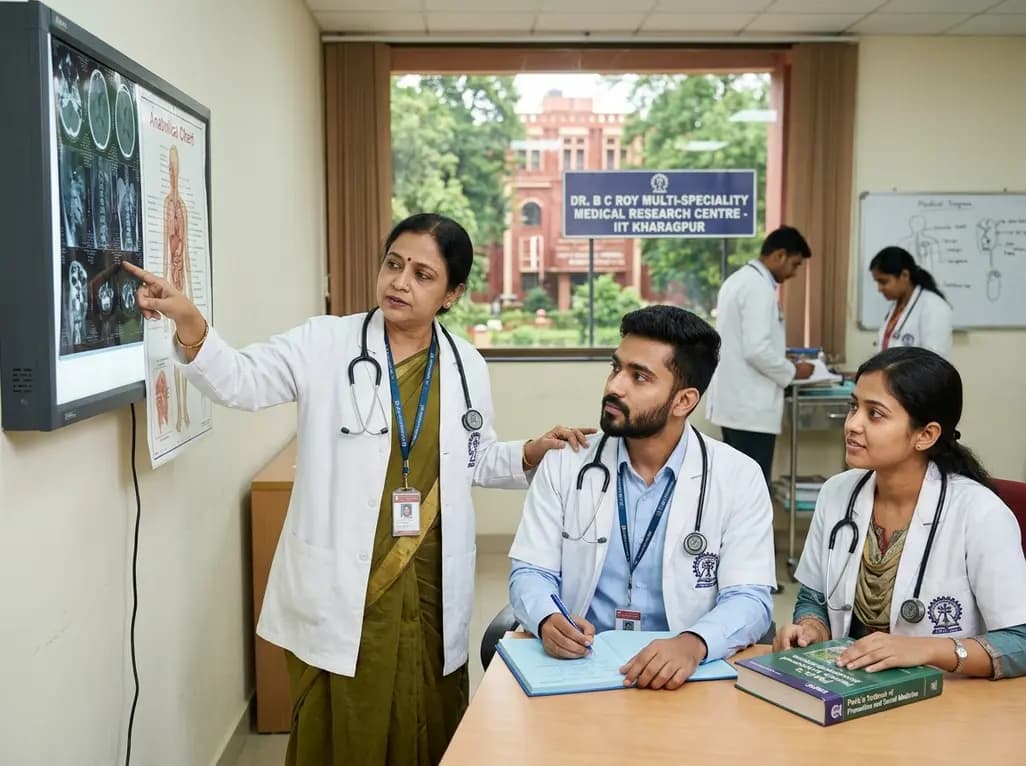
The Indian healthcare education framework has achieved a transformative historical milestone. Indian Institute of Technology Kharagpur has formally become the first IIT in the country to establish postgraduate clinical training programs. The National Medical Commission granted formal accreditation to these programs, establishing a historic precedent. Consequently, the newly introduced IIT Kharagpur MD courses signify a revolutionary shift in postgraduate medical pedagogy. This initiative unites clinical excellence with engineering ingenuity, modern artificial intelligence, and translational biomedical research.
IIT Kharagpur holds the distinct honor of being the very first Indian Institute of Technology established in India. Now, the institute pioneers another educational frontier by expanding into advanced postgraduate clinical disciplines. The National Medical Commission delivered formal approval after rigorous institutional reviews. Therefore, the institute will welcome its inaugural cohort of resident doctors for the 2026-27 academic session.
Director Suman Chakraborty emphasized that the program addresses modern healthcare challenges through innovative paradigms. Traditional medical training often functions in complete isolation from technological advancements. In contrast, this pioneering initiative creates an intellectual ecosystem where clinicians engage actively with technical experts. Professor Chakraborty noted that the institute aims to train clinician-innovators rather than conventional practitioners. Consequently, graduates will acquire profound diagnostic acumen alongside deep technological proficiency.
Furthermore, the initiative aligns seamlessly with national healthcare objectives demanding localized medical technology development. India relies heavily on imported medical hardware and diagnostic algorithms. By training physicians within an elite engineering institute, the nation cultivates native technological sovereignty. Residents will observe clinical hurdles directly and formulate technological remedies concurrently. Ultimately, this educational paradigm positions India at the global forefront of physician-led biomedical engineering.
Clinical residency requires extensive hospital infrastructure, diverse patient demographics, and high-volume diagnostic services. IIT Kharagpur established the Dr B C Roy Multi-Speciality Medical Research Centre to satisfy these strict educational criteria. The modern hospital complex provides an advanced setting for inpatient treatment, outpatient management, and critical care medicine. Consequently, resident trainees will gain comprehensive bedside experience across acute and chronic clinical cases.
Moreover, the multi-specialty facility integrates sophisticated technological departments within the immediate hospital perimeter. State-of-the-art diagnostic imaging suites, digital pathology archives, and central automated laboratories support daily clinical operations. Therefore, postgraduate scholars will utilize top-tier diagnostic devices throughout their regular rotations. Experienced senior medical faculty members lead clinical units, ensuring rigorous supervision and patient safety.
Additionally, the teaching hospital maintains a dedicated translational wing linked directly with university engineering laboratories. Bioengineers, computer software developers, and robotic specialists collaborate with hospital staff daily. This interdisciplinary proximity enables immediate bench-to-bedside research workflows. Postgraduate scholars will evaluate novel point-of-care devices and therapeutic monitoring algorithms during inpatient rounds. As a result, clinical rotations provide both standard medical competencies and hands-on exposure to cutting-edge health technological innovations.
For the initial 2026-27 rollout, the National Medical Commission authorized twelve postgraduate seats across six foundational medical disciplines. Each selected specialty will admit two postgraduate students in this pioneering cohort. The approved clinical disciplines comprise General Medicine, Radiodiagnosis, Pathology, Physiology, Community Medicine, and Biochemistry. This deliberate distribution balances core clinical specialties, non-clinical research disciplines, and essential diagnostic fields.
The IIT Kharagpur MD courses follow standard statutory competencies while integrating specialized analytical modules. Residents in General Medicine and Radiology will encounter advanced computational diagnostic aids, including machine learning algorithms. Similarly, Pathology postgraduates will train in digital histology, whole-slide scanning, and molecular tissue diagnostics. Meanwhile, Biochemistry and Physiology residents will participate in metabolomics, microfluidic sensing, and advanced physiological monitoring systems.
Furthermore, Community Medicine postgraduates will analyze wide-ranging public health databases using modern epidemiological analytics. They will deploy remote telemedicine platforms to monitor rural populations across regional districts. Each curriculum maintains absolute compliance with National Medical Commission standards, protecting board certification legitimacy. Nevertheless, elective technical coursework exposes students to advanced intellectual property development and medical device validation. Thus, postgraduates build remarkable dual-domain expertise throughout their three-year residency tenure.
Prospective postgraduate medical candidates must follow centralized national admission protocols to secure enrollment. The Medical Counselling Committee manages all admissions through the national online NEET-PG counselling portal. Candidates cannot apply via private institutional quotas or separate local entrance tests. Instead, eligible MBBS graduates must utilize their verified National Eligibility cum Entrance Test postgraduate ranks.
The institute officially introduced these postgraduate positions for active consideration during Round 2 of national counselling. Medical aspirants must review the updated seat matrix on the official Medical Counselling Committee website. Candidates must formulate their institutional choices strategically during the designated choice-filling window. Because total seat capacity remains limited to twelve candidates, admission cutoffs will reflect immense competitive interest.
Furthermore, qualified candidates must satisfy all NMC eligibility criteria, including complete compulsory rotating internships and state registration. Following provisional allotment in Round 2, candidates must complete physical reporting, credential verification, and medical fitness assessments. The institute will enforce standard national stipend policies and resident work-hour guidelines. Successful applicants will formally inaugurate India's very first generation of IIT-trained clinical specialists.
Modern clinical medicine increasingly requires sophisticated computational infrastructure, precision biomaterials, and complex therapeutic devices. However, conventional medical schools rarely offer direct exposure to engineering laboratories. The IIT Kharagpur program eliminates this historical segregation entirely. Clinicians will work closely with computer scientists, electrical engineers, and materials researchers throughout their regular hospital training.
For instance, radiology residents will collaborate directly with artificial intelligence teams to design reliable image-processing tools. These algorithms can identify subtle pulmonary nodules, acute intracranial hemorrhages, and complex microfractures. Similarly, pathology residents can co-develop automated cellular counting models and molecular biomarker assays. Such multidisciplinary collaboration reduces diagnostic turnaround times and enhances diagnostic accuracy across critical departments.
Additionally, this integrated clinical environment fosters an entrepreneurial mindset among resident physicians. Trainees will gain foundational insights into regulatory affairs, patent drafting, medical product prototyping, and clinical device testing. As healthcare systems adopt automation, doctors possessing deep technological comprehension will lead institutional innovation. Therefore, this landmark initiative sets a progressive precedent, encouraging other technical institutions to bridge clinical practice with engineering sciences.
Q1: Which clinical disciplines are available in the initial MD intake at IIT Kharagpur?
For the 2026-27 academic session, IIT Kharagpur offers postgraduate MD programs across six approved disciplines. These include General Medicine, Radiodiagnosis, Pathology, Physiology, Community Medicine, and Biochemistry. Each specialty provides two accredited seats, creating a total intake capacity of twelve postgraduate seats. All disciplines follow educational guidelines established by the National Medical Commission.
Q2: How can candidates secure admission into postgraduate medical programs at IIT Kharagpur?
Admissions occur exclusively through the Medical Counselling Committee online counselling portal based on NEET-PG examination merit rankings. Eligible MBBS graduates must participate in centralized counselling, where the seats become available during Round 2 choice filling. Candidates must satisfy standard national eligibility rules, complete their mandatory internship, and finish institutional document verification.
Q3: Are the postgraduate medical degrees granted by IIT Kharagpur legally recognized by the NMC?
Yes, all postgraduate medical degrees launched by IIT Kharagpur possess formal regulatory approval from the National Medical Commission. Consequently, these qualifications hold full legal recognition across India and internationally. Graduates enjoy identical career privileges, specialist registration rights, and academic eligibility as alumni from conventional government or state medical institutions.
Disclaimer: This content is for informational and educational purposes only. It does not constitute medical advice or replace professional judgment. Refer to the latest local and national guidelines for clinical practice.
References

Read summarized clinical updates, watch expert medical content, and earn CME certifications right from your smartphone.
Open your smartphone camera to scan and install.





In a historic national milestone, IIT Kharagpur has secured NMC accreditation to launch postgraduate MD courses for the 2026-27 session. Offering twelve seats across six disciplines at the Dr B C Roy Multi-Speciality Medical Research Centre, admissions occur via NEET-PG Round 2, uniting clinical care with engineering.
Today
Groundbreaking research from IIT Kanpur demonstrates that resident islet macrophages can shut down beta-cell insulin secretion within minutes via direct signaling. This rapid non-inflammatory communication reshapes our understanding of diabetes pathogenesis and highlights novel targets for therapeutic interventions.
Today
A review of the evolution of maternal and pediatric therapeutics over two decades, examining developmental pharmacokinetics, lactation pharmacology, pediatric formulations, and evidence-based guidance for clinicians managing pregnancy and childhood diseases.
Today
New PEX-NET registry data reveal that the right atrial pressure to cardiac output (RAP/CO) slope during exercise right heart catheterization is an independent predictor of long-term mortality in pulmonary hypertension, outperforming conventional resting measures.
Today
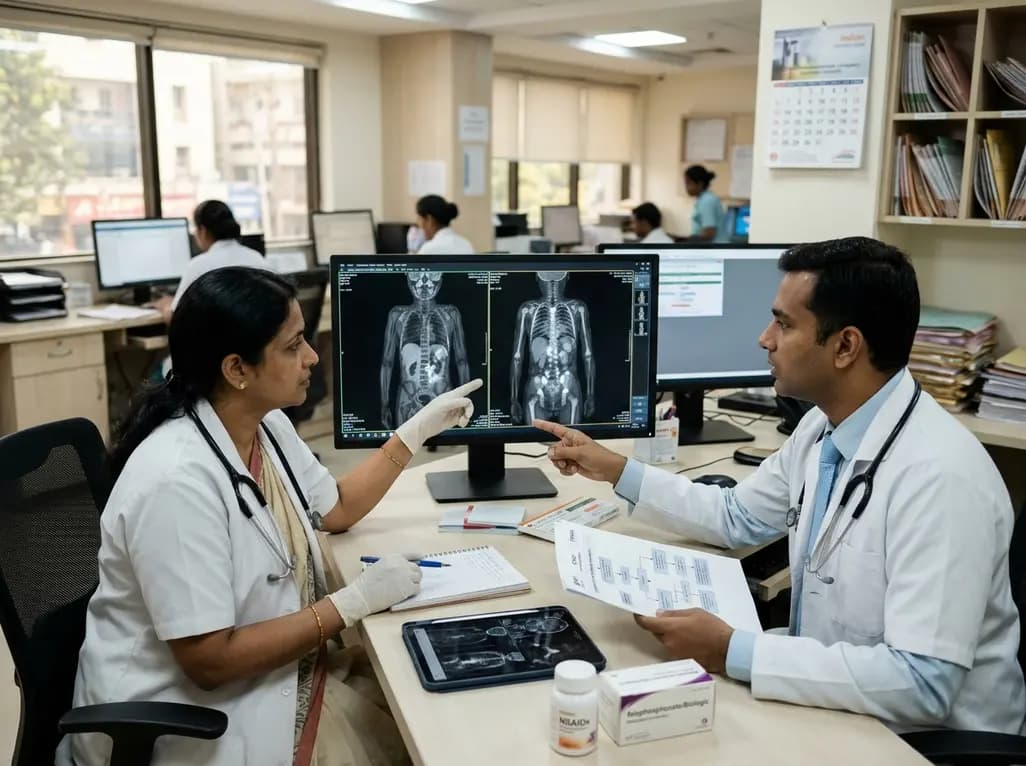
Chronic nonbacterial osteomyelitis (CNO) is a pediatric autoinflammatory bone disorder. This review covers the French protocol, emphasizing whole-body MRI as the diagnostic gold standard, prudent biopsy avoidance, first-line NSAID treatment, and second-line biologic or bisphosphonate therapies for spinal lesions.
Today
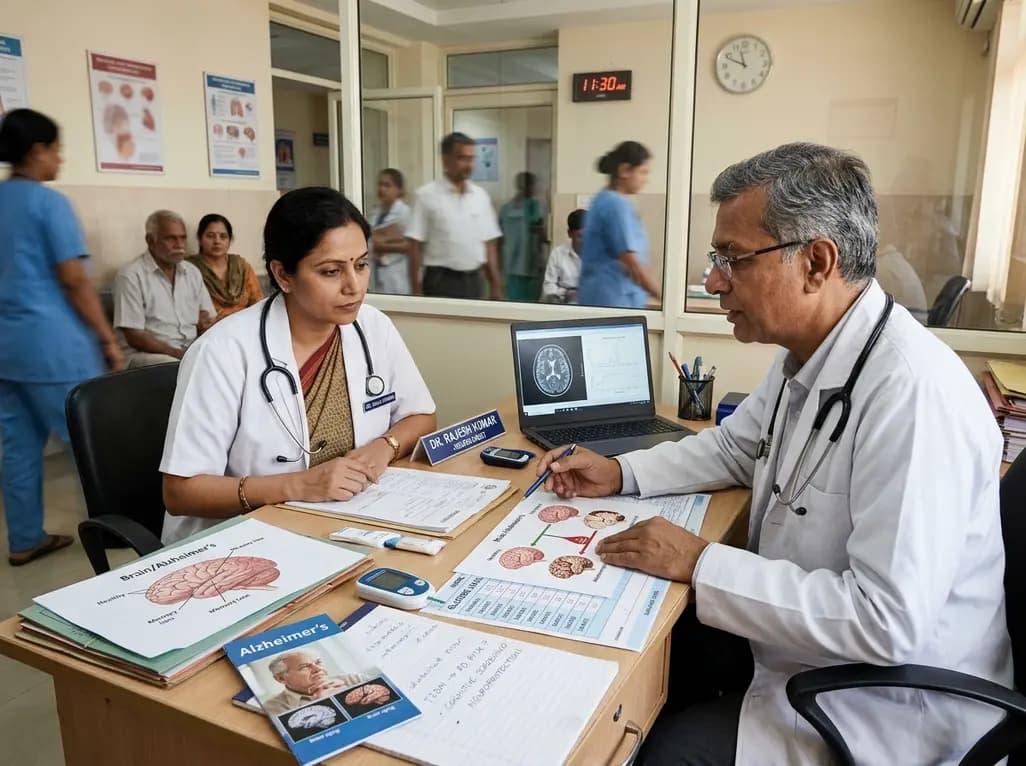
A comprehensive systematic review of 40 studies covering 27 million participants confirms that individuals with type 2 diabetes face a 53% higher risk of Alzheimer's disease. Clinicians must actively prioritize early cognitive screening, glycemic stability, and neuroprotective interventions in routine metabolic care.
Today
