.webp&w=384&q=75)

Loading, please wait...
Loading, please wait...
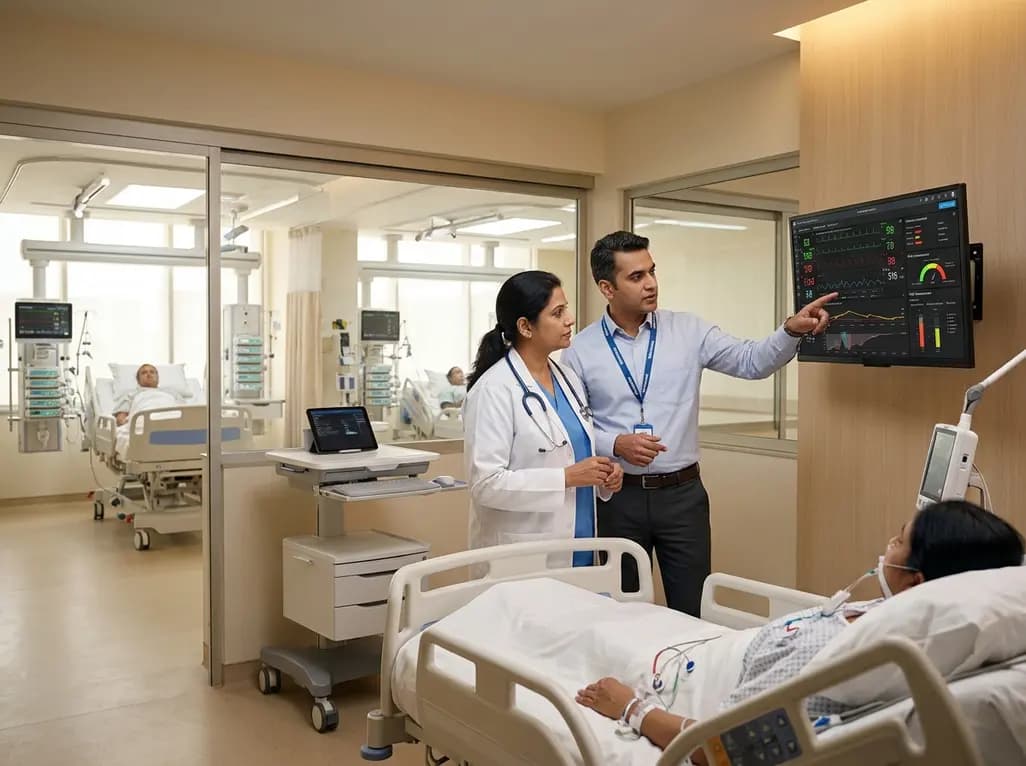
The critical care landscape in India is undergoing a major digital transformation. Recently, Medtronic and Apollo Hospitals announced a strategic partnership to launch a state-of-the-art ICU of the future at Apollo Hospitals, Jubilee Hills, Hyderabad. This advanced 11-bed intensive care unit integrates sophisticated medical technology with clinical workflows to improve bedside decision-making. Consequently, clinicians can now leverage real-time data to intervene more rapidly during patient crises.
Historically, traditional intensive care units have operated with isolated monitors that require nursing staff to compile vital statistics manually. However, the newly established ICU of the future changes this dynamic by establishing a fully integrated ecosystem of connected healthcare technologies. Specifically, Medtronic’s Acute Care & Monitoring systems aggregate continuous patient data into a single, intuitive interface. This seamless connectivity ensures that intensivists no longer need to piece together clinical information from separate screens. Consequently, the clinical team can detect early signs of physiological decline before they progress to life-threatening complications. Furthermore, this automated data stream significantly reduces the cognitive workload on the nursing staff, letting them focus on direct bedside patient care. Therefore, the integration of smart monitors directly enhances overall clinical safety and patient outcomes. Additionally, the clinical workflow becomes much more responsive and synchronized, which is highly beneficial during sudden clinical emergencies. Ultimately, this innovative model sets a new standard for modern intensive care design across India, raising the clinical benchmark. By standardizing patient monitoring and data collection, this facility reduces errors and supports clinical excellence. This ensures the patient receives unparalleled and highly coordinated medical attention.
The launch of this advanced clinical unit was formalized through a strategic partnership between two healthcare giants. Specifically, Dr. Sangita Reddy, Joint Managing Director of Apollo Hospitals Group, and Mandeep Singh Kumar, Vice President of Medtronic India Subcontinent, drove this collaboration. Together, they aim to create an ecosystem where real-world clinical experience directly guides technology development. Moreover, this partnership ensures that Indian patients gain immediate access to state-of-the-art global medical advancements. Indeed, critical care is a demanding discipline where every single second and every minor intervention can alter clinical outcomes. Therefore, combining Apollo's vast clinical experience with Medtronic's engineering excellence creates a solid foundation for continuous innovation. In addition, this initiative serves as a living laboratory for testing next-generation clinical workflows in actual high-volume clinical settings. Consequently, this joint effort will likely influence standard operating procedures in intensive care units across the entire country. By aligning corporate resources with clinical needs, both partners are setting a powerful example. Ultimately, this joint model demonstrates that the future of medicine relies on strong clinical partnerships. This synergy will inspire future healthcare developments globally.
At the technological core of this futuristic unit are Medtronic’s Acute Care & Monitoring solutions. Specifically, these technologies utilize sophisticated algorithms to analyze real-time patient metrics, including respiratory parameters and hemodynamic changes. Furthermore, the system incorporates predictive analytics that alert clinicians to subtle trends indicative of rapid physical decline. Consequently, medical teams can initiate preventive interventions hours before traditional alarms would normally sound. Additionally, these connected systems facilitate centralized monitoring, which enables senior intensivists to supervise multiple critically ill patients simultaneously. This centralized approach is highly beneficial in busy clinical environments where specialized resources are stretched thin. However, the technology does not aim to replace human expertise; rather, it seeks to enhance the decision-making of the healthcare workforce. Through this integration, clinical teams can avoid alarm fatigue, which is a common challenge in traditional intensive care settings. Ultimately, this synthesis of high-tech monitoring and human judgment creates a highly reliable safety net for patients undergoing complex therapies. As a result, bedside clinicians can react to physiological alterations before they manifest as critical situations. Indeed, it establishes a reliable paradigm of care. This system significantly minimizes the chances of critical oversight.
Indian hospitals encounter several clinical challenges, including high patient caseloads, diverse disease presentations, and an increasing prevalence of severe chronic illnesses. Therefore, the critical care infrastructure must progress rapidly to manage these complex scenarios. The advanced ICU facility at Jubilee Hills addresses these requirements directly by streamlining medical operations and enhancing clinician efficiency. Moreover, the integration of digital clinical tools allows for personalized therapy protocols adapted to each patient's physiological state. For example, clinical teams can manage mechanical ventilation and fluid balance with exceptional accuracy using automated feedback loops. In addition, this technological advancement supports shorter patient stays in intensive care units. As a result, hospitals can optimize bed availability, thereby improving healthcare accessibility for the broader community. Consequently, this model offers a highly sustainable solution to the growing demand for advanced tertiary care in urban centers. Indeed, standardizing high-quality monitoring ensures that clinical excellence remains consistent across all patient beds. Ultimately, investing in such intelligent critical care frameworks is crucial for building a strong healthcare system in India. Furthermore, it establishes a reliable paradigm. This replication could revolutionize state-level critical care infrastructure.
Beyond immediate patient treatment, this advanced ICU serves as a vital real-world innovation hub. Specifically, this clinical environment allows Medtronic's research and development teams to observe operational performance in everyday practice. By studying how clinicians interact with monitoring software, engineers can identify practical limitations and create more intuitive solutions. Furthermore, this structured collaboration accelerates the design of next-generation critical care tools. Significantly, these technologies aim to serve both the domestic Indian healthcare market and global medical systems. In addition, medical investigators at Apollo can utilize this secure data to conduct high-quality clinical studies. Consequently, this innovation hub will generate robust evidence to help refine future medical guidelines over the next decade. Therefore, this partnership is not merely a commercial contract; it is a profound scientific effort that highlights clinical research in India. Ultimately, the unique insights gathered from this unit will help make critical care more proactive, safer, and adaptable. By translating clinical data into actionable developments, the partnership helps shape the global future of hospital medicine. As a result, Indian clinicians are now playing a direct role in creating global healthcare technologies. This positions the country at the forefront of medical technology research.
Q1: What is the primary purpose of the 'ICU of the Future' launched by Medtronic and Apollo Hospitals?
The primary purpose of this collaborative initiative is to strengthen India's critical care infrastructure by integrating advanced digital technologies with clinical workflows. Specifically, this facility utilizes Medtronic’s Acute Care & Monitoring systems to provide real-time patient data. Consequently, this integration supports clinicians in making faster, more informed decisions, thereby improving patient clinical outcomes and overall critical care delivery.
Q2: How do the integrated technologies in this advanced ICU help in early patient deterioration detection?
The system leverages Medtronic's sophisticated Acute Care & Monitoring solutions to track vital physiological parameters. Furthermore, these connected technologies utilize smart predictive algorithms to analyze trends in clinical signs. By highlighting subtle shifts that indicate physiological decline, the system alerts clinical teams. As a result, doctors can implement preventive measures before the patient's condition becomes highly critical.
Q3: How does this partnership impact the development of next-generation critical care technologies?
Beyond clinical care, this advanced ICU serves as a real-world clinical innovation hub. Specifically, Medtronic's research teams collaborate closely with Apollo’s clinicians to gain practical insights from practice. This clinical feedback helps identify operational gaps and informs the development of smarter tools. Ultimately, this collaborative research aims to create next-generation technologies that support healthcare professionals globally.
Disclaimer: This content is for informational and educational purposes only. It does not constitute medical advice or replace professional judgment. Refer to the latest local and national guidelines for clinical practice.
References

Read summarized clinical updates, watch expert medical content, and earn CME certifications right from your smartphone.
Open your smartphone camera to scan and install.





Apollo Hospitals, Jubilee Hills, Hyderabad, has partnered with Medtronic to inaugurate an 11-bed 'ICU of the Future.' Integrated with advanced Acute Care & Monitoring (ACM) technologies, this facility supports clinical decision-making, early deterioration detection, and personalized critical care.
3 months ago
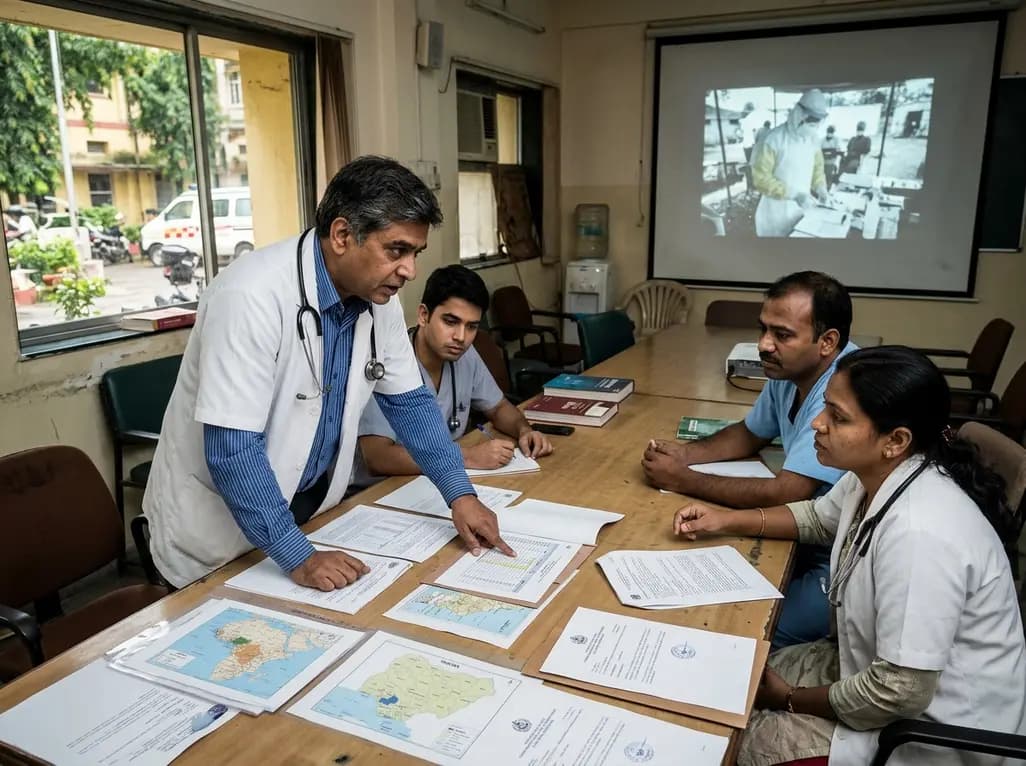
Following Nigeria's first recorded Ebola case linked to regional travel, the Africa CDC has convened an emergency ministerial summit. This alert underscores critical clinical priorities for healthcare professionals, including differentiating early viral infection from malaria, implementing barrier nursing, and triage.
Today

Leucine Rich Bio has introduced South Asia's first comprehensive vaginal microbiome test, BugSpeaks. By profiling microbial dysbiosis, pathogens, and antimicrobial resistance, this next-generation diagnostic platform provides clinicians with deeper insights into recurrent infections, fertility, and reproductive health.
Today

Review how tailored exercise programs benefit frail older patients with heart failure. Explore pathophysiological mechanisms, individualized training prescriptions, and strategies to overcome adherence barriers in clinical practice.
Today

This comparative study evaluates posterior labral tears with and without glenohumeral instability, highlighting distinct demographic patterns, MRI underestimation in stable shoulders, and successful arthroscopic repair outcomes.
Today

A clinical study demonstrates that early intervention with tocilizumab, either as monotherapy or bridged with corticosteroids, achieves significant proptosis reduction and resolves active inflammation in treatment-naive thyroid eye disease.
Today
