.webp&w=384&q=75)

Loading, please wait...
Loading, please wait...
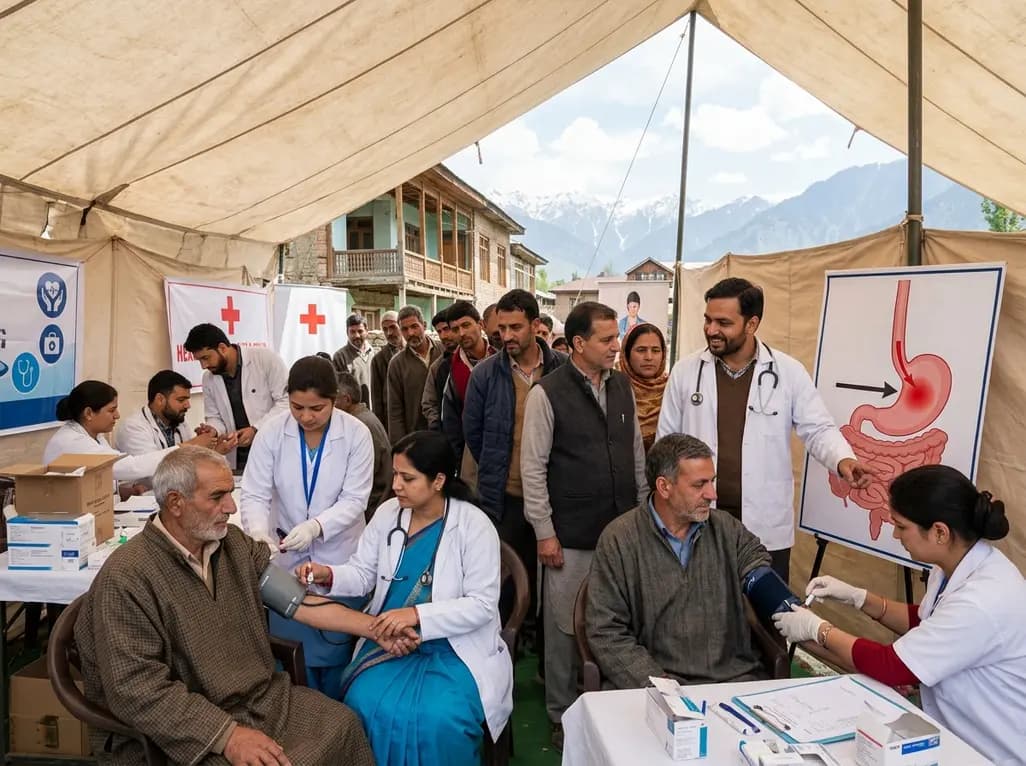
The ICMR has introduced a major health program to tackle unique oncological challenges in Jammu and Kashmir. Specifically, this initiative addresses the high prevalence of gastrointestinal malignancies in the region by implementing organized stomach cancer screening. India records over 14 lakh cancer cases annually. Meanwhile, Jammu and Kashmir reported over 67,000 cases from 2018 to 2024. Consequently, local health authorities are prioritizing early detection to curb rising mortality rates.
The Kashmir Valley faces a highly distinct cancer profile compared to the rest of India. While breast and lung cancers dominate nationwide, gastrointestinal malignancies represent the primary concern in this region. Particularly, stomach cancer shows exceptionally high prevalence rates, followed closely by esophageal and colorectal cancers. Doctors attribute this trend to traditional dietary habits, widespread Helicobacter pylori infections, high tobacco consumption, and genetic factors. Furthermore, sedentary lifestyles and rising obesity rates worsen the regional burden. Therefore, clinicians must maintain a high index of suspicion when evaluating local patients with persistent dyspepsia.
To address this threat, the ICMR has invited local research teams to test a scalable community screening model. This four-year project integrates screening services directly into the public healthcare infrastructure. Specifically, the initiative defines target age groups for different cancers to optimize resources. Additionally, the guidelines establish clear eligibility criteria. First, adults aged 40 years and above will undergo gastrointestinal screening. Second, oral cancer screening covers adults aged 18 years and older. Third, women aged 30 years and above are eligible for breast screenings. Finally, sexually active women aged 30 to 60 years will undergo cervical screening. Consequently, these structured protocols aim to catch malignancies early.
Healthcare workers will actively mobilize communities to maximize screening participation. Patients who test positive will be directly linked to tertiary care services for immediate treatment. Moreover, this model will eventually merge into the National Programme for Prevention and Control of Non-Communicable Diseases (NP-NCD). Therefore, the project holds the potential for scalability across the entire territory. Ultimately, early diagnosis is the most powerful tool to reduce cancer mortality.
Q1: Why is stomach cancer screening being prioritized specifically in Jammu and Kashmir?
Jammu and Kashmir, particularly the Kashmir Valley, faces a high burden of gastrointestinal cancers. A combination of traditional dietary practices, Helicobacter pylori infection, tobacco use, and genetic susceptibility contributes to this distinct epidemiological challenge.
Q2: What is the age eligibility for gastrointestinal cancer screening under this ICMR initiative?
Under the new guidelines, screening for gastrointestinal cancers is recommended for adults aged 40 years and above.
Q3: How long is the ICMR implementation research project planned to run?
This is a four-year implementation research project. It aims to develop a scalable, evidence-based prevention and early detection model that can be integrated into the National Programme for Prevention and Control of Non-Communicable Diseases (NP-NCD).
Disclaimer: This content is for informational and educational purposes only. It does not constitute medical advice or replace professional judgment. Refer to the latest local and national guidelines for clinical practice.
References

Read summarized clinical updates, watch expert medical content, and earn CME certifications right from your smartphone.
Open your smartphone camera to scan and install.





ICMR has launched a major cancer screening initiative in J&K to combat the high burden of stomach and gastrointestinal cancers through public healthcare....
4 months ago

As monsoon seasons elevate arboviral disease threats, Tamil Nadu has initiated an ICMR-monitored evaluation of the tetravalent dengue vaccine in Tenkasi district. Clinicians emphasize clinical monitoring, public prevention, and high-quality early pediatric care to reduce disease morbidity across endemic regions.
Today

Leucine Rich Bio has introduced South Asia's first comprehensive vaginal microbiome test, BugSpeaks. By profiling microbial dysbiosis, pathogens, and antimicrobial resistance, this next-generation diagnostic platform provides clinicians with deeper insights into recurrent infections, fertility, and reproductive health.
Today

Review how tailored exercise programs benefit frail older patients with heart failure. Explore pathophysiological mechanisms, individualized training prescriptions, and strategies to overcome adherence barriers in clinical practice.
Today

This comparative study evaluates posterior labral tears with and without glenohumeral instability, highlighting distinct demographic patterns, MRI underestimation in stable shoulders, and successful arthroscopic repair outcomes.
Today

A clinical study demonstrates that early intervention with tocilizumab, either as monotherapy or bridged with corticosteroids, achieves significant proptosis reduction and resolves active inflammation in treatment-naive thyroid eye disease.
Today
