.webp&w=384&q=75)

Loading, please wait...
Loading, please wait...

Managing locally advanced hypopharyngeal squamous cell carcinoma (HSCC) remains a significant challenge for oncologists in India. Understanding the nuances of hypopharyngeal cancer prognosis is essential for personalized treatment planning and risk stratification. A recent retrospective study analyzed data from 1,591 patients in the SEER database to evaluate survival outcomes. Researchers aimed to create a robust predictive model that incorporates key clinical variables and treatment modalities.
The study utilized X-tile software to establish optimal cutoff points for continuous variables. Furthermore, Kaplan-Meier analysis revealed that overall survival (OS) and cancer-specific survival (CSS) vary significantly depending on the primary tumor site. Consequently, clinicians must consider the specific subsite of the hypopharynx when counseling patients. This site-specific approach allows for more nuanced clinical discussions.
The investigators identified 13 independent prognostic factors through stepwise Cox regression analysis. These factors include age, race, marital status, and tumor grade, alongside the T, N, and M stages. Additionally, the type of treatment—such as surgery, radiotherapy, and systemic therapy—played a critical role in the final survival model. The resulting nomogram demonstrated a concordance index (C-index) of 0.727 in both training and validation sets. This suggests moderate to high accuracy in predicting long-term outcomes for patients with locally advanced disease.
Model validation showed consistent results across different patient cohorts. The area under the receiver operating characteristic curve (AUC) for 1-, 3-, and 5-year overall survival remained near 0.79. Moreover, decision curve analysis (DCA) indicated that the nomogram offers a superior net benefit compared to the traditional TNM staging system alone. Therefore, this tool could serve as a valuable supplementary reference in clinical practice. However, doctors should note that external validation in diverse populations is necessary before widespread adoption.
Independent risk factors include age, tumor site, T/N/M stage, and treatment type. Social factors like marital status also influenced survival outcomes in the SEER study.
According to the researchers, the nomogram provides better prognostic accuracy and clinical utility than TNM staging alone. It incorporates systemic therapy and primary site data, which TNM staging may overlook.
Survival rates differ significantly across the three main subsites: the pyriform sinus, post-cricoid area, and posterior pharyngeal wall. Site-specific analysis is crucial for determining the most effective treatment strategy.
Disclaimer: This content is for informational and educational purposes only. It does not constitute professional medical advice, diagnosis, or treatment. Always seek the advice of your physician or other qualified health provider with any questions you may have regarding a medical condition. Refer to the latest local and national guidelines for clinical practice.
References
1. Zhu H et al. Comparison of survival and establishment of prognostic models for patients with locally advanced squamous cell carcinoma of the hypopharynx at different sites: A retrospective study based on the SEER database. Sci Prog. 2026 undefined undefined. doi: 10.1177/00368504261441371. PMID: 41922929.
2. Gupta T, et al. Clinical profile and treatment outcome of squamous cell carcinoma hypopharynx: a retrospective analysis. Int J Acad Med Pharm. 2023.
3. Sharma S, et al. A Survival Analysis of Hypopharyngeal Cancer Patients: A Hospital-Cancer registry Based Study. Indian J Surg Oncol. 2021.

Read summarized clinical updates, watch expert medical content, and earn CME certifications right from your smartphone.
Open your smartphone camera to scan and install.





This study develops a 13-factor prognostic nomogram for locally advanced HSCC, offering superior accuracy over traditional TNM staging for survival predicti...
6 months ago

A landmark 12-year longitudinal study highlights significant reductions in opioid prescribing for nonspecific low back pain following clinical guidelines and prescription monitoring systems, emphasizing non-opioid multimodal pain care.
Today
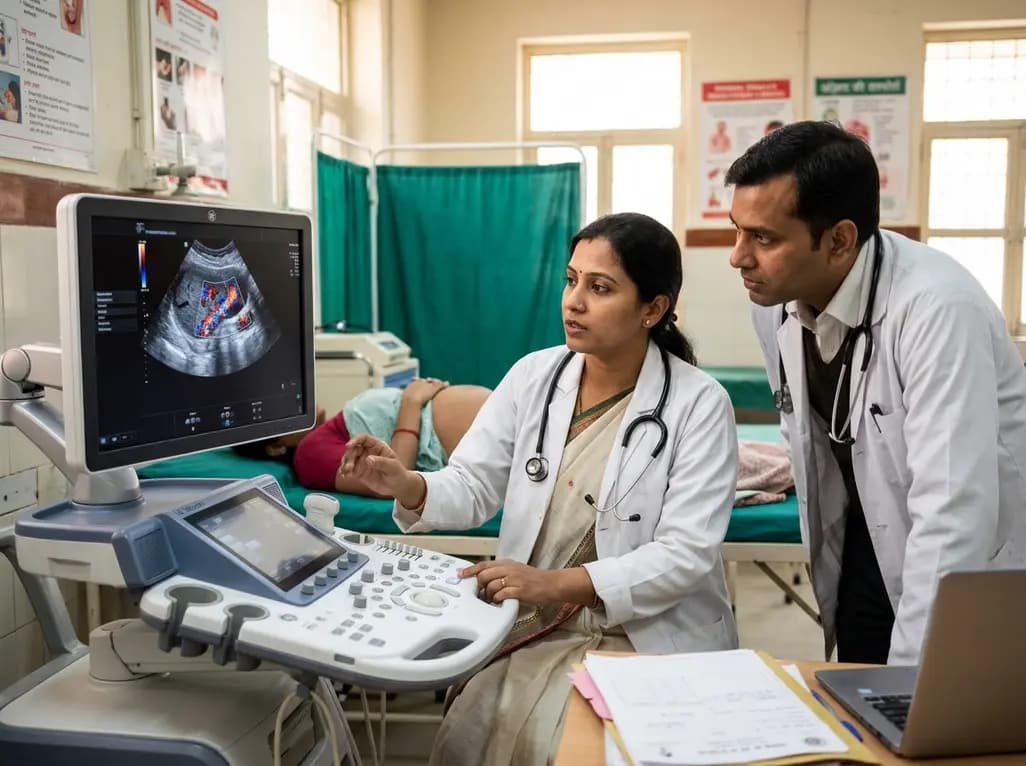
A study in Ultrasound in Obstetrics & Gynecology shows that quantitative vascularization of the anterior fornix/cervix with transvaginal ultrasound reliably identifies placenta accreta spectrum and predicts severe intraoperative hemorrhage, offering vital objective risk stratification.
Today
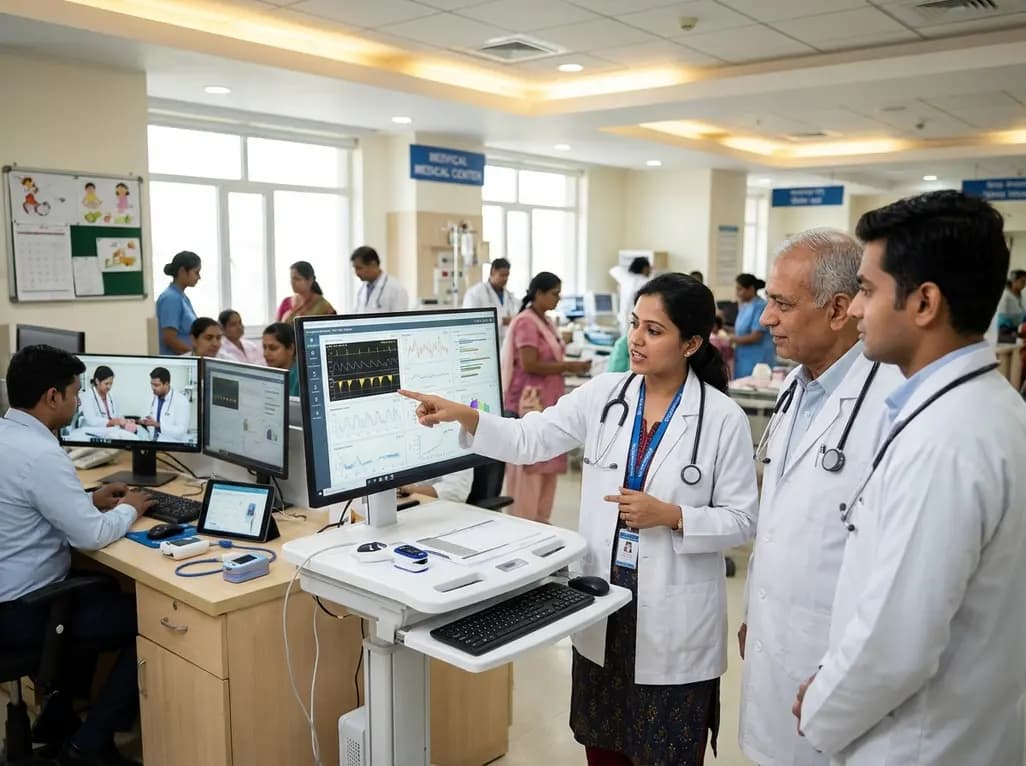
A landmark study details how an enterprise pediatric remote patient management model expanded from a single cardiology pilot to 16 diverse specialty programs by combining centralized digital operations with specialty clinical leadership.
Yesterday
A breakthrough study shows that 3D-planned corrective osteotomy successfully resolves distal radioulnar joint instability in pediatric diaphyseal forearm malunions. The precise osseous realignment eliminates chronic wrist pain and restores joint function without requiring secondary soft-tissue reconstruction.
Today

Protein O-GlcNAcylation couples cellular nutrient status to vital neuronal functions. This review explores how disrupted O-GlcNAc cycling drives both neurodevelopmental delays and neurodegenerative cascades, positioning metabolic post-translational modifications as therapeutic targets in clinical neurology.
Today
