.webp&w=384&q=75)

Loading, please wait...
Loading, please wait...

Glioblastoma multiforme remains one of the most lethal central nervous system malignancies worldwide. Despite gross total resection followed by standard chemoradiation, almost all patients experience tumor relapse. Consequently, preventing postoperative glioblastoma recurrence remains a critical therapeutic challenge for neurosurgeons and neuro-oncologists. Infiltrating glioma cells penetrate deeply into surrounding brain parenchyma, escaping surgical margins and resisting cytotoxic therapies. Furthermore, the postoperative cavity harbors a profoundly immunosuppressive microenvironment that shields residual neoplastic cells from host surveillance. A multidisciplinary team has engineered an in situ injectable biomaterial hydrogel to counter these mechanisms directly within the resection cavity. This platform delivers synergistic chemo-immunotherapy that mobilizes innate and adaptive immune defenses against microscopic residual disease.
Surgical resection provides immediate cytoreduction, yet microscopic margins invariably retain malignant glioblastoma cells. These infiltrative cells quickly re-establish local tumors because conventional systemic chemotherapies fail to penetrate the blood-brain barrier effectively. In addition, neurosurgical trauma creates a wound-healing cascade rich in immunosuppressive cytokines such as transforming growth factor-beta and interleukin-10. This hostile microenvironment paralyzes local cytotoxic lymphocytes and recruits myeloid-derived suppressor cells. Therefore, systemic therapies struggle to eradicate residual foci before aggressive relapse occurs. Clinicians urgently require localized delivery systems that sustain therapeutic drug concentrations directly at surgical margins without systemic toxicity. By converting the surgical bed into an active immunological zone, local interventions can eradicate dispersed glioma stem cells. Consequently, biomaterial engineering offers unprecedented opportunities to transform post-surgical cavities into potent anticancer centers.
The newly developed system relies on an injectable, photo-crosslinkable carboxymethyl chitosan hydrogel, designated si-HAX1&Quercetin@Gel. This biocompatible hydrogel polymerizes rapidly upon light exposure to conform seamlessly to irregular cavity walls. Following local delivery, the matrix slowly releases small interfering RNA targeting HCLS1-associated protein X-1 (si-HAX1) alongside the natural flavonoid quercetin. Silencing HAX1 severely disrupts mitochondrial integrity and calcium balance, thereby producing profound endoplasmic reticulum stress in residual glioma cells. This targeted stress response induces immunogenic cell death, characterized by surface translocation of calreticulin. Extracellular calreticulin functions as a critical pro-phagocytic signal that alerts regional antigen-presenting cells. Concurrently, quercetin acts as a small-molecule antagonist of the CD47-SIRPα axis. By neutralizing CD47, quercetin dismantles the prominent antiphagocytic barrier that glioma cells erect against immune attack.
Tumor-associated macrophages and brain-resident microglia constitute a substantial portion of glioblastoma tissue. Unfortunately, immunosuppressive signals polarize these myeloid cells into an anti-inflammatory M2 phenotype that fosters angiogenesis and immune evasion. The hydrogel intervention reverses this polarization effectively. Because quercetin inhibits CD47-SIRPα engagement while si-HAX1 exposes calreticulin, tissue macrophages actively engulf stressed neoplastic cells. Consequently, this coordinated approach shifts the tumor microenvironment toward a proinflammatory M1 macrophage state. These activated M1 cells secrete tumor necrosis factor-alpha and interleukin-12, promoting robust inflammatory responses. Furthermore, enhanced phagocytosis accelerates tumor antigen processing and cross-presentation. As a result, the hydrogel facilitates the recruitment and activation of CD8-positive cytotoxic T lymphocytes. Therefore, local therapy re-educates the hostile tumor bed into an immune-competent zone that actively restrains tumor regrowth.
Systemic immune checkpoint inhibitors targeting the programmed cell death protein 1 pathway have largely yielded disappointing results in glioblastoma clinical trials. This resistance stems primarily from profound T-cell exhaustion and deficient neoantigen presentation within cold intracranial tumors. Notably, the si-HAX1&Quercetin@Gel platform successfully overcomes this fundamental barrier. In preclinical models, the localized hydrogel therapy elevated interferon-gamma production and up-regulated major histocompatibility complex molecules. This immunogenic conversion resensitized residual glioma cells to intratumorally administered anti-PD-1 antibodies. When combined with checkpoint blockade, the hydrogel triggered robust clonal expansion of effector T cells. Consequently, this synergistic regimen prolonged median survival times and eradicated established residual micro-tumors without adverse neurotoxicity. These preclinical findings substantiate localized combinatorial immunotherapy as an attractive paradigm for recurrent intracranial malignancies.
Integrating localized drug-eluting hydrogels into neurosurgical workflows offers distinct clinical advantages. During craniotomy, surgeons can apply the liquid hydrogel precursor directly into the resection cavity after achieving complete hemostasis. Rapid photo-crosslinking ensures stable adherence to brain margins without elevating intracranial pressure or inducing mass effect. Furthermore, the localized sustained-release profile minimizes systemic exposure, thereby eliminating off-target toxicities common to systemic CD47 inhibitors. In developing healthcare ecosystems such as India, neurosurgical oncology centers manage substantial cohorts of high-grade glioma patients. Implementing cost-effective, locally administered biomaterials could markedly reduce chemotherapy toxicity and optimize inpatient resources. However, researchers must conduct rigorous clinical trials to validate hydrogel degradation kinetics, long-term biocompatibility, and safety before routine bedside deployment.
Glioma cells frequently upregulate surface CD47 to engage signal regulatory protein alpha on macrophages, transmitting an inhibitory signal that prevents phagocytosis. Neutralizing this axis removes the protective shield, allowing innate immune cells to recognize and consume malignant cells efficiently. Consequently, targeting CD47 stimulates myeloid-driven antitumor responses while promoting downstream T-cell activation within the central nervous system.
Excessive endoplasmic reticulum stress overwhelms the unfolded protein response, inducing severe cellular damage that forces tumor cells to undergo immunogenic cell death. Stressed glioma cells translocate calreticulin to their outer membranes and secrete high-mobility group box 1 protein. These damage-associated molecular patterns signal dendritic cells and macrophages to capture, process, and present tumor antigens to cytotoxic lymphocytes.
Systemic immunotherapeutics frequently struggle to penetrate the blood-brain barrier and can induce systemic autoimmune adverse effects, such as anemia. In contrast, in situ photo-crosslinkable hydrogels achieve high local drug concentrations directly inside the resection cavity. This localized delivery provides prolonged therapeutic activity at tumor margins while sparing healthy peripheral tissues from destructive immunological and cytotoxic toxicities.
Disclaimer: This content is for informational and educational purposes only and should not be considered medical advice. Always consult a qualified healthcare provider for diagnosis and treatment decisions. Refer to the latest local and national guidelines for clinical practice.
References
Guan X et al. Dual-Targeting of ER Stress and the CD47-SIRPα Axis via an In Situ Hydrogel Prevents Postoperative Glioblastoma Recurrence. Small. 2026 Oct 04. doi: 10.1002/smll.76032. PMID: 42829868.
Hutter G et al. Microglia are effector cells of CD47-SIRPα antiphagocytic-axis disruption against glioblastoma. Proc Natl Acad Sci USA. 2019;116(3):997-1006. doi: 10.1073/pnas.1721434116.
Gao X et al. Dual-sensitive drug-loaded hydrogel system for local inhibition of post-surgical glioma recurrence. J Control Release. 2022;349:578-591. doi: 10.1016/j.jconrel.2022.07.011.

Read summarized clinical updates, watch expert medical content, and earn CME certifications right from your smartphone.
Open your smartphone camera to scan and install.





A novel injectable hydrogel combines si-HAX1 and quercetin to trigger immunogenic cell death and block CD47, preventing postoperative glioblastoma recurrence and sensitizing residual brain tumors to immunotherapy.
Today

Following 37,899 reported cases and 9 deaths, Odisha has scaled up active case detection, rapid diagnostic testing, and vector control across high-burden districts. Here is a comprehensive clinical breakdown of the state's aggressive containment protocols, diagnostic pathways, and targeted field management.
Today

Endometriosis affects millions of women across India, yet diagnostic delays frequently exceed five years. Recent multi-centre genomic research has identified 21 novel genetic regions, notably on chromosome 13, establishing crucial population-specific insights to transform clinical screening and therapeutic strategies.
Today
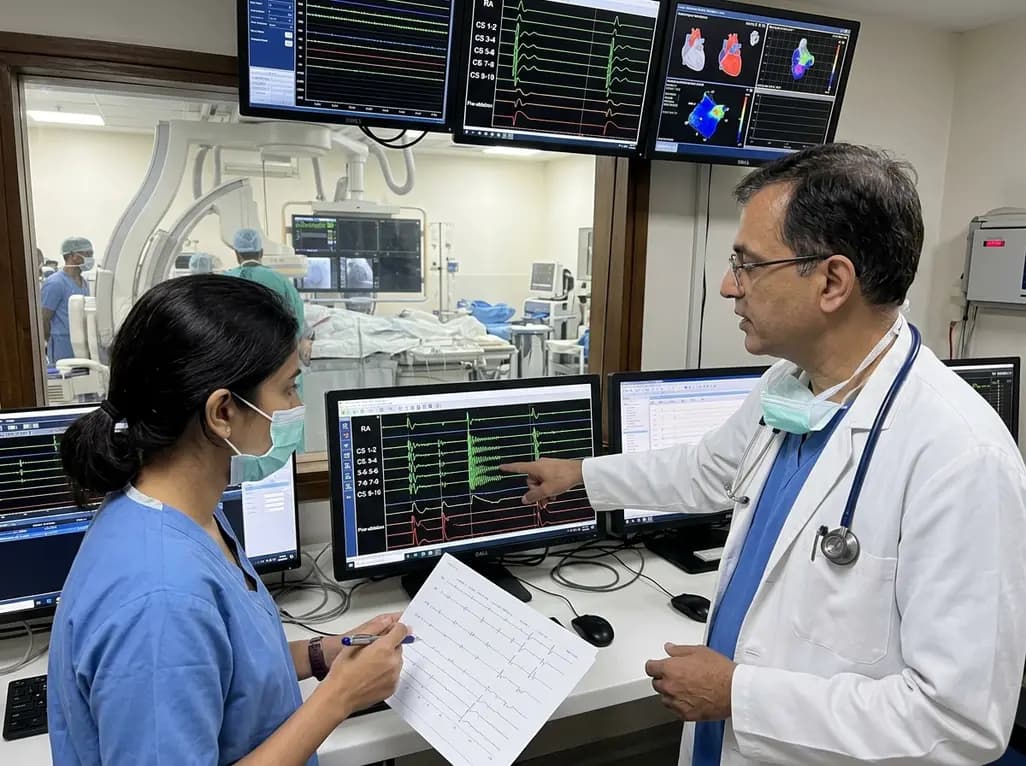
Radiofrequency catheter ablation of the cavotricuspid isthmus successfully terminates typical atrial flutter. This article reviews the mechanisms driving coronary sinus electrogram changes, wavefront activation pathways, and clinical criteria to verify bidirectional block during electrophysiology studies.
Today

A study comparing four knee flexion strength tests after ACL reconstruction using hamstring tendon autografts reveals marked variability in limb symmetry indices. Clinicians must recognize that different strength testing modalities yield divergent return-to-sport clearance rates.
Today

Discover how to identify superimposed entrapment neuropathy in diabetic patients. This review details clinical evaluation, surgical decompression evidence, and a structured algorithm for primary care referrals to prevent ulcers and preserve limb function.
Yesterday
