.webp&w=384&q=75)

Loading, please wait...
Loading, please wait...
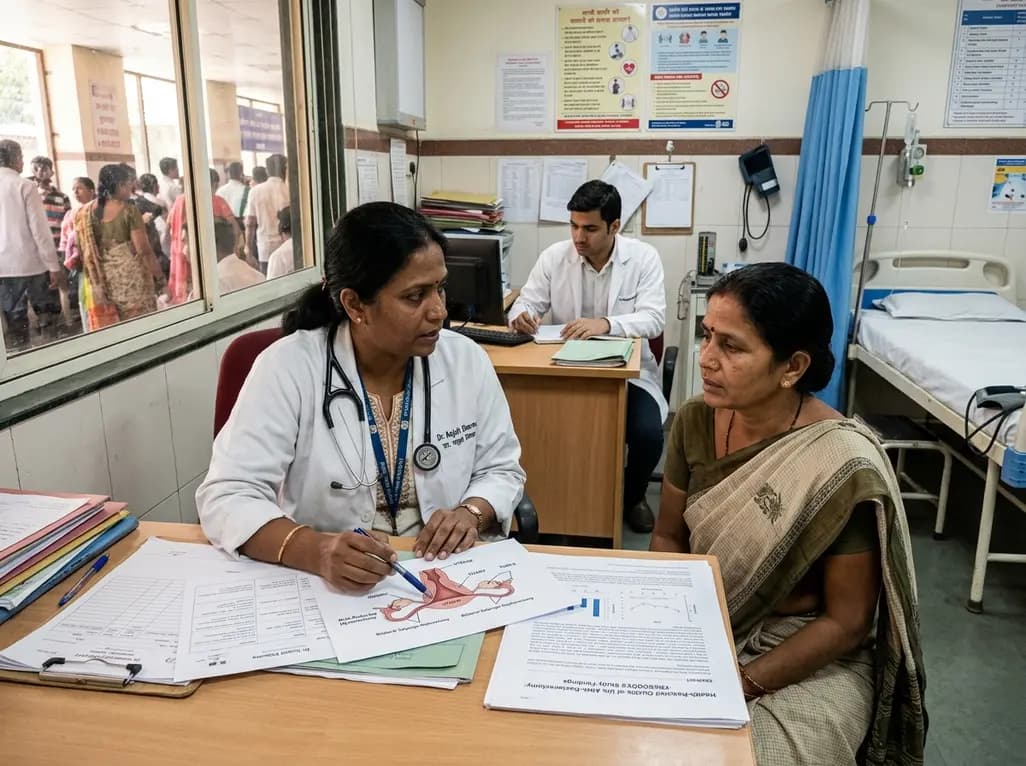
Endometrial cancer represents a major oncological concern for women worldwide, especially those carrying high-risk genetic mutations such as Lynch syndrome. Consequently, undergoing a risk-reducing hysterectomy offers an exceptional level of protection against malignant transformation in the uterine lining. However, deciding to undergo preventive surgery requires a nuanced understanding of both oncology outcomes and post-operative quality of life. Furthermore, clinical counseling must balance long-term oncological safety against the physical, emotional, and hormonal changes associated with surgical organ removal. Because premenopausal patients face unique physiological considerations, clinicians must thoroughly evaluate how surgical intervention alters daily functional status and emotional health. Recent health-economic research emphasizes the importance of health-related utility scores (HRUS) to quantify quality-of-life trade-offs accurately. Ultimately, understanding patient-reported utility values allows healthcare providers to optimize shared decision-making frameworks. This enables women to weigh cancer risk reduction directly against potential surgical sequelae and recovery challenges.
To quantify post-operative quality of life, researchers conducted part two of the landmark Preventing Endometrial-Cancers: Comparing Risk-Reducing Strategies (PRESCORES) study. This UK-based randomized vignette study recruited 1001 women from the general population to evaluate specific health states using the standardized EQ-5D evaluation tool. Specifically, four detailed postoperative health vignettes were meticulously constructed for a hypothetical 40-year-old healthy woman. These vignettes described health states following risk-reducing hysterectomy alone or combined with bilateral salpingo-oophorectomy (BSO) at two distinct time points: one month and one year post-surgery. Subsequently, participants valued these detailed descriptions, generating health utility scores that were adjusted against age-matched and sex-matched general population reference values. Furthermore, researchers utilized ordinary least squares regression combined with non-parametric bootstrapping to explore associations between clinical variables. This robust methodology provided objective, population-derived utility values essential for subsequent health-economic modeling and personalized risk counseling.
The trial demonstrated distinct patterns in utility scores across the four evaluated postoperative health states. Specifically, at one year post-surgery, women undergoing risk-reducing hysterectomy alone achieved a mean utility score of 0.942, reflecting an almost complete recovery to baseline health status. In contrast, those undergoing combined hysterectomy and bilateral salpingo-oophorectomy scored 0.841 at one year, highlighting a persistent detriment to health-related quality of life. Conversely, short-term evaluations at one month post-op revealed lower utility values of 0.670 for hysterectomy alone and 0.733 for combined surgery. Interestingly, the initial utility drop at one month underscores the transient physical recovery phase, whereas the one-year scores capture stable, long-term health outcomes. Therefore, comprehensive statistical analysis confirmed significant differences between each group, proving that surgical extent and post-operative recovery duration independently shape health-related quality of life over time.
A major finding of the PRESCORES study lies in the substantial utility score gap between hysterectomy alone and combined oophorectomy at one year. Removing the ovaries triggers abrupt surgical menopause in premenopausal women, causing rapid estrogen deprivation and systemic hormonal disruption. Consequently, patients frequently experience troublesome vasomotor symptoms, sleep disturbances, mood changes, cognitive fluctuations, and elevated long-term risks for osteoporosis and cardiovascular disease. Although combined surgery eliminates both uterine and ovarian cancer risks, the long-term utility score of 0.841 reflects the enduring physical burden of surgical menopause. In contrast, preserving the ovaries during risk-reducing hysterectomy allows premenopausal women to maintain natural endogenous hormone production, yielding a much higher long-term utility score of 0.942. Thus, clinicians must carefully evaluate ovarian preservation when ovarian cancer risk remains low, ensuring preventive strategies do not unnecessarily compromise long-term well-being.
Incorporating health-related utility scores into clinical practice transforms how gynaecologic oncologists approach risk-reducing interventions. For instance, health economists utilize these specific utility values within decision-analytic models to determine the exact lifetime cancer risk threshold where preventive surgery becomes cost-effective. Furthermore, for clinicians in India and globally, these objective metrics offer valuable evidence to guide complex clinical consultations. Rather than relying on subjective assumptions, doctors can present clear, data-driven expectations regarding recovery timelines and hormonal impact. Additionally, understanding that short-term quality of life dips significantly at one month helps patients prepare psychologically for immediate post-operative physical challenges. Ultimately, utilizing standardized utility scores enhances patient trust, bridges the gap between clinical trial research and practical patient management, and fosters personalized treatment strategies aligned with individual patient values.
Effective management of high-risk patients requires a patient-centered approach that balances oncology benefits against individual health priorities. When discussing risk-reducing hysterectomy, physicians should thoroughly explain the expected temporal trajectory of physical recovery and psychological adaptation. Moreover, clinical counseling must address the distinct trade-offs between uterine removal alone and concurrent oophorectomy. For premenopausal women choosing oophorectomy, clinicians should proactively discuss hormone replacement therapy (HRT) to mitigate severe vasomotor symptoms and protect long-term bone and cardiovascular health. Furthermore, integrating non-surgical preventive alternatives, such as levonorgestrel-releasing intrauterine systems, may suit select moderate-risk patients desiring fertility preservation or surgical avoidance. Ultimately, empowering patients with clear utility data enables informed choices, optimizes post-surgical satisfaction, and ensures a consistently high quality of care across gynaecological oncology practices.
A risk-reducing hysterectomy is a preventive surgical procedure designed to remove the uterus before cancer develops. It is primarily recommended for women at high genetic risk for endometrial cancer, such as those with Lynch syndrome or strong family histories. By surgically removing uterine tissue, the procedure effectively eliminates the primary site of endometrial malignancy, providing significant cancer protection and long-term peace of mind for high-risk individuals.
Adding bilateral salpingo-oophorectomy removes both ovaries and fallopian tubes, inducing sudden surgical menopause in premenopausal women. This immediate cessation of estrogen production can trigger severe vasomotor symptoms, mood disturbances, and accelerated bone density loss. Consequently, study findings demonstrate that women undergoing combined oophorectomy report lower long-term health utility scores compared to those retaining their ovaries, highlighting the significant physical trade-offs of premature surgical menopause.
Health-related utility scores provide standardized, quantitative measures of quality of life across different health states and recovery periods. Clinicians and health economists use these values to construct cost-effectiveness models and determine optimal risk thresholds for preventive interventions. Furthermore, utility scores allow healthcare providers to give patients realistic, evidence-based expectations regarding short-term post-operative recovery and long-term well-being, fostering enhanced shared decision-making.
Disclaimer: This content is for informational and educational purposes only, and does not constitute medical advice, diagnosis, or treatment. Healthcare professionals should rely on their professional judgment and refer to the latest local and national guidelines for clinical practice.
References

Read summarized clinical updates, watch expert medical content, and earn CME certifications right from your smartphone.
Open your smartphone camera to scan and install.





A randomized vignette study (PRESCORES) evaluates health-related utility scores after risk-reducing hysterectomy with and without bilateral salpingo-oophorectomy, offering vital quality-of-life insights to guide endometrial cancer prevention and clinical decision-making.
last month

Intestinal lymphatic dysfunction is re-emerging as a fundamental driver of Crohn's disease pathogenesis. Explore how structural remodeling, lymphangitis, and defective clearance shape transmural inflammation and offer novel therapeutic targets.
Today

A school-based intervention using the Health Action Process Approach (HAPA) significantly enhanced adolescents' perceived benefits of consulting healthcare providers and promoted proactive menstrual health behaviors, offering key clinical insights for managing adolescent dysmenorrhea and endometriosis.
Today

A comprehensive analysis of the Translational Maturity Framework for nanomedicine-device combination products, evaluating regulatory complexity, manufacturing hurdles, and clinical readiness across oncology, cardiology, and orthopedics.
Today
A cross-sectional study reveals that sarcopenic obesity independently increases functional impairment and severe disc degeneration in patients with degenerative lumbar spinal stenosis, highlighting the need for body composition assessment.
Today
A landmark dose-response meta-analysis of 8.8 million adults reveals that high ultra-processed food intake significantly elevates risks for cardiovascular disease, cancer, diabetes, depression, and all-cause mortality, highlighting urgent needs for clinical lifestyle interventions.
Today
