.webp&w=384&q=75)

Loading, please wait...
Loading, please wait...
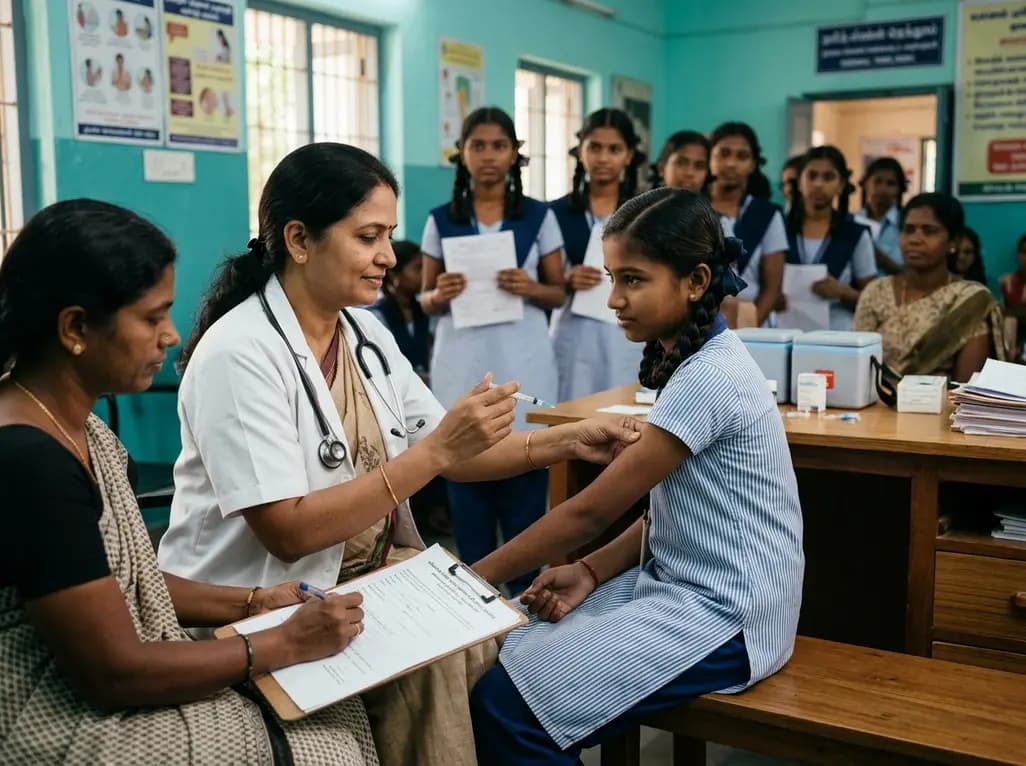
Public health authorities in Tamil Nadu are currently accelerating efforts to protect young adolescents against human papillomavirus infections. The state plans to expand its ongoing HPV vaccination drive to cover seven lakh eligible girls before available doses expire in January 2028. Because eligible adolescents rapidly age out of the national program, healthcare teams are ramping up their daily outreach operations to prevent future cervical cancer cases.
Since early March, public health personnel have successfully delivered approximately 1.15 lakh doses to adolescent beneficiaries across multiple health facilities. However, current administration rates average around 600 injections each day. Consequently, health authorities recognized that this pace cannot exhaust the available inventory before the expiry window closes in January 2028. Therefore, the Directorate of Public Health plans to boost daily immunization quotas to at least 1,500 doses across government clinics. Furthermore, the state has received 5.3 lakh vials from the central pool while supplementing this reserve with state-purchased supplies. Meeting this ambitious delivery objective requires rapid operational adjustments in both urban centers and rural primary healthcare outposts. Clinicians emphasize that timely immunization provides robust, life-long protection against oncogenic viral strains. Additionally, health officials are collaborating closely with local administrative bodies to minimize logistical delays. Dedicated outreach personnel are conducting localized awareness sessions to inform hesitant communities about vaccine availability. As a result, vaccination teams are now actively establishing fixed community sessions and expanding mobile clinic networks to reach every target district effectively.
Under current national guidelines, the free public immunization program exclusively covers girls who have completed 14 years but have not yet turned 15. Consequently, a strict temporal constraint governs this public health rollout. In Tamil Nadu alone, nearly 1,000 adolescent girls celebrate their fifteenth birthday every day. When these individuals turn 15, they immediately age out of the complimentary single-dose initiative. Therefore, program managers are prioritizing adolescent outreach to ensure eligible individuals receive their shot before crossing the cut-off boundary. Meanwhile, state officials have actively consulted renowned global health experts regarding potential solutions for teens who miss the strict cut-off. For instance, former World Health Organization chief scientist Dr. Soumya Swaminathan highlighted that older girls still derive profound biological defense from the vaccine. Specifically, international guidelines from the World Health Organization endorse either a single-dose or two-dose regimen for young women aged 15 through 20 years. Such global scientific consensus demonstrates that older adolescents retain substantial immunological benefits from delayed inoculation. Thus, public health authorities are petitioning central ministries to permit expanded catch-up windows for adolescents who recently aged out.
The urgency behind expanding vaccination coverage directly reflects the alarming oncology metrics documented across the southern state. Specifically, projections from the Tamil Nadu Cancer Registry Project indicate that the state will record 1,00,097 new malignancies in 2025. Notably, female patients account for 53,542 of these anticipated diagnoses. Cervical carcinoma persists as one of the primary drivers of cancer morbidity and mortality among Indian women. Because high-risk oncogenic types, particularly HPV 16 and 18, cause most invasive cervical tumors, prophylactic vaccination serves as an indispensable preventive intervention. Oncologists emphasize that administering vaccines before sexual debut establishes durable neutralizing antibodies against these virulent viral strains. Furthermore, widespread adolescent coverage establishes herd immunity that dampens regional viral circulation over successive decades. Robust immunisation efforts also mitigate the staggering economic hardship associated with protracted oncological therapies. Therefore, public health leaders regard this mass campaign not merely as a routine inoculation program, but as an essential long-term strategy for cancer elimination. By protecting young girls today, medical providers can prevent thousands of preventable malignant diagnoses and invasive surgical interventions tomorrow.
Although the central government launched the nationwide campaign in February, operational obstacles initially dampened early participation rates across several states. Most notably, the central framework mandates parental consent through one-time password verification on the digital U-WIN portal. Furthermore, the protocol initially expected families to bring eligible daughters directly to designated government hospitals or primary health centers. However, this requirement created substantial logistical hurdles for daily wage laborers and rural families lacking dependable internet access. In response, public health directors initiated practical modifications to streamline the intake process. For example, local clinics now accept physical, manually signed consent forms from parents who cannot access digital tools. Moreover, healthcare teams are coordinating directly with the school education department to identify missing students and track classroom rosters. Dedicated district coordinators also organize school-level screening days to assist parents with registration paperwork. Health workers also plan to seek federal approval to reopen portal registries for girls who experienced scheduling delays during school vacations and election periods. Consequently, these operational adjustments will remove barriers and accelerate routine clinical enrollment.
Scientific evidence supporting a simplified vaccination schedule has significantly transformed cervical cancer prevention paradigms worldwide. For many years, immunization protocols demanded two or three doses over six months to achieve durable immunity. However, recent clinical trials demonstrated that a single dose yields immune responses comparable to multi-dose regimens in young adolescents. The World Health Organization updated its formal recommendations in December 2022 to endorse this streamlined single-dose strategy for routine pediatric programs. Consequently, healthcare systems can drastically reduce storage requirements, clinical staffing overhead, and procurement costs. In addition, single-dose administration eliminates the risk of patient loss to follow-up, which frequently plagued previous multi-shot campaigns. Clinicians observe excellent safety profiles with negligible rates of severe adverse events following immunization. Healthcare providers, gynecologists, and pediatricians across Tamil Nadu play a decisive role in maximizing community vaccination coverage. Because parental vaccine hesitancy frequently hinders adolescent immunizations, physicians must proactively initiate preventive discussions during routine family consultations. Through shared clinical leadership and streamlined public health delivery, medical professionals can lead the historic elimination of cervical malignancy.
Q1: Why is the Tamil Nadu government accelerating its adolescent HPV vaccination drive?
The state must vaccinate approximately seven lakh eligible adolescent girls before the current stock of free HPV vaccines expires in January 2028. Currently, health centers administer roughly 600 doses daily, which is insufficient to reach the target. Therefore, authorities must elevate daily administrations to at least 1,500 doses while preventing eligible girls from aging out of the national program.
Q2: Who is eligible to receive the free HPV vaccine under India's national campaign?
Under the official national program, the free single-dose quadrivalent HPV vaccine is strictly available to adolescent girls who have completed 14 years of age but have not yet celebrated their fifteenth birthday. Eligible beneficiaries receive the injection at accredited government facilities, including primary health centers, community hospitals, and government medical colleges, following verified parental or legal guardian consent.
Q3: What alternatives exist for adolescent girls who turn 15 before receiving their dose?
Although India's free public campaign restricts eligibility to 14-year-olds, global guidelines from the World Health Organization permit either a single-dose or two-dose schedule for females aged 15 to 20 years. Tamil Nadu health officials have consulted expert advisors and are currently requesting federal authorization to reopen digital portal registration for adolescent girls who recently surpassed the age cut-off.
Disclaimer: This content is for informational and educational purposes only. It does not constitute medical advice or replace professional judgment. Refer to the latest local and national guidelines for clinical practice.
References

Read summarized clinical updates, watch expert medical content, and earn CME certifications right from your smartphone.
Open your smartphone camera to scan and install.





Tamil Nadu public health authorities are ramping up immunization efforts to vaccinate 700,000 adolescent girls before stocks expire in January 2028. To tackle digital bottlenecks and age cut-offs, the state is introducing manual consent forms and coordinating with schools to ensure robust cervical cancer prevention.
Today
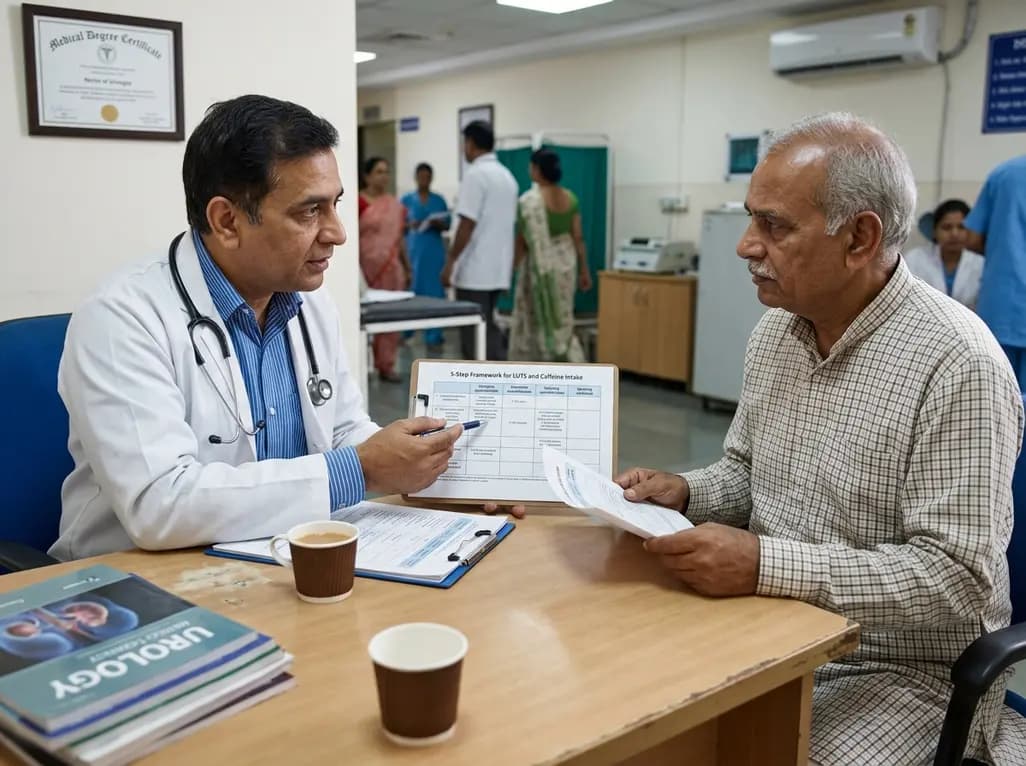
Evaluating caffeine intake in lower urinary tract symptoms (LUTS) requires more than cutting coffee. This 5-step clinical framework details symptom classification, intake quantification across hidden sources, CYP1A2 pharmacokinetic modifiers, and individualized weaning schedules for improved urological outcomes.
Today
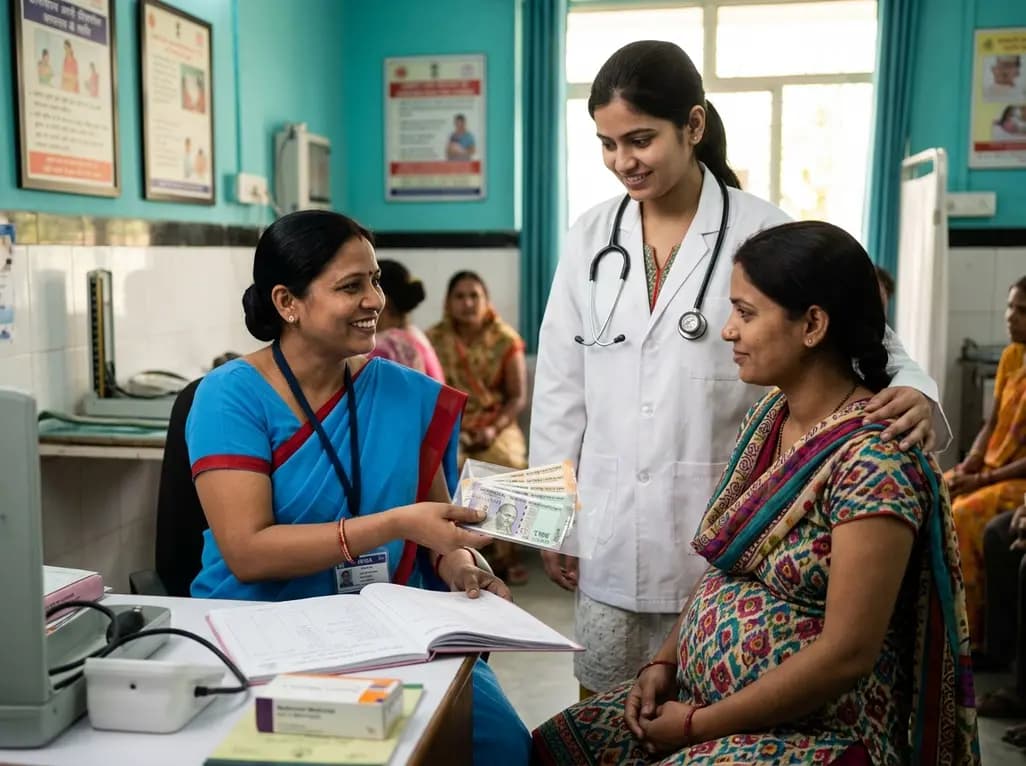
The Delhi Cabinet has approved a key policy revision doubling the fixed monthly allowance for accredited social health activists. This financial enhancement bolsters grassroots maternal and child healthcare delivery, strengthens urban public health surveillance, and improves frontline community health worker retention.
Today
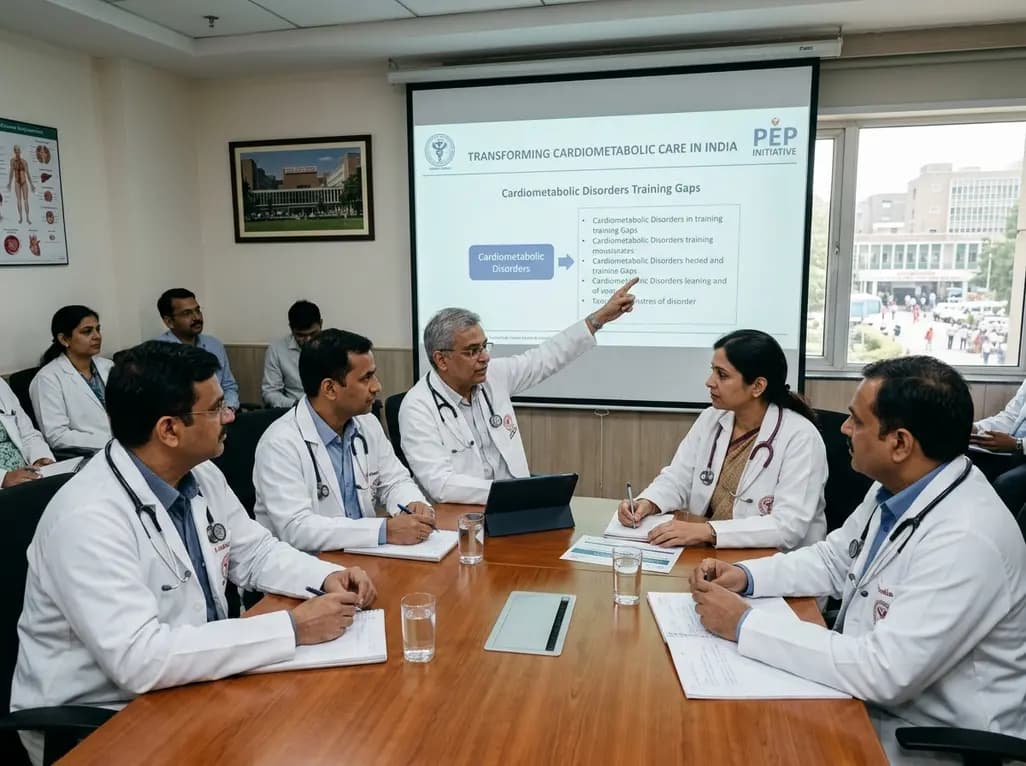
The All India Institute of Medical Sciences has convened national health experts, policymakers, and state nodal officers to transform medical training for cardiometabolic disorders. This collaborative effort under the PEP initiative addresses training gaps to elevate chronic disease care across Indian healthcare.
Today
A systematic review and meta-analysis of 21 RCTs reveals that platelet-rich plasma provides small but statistically superior pain relief and functional improvements compared to hyaluronic acid at 12 months in knee osteoarthritis, influenced by platelet concentration and leukocyte enrichment.
Today
A multicenter real-world prospective study in Taiwan demonstrates that liraglutide effectively reduces body weight and BMI standard deviation score in adolescents with obesity. The therapy shows a favorable safety profile with mild gastrointestinal adverse events and zero treatment discontinuations due to intolerance.
Today
