.webp&w=384&q=75)

Loading, please wait...
Loading, please wait...

Prime Minister Narendra Modi will launch the nationwide HPV vaccination campaign India on February 28 from Ajmer. This initiative marks a major milestone in women's health. Specifically, the campaign focuses on girls aged 14 across the country. Consequently, health officials are preparing for a massive virtual connection during the event.
The program utilizes the quadrivalent Gardasil 4 vaccine. This vaccine provides robust protection against HPV types 16 and 18. These strains cause the majority of cervical cancer cases globally. Additionally, it protects against types 6 and 11, which cause genital warts. Consequently, a single dose is now the recommended protocol for this cohort.
The Union Health Ministry sent official letters to all states on February 25. These letters confirm the launch time for 11:30 am. Furthermore, the Prime Minister chose Ajmer, Rajasthan, for this landmark event. All states and Union Territories will connect virtually. Therefore, local leadership will participate in the formal start of the battle against preventable cancers.
Cervical cancer remains a significant public health concern in India. However, it is the only cancer that a vaccine can effectively prevent. We are committed to encouraging vaccination for adolescent girls. Moreover, research shows that a single dose offers durable protection for this age group. Consequently, government facilities will provide these shots free of cost.
Vaccination will occur at diverse government health facilities. These include Ayushman Arogya Mandirs and Primary Health Centers. Similarly, Community Health Centers and district hospitals will host sessions. Each site will maintain a cold chain point for vaccine integrity. Furthermore, a dedicated medical officer will manage any potential adverse events.
The vaccination process remains entirely voluntary. However, obtaining mandatory consent from parents or guardians is essential. The campaign will run daily for three months to ensure maximum coverage. Thereafter, the vaccine will join the routine immunization schedule. Consequently, this phased approach ensures long-term sustainability.
Q1: Who is eligible for the HPV vaccine under this campaign?
All girls aged 14 years across India are the primary target for this vaccination drive.
Q2: Which specific vaccine will the government provide?
The government will administer a single dose of the quadrivalent Gardasil 4 vaccine.
Q3: Is parental consent required for the vaccination?
Yes, although the vaccination is voluntary, obtaining mandatory consent from a parent or guardian is necessary.
Disclaimer: This content is for informational and educational purposes only. It does not constitute medical advice or replace professional judgment. Refer to the latest local and national guidelines for clinical practice.
References

Read summarized clinical updates, watch expert medical content, and earn CME certifications right from your smartphone.
Open your smartphone camera to scan and install.





PM Modi launches India's nationwide HPV vaccination campaign for 14-year-old girls on Feb 28 to provide single-dose Gardasil 4 against cervical cancer....
7 months ago
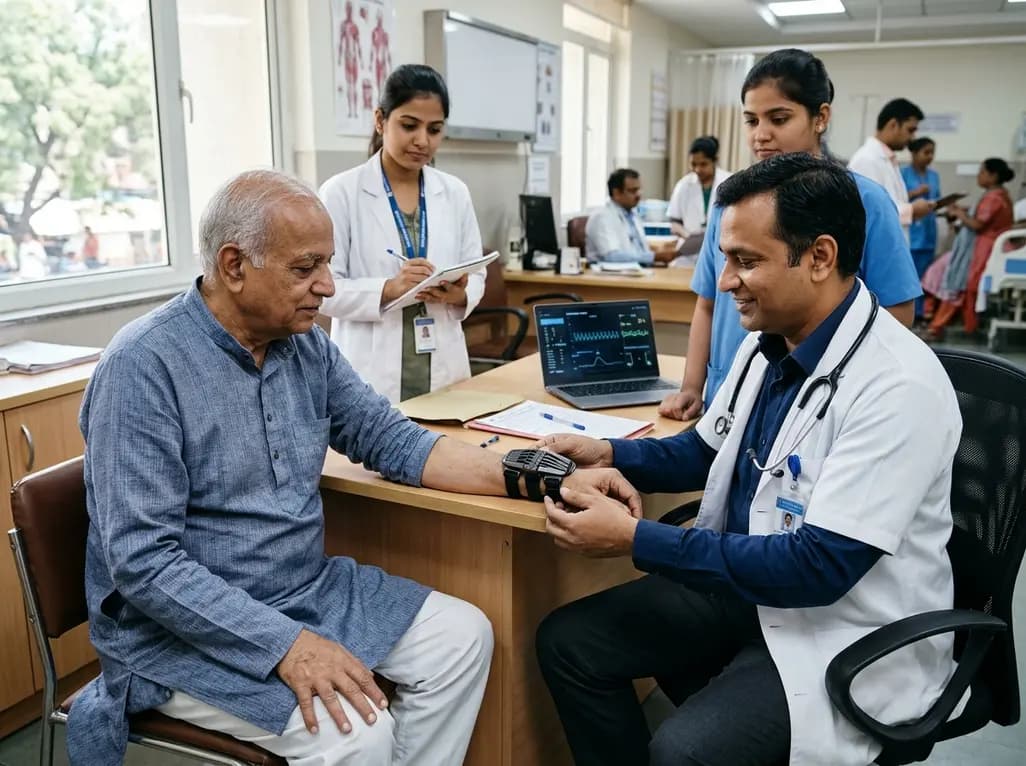
The TREM-AB open-label pilot study evaluated a wearable passive nonlinear vibration absorber for essential tremor. The Nonlinear Energy Sink bracelet reduced clinical Fahn-Tolosa-Marin tremor scores by 32.1% and electrophysiological tremor power by 49.2% with no adverse effects reported.
Today
A population-based study of 20,928 children reveals that small vulnerable newborns face sex-divergent mental capital outcomes at ages 6-7: term SGA girls show higher behavioral difficulties and lower resilience, while preterm non-SGA boys experience increased behavioral problems.
Today
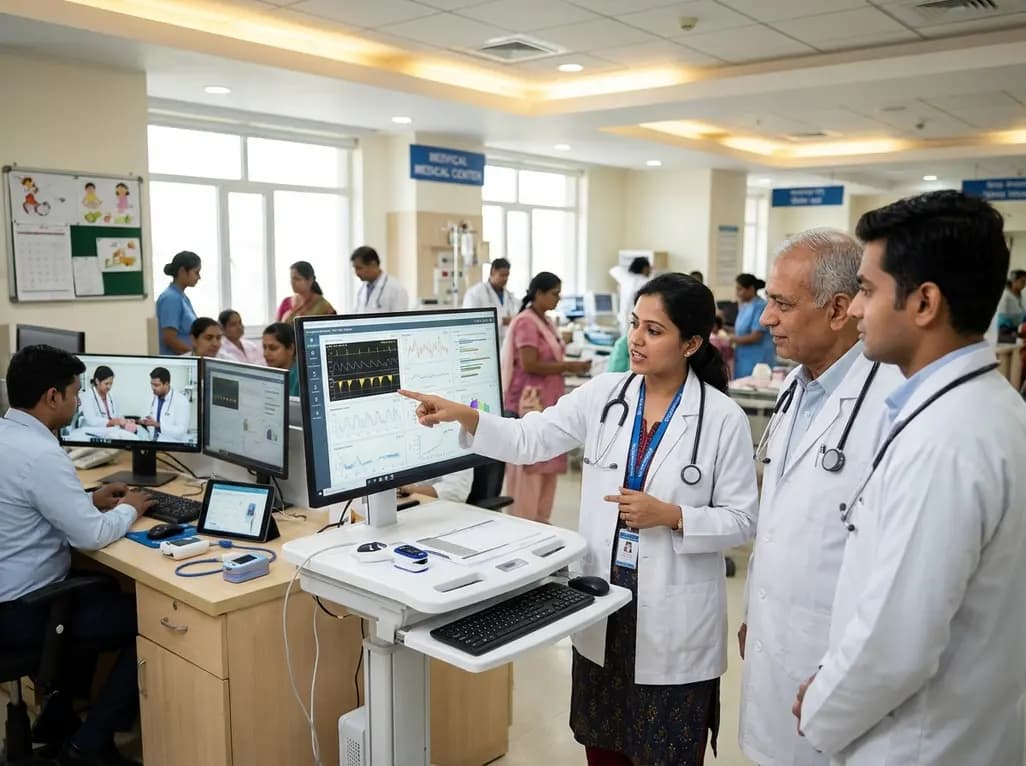
A landmark study details how an enterprise pediatric remote patient management model expanded from a single cardiology pilot to 16 diverse specialty programs by combining centralized digital operations with specialty clinical leadership.
Today
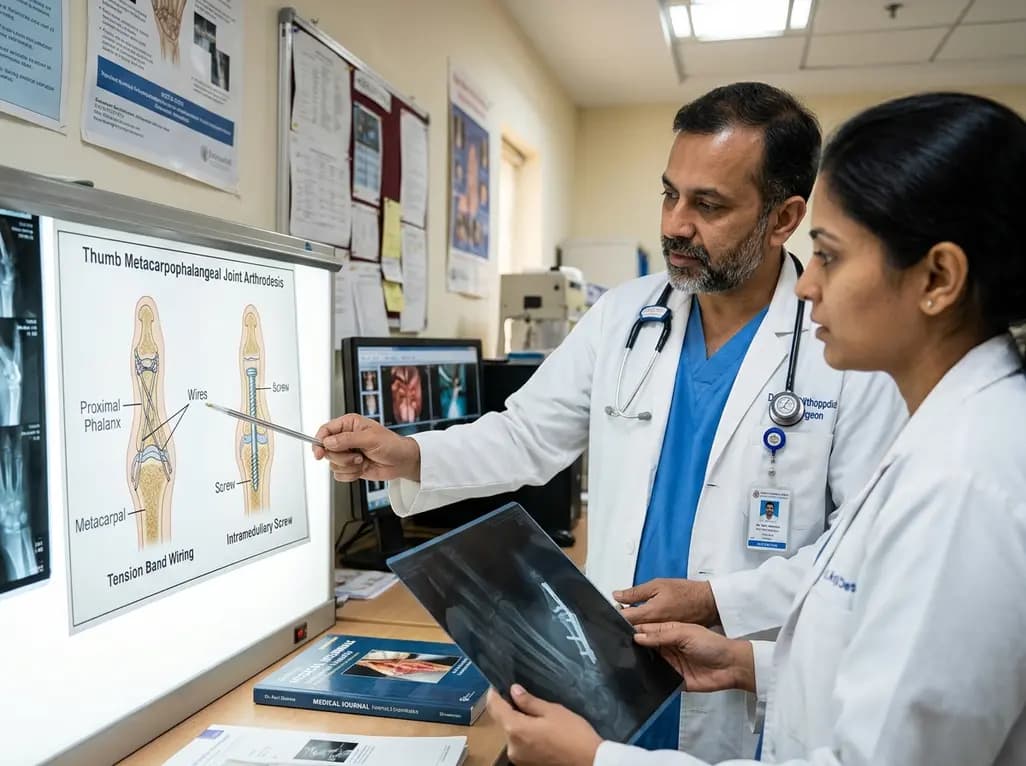
A comparative review of tension band wiring and intramedullary screw fixation in thumb metacarpophalangeal arthrodesis, evaluating union rates, hardware complications, and clinical outcomes.
Today
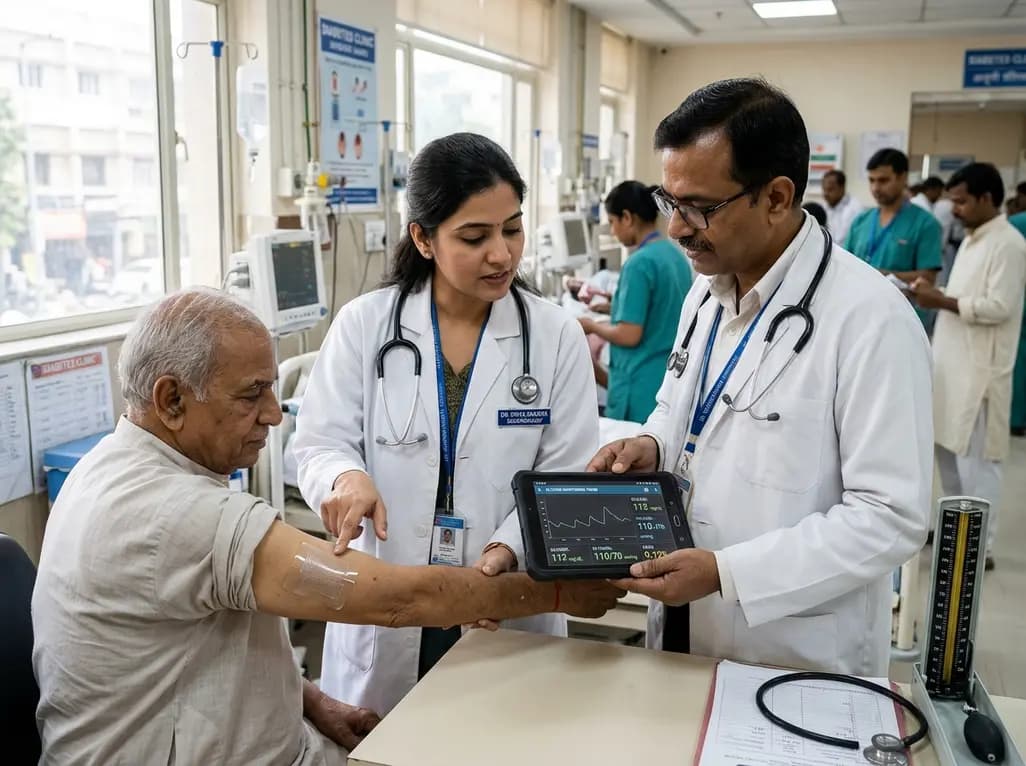
A breakthrough ultrathin multimodal sensor decouples physical hemodynamic monitoring from disposable electrochemical calibration, achieving long-term wearable glucose prediction with 81.36% accuracy and a 9.12% MARD. This offers a robust, drift-free solution for outpatient metabolic surveillance.
Today
