.webp&w=384&q=75)

Loading, please wait...
Loading, please wait...

The Government of India is formalizing an ambitious national framework to establish standardized hospital quality grading across both public and private healthcare sectors. Spearheaded by NITI Aayog, this landmark regulatory reform seeks to align institutional care with rigorous global safety benchmarks. Consequently, patients across the country will soon gain access to transparent, audited data to guide their healthcare decisions. Furthermore, healthcare administrators and clinicians will operate under unified clinical parameters designed to systematically reduce medical errors and boost overall clinical efficacy.
Currently, the Indian healthcare system operates with considerable disparity between healthcare facilities regarding clinical documentation and safety transparency. While private hospitals frequently pursue accreditation from the National Accreditation Board for Hospitals and Healthcare Providers (NABH), these audit reports remain confidential. As a result, patients cannot readily evaluate institutional performance before selecting a medical facility. Therefore, the introduction of transparent hospital quality grading bridges this critical informational gap.
Moreover, the policy shift reflects global best practices seen in mature healthcare systems. For example, the National Health Service in the United Kingdom publicly disseminates audited clinical registries and safety indicators. In contrast, Indian patients often rely on informal testimonials or commercial promotions. By establishing an objective, standardized ranking architecture, the government aims to reward clinical merit and foster healthy competition. Additionally, this nationwide visibility will boost international confidence, reinforcing India's reputation as a preferred global destination for medical value travel.
The proposed framework focuses heavily on measurable clinical endpoints rather than purely administrative infrastructure. Specifically, health authorities plan to evaluate thirty-day hospital readmission rates, healthcare-associated infection rates, and systemic medication errors. Consequently, institutions will need to enforce strict pharmacological reconciliations and rigorous antimicrobial stewardship protocols to maintain favorable rankings.
Furthermore, the evaluation model will incorporate patient-reported outcome measures (PROMs) alongside patient-reported experience measures (PREMs). These validated instruments directly capture functional recovery and therapeutic satisfaction from the patient's viewpoint. In addition, governing bodies will scrutinize adverse surgical events and rapid response call activations. Because these metrics directly reflect ward safety and diagnostic vigilance, hospitals must upgrade their internal continuous quality improvement (CQI) programs. Ultimately, standardizing these indicators compels clinical teams to prioritize evidence-based protocols across all inpatient encounters.
A distinctive feature of the forthcoming framework is its granular focus on high-risk, specialty-specific clinical outcomes. Rather than assigning generic hospital ratings, the grading architecture evaluates specialized departments through targeted risk-adjusted indicators. For instance, oncology services will face close scrutiny regarding postoperative thirty-day mortality rates, margin clearance rates, and perioperative complication frequencies.
Similarly, solid organ transplant programs will undergo evaluation based on standardized graft survival and patient survival curves at thirty days and one year. Furthermore, interventional cardiology and cardiothoracic surgery wings must report door-to-balloon times, postoperative stroke rates, and in-hospital mortality. By analyzing these complex data points, the government ensures that institutions handling acute tertiary pathology are evaluated fairly against international standards. Consequently, tertiary care hospitals will invest substantially in subspecialty audits, structured morbidity and mortality conferences, and advanced clinical governance.
This structural transformation will profoundly reshape institutional medical practice and health insurance underwriting across India. For healthcare providers, objective grading establishes a tangible mechanism to showcase clinical excellence. Hospitals that invest heavily in infection control, intensive care nursing ratios, and comprehensive safety measures can distinctly separate themselves from substandard facilities. Consequently, clinical specialists will find greater administrative support for evidence-based interventions.
Simultaneously, commercial and social health insurance payors will benefit immensely from public outcome disclosures. Insurers can design value-based reimbursement schedules, rewarding hospitals that achieve superior safety scores with preferred network tiering. In contrast, institutions with recurrent sentinel events or excessive readmissions may face financial disincentives. Therefore, the grading ecosystem encourages healthcare networks to discard fragmented care models in favor of coordinated, outcome-driven therapeutic pathways.
Executing a uniform grading framework across India's highly fragmented healthcare landscape presents considerable operational hurdles. Public district hospitals often confront significant infrastructure deficits, variable diagnostic availability, and heavy patient volumes compared to corporate centers. Therefore, NITI Aayog and technical advisory panels are crafting risk-adjustment algorithms to prevent unfair penalization of overburdened safety-net institutions.
Additionally, the transition demands robust digital health infrastructure to prevent fraudulent data reporting. Facilities must integrate electronic health record systems capable of feeding verified clinical data directly into national monitoring registries. Furthermore, independent third-party audits will verify clinical submissions to preserve the framework's credibility. While these initial compliance efforts will require capital investment, the long-term payoff will elevate standard operating procedures, safeguard vulnerable patients, and establish a resilient foundation for universal healthcare delivery.
Q1: When will the national hospital quality grading framework officially take effect?
According to health officials, the finalized quality framework is scheduled for completion by the end of the current calendar year. Formal grading across public and private hospitals is anticipated to launch during the next financial year. Initial rollouts will establish baseline auditing standards before transitioning into comprehensive nationwide public reporting.
Q2: How does this new quality framework differ from existing NABH accreditation?
While NABH accreditation evaluates hospital compliance against established operational standards, its assessment findings and specific clinical outcomes remain private. In contrast, the forthcoming national framework will publicly publish standardized grades. This transparent reporting empowers healthcare consumers to compare clinical safety metrics, postoperative mortality, and patient satisfaction across competing hospitals.
Q3: Which specialty surgical metrics will health authorities assess under the grading system?
The framework incorporates granular, risk-adjusted parameters across tertiary surgical specialties. Major sub-indicators include postoperative mortality rates for advanced oncology resections, graft survival timelines for organ transplant recipients, and thirty-day readmission frequencies. Tracking these specialized metrics incentivizes surgical departments to maintain stringent intraoperative protocols and rigorous postoperative monitoring.
Disclaimer: This content is for informational and educational purposes only. It does not constitute medical advice or replace professional judgment. Refer to the latest local and national guidelines for clinical practice.
References

Read summarized clinical updates, watch expert medical content, and earn CME certifications right from your smartphone.
Open your smartphone camera to scan and install.





The Indian government and NITI Aayog are finalizing a unified national quality framework to evaluate both public and private healthcare facilities. By auditing clinical outcomes, medication safety, and patient experiences, the initiative aims to empower healthcare consumers and elevate institutional clinical standards.
Today

The Supreme Court has reserved its judgment on FSSAI's proposed front-of-pack nutritional warning labels for packaged foods. With debates over compliance timelines, added versus total sugars, and ultra-processed food definitions, this landmark decision carries profound public health implications for India.
Today
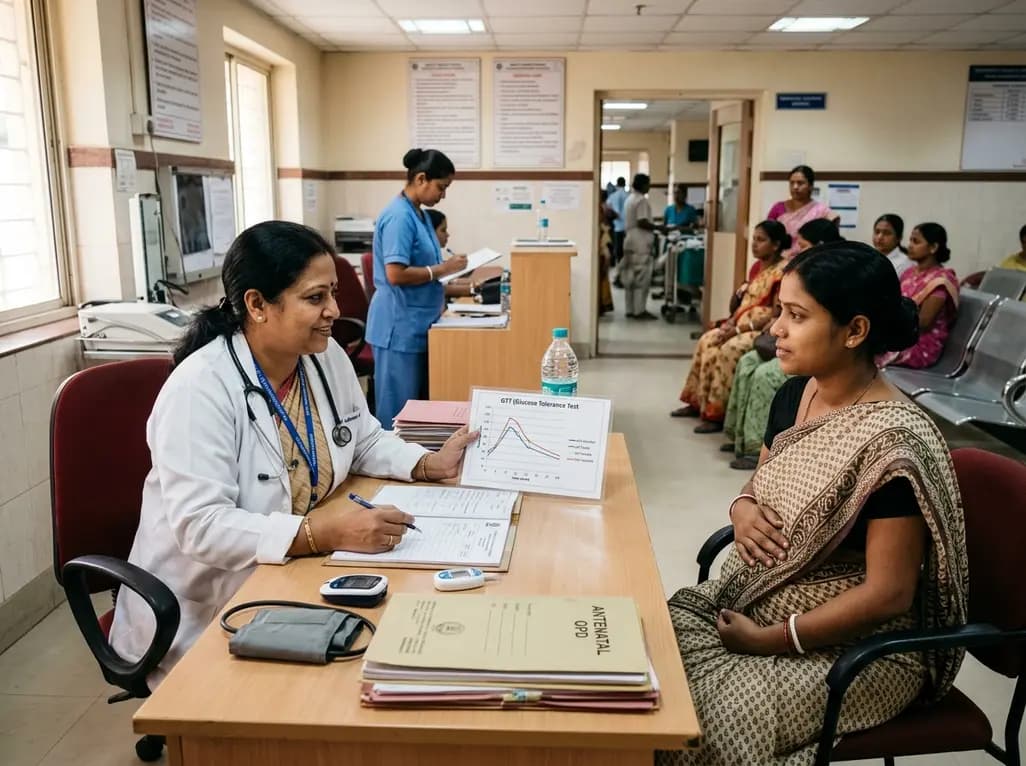
A comprehensive scoping review reveals a 23.24% prevalence of gestational diabetes mellitus in Vietnam alongside heightened risks in diaspora communities, underscoring urgent needs for standardized screening and culturally tailored metabolic interventions.
Today

A pioneering Italian case series demonstrates that mobile heart teams can successfully implement TA-NRP heart procurement in peripheral noncardiac hospitals. Despite a mandatory 20-minute no-touch period and prolonged warm ischemia, 89.5% of hearts were transplanted with zero primary graft dysfunction.
Today

DOORS-GHF is a newly validated operative risk scoring system for geriatric hip fracture patients. Outperforming legacy tools like P-POSSUM, it accurately predicts 30-day postoperative complications and mortality, enhancing perioperative triage, clinical decision-making, and individualized orthogeriatric care.
Today

A systematic review evaluates the feasibility and safety of thyroidectomy after thermal ablation for thyroid nodules. Although procedures encounter significant fibrosis and surgical adhesions, permanent complication rates remain remarkably low in experienced centers.
Today
