.webp&w=384&q=75)

Loading, please wait...
Loading, please wait...

Managing older adults with proximal femur injuries requires nuanced clinical judgment and precise risk estimation. With rapidly aging global and national populations, predicting geriatric hip fracture risk before surgical intervention has become a critical clinical priority. Frailty, multimorbidity, and depleted physiological reserve create substantial hazards for surgical complications. Consequently, surgical teams require robust, contemporary prognostic instruments to optimize perioperative strategies, guide shared clinical decisions, and improve survival.
Geriatric hip fractures represent an orthopedic emergency associated with considerable morbidity and mortality. In many healthcare systems, including India, older individuals frequently present with preexisting cardiovascular disease, chronic kidney disease, diabetes mellitus, and cognitive impairment. Therefore, identifying vulnerable individuals prior to surgery remains crucial for anesthesiologists and orthopedic surgeons. Historically, clinicians relied on generic scoring tools, such as the Portsmouth Physiological and Operative Severity Score for the Enumeration of Mortality and Morbidity (P-POSSUM). However, researchers developed P-POSSUM several decades ago primarily for general surgical cohorts. Modern surgical techniques, shorter operative intervals, and specialized anesthesia protocols have evolved dramatically since that era. As a result, older scoring systems often overestimate mortality and provide inadequate discrimination for modern geriatric trauma. Furthermore, generic physiological instruments fail to account for the unique biomechanical and systemic stress caused by acute skeletal trauma. Moreover, prompt surgical stabilization within 24 to 48 hours of admission significantly reduces mortality, making rapid and precise preoperative risk stratification indispensable. When risk stratification lacks precision, hospital teams struggle to allocate intensive care resources appropriately. Consequently, contemporary clinicians urgently need specialized tools designed specifically for older orthopedic patients. Such models empower clinicians to identify high-risk individuals rapidly, improve family counseling, and reduce preventable postoperative complications.
To resolve these long-standing diagnostic gaps, investigators conducted a multicenter retrospective study evaluating 4,417 geriatric hip fracture cases. From this large cohort, researchers selected 1,599 patients and assigned 1,199 individuals to the primary model development group. The authors established the Daping Orthopedics Operative Risk Scoring System for Geriatric Hip Fracture, known as DOORS-GHF. Specifically, the researchers employed multivariable binary logistic regression to evaluate two core dimensions: the preoperative physiological score (PS) and the operative severity score (OS). These two variables capture acute systemic derangements and procedural complexity effectively. The mathematical formula for complication probability is ln[R/(1 - R)] = -5.089 - 0.114 × OS + 0.226 × PS. In addition, the predictive equation for 30-day mortality is ln[Z/(1 - Z)] = -10.308 + 0.655 × OS + 0.201 × PS. By synthesizing both baseline physiological stability and surgical magnitude, the scoring system generates objective, individualized risk estimates. Furthermore, the inclusion of multicenter data gathered over a thirteen-year period enhances the statistical validity and generalizability of both predictive equations across varied clinical environments. Moreover, clinicians can collect all required variables quickly upon hospital admission without relying on cumbersome laboratory panels. Therefore, the DOORS-GHF framework delivers a practical, streamlined workflow suited for emergency orthopedic admissions and urgent surgical planning.
To demonstrate clinical superiority, investigators tested DOORS-GHF in an external validation cohort comprising 400 elderly patients. In this group, the observed 30-day mortality was 2.0%, while the complication rate reached 6.5%. The investigators compared DOORS-GHF against both P-POSSUM and the earlier DORSSSP version 3.0 model. Remarkably, DOORS-GHF outperformed both legacy scoring systems across every major statistical performance metric. For complication prediction, DOORS-GHF achieved an impressive area under the receiver operating characteristic curve (AUC) of 0.878. Furthermore, it demonstrated acceptable calibration with a Hosmer-Lemeshow chi-square of 11.887 (p = 0.156) and a low Brier score of 0.0489. In predicting 30-day postoperative mortality, the model achieved an exceptional AUC of 0.968, indicating outstanding discriminatory power. Its mortality calibration proved robust with a Hosmer-Lemeshow chi-square of 6.259 (p = 0.510) and an exceptionally low Brier score of 0.0140. In contrast, legacy tools exhibited overestimation and weaker discriminative capabilities. Thus, these rigorous multicenter findings confirm that DOORS-GHF provides superior diagnostic precision for contemporary orthogeriatric care. Consequently, clinicians gain a reliable method to differentiate low-risk candidates from patients requiring enhanced perioperative monitoring.
Statistical discrimination alone does not guarantee real-world clinical utility; therefore, researchers utilized decision curve analysis (DCA) to measure practical therapeutic value. Decision curve analysis assesses whether utilizing a risk model improves clinical outcomes across various decision thresholds compared to treating all or treating no patients. In this study, DCA confirmed that DOORS-GHF delivered the broadest clinical net benefit among all evaluated tools. Specifically, the system provided substantial net benefit across threshold probabilities of 0 to 0.65 for postoperative complications. Similarly, it maintained broad net benefit across threshold ranges of 0 to 0.40 for 30-day mortality. Because these threshold ranges encompass typical clinical scenarios, surgical teams can apply the model confidently during routine practice. For instance, when a patient presents with an elevated DOORS-GHF mortality risk, clinicians can immediately consult intensivist colleagues for preemptive critical care bed reservations. Moreover, surgical teams can modify invasive operative techniques to minimize blood loss and procedural duration. Conversely, identifying low-risk individuals facilitates early functional rehabilitation and avoids unnecessary invasive monitoring. Ultimately, this risk-adapted approach optimizes scarce medical resources while safeguarding vulnerable geriatric patients throughout their recovery.
Integrating DOORS-GHF into routine clinical workflows requires coordinated teamwork among orthopedists, geriatricians, anesthesiologists, and nursing professionals. In many busy tertiary hospitals, delays in medical clearance significantly increase mortality. By applying DOORS-GHF upon emergency presentation, hospital staff can standardize perioperative triage and eliminate ambiguous clinical assessments. Furthermore, clear numerical probabilities empower clinicians during pre-anesthetic counseling with patients and their families. Often, family members struggle to grasp surgical hazards; thus, providing objective risk calculations fosters transparency and eases shared decision-making. In addition, anesthesiologists can utilize the physiological score to tailor intraoperative hemodynamic management, selecting invasive arterial monitoring or specific regional anesthetic blocks when indicated. Furthermore, standardized scoring bridges communication gaps between emergency physicians, operating surgeons, and ward nurses, creating cohesive care protocols that protect vulnerable older adults throughout hospital stays. Postoperatively, high-risk individuals can transition directly to high-dependency units for targeted fluid resuscitation, rigorous delirium screening, and proactive cardiopulmonary support. Meanwhile, physical therapists can initiate early assisted ambulation for lower-risk individuals without unwarranted delays. Therefore, adopting this structured scoring model strengthens multidisciplinary orthogeriatric pathways, decreases hospital lengths of stay, and minimizes avoidable surgical complications.
The DOORS-GHF scoring system calculates individual risk by combining two independent variables: a preoperative physiological score and an operative severity score. Clinicians insert these values into validated multivariable logistic regression equations to predict 30-day complications and mortality. Because the model uses routine admission parameters and surgical details, healthcare teams can compute accurate probabilities rapidly. This standardized mathematical approach eliminates subjective bias during emergency surgical planning.
DOORS-GHF outperforms legacy systems because researchers developed it specifically for geriatric hip fracture cohorts under modern perioperative standards. In contrast, older tools like P-POSSUM were derived decades ago from mixed general surgical populations. Consequently, P-POSSUM frequently overestimates mortality and fails to capture nuances of contemporary orthopedic care. DOORS-GHF demonstrates superior calibration, lower Brier scores, and higher discrimination, achieving an impressive mortality AUC of 0.968 in external validation.
Surgical teams utilize DOORS-GHF results to tailor perioperative care pathways to individual patient vulnerability. High-risk patients receive immediate multidisciplinary optimization, proactive critical care bed allocation, and less traumatic surgical fixation methods. Additionally, objective score results enhance transparent communication during informed consent discussions with anxious families. Conversely, identifying low-risk patients enables expedited operating room scheduling, prompt post-surgical mobilization, and shorter overall hospital stays without sacrificing safety.
Disclaimer: This content is for informational and educational purposes only and does not substitute professional medical advice, diagnosis, or treatment. Refer to the latest local and national guidelines for clinical practice.
References

Read summarized clinical updates, watch expert medical content, and earn CME certifications right from your smartphone.
Open your smartphone camera to scan and install.





DOORS-GHF is a newly validated operative risk scoring system for geriatric hip fracture patients. Outperforming legacy tools like P-POSSUM, it accurately predicts 30-day postoperative complications and mortality, enhancing perioperative triage, clinical decision-making, and individualized orthogeriatric care.
Today

India is advancing biomedical frontiers by integrating AI, genomics, and nanomedicine under supportive national policies like BioE3. Union Minister Jitendra Singh urges clinicians to balance cutting-edge innovations with bedside clinical acumen to preserve patient trust and deliver equitable precision healthcare.
Today

Novel preclinical research demonstrates that antisense oligonucleotides targeting essential genes such as DARS1, DYNC1I2, and EIF2S3 selectively induce apoptosis in ovarian and lung cancer cells. Conditional biomarker activation provides a viable strategy to spare normal tissue while overcoming therapy resistance.
Today
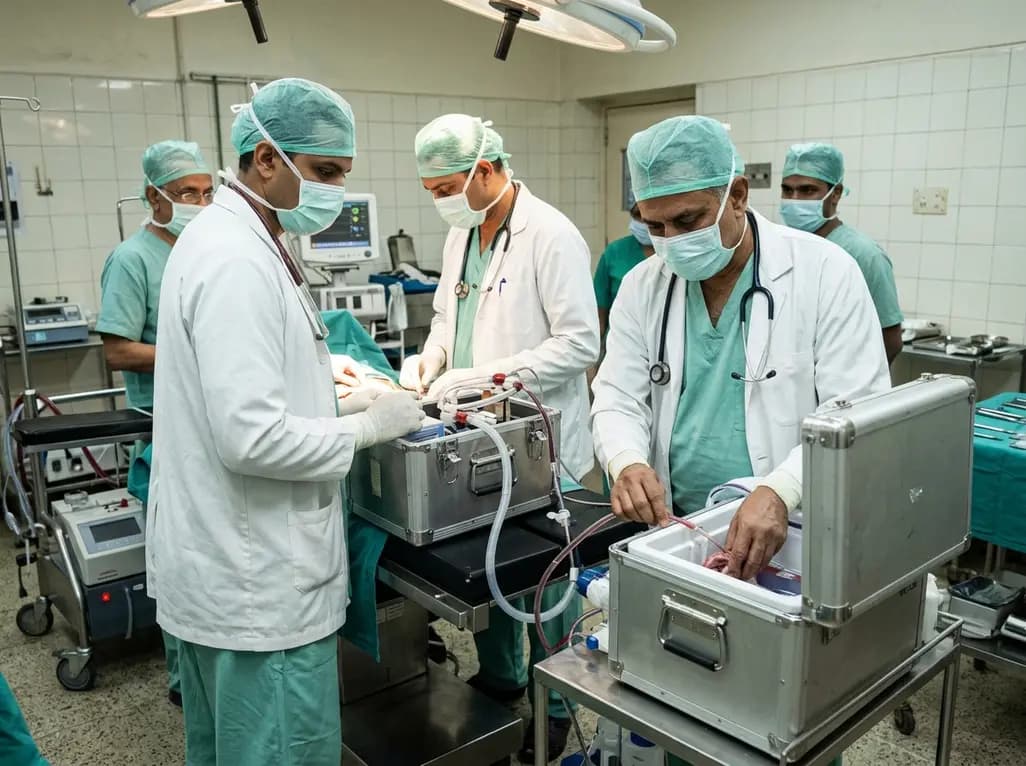
A pioneering Italian case series demonstrates that mobile heart teams can successfully implement TA-NRP heart procurement in peripheral noncardiac hospitals. Despite a mandatory 20-minute no-touch period and prolonged warm ischemia, 89.5% of hearts were transplanted with zero primary graft dysfunction.
Today
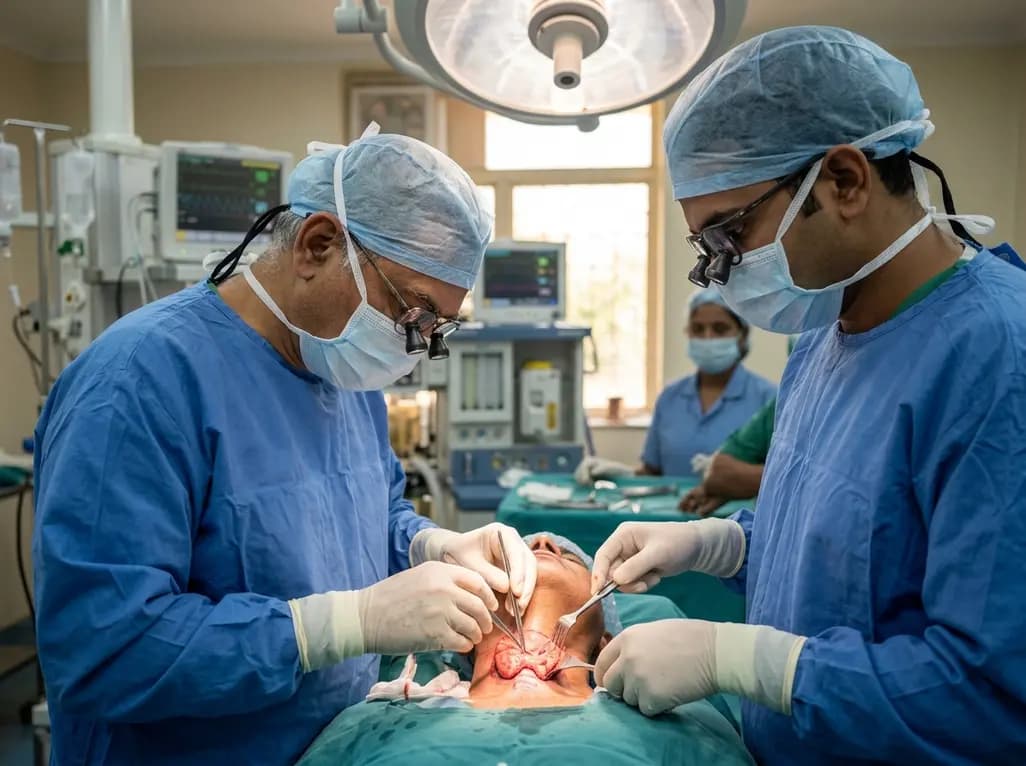
A systematic review evaluates the feasibility and safety of thyroidectomy after thermal ablation for thyroid nodules. Although procedures encounter significant fibrosis and surgical adhesions, permanent complication rates remain remarkably low in experienced centers.
Today
