.webp&w=384&q=75)

Loading, please wait...
Loading, please wait...

Minimally invasive thermoablative procedures have gained widespread popularity for managing symptomatic benign thyroid nodules and selected low-risk malignancies. Techniques such as radiofrequency ablation, microwave ablation, and laser ablation offer rapid recovery and avoid visible neck scars. However, some patients eventually require salvage or completion resection due to nodule regrowth, persistent symptoms, or diagnostic ambiguity. Performing thyroidectomy after thermal ablation introduces unique clinical challenges for endocrine surgeons. A comprehensive systematic review synthesized surgical risk, operative nuances, and histopathology across nine retrospective cohort studies involving 150 patients. These findings provide vital guidance for surgeons evaluating secondary operative intervention.
Surgical teams frequently encounter pronounced scarring when operating on previously ablated thyroid tissue. Thermal injury triggers vigorous perithyroidal inflammation, resulting in dense fibrous adhesions between the thyroid capsule and adjacent cervical structures. Consequently, controlled comparative studies reveal significantly longer operative times for secondary resections than for primary operations. Furthermore, operating surgeons report higher surgical difficulty scores when dissecting tissue planes in post-ablation fields. The strap muscles often adhere firmly to the anterior thyroid surface, obscuring conventional anatomical landmarks. Therefore, surgeons must alter standard dissection pathways to navigate these fibrous barriers without injuring surrounding structures. In addition, the heat-induced fibrosis impairs the natural mobility of the thyroid lobe, which hinders smooth exteriorization during surgery. Clinicians must anticipate these technical challenges prior to entering the operating room. Adequate pre-operative imaging helps teams delineate the exact boundaries of thermal scar tissue. Moreover, experienced endocrine surgeons advise sharp dissection rather than blunt traction to divide tough scar tissue cleanly. By maintaining meticulous operative discipline, surgical teams can overcome these anatomical distortions safely and achieve complete tissue clearance.
Despite heightened technical difficulty, published clinical series demonstrate reassuring overall safety profiles for secondary procedures. In patients undergoing surgery for benign or indeterminate lesions, transient recurrent laryngeal nerve palsy ranged from 0% to 9.7%. Similarly, transient post-operative hypoparathyroidism occurred in 0% to 6.5% of cases. Hematoma formation requiring surgical evacuation also remained uncommon, affecting between 0% and 6.5% of surgical cohorts. Remarkably, none of the analyzed studies reported permanent recurrent laryngeal nerve injury or permanent hypoparathyroidism. Although controlled studies noted elevated operative complexity, overall complication rates did not differ significantly between primary and secondary surgical groups. These reassuring outcomes suggest that high-volume centers can deliver safe surgical care despite post-ablation anatomical distortion. Nevertheless, clinicians should remember that these encouraging results originate primarily from specialized tertiary hospitals. Less experienced operators might experience higher morbidity rates when confronting dense adhesions. Therefore, meticulous nerve identification and cautious parathyroid gland preservation remain indispensable requirements throughout every case. Surgeons should also ensure transparent preoperative counseling regarding potential transient voice changes and temporary hypocalcemia risks.
Histopathologists face distinct interpretative hurdles when examining specimens resected after previous thermoablative therapies. Extreme heat induces profound structural alterations, including coagulative necrosis, extensive fibrous hyalinization, and chronic granulomatous inflammation. Furthermore, surviving follicular cells frequently display bizarre architectural distortion, nuclear enlargement, and treatment-induced nuclear atypia. Consequently, these reactive changes closely mimic true neoplastic features, severely complicating the microscopic evaluation of follicular-patterned neoplasms. Pathologists may struggle to distinguish benign reactive repair from true capsular invasion or malignant transformation. Importantly, the systematic review confirmed that no true carcinoma originated de novo within the ablated necrotic zones. However, untreated peripheral viable tissue can still conceal underlying primary thyroid pathology. Clinicians must clearly communicate prior ablation history on surgical pathology requisition forms to avoid catastrophic diagnostic errors. In addition, pathologists should perform comprehensive serial sectioning and utilize targeted immunohistochemical panels whenever cellular atypia appears indeterminate. Enhanced multidisciplinary dialogue between operating surgeons and expert pathologists ensures accurate tumor classification and prevents inappropriate over-treatment.
The systematic review highlighted serious oncological caveats regarding thermal ablation applied as primary therapy for malignant nodules. In the papillary thyroid carcinoma subgroup, final surgical specimens frequently revealed residual viable malignant cells along the ablation margins. Furthermore, operative pathology routinely uncovered occult central or lateral cervical lymph node metastases that pre-ablation imaging missed completely. Ablation targets the primary tumor nodule selectively, but it cannot address occult micro-metastases within regional nodal basins. Moreover, published retrospective studies lacked comprehensive, long-term oncological follow-up data to verify disease-free survival. Consequently, current clinical guidelines caution against using thermoablative techniques as definitive first-line therapy for papillary thyroid carcinoma outside strict clinical trials. Primary surgical resection remains the indisputable gold standard for malignant thyroid disease because it guarantees complete tumor removal and accurate pathological staging. Therefore, endocrinologists and surgeons must exercise extreme vigilance when reviewing patients who underwent ablation elsewhere for suspicious malignant lesions. Timely completion thyroidectomy and formal lymph node clearance remain critical interventions whenever residual tumor or nodal disease appears likely.
Current medical literature demonstrates that thyroidectomy following thermal ablation is technically feasible, yet clinicians must address substantial evidentiary limitations. Existing published series comprise small retrospective cohorts with significant clinical heterogeneity, precluding definitive conclusions regarding absolute incremental risks. Furthermore, reporting across studies remains inconsistent regarding intraoperative adjuncts, such as continuous intraoperative neuromonitoring or indocyanine green parathyroid fluorescence. Endocrine surgeons must therefore adopt a cautious, standardized approach when planning secondary surgical interventions. Preoperative ultrasound mapping should evaluate nodule margins, vascularity, and the proximity of scarring to the recurrent laryngeal nerve. Additionally, surgical teams must maintain realistic expectations regarding operative duration and prepare for meticulous adhesiolysis. In India and across diverse global healthcare environments, multidisciplinary tumor boards should review each candidate carefully before recommending salvage surgery. Prospective multicenter registries with standardized outcome metrics will ultimately clarify the optimal timing and technical execution of secondary operations. Until broader registry data emerge, performing secondary resections within high-volume endocrine surgical units ensures maximal patient safety and clinical success.
Thermal ablation causes significant heat dissipation into adjacent tissues, triggering an intense inflammatory reaction followed by dense fibrous scarring. Consequently, the thyroid capsule frequently fuses with the surrounding strap muscles, trachea, and carotid sheath. This obliterated tissue plane obscures critical anatomical landmarks. Operating surgeons must perform meticulous sharp adhesiolysis to avoid tearing fragile structures, which noticeably lengthens operative duration and elevates technical difficulty compared to primary thyroidectomy.
Current systematic review data indicate that prior thermal ablation does not significantly elevate the risk of permanent vocal cord paralysis in experienced centers. While transient recurrent laryngeal nerve palsy occurs in up to 9.7% of benign cases due to mechanical traction or thermal scar dissection, no permanent nerve injuries were documented across the evaluated cohorts. However, surgical teams must maintain meticulous visualization and consider intraoperative nerve monitoring to ensure optimal outcomes.
Thermoablative energy induces extensive coagulative necrosis, fibrous hyalinization, and reactive nuclear atypia within treated tissue beds. These architectural distortions frequently mimic follicular neoplasms or invasive carcinoma, posing serious diagnostic challenges for surgical pathologists. Moreover, viable residual tissue at the periphery can harbor undetected pathology. Providing pathologists with a precise history of previous thermal ablation is crucial to prevent misinterpreting treatment-related degenerative atypia as true malignancy or invasive disease.
Disclaimer: This content is for informational and educational purposes only and should not be taken as professional medical advice. Healthcare providers should rely on their clinical judgment when managing individual cases. Refer to the latest local and national guidelines for clinical practice.
References

Read summarized clinical updates, watch expert medical content, and earn CME certifications right from your smartphone.
Open your smartphone camera to scan and install.





A systematic review evaluates the feasibility and safety of thyroidectomy after thermal ablation for thyroid nodules. Although procedures encounter significant fibrosis and surgical adhesions, permanent complication rates remain remarkably low in experienced centers.
Today
Elder abuse education is essential for empowering clinicians to detect mistreatment, recognize forensic indicators, and navigate legal mandates. Enhancing interprofessional training and institutional policies ensures earlier intervention, protects patient dignity, and reduces preventable harm in aging populations.
Today
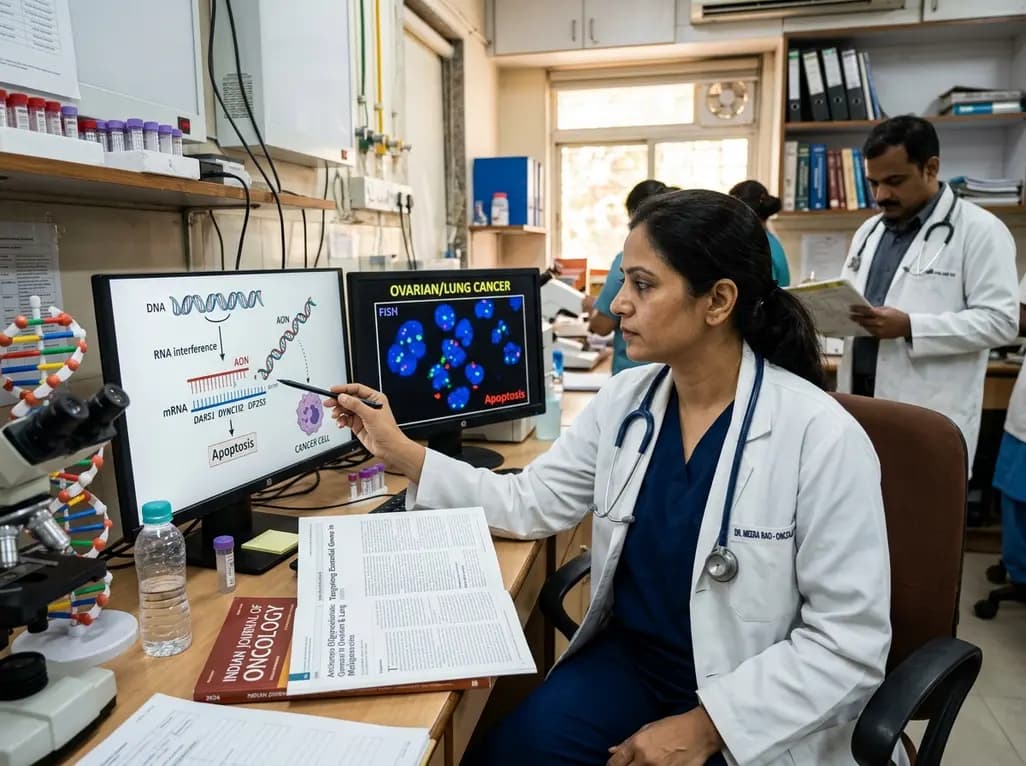
Novel preclinical research demonstrates that antisense oligonucleotides targeting essential genes such as DARS1, DYNC1I2, and EIF2S3 selectively induce apoptosis in ovarian and lung cancer cells. Conditional biomarker activation provides a viable strategy to spare normal tissue while overcoming therapy resistance.
Today
A recent study evaluates the impact of mean arterial pressure on cardiac output, pulmonary artery pulsatility index, and acute kidney injury during the first 24 hours after HeartMate 3 implantation, highlighting key hemodynamic targets for intensive care management.
Today

A 10-year Markov state-transition model shows minimally invasive tubular decompression dominates open laminectomy for pure lumbar spinal stenosis, yielding 5.95 vs 5.91 QALYs and saving $4,167 per patient through reduced complications and lower index costs.
Today
