.webp&w=384&q=75)

Loading, please wait...
Loading, please wait...
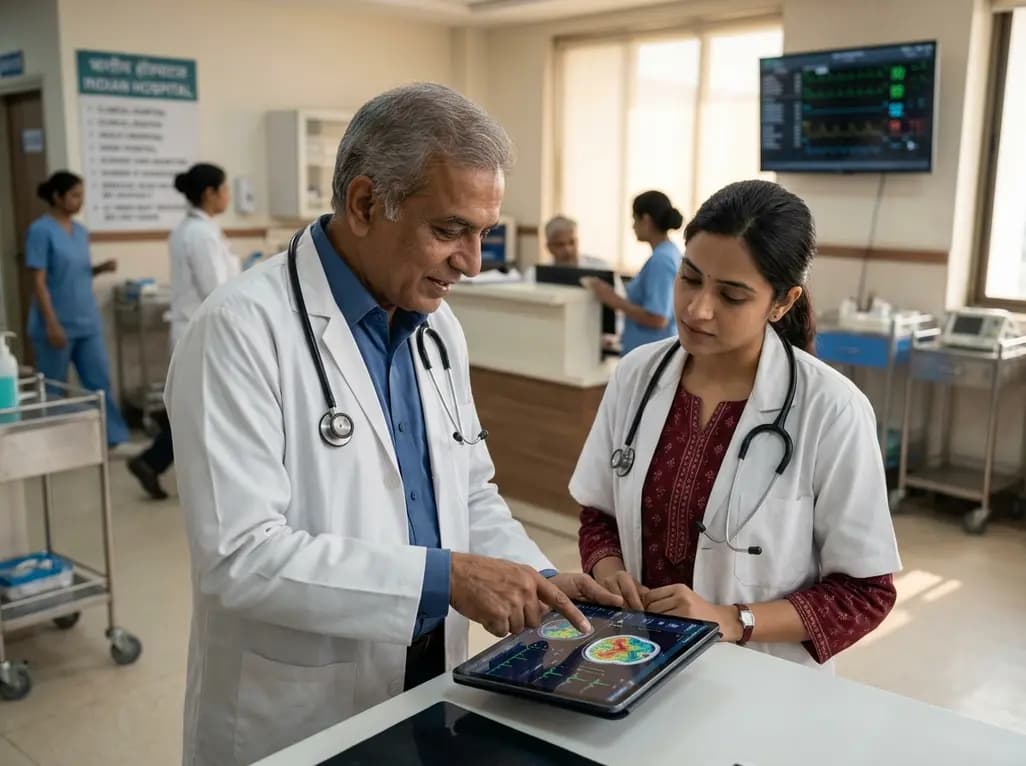
Modern healthcare delivery in India is experiencing a remarkable influx of computational tools. However, successful hospital AI integration remains the defining bottleneck for clinical leadership across the country. During the sixth edition of the ETHealthcare Leaders Summit, medical specialists emphasized that while experimental deployments flourish, translating computational models into daily patient management presents formidable structural obstacles. Digital solutions often show promise in controlled academic environments. Nevertheless, health systems must bridge the operational gap between diagnostic prediction and continuous therapeutic execution.
Healthcare institutions across Indian states frequently launch algorithmic pilots to evaluate screening software and diagnostic models. Unfortunately, an estimated 95 percent of these computational initiatives succumb to an implementation valley of death. They fail to become standard components of everyday hospital care. Dr. Saurav Basu from the Indian Council of Medical Research pointed out that computational algorithms alone do not provide patient care. Instead, human healthcare systems deliver real interventions. Consequently, screening programs that identify disease without downstream clinical pathways create operational friction rather than improved outcomes. If secondary and tertiary care centers lack the beds, surgical suites, or specialist staffing to manage newly flagged patients, early screening provides minimal real benefit. Moreover, software developers frequently build clinical algorithms within isolated silos. They regularly fail to account for the physical constraints of low-resource public and private facilities. Therefore, healthcare leaders must evaluate every new computational tool based on the entire continuum of care rather than isolated diagnostic accuracy.
Algorithmic validation poses another formidable challenge when deploying digital health platforms across India. Machine learning models that report impressive 90 percent accuracy in limited trials often falter when applied to diverse demographics. Dr. Saurav Basu warned that algorithmic biases emerge because training datasets rarely capture the socioeconomic, ethnic, cultural, and linguistic diversity of India. Consequently, a diagnostic algorithm trained on urban cohorts may perform unreliably in rural clinics. Clinicians must recognize that sample homogeneity in validation datasets represents a critical clinical red flag. Furthermore, scaling an unrepresentative system across vulnerable populations compromises patient safety and exacerbates existing health disparities. To mitigate these risks, Indian medical research bodies now emphasize comprehensive data governance and representative multicenter validation. Clinicians and data scientists must collaborate closely during model creation. Specifically, development teams should validate predictive models against diverse patient cohorts before achieving widespread clinical clearance. Through rigorous real-world evaluation, healthcare organizations can ensure that automated tools protect diagnostic reliability across varied communities.
Achieving sustainable hospital AI integration requires healthcare executives to rethink their technological investment models. Conventional hospital software packages frequently operate as inflationary investments that demand recurring license fees, extensive user training, and additional personnel. In contrast, Kalyan Sivasailam from 5C Network highlighted that true artificial intelligence must function as a deflationary asset. When deployed effectively, an automated model acts much like an indefatigable resident physician for clinical staff. The system reduces repetitive cognitive steps and operational clicks rather than adding burdensome paperwork. As a result, smaller community hospitals and regional diagnostic centers adopt these diagnostic systems much faster than large tertiary networks. These regional facilities operate under stringent margin pressures and require immediate labor efficiencies. Consequently, community providers eagerly seek validated models to expand their specialist coverage. By treating algorithmic support as automated clinical labor rather than an administrative expense, healthcare institutions reduce overhead while expanding high-quality diagnostic services to underserved local communities.
Radiology represents the vanguard of practical clinical adoption in Indian hospitals. Historically, algorithmic implementations focused primarily on population screening, such as detecting pulmonary tuberculosis or suspicious lung nodules on plain radiographs. However, newer computational architectures are rapidly transforming this limited paradigm. Today, algorithmic platforms are transitioning from simple screening tools into comprehensive diagnostic engines. Kalyan Sivasailam noted that India possesses unparalleled scale in clinical imaging volume. This vast clinical volume enables data engineers to develop robust, generalizable diagnostic architectures. For example, machine learning tools can now identify subtle intracranial hemorrhages, acute ischemic strokes, and complex oncological margins. Furthermore, these platforms organize worklists according to patient urgency. By prioritizing life-threatening findings, the automated system ensures that on-call radiologists review critical scans immediately. As diagnostic models continue to mature, they streamline complex image analysis and reduce interpretive errors. Consequently, practicing radiologists can dedicate more attention to complex multidisciplinary consultations and individualized patient management.
Clinical adoption by physicians is no longer the primary impediment to technological progress. J.P. Dwivedi from Rajiv Gandhi Cancer Institute emphasized that clinicians actively pull for digital tools that alleviate administrative burdens. In forward-looking oncology centers, algorithmic document processing extracts essential unstructured data and compiles comprehensive clinical summaries in seconds. Consequently, clinical document handling that once required several minutes per record now takes less than sixty seconds. However, fragmented technological implementation introduces severe operational vulnerabilities. Hospital administrators must avoid deploying disconnected point solutions that operate in institutional silos. Instead, healthcare organizations require a thoughtfully orchestrated, unified digital architecture that integrates directly with electronic health records. When clinical software seamlessly communicates with hospital management systems, patient workflows remain secure and uninterrupted. Moreover, centralized integration ensures compliance with evolving data privacy standards. By uniting electronic documentation and diagnostic algorithms into one coherent infrastructure, medical centers enhance clinical productivity without sacrificing patient safety or operational continuity.
Q1: Why do most healthcare AI pilots fail to achieve hospital integration?
Most healthcare pilots fail because developers design them in silos without evaluating downstream clinical resources. An algorithm can rapidly detect pathological patterns, but hospital systems must deliver the subsequent patient care. If facilities lack the medical staff, diagnostic beds, or surgical suites required to treat flagged conditions, early screening provides minimal clinical value. Successful transition from pilot testing to daily practice requires deep workflow alignment with local clinical infrastructure.
Q2: How does algorithmic bias compromise patient safety in Indian healthcare?
Algorithmic bias occurs when developers train machine learning models on narrow datasets that lack representative population diversity. India features immense genetic, regional, socioeconomic, and cultural diversity. When a software platform learns solely from urban hospital cohorts, its predictive accuracy often deteriorates in rural settings. Applying biased algorithms to underrepresented patient groups leads to delayed diagnoses, misclassifications, and inappropriate clinical recommendations, which directly undermines patient safety and worsens existing health disparities.
Q3: How does artificial intelligence differ economically from standard hospital software?
Standard enterprise software is inflationary because it introduces continuous subscription fees, extensive staff retraining, and ongoing IT overhead. In contrast, clinical artificial intelligence acts as a deflationary asset by functioning like an automated resident. It reduces repetitive clicks, triages diagnostic studies, and automates record summarization. By streamlining complex tasks, effective algorithms reduce unit labor costs and allow diagnostic facilities to process larger case volumes without expanding operational expenditure.
Disclaimer: This content is for informational and educational purposes only. It does not constitute medical advice or replace professional judgment. Refer to the latest local and national guidelines for clinical practice.
References

Read summarized clinical updates, watch expert medical content, and earn CME certifications right from your smartphone.
Open your smartphone camera to scan and install.





Healthcare experts at the ETHealthcare Leaders Summit emphasize that while India boasts numerous artificial intelligence pilots, seamless clinical integration remains the true hurdle. Bridging this implementation gap requires addressing algorithmic bias, unified IT architecture, and practical workflow adoption.
Today

New research reveals that amylin receptor signalling in the laterodorsal tegmental nucleus controls food intake through inhibitory projections to the ventral tegmental area. This study demonstrates how midbrain reward circuits regulate feeding, presenting crucial targets for next-generation obesity pharmacotherapy.
Today
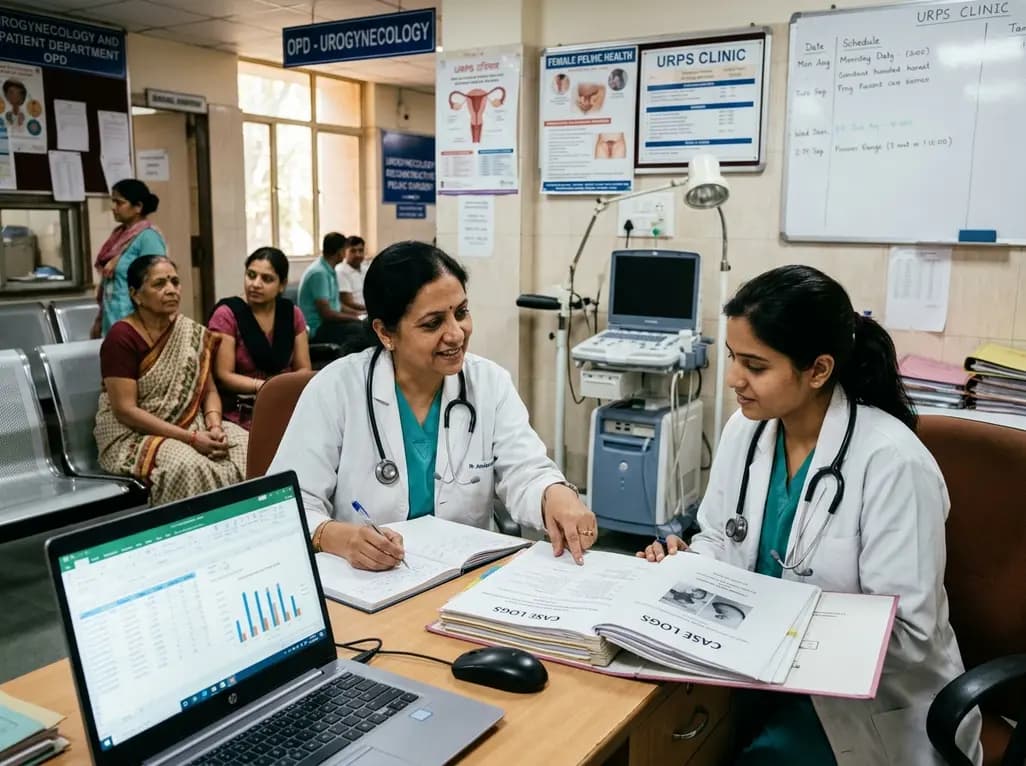
A ten-year cohort study of ABU case logs reveals that URPS fellowship training significantly drives higher annual case volumes, advanced surgical complexity, and increased female representation in pelvic floor reconstruction, underscoring the vital need for structured subspecialty training.
Today
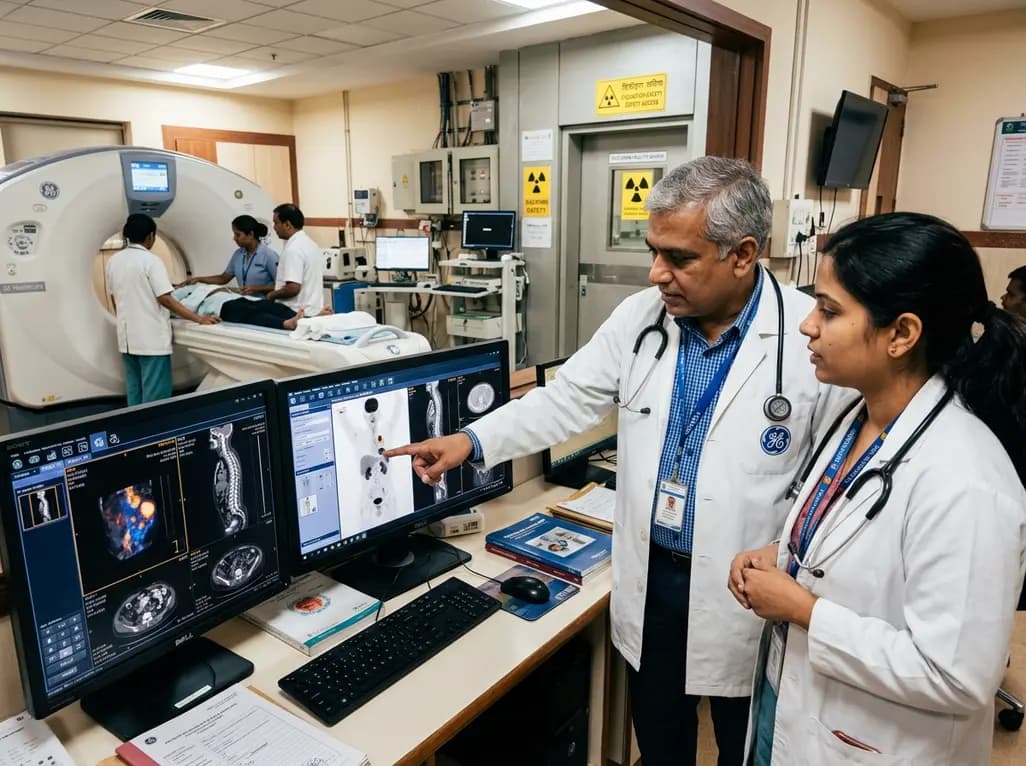
GE HealthCare has agreed to acquire Sofie Biosciences in a 945 million dollar all-cash transaction. The deal secures global rights to the investigational pan-cancer tracer FAPI-74 and expands cyclotron manufacturing infrastructure to accelerate precision theranostics and clinical molecular imaging workflows.
Today
Dual-nanofiber interpenetrating network scaffolds combining silica and PLLA/gelatin nanofibers with sodium alginate achieve complementary mechanical stability, immunomodulatory M2 macrophage polarization, and enhanced osteogenesis for advanced bone repair.
Today
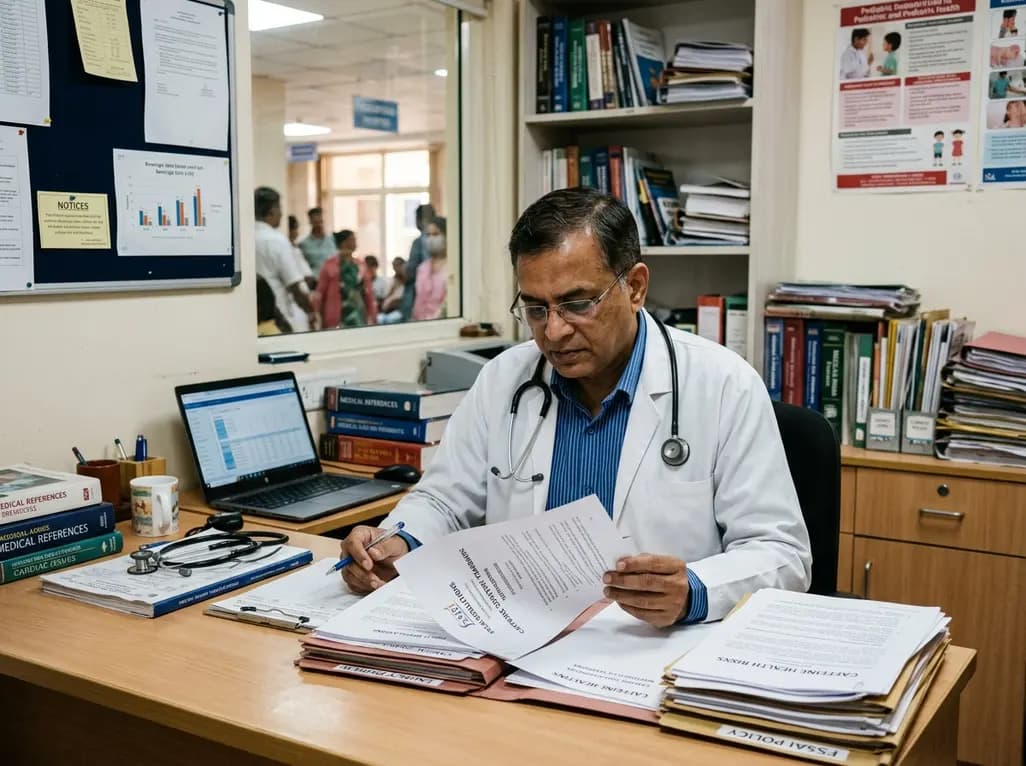
India's food safety authority has cracked down on high-caffeine beverages sold under stimulant branding, prompting legal challenges from major beverage corporations. This review examines FSSAI regulations, cardiac and metabolic complications, pediatric risks, and actionable counseling strategies for physicians.
Today
