.webp&w=384&q=75)

Loading, please wait...
Loading, please wait...

The global effort to eliminate AIDS depends on reaching the UNAIDS HIV 95-95-95 targets by 2025. These benchmarks mandate that 95% of people living with HIV (PLHIV) know their status, 95% of those diagnosed receive treatment, and 95% of those treated achieve viral suppression. While focus often rests on younger populations, the aging demographic of PLHIV presents unique challenges. A recent study in KwaZulu-Natal (KZN), South Africa, assessed these targets among adults aged 40 and older. Consequently, the results highlight a critical need to refocus on diagnostic strategies for seniors.
Researchers conducted a population-based study across urban and rural areas in KZN to evaluate current progress. The findings revealed a startlingly high HIV prevalence of 38% among older adults. However, the study demonstrated that the region is remarkably close to its goals, achieving a cascade of 94-98-96. This means that while treatment and suppression rates are exemplary, the first target—knowing one's status—remains the weak link. Furthermore, the data suggests that older adults who are aware of their status are highly likely to adhere to treatment. Therefore, the primary clinical barrier is not treatment fatigue but rather the initial diagnosis.
One of the most significant findings was the lack of disparity between urban and rural achievement. Regardless of where they lived, older adults faced similar hurdles in accessing initial testing. Many seniors do not perceive themselves as being at risk for HIV, which often leads to delayed testing. Additionally, healthcare providers may overlook HIV as a differential diagnosis in older patients due to ageist assumptions. Consequently, missed opportunities for diagnosis can lead to advanced disease progression and increased transmission. Integrating routine HIV screening into geriatric care is essential to bridge this gap. By normalizing testing for all age groups, clinicians can help ensure that the first of the HIV 95-95-95 targets is fully met.
For practitioners, these results underscore that HIV is no longer just a disease of the youth. In regions with high endemicity, nearly four in ten older adults may be living with the virus. Clinicians should maintain a high index of suspicion and offer testing regardless of a patient's marital or social status. In addition, addressing comorbidities is vital, as older PLHIV often manage multiple chronic conditions alongside their HIV therapy. Successful management requires a multidisciplinary approach that balances antiretroviral therapy with the complexities of geriatric health.
The primary barrier is often a low perception of risk among both patients and providers. Stigma and a lack of targeted testing campaigns for seniors lead to fewer diagnostic opportunities compared to younger age groups.
The study in KwaZulu-Natal found no significant difference in the achievement of 95-95-95 targets between urban and rural residents. This suggests that once linked to care, older adults are generally highly adherent to treatment regardless of their location.
Providers should implement routine, opt-out HIV testing for all adults during standard clinical visits. Educating older patients about sexual health and removing age-related biases in screening can significantly improve early detection rates.
Disclaimer: This content is for informational and educational purposes only. It is not intended as a substitute for professional medical advice, diagnosis, or treatment. Always seek the advice of your physician or other qualified health provider with any questions you may have regarding a medical condition. Refer to the latest local and national guidelines for clinical practice.
References
Madela EIY et al. UNAIDS 95-95-95 targets in older people living with HIV in urban and rural KwaZulu-Natal, South Africa. BMC Infect Dis. 2026 Apr 07. doi: 10.1186/s12879-026-13273-y. PMID: 41947066.
UNAIDS. Understanding measures of progress towards the 95–95–95 HIV testing, treatment and viral suppression targets. Global HIV & AIDS statistics — 2023 Fact sheet.
National AIDS Control Organisation (NACO). Sankalak: Status of National AIDS Response in India. Ministry of Health and Family Welfare, Government of India.

Read summarized clinical updates, watch expert medical content, and earn CME certifications right from your smartphone.
Open your smartphone camera to scan and install.





A study in KwaZulu-Natal shows older adults are close to achieving HIV 95-95-95 targets, but a diagnosis gap remains a critical challenge for clinicians....
6 months ago

Following regulatory scrutiny from FSSAI regarding promotional representations and lean muscle preservation claims, Dr. Reddy's Laboratories and Nestlé Health Science are currently reviewing the branding and marketing strategy for their joint nutritional supplement Celevida GLP+.
Today
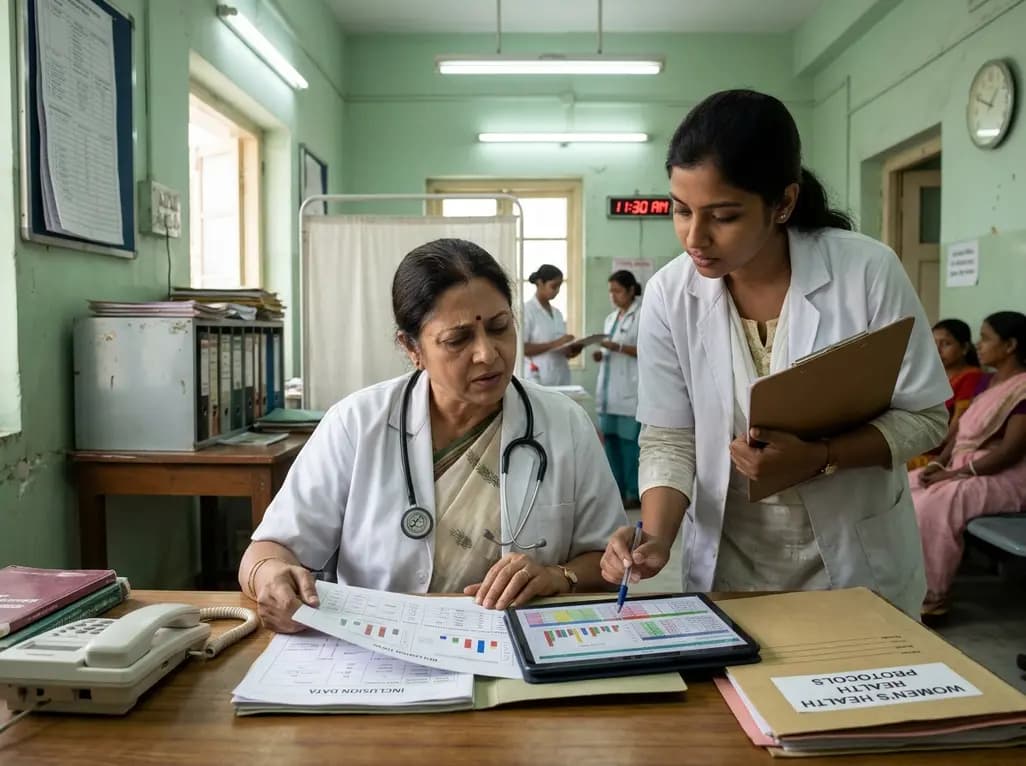
Demanding exhaustive hormonal profiling can inadvertently discourage clinical studies involving females. Methodological standards must align with the specific scientific question to expand, not restrict, equitable evidence for women.
Today

The Directorate General of Health Services directs Indian states to halt the hazardous reuse and reprocessing of single-use medical devices. Discover regulatory implications under the Drugs and Cosmetics Act, critical infection risks, legal liabilities, and operational changes required across clinical specialties.
Today
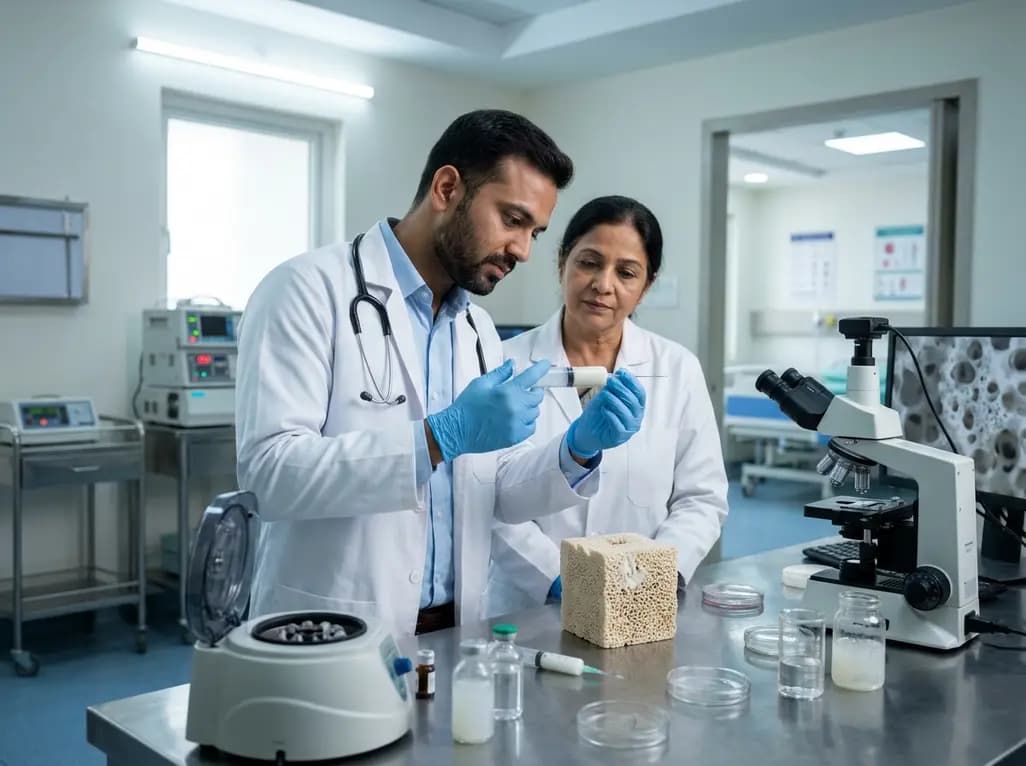
A novel calcium polyphosphate coacervate enables injectable bone implants with in situ hierarchical porosity via phase separation and gas foaming, significantly enhancing cell proliferation, energy metabolism, and osteogenic differentiation for minimally invasive bone defect repair.
Today

India is advancing preventive healthcare by integrating genomics, artificial intelligence, and quantum technologies. With the SANGAM programme sequencing one million Indian genomes, clinicians can unlock personalized therapies, detect cardiometabolic risks early, and curb the burden of diabetes and heart disease.
Today
