.webp&w=384&q=75)

Loading, please wait...
Loading, please wait...

Recent health reports indicate a sharp increase in caesarean deliveries across India. High-risk pregnancy management has become a critical focus for clinicians as metabolic conditions become more prevalent among expectant mothers. Experts at the 'Art of Birthing Conclave' in Lucknow emphasized that the priority remains maternal and neonatal safety. However, the medical community must address the underlying causes of surgical interventions.
Amit Kumar Ghosh, Additional Chief Secretary, noted that obesity and diabetes significantly contribute to these trends. Furthermore, conditions such as hypertension and anaemia complicate the birthing process. Consequently, healthcare providers must improve antenatal care to mitigate these risks early in the pregnancy.
The Federation of Obstetric and Gynaecological Societies of India (FOGSI) is actively training frontline workers. Specifically, the conclave focused on natural birthing techniques and facility readiness. Additionally, delegates received hands-on training for postpartum haemorrhage and newborn resuscitation. Therefore, improving practical proficiency remains essential for reducing maternal mortality.
Dr. Preeti Kumar stated that strengthening skills through global best practices is vital. Moreover, Dr. Bhaskar Pal emphasized the need for dignified and safe deliveries. As a result, institutional deliveries and timely interventions are now more important than ever for high-risk cases.
Q1: Why are caesarean delivery rates rising in India?
The rise is primarily driven by an increase in high-risk conditions such as obesity, diabetes, hypertension, and anaemia among pregnant women.
Q2: How can maternal and neonatal mortality be reduced?
Reductions in mortality depend on timely clinical intervention, improved antenatal care, and ensuring deliveries occur in institutional settings with trained staff.
Disclaimer: This content is for informational and educational purposes only. It does not constitute medical advice or replace professional judgment. Refer to the latest local and national guidelines for clinical practice.
References

Read summarized clinical updates, watch expert medical content, and earn CME certifications right from your smartphone.
Open your smartphone camera to scan and install.





Rising rates of obesity and diabetes are fueling high-risk pregnancies and C-sections in India, necessitating better antenatal care and clinical training....
6 months ago

Following regulatory scrutiny from FSSAI regarding promotional representations and lean muscle preservation claims, Dr. Reddy's Laboratories and Nestlé Health Science are currently reviewing the branding and marketing strategy for their joint nutritional supplement Celevida GLP+.
Today

Demanding exhaustive hormonal profiling can inadvertently discourage clinical studies involving females. Methodological standards must align with the specific scientific question to expand, not restrict, equitable evidence for women.
Today
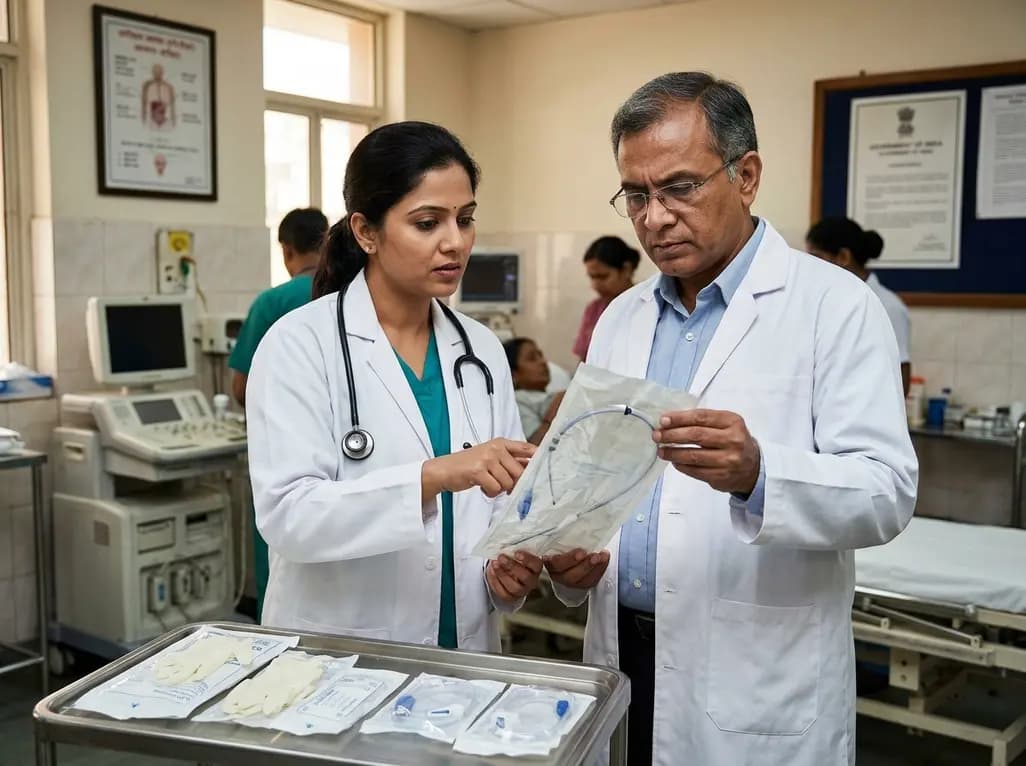
The Directorate General of Health Services directs Indian states to halt the hazardous reuse and reprocessing of single-use medical devices. Discover regulatory implications under the Drugs and Cosmetics Act, critical infection risks, legal liabilities, and operational changes required across clinical specialties.
Today
A novel calcium polyphosphate coacervate enables injectable bone implants with in situ hierarchical porosity via phase separation and gas foaming, significantly enhancing cell proliferation, energy metabolism, and osteogenic differentiation for minimally invasive bone defect repair.
Today

India is advancing preventive healthcare by integrating genomics, artificial intelligence, and quantum technologies. With the SANGAM programme sequencing one million Indian genomes, clinicians can unlock personalized therapies, detect cardiometabolic risks early, and curb the burden of diabetes and heart disease.
Today
