.webp&w=384&q=75)

Loading, please wait...
Loading, please wait...

Hexahydrocannabinol (HHC) is a semi-synthetic cannabinoid that has recently emerged on the global market as a \"legal\" alternative to THC. Despite its availability, clinical reports indicate that HHC-induced rhabdomyolysis can lead to severe complications. This case study details a significant toxicological event involving a 35-year-old male who suffered multiple organ issues after HHC use.
The patient, a chronic smoker of tobacco and HHC products, experienced a tonic-clonic seizure followed by a coma. Upon admission, his clinical course was complicated by severe rhabdomyolysis. This condition caused muscle breakdown products to enter his system, eventually resulting in acute kidney injury (AKI). He spent 11 days in the intensive care unit (ICU) and received supportive care. Fortunately, the patient recovered without requiring dialysis and was discharged after 15 days.
Researchers conducted a comprehensive toxicological exploration of the patient's biological matrices. Using ultra-high performance liquid chromatography and high-resolution mass spectrometry, they identified 35 HHC metabolites. The study revealed that HHC concentration correlates with phenylalanine levels. Additionally, creatinine and creatine kinase levels showed a link to the carnitine pathway and dicarboxylic acids. These results suggest that HHC significantly alters biochemical pathways like β-oxidation and ω-oxidation.
This case corroborates findings that semi-synthetic cannabinoids carry potent toxic risks. Doctors must stay vigilant as these substances often evade standard drug screening protocols. Early recognition of symptoms like seizures and muscle pain is vital. Aggressive fluid resuscitation remains the cornerstone of managing rhabdomyolysis-induced renal failure. Furthermore, monitoring metabolomic changes may provide new insights into cannabinoid toxicity in the future.
Common signs include severe muscle pain, weakness, and dark-colored urine. In severe cases, it can present alongside neurological symptoms like seizures or coma, as seen in this report.
Treatment is primarily supportive. It focuses on aggressive intravenous hydration to maintain urine output and prevent renal tubular damage from myoglobin. ICU monitoring may be necessary for severe cases.
The legal status of semi-synthetic cannabinoids like HHC is complex. They often fall under the broad definitions of the Narcotic Drugs and Psychotropic Substances (NDPS) Act. Clinicians should treat any synthetic derivative as a high-risk substance.
Disclaimer: This content is for informational and educational purposes only. It does not constitute medical advice or establish a doctor-patient relationship. Refer to the latest local and national guidelines for clinical practice.
References

Read summarized clinical updates, watch expert medical content, and earn CME certifications right from your smartphone.
Open your smartphone camera to scan and install.





A case report detailing HHC-induced rhabdomyolysis and AKI, providing insights into HHC metabolism and its impact on biochemical pathways like carnitine....
5 months ago
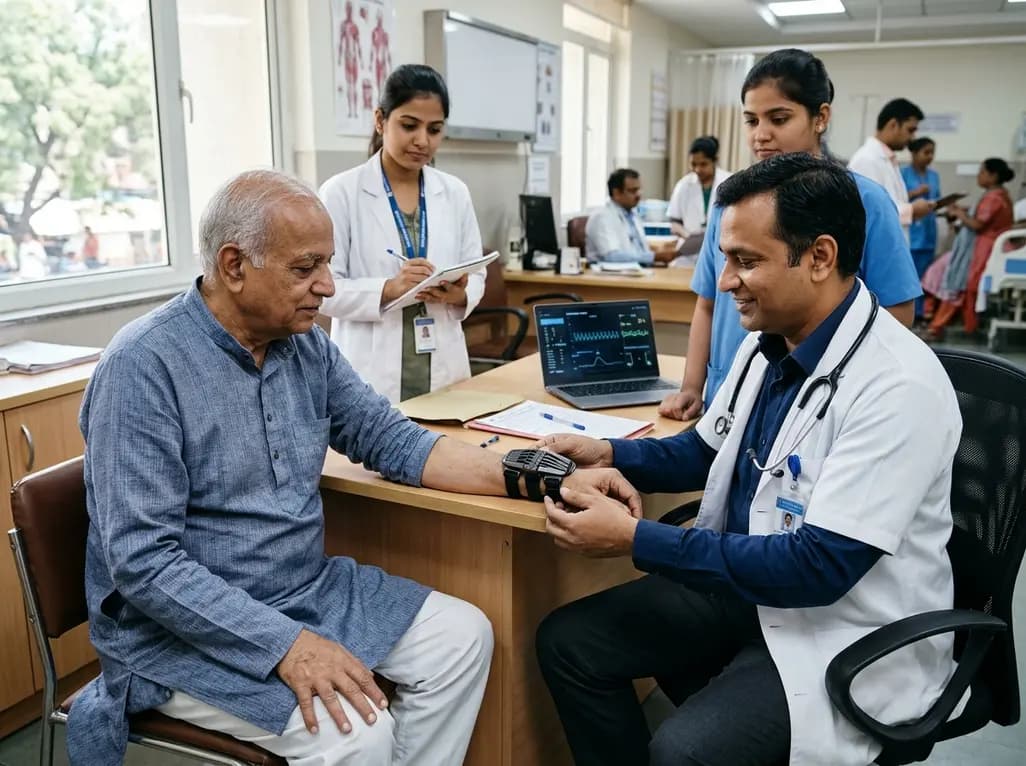
The TREM-AB open-label pilot study evaluated a wearable passive nonlinear vibration absorber for essential tremor. The Nonlinear Energy Sink bracelet reduced clinical Fahn-Tolosa-Marin tremor scores by 32.1% and electrophysiological tremor power by 49.2% with no adverse effects reported.
Today

A population-based study of 20,928 children reveals that small vulnerable newborns face sex-divergent mental capital outcomes at ages 6-7: term SGA girls show higher behavioral difficulties and lower resilience, while preterm non-SGA boys experience increased behavioral problems.
Today
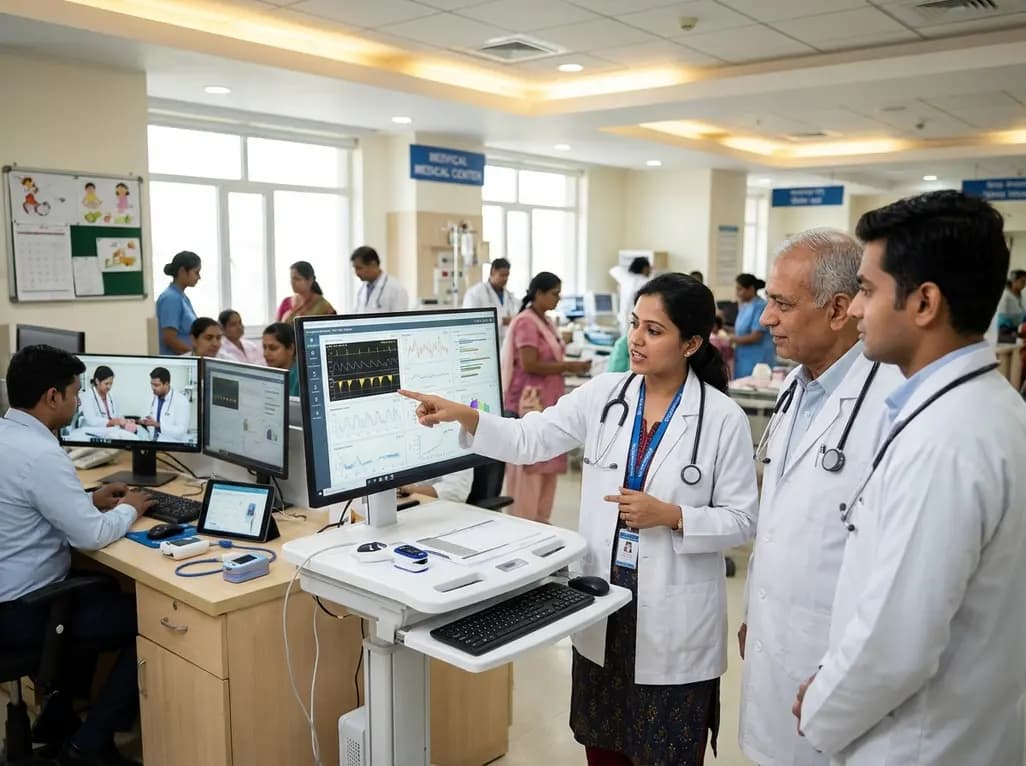
A landmark study details how an enterprise pediatric remote patient management model expanded from a single cardiology pilot to 16 diverse specialty programs by combining centralized digital operations with specialty clinical leadership.
Today

A comparative review of tension band wiring and intramedullary screw fixation in thumb metacarpophalangeal arthrodesis, evaluating union rates, hardware complications, and clinical outcomes.
Today

A breakthrough ultrathin multimodal sensor decouples physical hemodynamic monitoring from disposable electrochemical calibration, achieving long-term wearable glucose prediction with 81.36% accuracy and a 9.12% MARD. This offers a robust, drift-free solution for outpatient metabolic surveillance.
Today
