.webp&w=384&q=75)

Loading, please wait...
Loading, please wait...

Extreme environmental temperatures pose severe cardiovascular and thermoregulatory challenges to athletes, outdoor laborers, and military personnel worldwide. Structured heat acclimation represents a proven physiological intervention that mitigates thermal strain and preserves functional physical capacity. Recently, sports medicine researchers investigated how different climatic conditions influence performance adaptations when using heart rate-clamped exercise. This clinical review evaluates adaptive changes across dry and humid heat stress.
The human thermoregulatory system relies heavily on cutaneous vasodilation and eccrine sweating to maintain core thermal equilibrium during physical exertion. However, exposure to high ambient temperatures compromises sensible heat dissipation through convection and radiation. Consequently, the cardiovascular system must divert substantial cardiac output toward peripheral capillary networks to facilitate evaporative cooling. This circulatory redistribution inevitably compromises muscular perfusion, elevating heart rate while precipitating premature muscular fatigue.
To investigate these adaptations, investigators designed a rigorous ten-day training trial comparing three distinct thermal profiles. Specifically, thirty trained individuals trained for one hour daily under hot-dry, hot-humid, or temperate conditions. Researchers clamped exercise intensity to a fixed cardiovascular strain rather than an absolute mechanical workload. Therefore, participants adjusted their mechanical power output continuously to sustain a steady target heart rate throughout every training session. Moreover, this cardiovascular clamping methodology ensures uniform physiological strain across all cohorts despite differences in ambient humidity. This experimental design enabled investigators to isolate cardiovascular adaptation from variable metabolic pacing.
Environmental stress depends heavily on ambient relative humidity rather than dry-bulb temperature alone. In the experimental trial, scientists matched the hot-dry and hot-humid environments for wet-bulb globe temperature at approximately thirty-one degrees Celsius. Specifically, the hot-dry condition featured forty degrees Celsius with thirty-five percent relative humidity. In contrast, the hot-humid condition presented thirty-one point five degrees Celsius with ninety-five percent humidity.
Furthermore, these disparate atmospheric conditions alter the biophysical mechanisms governing heat transfer between the skin and the environment. Hot-dry conditions promote exceptionally rapid sweat evaporation because high water vapor pressure gradients exist between the epidermis and surrounding air. Conversely, near-saturated humid air suppresses evaporative cooling almost entirely. Consequently, unevaporated sweat drips uselessly from the skin without providing latent cooling. Therefore, identical heat index values can generate profoundly disparate physiological strains depending on environmental water saturation. Sports medicine clinicians must understand these distinct environmental physics when evaluating heat tolerance across varying geographic regions.
The primary outcome of the heart rate-clamped protocol revealed notable functional enhancements in cardiovascular efficiency. During the initial five days, participants exercising in both heated environments demonstrated a substantial surge in power output. Specifically, mean mechanical power output increased by twenty-seven percent between Day 1 and Day 5. Interestingly, after this rapid initial surge, work output reached a stable plateau without further significant increases through Day 10.
Additionally, participants exercising in the thermoneutral control environment exhibited minimal power changes across the identical ten-day timeline. This stark disparity proves that ambient thermal stress acted as the primary driver for rapid cardiovascular adaptation. As plasma volume expands during early thermal conditioning, stroke volume increases substantially. Therefore, the heart pumps greater stroke volume per contraction, sustaining higher muscular blood flow at the identical heart rate. Furthermore, plasma volume expansion expands central venous pressure, allowing athletes to sustain higher cardiac outputs with lower sympathetic stimulation. Consequently, athletes generate considerably higher wattage before reaching designated cardiovascular thresholds.
Thermal monitoring during the protocol uncovered fascinating distinctions between internal core temperature and cutaneous thermal strain. Rectal core temperature increased similarly across all three cohorts, rising by roughly zero point eight degrees Celsius. However, absolute core temperature remained slightly higher in the hot-dry environment throughout the training bouts. This finding illustrates that internal metabolic heat storage proceeds steadily during moderate-intensity cardiovascular exercise regardless of humidity levels.
In contrast, skin temperature dynamics diverged drastically between the two heated environments. In hot-dry conditions, mean skin temperature reached an early peak and plateaued completely by Day 5. This rapid stabilization reflects optimized evaporative cooling capacity. Conversely, skin temperature in the hot-humid condition climbed progressively throughout the entire ten-day intervention. Because humid air prevents sweat vaporization, cutaneous microvascular beds remain maximally dilated in an ineffective attempt to unload heat. Consequently, persistent cutaneous heat retention perpetuates peripheral circulatory pooling. Consequently, persistent skin warming exacerbates cardiovascular drift by forcing continuous cutaneous blood flow at the expense of working skeletal muscle.
Subjective thermal sensation and perceived exertion represent vital protective mechanisms against catastrophic exertional heat stroke. In this study, perceptual strain ratings remained significantly higher in both heated cohorts compared to thermoneutral controls. Furthermore, perceptual strain correlated closely with rising skin temperatures rather than core body temperature alone. When skin remains hot and sweat-soaked, sensory afferents transmit persistent discomfort signals to the cerebral cortex.
Moreover, participants in hot-humid conditions experienced intense perceptual burden despite identical wet-bulb globe temperatures. In humid climates, skin wetness approaches one hundred percent, triggering heightened subjective distress and feelings of suffocating exertion. Consequently, central motor drive declines prematurely as an adaptive neuroprotective response to avoid hyperthermia. Clinicians must recognize that perceptual strain often forces individuals to discontinue activity before physiological compensatory limits fail. Therefore, subjective fatigue serves as a valuable early warning marker during clinical heat illness triage.
These experimental findings carry profound clinical relevance for physicians and sports medicine practitioners across the Indian subcontinent. India displays dramatic climatic diversity, ranging from the arid heat of Rajasthan to the oppressive coastal humidity of Chennai. Consequently, prescribing uniform exercise guidelines or athletic training protocols across different Indian states is clinically inappropriate. While hot-dry exposure permits rapid cutaneous stabilization, humid heat poses unrelenting thermal and cardiovascular strain.
Additionally, industrial laborers, agricultural workers, and military recruits face severe occupational hazards during pre-monsoon heat waves. Clinicians managing exertional heat risk should mandate at least five days of progressive conditioning to secure early cardiovascular gains. Furthermore, medical personnel must emphasize aggressive hydration and active cooling strategies, especially in humid regions where natural evaporative sweating fails. Moreover, recognizing these physiological nuances helps sports physicians formulate individualized acclimatization timelines for professional athletes competing across diverse geographical zones. By incorporating wet-bulb monitoring into clinical recommendations, healthcare providers can prevent life-threatening heat illness and optimize physical performance safely.
Wet-bulb globe temperature integrates ambient temperature, relative humidity, wind velocity, and radiant solar energy into a comprehensive environmental stress metric. Consequently, this measurement reflects true biophysical cooling capacity far better than dry-bulb temperature alone. Clinicians and sports medicine specialists utilize wet-bulb readings to prescribe safe physical exertion limits. Therefore, monitoring this index prevents severe heat illnesses like exertional heat stroke across diverse Indian microclimates, particularly during intense pre-monsoon summer weather.
In hot-dry environments, low ambient relative humidity facilitates rapid sweat evaporation from cutaneous surfaces. Consequently, efficient evaporative cooling stabilizes mean skin temperature within several days. Conversely, hot-humid conditions severely impede evaporative flux due to minimal water vapor pressure gradients between skin and air. Sweat rolls off unevaporated without extracting latent heat. As a result, skin temperature continues climbing progressively over prolonged exposure, sustaining elevated cardiovascular strain and marked thermal discomfort.
Heart rate clamping standardizes cardiovascular strain by continuously adjusting external mechanical work to maintain a preselected cardiac output. Consequently, this method prevents dangerous early cardiac overload when thermoregulatory capacity remains undeveloped. Furthermore, clamping allows researchers and exercise physiologists to track genuine capacity gains through progressive power output improvements over time. Clinicians supervising physical rehabilitation or athlete reconditioning can safely prescribe this technique to stimulate optimal cellular and vascular adaptations without risking circulatory collapse.
Disclaimer: This content is for informational and educational purposes only... Refer to the latest local and national guidelines for clinical practice.
References
Anbalagan P et al. Physiological responses to 10 days of heart rate-clamped heat acclimation in hot-dry and hot-humid environments. J Sports Sci. 2026 Sep 27. doi: 10.1080/02640414.2026.2733957. PMID: 42801726.
Périard JD, Racinais S, Sawka MN. Adaptations and mechanisms of human heat acclimation: Applications for competitive athletes and sports. Scand J Med Sci Sports. 2015;25 Suppl 1:20-38.
Sawka MN, Leon LR, Montain SJ, Sonna LA. Integrated physiological mechanisms of exercise-heat tolerance. Compr Physiol. 2011;1(4):1883-1928.

Read summarized clinical updates, watch expert medical content, and earn CME certifications right from your smartphone.
Open your smartphone camera to scan and install.





A 10-day heart rate-clamped heat acclimation study reveals that power output rises within 5 days in hot-dry and hot-humid conditions, but skin temperature climbs persistently in humid heat. These findings provide vital clinical guidance for managing heat stress and athletic conditioning across Indian climates.
Today
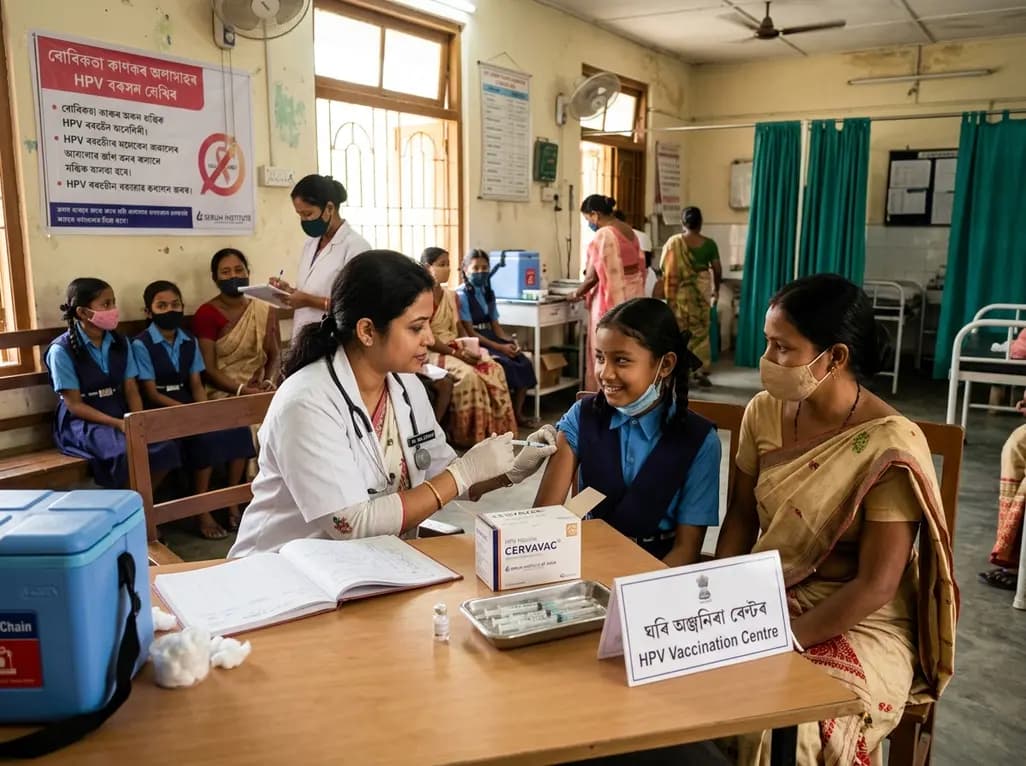
An independent clinical evaluation from Assam confirms the excellent safety profile of CERVAVAC, India's indigenous HPV vaccine. Evaluating 3,800 doses administered to 2,000 young girls, researchers documented zero serious adverse events, providing critical real-world evidence to resolve vaccine hesitancy.
Today
This clinical analysis examines heparin-free versus heparin-containing Impella purge solutions in patients receiving concomitant ECMO support (ECPELLA). Evidence suggests anticoagulant-free purges maintain device patency while reducing bleeding risks, offering a viable strategy alongside systemic anticoagulation.
Today

A 10-year Markov state-transition model shows minimally invasive tubular decompression dominates open laminectomy for pure lumbar spinal stenosis, yielding 5.95 vs 5.91 QALYs and saving $4,167 per patient through reduced complications and lower index costs.
Today
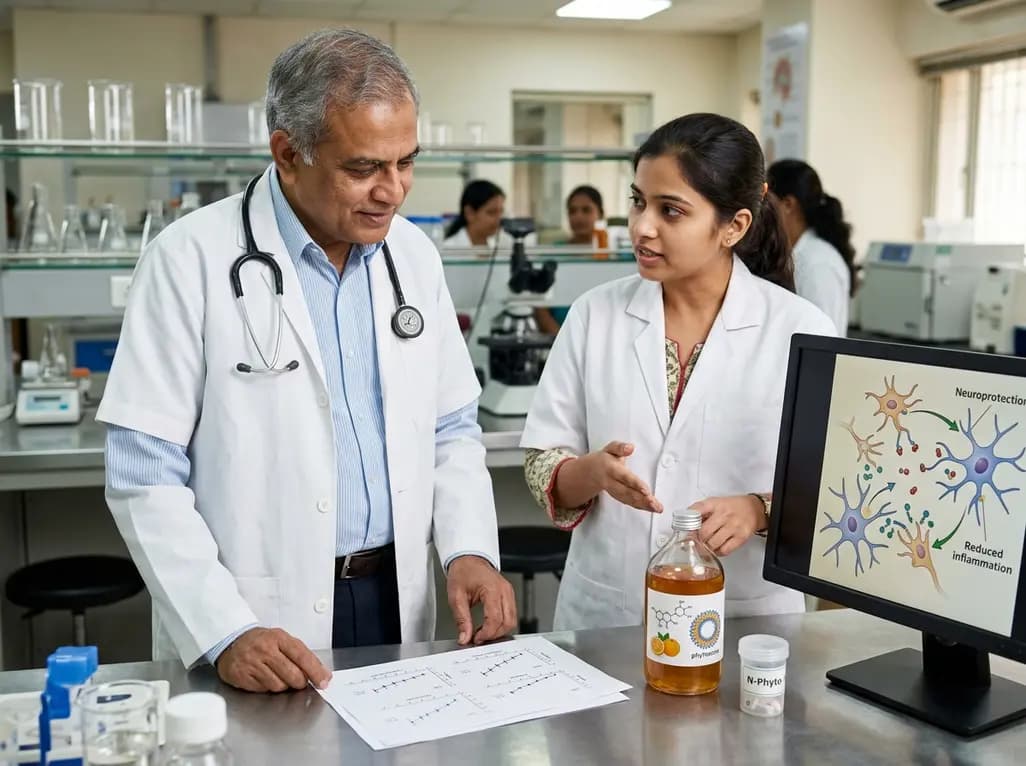
A preclinical study demonstrates that naringin-loaded phytosomes significantly enhance oral bioavailability and provide neuroprotective efficacy in diabetic neuropathy by dampening inflammation, reducing oxidative stress, and relieving neuropathic pain.
Today
