

Loading, please wait...
Loading, please wait...
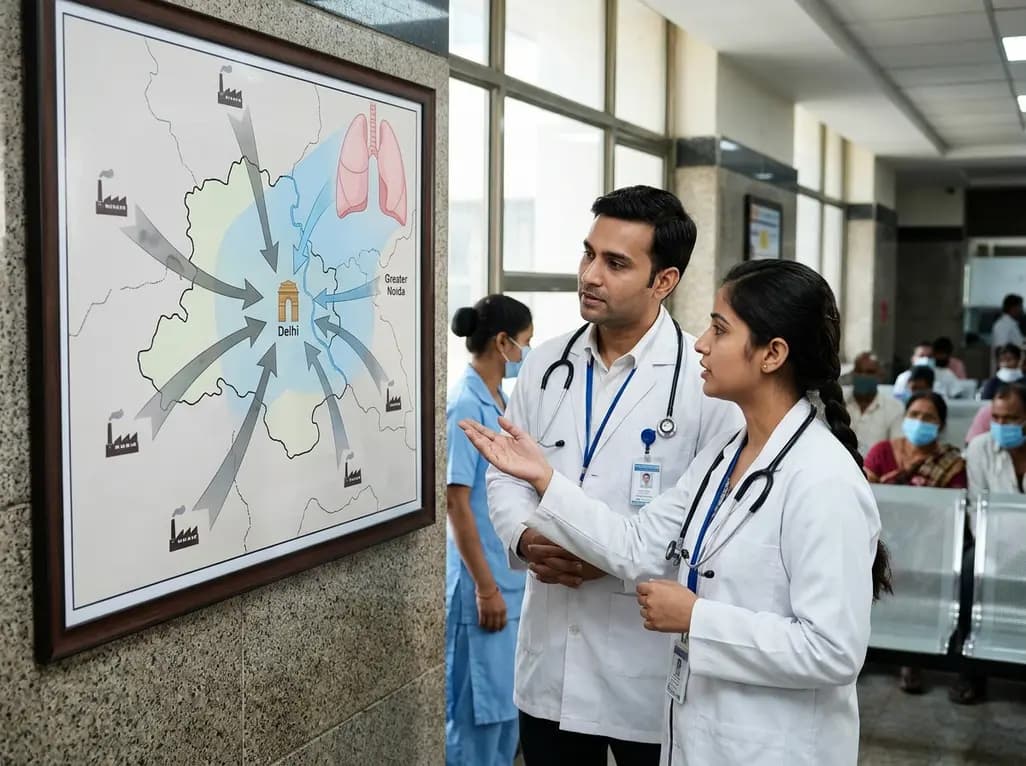
Severe air pollution represents one of the most pressing public health emergencies across India today. According to a breakthrough study from the National Institute of Advanced Studies, decisive PM2.5 emission cuts could yield immediate environmental benefits. In fact, curbing human activities across Delhi and surrounding territories could lower regional particulate concentrations by roughly sixty percent. The research team modelled nationwide atmospheric dynamics over twenty-three years to define distinct pollution sheds. Consequently, this innovative approach shifts regulatory focus from rigid political borders to scientific atmospheric units. For healthcare providers, these findings offer vital perspective on chronic disease prevention. Furthermore, understanding regional air dynamics enables physicians to deliver targeted clinical advice to vulnerable patients.
Traditional air pollution management relies heavily on municipal administrative boundaries. However, atmospheric pollutants disperse without regard for municipal lines. The new study proposes dividing the nation into sixteen distinct air quality management regions termed airshedems. Researchers identified these geographic sectors by analyzing satellite observations, weather datasets, land use, and emission inventories. Notably, this framework accounts for local meteorology, terrain topography, population density, and regional economic activity.
The modeling team evaluated targeted PM2.5 emission cuts strictly within Airshedem-2. This critical zone encompasses Delhi, Haryana, Punjab, Chandigarh, and adjacent districts. When simulated controls eliminated local human emissions, ambient fine particulate levels dropped by sixty percent across the airshed. Moreover, the intervention lowered air pollution in neighboring regions by five to seventeen percent. Consequently, national average particulate levels fell by ten percent. Nevertheless, the study revealed that baseline particulate matter remained at twenty-one micrograms per cubic meter. Transboundary transport from neighboring countries contributed approximately five micrograms per cubic meter to this stubborn background load. Therefore, while local mitigation achieves dramatic improvements, broad cross-border cooperation remains essential for comprehensive respiratory protection.
The study highlights striking disparities in source contributions across the subcontinent. Specifically, just two of the sixteen airsheds account for half of the nation's total particulate matter. These two zones occupy only twenty-three percent of the Indian landmass. Airshedem-2 represents the highest-emitting zone in northern India. In this densely populated corridor, heavy vehicular transport and industrial plants generate extreme toxic plumes. Additionally, residential biomass combustion and seasonal crop burning release massive volumes of harmful smoke. Congested urban layouts trap pollutants near ground level during winter thermal inversions.
In contrast, Airshedem-7 in central and southern India exhibits a fundamentally different emission profile. Significant forest cover characterizes this expansive region. However, intensive coal mining, mineral extraction, and thermal power plants generate heavy pollution loads across local communities. Thus, uniform environmental policies across diverse zones fail to achieve optimal health outcomes. Instead, authorities must tailor specific interventions to regional economic engines and emission sources. Consequently, healthcare workers can correlate regional occupational patterns with distinct respiratory hazards. Understanding these localized emission profiles helps clinicians anticipate seasonal disease surges and advise community health initiatives effectively.
Fine particulate matter measuring 2.5 micrometers or smaller poses grave hazards to the human body. Because these microscopic particles bypass upper airway defenses, they penetrate deeply into alveolar spaces. Subsequently, fine particles cross the alveolar-capillary membrane and enter systemic circulation. This process triggers pronounced pulmonary inflammation and persistent oxidative stress. As a result, patients experience bronchial hyperreactivity, impaired gas exchange, and accelerated lung function decline.
Clinicians frequently encounter sudden clinical deteriorations in chronic obstructive pulmonary disease and asthma during severe pollution episodes. Furthermore, chronic exposure damages alveolar epithelial integrity and increases susceptibility to severe bacterial pneumonia. In addition, the systemic spillover of inflammatory cytokines promotes vascular endothelial dysfunction. Consequently, circulating particulates accelerate atherosclerotic plaque progression and increase arterial stiffness. Clinical studies demonstrate that acute spikes in particulate matter directly correlate with elevated admissions for acute coronary syndromes. Therefore, substantial reductions in ambient particulate concentrations would directly decrease intensive care admissions across regional healthcare facilities.
Moreover, microvascular injury from persistent particulate inhalation increases long-term risks of ischemic stroke and heart failure exacerbations. By mitigating these airborne insults through regional emission policies, healthcare systems could avoid thousands of preventable cardiovascular hospitalizations.
The deleterious consequences of fine particulate exposure extend far beyond the respiratory and cardiovascular systems. Indeed, ongoing exposure initiates persistent low-grade systemic inflammation that alters metabolic homeostasis. Emerging medical evidence links particulate exposure to elevated insulin resistance and poorly controlled type 2 diabetes mellitus. Additionally, fine particulates contribute to renal microvascular damage, accelerating chronic kidney disease progression. Long-term inhalation of particulate-bound polycyclic aromatic hydrocarbons also elevates lifetime risks of pulmonary malignancies.
Certain patient demographics face disproportionately severe risks from dirty air. In particular, pediatric populations suffer significant harm because their developing lungs possess higher minute ventilation rates. Frequent exposure in children triggers recurrent wheezing, blunts lung maturation, and induces early-onset allergic sensitization. Similarly, geriatric individuals and pregnant women display heightened vulnerability. Prenatal exposure to high particulate concentrations increases risks of intrauterine growth restriction, low birth weight, and preterm birth. Consequently, medical practitioners must recognize ambient pollution as an independent, modifiable risk factor in maternal and neonatal health management.
Furthermore, socioeconomically disadvantaged populations often endure greater exposure due to substandard housing and reliance on biomass fuels. Therefore, clinicians must routinely assess environmental living conditions during comprehensive medical evaluations.
The findings from the National Institute of Advanced Studies underline the critical role of preventive medicine in pollution management. While macro-level policy shifts remain necessary, doctors must provide clear, actionable guidance during routine clinic visits. First, physicians should counsel high-risk patients to monitor daily air quality index levels consistently. On days with elevated pollution, vulnerable individuals must avoid strenuous outdoor physical activities. Instead, patients should shift exercise routines indoors to prevent excessive particulate inhalation.
Additionally, medical providers should recommend certified N95 or N99 respirators when outdoor exposure is unavoidable. Simple surgical masks or cloth coverings fail to filter dangerous submicron particulates. In domestic environments, high-efficiency particulate air purifiers can significantly lower indoor particulate concentrations. Furthermore, physicians should review inhaled medication adherence with asthma and chronic obstructive pulmonary disease patients ahead of high-risk winter months. Adjusting maintenance controller dosages preemptively can avert acute exacerbations. Ultimately, healthcare professionals must advocate for scientific, airshed-level pollution control policies to achieve durable population wellness.
Moreover, physicians can organize patient education workshops that emphasize proper mask fit and indoor air quality maintenance. By combining individual clinical protection with regional environmental advocacy, medical providers can substantially mitigate air-related morbidities across India.
Q1: What is an airshedem and how does it differ from traditional administrative pollution monitoring?
An airshedem is an air quality management region defined by shared meteorology, geography, climate, and emission patterns rather than political boundaries. Traditional pollution monitoring focuses strictly on individual city or state administrative borders. However, air masses and toxic pollutants circulate across state lines freely. By grouping interconnected regions into sixteen airshedems, environmental authorities can implement synchronized emission control strategies that address common geographic and atmospheric realities.
Q2: Why does Airshedem-2 generate such a high proportion of national air pollutants?
Airshedem-2 encompasses Delhi-NCR, Punjab, Haryana, and portions of neighboring northern states. This region features exceptionally high population density, intense vehicular traffic, and concentrated industrial activities. Furthermore, extensive agricultural crop burning and widespread domestic biofuel usage release massive quantities of fine particulates. In winter, localized thermal inversions and weak surface winds trap these combined emissions near the ground. Consequently, these structural factors generate half of the nation's particulate and nitrogen oxide load.
Q3: How should clinicians guide respiratory patients during severe winter pollution spikes?
Clinicians should advise respiratory patients to monitor daily local air quality index readings diligently. When particulate levels spike, patients must limit outdoor exertion and wear well-fitted, certified N95 respirators outdoors. Additionally, physicians should ensure strict compliance with prescribed inhaled corticosteroids and bronchodilators, updating action plans before winter begins. Recommending indoor HEPA air filtration and avoiding indoor incense or biomass burning further safeguards compromised respiratory tracts against acute flare-ups.
Disclaimer: This content is for informational and educational purposes only. It does not constitute medical advice or replace professional judgment. Refer to the latest local and national guidelines for clinical practice.
References

Read summarized clinical updates, watch expert medical content, and earn CME certifications right from your smartphone.
Open your smartphone camera to scan and install.





A landmark NIAS study reveals that regional airshed interventions can slash northern India's fine particulate levels by up to 60%. Discover the profound clinical implications of targeted emission curbs on cardiopulmonary health, chronic respiratory diseases, and population-level preventative strategies.
Today

Union Minister Pratap Jadhav highlights the pivotal role of pharmacists in fighting antibiotic misuse and antimicrobial resistance. By championing rational medicine use, patient counseling, and curriculum modernization, community pharmacists stand as vital guardians of public health across India.
Today

Delhi is undergoing a major healthcare overhaul with enhanced Ayushman Bharat insurance up to ₹10 lakh, increased MBBS and PG medical training seats, expanded primary network mandirs, new tertiary neuro-ICUs, and public-private reproductive technology initiatives to build a resilient, preventative healthcare model.
Today

Non-union fractures occur in 2-5% of cases, causing significant disability and cost. Conservative modalities such as LIPUS, PEMF, and focused ESWT offer non-surgical healing options for defects up to 5-10 mm when adequate mechanical stability exists without infection.
Today

A Brazilian birth cohort reveals significant sex-specific associations between preterm birth and adolescent adiposity, underscoring the urgent need for targeted long-term cardiometabolic surveillance and tailored clinical monitoring.
Today
