

Loading, please wait...
Loading, please wait...
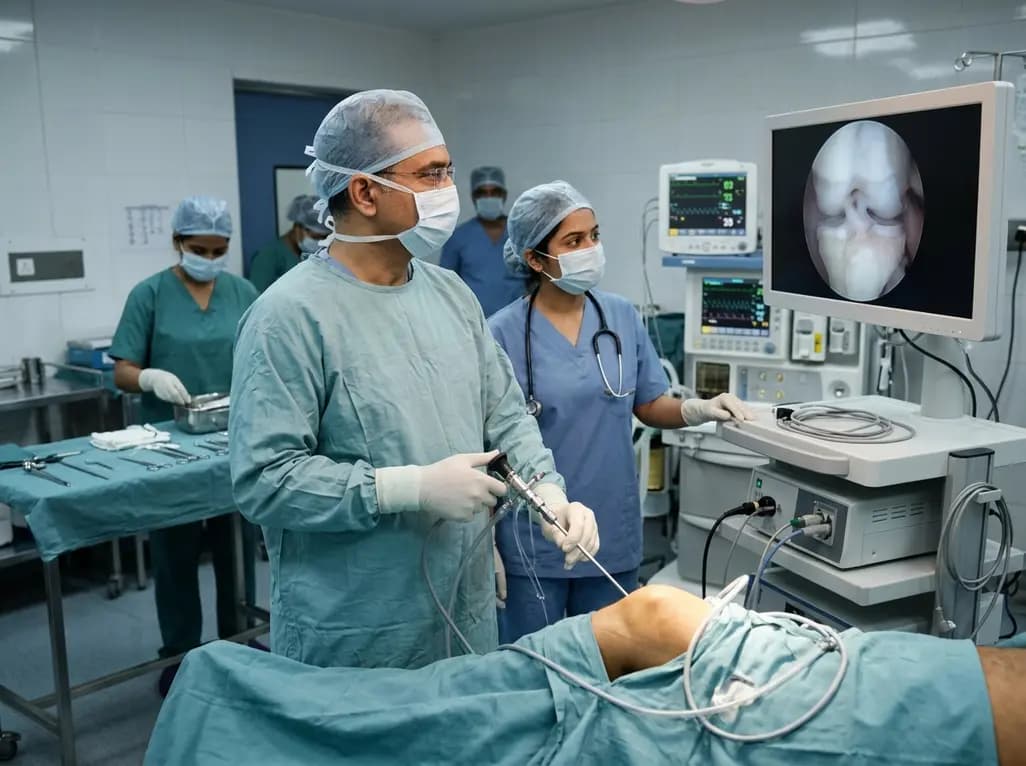
The surgical treatment of musculoskeletal injuries in India is experiencing a profound transformation. As surgical techniques advance, the demand for high-performance orthopedic medical devices continues to surge across urban and regional healthcare centers. To address this evolving landscape, Healthium Medtech has officially rebranded its dedicated arthroscopy division, SIRONIX Arthroscopy, into SIRONIX Orthopedics. This strategic transition represents an ambitious expansion beyond conventional sports medicine into comprehensive joint reconstruction, tissue biology, and surgical navigation. Consequently, Indian surgeons and hospital systems gain access to broader indigenous solutions tailored to complex anatomical demands. By expanding its focus, the organization aims to participate meaningfully across the full continuum of musculoskeletal care.
Healthium Medtech has established a reputable presence in Indian surgical theatres through precision wound closure and arthroscopy devices. However, modern musculoskeletal care requires interventions extending far beyond isolated ligament repairs. For this reason, the transition to SIRONIX Orthopedics reflects a calculated strategy to serve high-acuity surgical segments. Gaurav Goel, Chief Executive Officer and Managing Director of Healthium Medtech, noted that the market requires deeper participation across the entire orthopedic ecosystem. Therefore, the brand is broadening its product offerings to address joint preservation, complex reconstruction, and procedural navigation.
Moreover, the global market for musculoskeletal solutions is expanding rapidly. Industry analysts project that the global orthopedic device sector will reach 68 billion dollars by 2030. In India, growing physical activity, increasing vehicular trauma, and an aging demographic drive parallel procedural expansion. Historically, Indian hospitals relied heavily on expensive multinational imports for complex joint interventions. Consequently, developing robust, home-grown orthopedic options provides crucial economic and logistical advantages. This strategic repositioning allows the enterprise to capitalize on expanding domestic demand while scaling its international footprints. Ultimately, clinicians can expect broader therapeutic options that integrate smoothly into routine operative workflows.
To execute its expanded vision, SIRONIX Orthopedics has organized its business into four focused product verticals. First, the SIRONIX Sportsmed division sustains the company's established leadership in minimally invasive soft-tissue fixation. This segment focuses on high-tensile suture anchors, interference screws, and meniscal repair implants for knee and shoulder arthroscopy. Second, the SIRONIX Regen vertical addresses the rapidly emerging field of joint preservation and biologics. These solutions actively support cellular scaffold integration, bone void filling, and tendon-to-bone healing.
Additionally, the third vertical, SIRONIX Recon, tackles joint reconstruction and mobility restoration. This portfolio targets major joint replacements and modular reconstruction systems for degenerative arthritis and traumatic bone loss. Fourth, the SIRONIX Tech vertical delivers technology-enabled innovations for modern operating theatres. Specifically, it incorporates digital preoperative planning software, intraoperative navigation, and advanced visualization platforms. Therefore, this division empowers surgical teams to execute complex procedures with superior alignment and reproducible accuracy. By establishing these four distinct verticals, the brand delivers a unified ecosystem. Consequently, orthopedic surgeons can manage patient pathologies across the entire care spectrum, from early joint preservation to definitive arthroplasty.
The integration of sports medicine and regenerative orthobiology represents a vital development in modern musculoskeletal therapy. Athletes and active patients routinely present with complex multiligament instability, chondral defects, and early degenerative changes. Therefore, mechanical joint stability alone cannot ensure long-term clinical success without biological tissue integration. Under the new alignment, SIRONIX Sportsmed and SIRONIX Regen work synergistically to provide comprehensive therapeutic pathways. For example, surgeons can perform knotless rotator cuff repairs while concurrently augmenting the footprint with regenerative biological patches.
Furthermore, meniscal preservation remains a crucial objective in orthopedic surgery. Modern clinical guidelines strongly advocate preserving native tissue whenever possible to delay osteoarthritis progression. SIRONIX provides all-inside meniscal repair devices that combine flexible delivery needles with high-strength non-absorbable sutures. When clinicians pair these repair devices with biological healing scaffolds, repair integrity improves significantly. Similarly, in anterior cruciate ligament reconstruction, bio-composite interference screws facilitate superior osteointegration compared to traditional bioabsorbable polymers. As a result, patients experience accelerated graft maturation, reduced inflammatory cyst formation, and reliable functional recovery. These biomaterial innovations illustrate how targeted technological developments directly elevate everyday surgical standards in joint preservation.
Expanding into complex reconstruction and digital surgical navigation requires stringent quality governance and continuous regulatory compliance. Notably, SIRONIX holds the distinction of being the first Indian brand to obtain European Union Medical Device Regulation certification for an arthroscopy portfolio. In addition, the enterprise maintains multiple 510-k clearances from the United States Food and Drug Administration. These global regulatory milestones validate the mechanical durability, biocompatibility, and clinical safety of its domestic manufacturing processes.
Furthermore, domestic manufacturing scale remains a decisive factor in maintaining supply chain stability for healthcare institutions. Healthium operates specialized medical device production plants in India, including dedicated green manufacturing units in Ahmedabad and Peenya. These advanced facilities operate under rigorous quality management systems to produce precision-engineered titanium anchors, PEEK implants, and digital surgical instruments. Additionally, the company holds more than 75 patents across Indian and American jurisdictions, reflecting continuous intellectual property investment. Consequently, Indian hospitals can procure world-class implants without facing erratic currency fluctuations or international freight bottlenecks. This regulatory reliability reassures orthopedic surgeons who require proven, traceable, and defect-free hardware for complex reconstructive interventions.
The expansion of indigenous orthopedic manufacturing carries substantial clinical and economic benefits for India's evolving healthcare infrastructure. Musculoskeletal trauma and degenerative arthritis place a massive socioeconomic burden on patients across Tier-2 and Tier-3 cities. While public welfare schemes such as Ayushman Bharat have expanded surgical access, hospital margins remain constrained by expensive imported hardware. Therefore, the availability of high-precision domestic alternatives directly reduces procedure costs without sacrificing operative quality.
Moreover, indigenous medical device engineering fosters localized surgical training and specialized instrument design. Multinational manufacturers often design hardware tailored primarily for Caucasian anatomical geometries. In contrast, domestic engineering teams can adapt implant morphology to match Asian anthropometric dimensions and bone mineral densities. Additionally, local manufacturers frequently partner with domestic academic societies to conduct hands-on surgical cadaver workshops. These initiatives accelerate the learning curve for young surgeons entering arthroscopy and arthroplasty fellowships. Ultimately, the growth of SIRONIX Orthopedics supports the overarching goal of healthcare democratization in India. By bridging cost differentials, enhancing anatomical compatibility, and improving regional availability, domestic medtech manufacturers help surgeons deliver equitable musculoskeletal care.
Q1: Why did Healthium Medtech rebrand SIRONIX Arthroscopy to SIRONIX Orthopedics?
Healthium Medtech rebranded the division to reflect its strategic evolution beyond sports medicine and isolated arthroscopic procedures. The new identity encompasses a broader spectrum of orthopedic care, including joint reconstruction, tissue regeneration, and navigation technologies. Furthermore, this repositioning enables the company to tap into a rapidly expanding global market projected to reach 68 billion dollars by 2030, while delivering comprehensive musculoskeletal solutions for surgeons in domestic and international healthcare systems.
Q2: What are the four core product verticals under the new SIRONIX Orthopedics brand?
The new identity comprises four specialized verticals designed for complete surgical workflows. SIRONIX Sportsmed maintains leadership in minimally invasive soft-tissue fixation and arthroscopy. SIRONIX Regen focuses on tissue preservation, bone void fillers, and cellular scaffolds. SIRONIX Recon supplies total joint replacement implants and mobility reconstruction systems. Finally, SIRONIX Tech offers digital surgical planning, navigation software, and advanced intraoperative visualization platforms to elevate operative precision for complex joint surgeries.
Q3: How do international regulatory certifications benefit Indian orthopedic surgeons using domestic implants?
International regulatory clearances, such as EU-MDR certification and US FDA 510-k clearances, ensure that domestic implants satisfy rigorous biomechanical and safety standards. For Indian surgeons, these certifications provide clinical confidence regarding implant biocompatibility, fatigue strength, and procedural reliability. Additionally, domestic production of certified hardware minimizes procurement delays, insulates hospital budgets from currency volatility, and ensures consistent availability of specialized instruments across high-volume surgical centers nationwide.
Disclaimer: This content is for informational and educational purposes only. It does not constitute medical advice or replace professional judgment. Refer to the latest local and national guidelines for clinical practice.
References

Read summarized clinical updates, watch expert medical content, and earn CME certifications right from your smartphone.
Open your smartphone camera to scan and install.





Healthium Medtech has transitioned its arthroscopy vertical into SIRONIX Orthopedics, aiming to capture key segments of the global joint care market. The strategic shift introduces dedicated portfolios in sports medicine, joint regeneration, surgical reconstruction, and digital operating technologies.
Today
The 2026 KASID guidelines outline evidence-based recommendations for Crohn's disease medical management. Covering advanced biologics, small molecules, biosimilars, and individualized therapeutic strategies, the update helps clinicians optimize long-term remission and mucosal healing in adult patients.
Today
A KGMU study reveals over half of women with breast abnormalities fail to undergo diagnostic confirmation, leading to advanced-stage detection. Discover the socio-cultural barriers, clinical risks of incomplete resection, and community-level solutions needed to bridge the critical screening-to-diagnosis gap in India.
Today
A comparative non-contact study reveals that high-power radiofrequency delivery with the QDOT MICRO catheter induces an artifactual contact force rise. Electrophysiologists must understand this power-dependent thermal and electrical phenomenon to avoid inadvertent catheter withdrawal and ineffective ablation.
Today
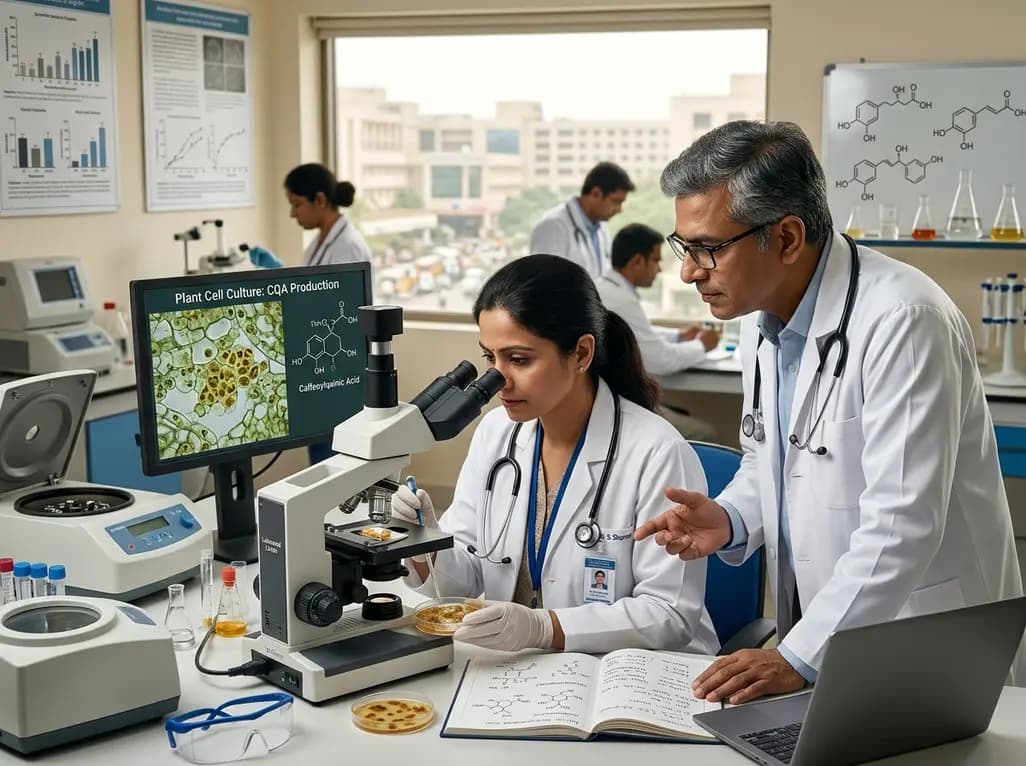
Caffeoylquinic acids, such as chlorogenic acid, offer broad antioxidant, antidiabetic, and anti-inflammatory properties. Advanced plant cell and organ culture methods now enable scalable, sustainable, and pure production of these high-value therapeutic metabolites for pharmaceutical and clinical applications.
Today
