.webp&w=384&q=75)

Loading, please wait...
Loading, please wait...

Healthcare job growth India enters a capability-led phase according to a new report by Adecco India. This growth phase could potentially create up to 2.5 million new jobs by 2030. Furthermore, the industry expects a shift in focus toward specialization and technology integration. This transformation includes sectors like hospitals, AYUSH, diagnostics, and telemedicine. Consequently, the healthcare economic footprint may reach 5 percent of the national GDP by 2030.
As the sector expands, roles are evolving across care delivery and manufacturing. Therefore, nearly 30 to 35 percent of the workforce will likely undergo reskilling. Technology-enabled roles combining clinical and digital capabilities are now in high demand. Specifically, diagnostics and preventive healthcare drive a 25 percent increase in distributed care roles. Moreover, advanced R&D and regulatory roles align with a shift toward biologics and specialty therapies.
Historically, most hiring remained concentrated in major hubs like Mumbai and Bengaluru. However, activity is now increasing in tier II and III markets like Pune and Coimbatore. This shift supports hospital network expansion and distributed delivery models. Additionally, India is emerging as a critical global talent supplier. As a result, overseas demand for Indian healthcare professionals may rise by 30 percent in markets like the UK and the Middle East.
Q1: What are the key sectors driving job creation?
Job creation is primarily driven by hospitals, pharmaceutical development, clinical research, telemedicine, and diagnostic services.
Q2: How many new jobs will the healthcare sector create by 2030?
The sector is projected to create between 2 and 2.5 million new jobs by 2030, according to the Adecco India report.
Disclaimer: This content is for informational and educational purposes only. It does not constitute medical advice or replace professional judgment. Refer to the latest local and national guidelines for clinical practice.
References

Read summarized clinical updates, watch expert medical content, and earn CME certifications right from your smartphone.
Open your smartphone camera to scan and install.





India's healthcare and pharma sectors are expected to create up to 2.5 million jobs by 2030, driven by technology and regional expansion in tier II cities....
6 months ago
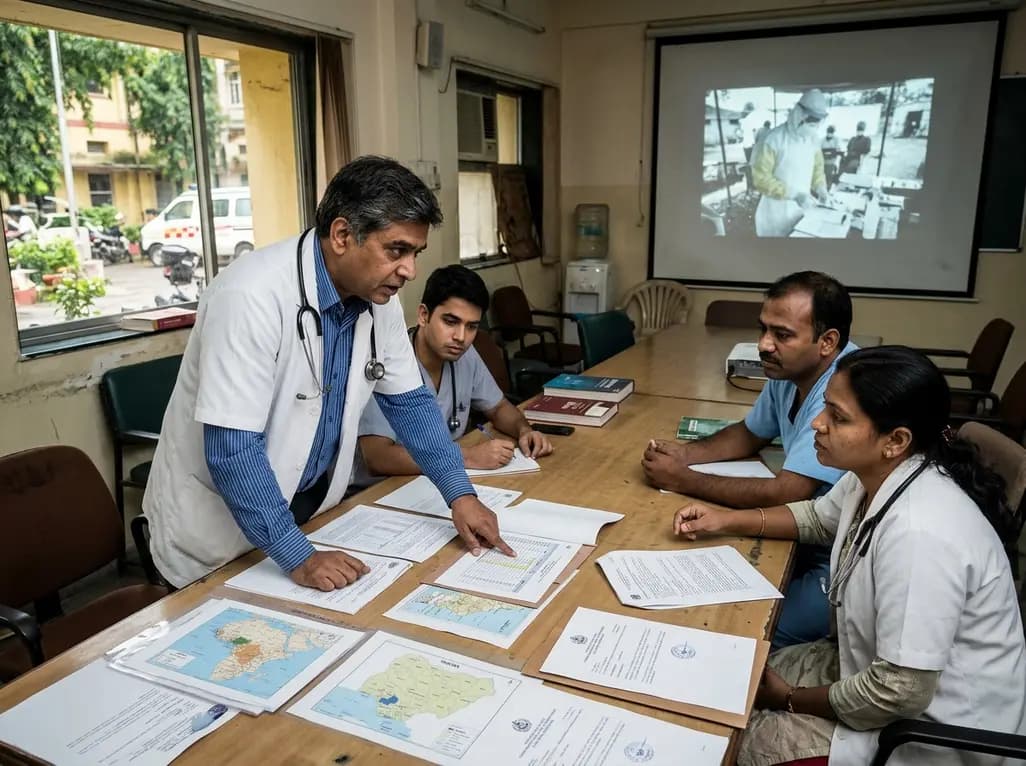
Following Nigeria's first recorded Ebola case linked to regional travel, the Africa CDC has convened an emergency ministerial summit. This alert underscores critical clinical priorities for healthcare professionals, including differentiating early viral infection from malaria, implementing barrier nursing, and triage.
Today

Leucine Rich Bio has introduced South Asia's first comprehensive vaginal microbiome test, BugSpeaks. By profiling microbial dysbiosis, pathogens, and antimicrobial resistance, this next-generation diagnostic platform provides clinicians with deeper insights into recurrent infections, fertility, and reproductive health.
Today

Review how tailored exercise programs benefit frail older patients with heart failure. Explore pathophysiological mechanisms, individualized training prescriptions, and strategies to overcome adherence barriers in clinical practice.
Today

This comparative study evaluates posterior labral tears with and without glenohumeral instability, highlighting distinct demographic patterns, MRI underestimation in stable shoulders, and successful arthroscopic repair outcomes.
Today

A clinical study demonstrates that early intervention with tocilizumab, either as monotherapy or bridged with corticosteroids, achieves significant proptosis reduction and resolves active inflammation in treatment-naive thyroid eye disease.
Today
