.webp&w=384&q=75)

Loading, please wait...
Loading, please wait...
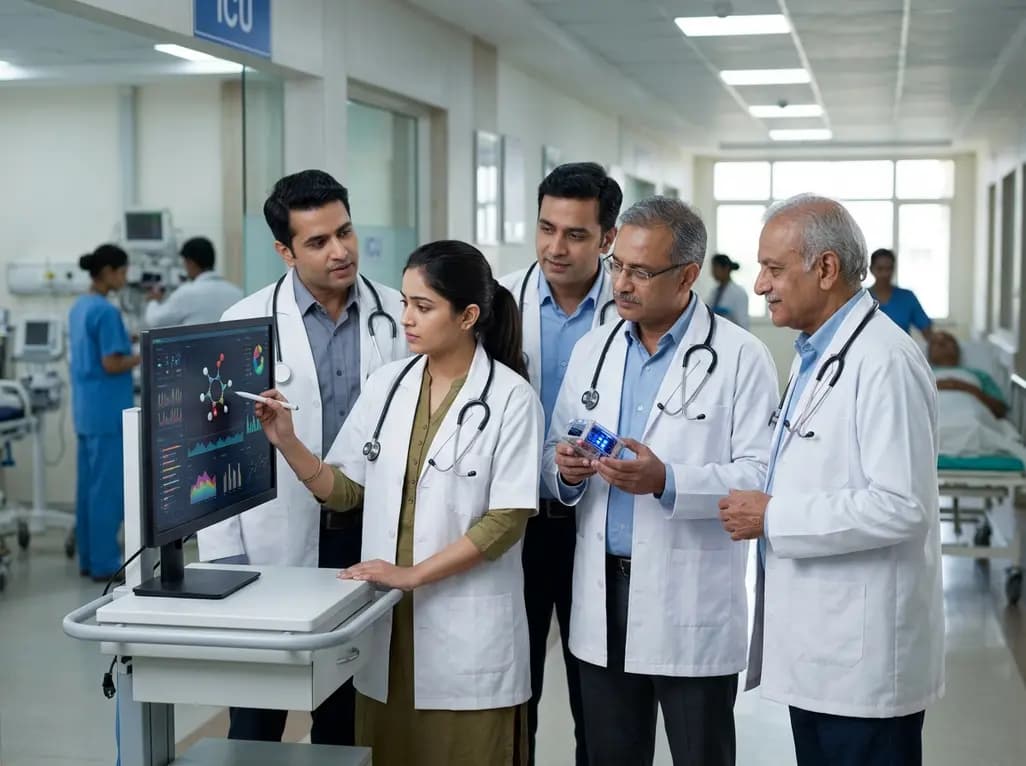
The healthcare landscape in India is experiencing a rapid technological shift, driven by pioneering startups and clinical collaborations. Recently, IHH Healthcare and Fortis Healthcare announced the winners of the inaugural IHH Catalyst Fortis India Edition. This startup accelerator bridges the gap between early-stage healthcare innovations in India and practical clinical adoption. From an impressive pool of 195 applications, ten startups made it to the final cohort. Ultimately, a jury of clinicians, healthcare leaders, and investors selected the top three winners on Demo Day. These emerging technologies offer transformative solutions to long-standing healthcare delivery challenges.
India currently faces a dual challenge of managing a massive patient load while addressing acute resource shortages in remote areas. Consequently, healthcare innovations in India are moving away from simple wellness applications toward highly complex clinical tools. This shift is critical because clinicians require robust solutions that fit seamlessly into their daily workflows. Large hospital networks like Fortis Healthcare recognize that medical technology must undergo rigorous testing to survive in real-world settings. Therefore, this incubator provides essential clinical validation, operational mentorship, and access to state-of-the-art infrastructure. By supporting these early-stage ventures, the program accelerates the timeline from laboratory concept to actual bedside implementation. Additionally, this initiative helps startups navigate regulatory hurdles, cybersecurity frameworks, and data interoperability protocols. As a result, hospitals can adopt validated technologies with greater confidence and minimal operational friction. Ultimately, these collaborative efforts strengthen the entire healthcare ecosystem, laying a foundation for scalable, high-impact clinical interventions nationwide. Furthermore, this structured support encourages young entrepreneurs to focus on high-priority clinical areas. These focus areas include chronic disease management, preventive care, predictive analytics, and oncology workflows. Through this comprehensive approach, India can establish itself as a global hub for medical technology innovation.
The winner of the accelerator, eNext ICU, is directly tackling the critical shortage of intensivist doctors in non-metropolitan areas. Specifically, the startup operates a comprehensive 24x7 Tele-ICU platform that allows remote specialists to monitor critically ill patients. This continuous oversight is incredibly valuable for tier-2 and tier-3 hospitals that often lack full-time, on-site critical care experts. Through high-definition audio-visual feeds and real-time data streaming, remote clinicians can make immediate, life-saving therapeutic decisions. In addition, the platform offers simulation-based training modules designed for local doctors and nurses. This educational component ensures that the on-site staff can confidently execute advanced clinical protocols under pressure. Consequently, the technology bridges the clinical gap between rural centers and major tertiary care facilities. Many small hospitals struggle to retain specialized talent, which frequently leads to unnecessary patient transfers. Therefore, eNext ICU keeps care localized, reducing financial burdens and improving survival rates for critically ill patients. By leveraging secure telecommunication networks, this platform demonstrates how digital solutions can democratize high-quality emergency medicine. As the platform scales, it could redefine standard critical care delivery across remote regions of India.
Early detection remains the single most important factor in improving survival rates for gastrointestinal cancers. For this reason, the first runner-up, RNT Health Insights, has developed AI-powered medical devices for routine endoscopies. These innovative tools provide real-time clinical decision support to help gastroenterologists identify subtle mucosal abnormalities and lesions. During standard endoscopic procedures, clinicians can easily miss early-stage upper gastrointestinal cancers due to visual fatigue or anatomical variations. However, the AI algorithm continuously analyzes the live video stream, flagging suspicious areas for immediate closer inspection. Furthermore, this device standardizes reporting protocols, which helps reduce diagnostic variability among different medical centers. Consequently, patients receive more accurate diagnoses regardless of where they undergo their endoscopic procedures. Early detection allows for minimally invasive endoscopic resections, thereby sparing patients from aggressive surgical interventions. Additionally, this technology enhances the clinical workflow by seamlessly integrating with existing endoscopic equipment. As clinicians widely adopt these intelligent assistants, the overall standard of diagnostic gastroenterology will improve significantly. Ultimately, this innovation highlights the powerful role of artificial intelligence in preventing advanced, untreatable cancers.
Chimeric Antigen Receptor T-cell (CAR-T) therapy represents a revolutionary milestone in treating aggressive blood cancers. Unfortunately, the astronomical cost and extreme logistical complexity have limited its accessibility for patients in India. To address this barrier, second runner-up Cartogene Therapeutics is working to make CAR-T cell therapy highly affordable. Specifically, they have developed a streamlined processing system that significantly reduces the treatment timeline. In typical scenarios, the vein-to-vein treatment cycle can take several weeks, which poses a severe risk to fast-progressing cancer patients. Cartogene Therapeutics successfully shortens this critical window to just 8 to 10 days, allowing for faster intervention. Furthermore, their proprietary manufacturing process substantially lowers production costs without compromising safety or clinical efficacy. This advancement is particularly crucial for Indian oncology clinics, which desperately need localized and cost-effective advanced therapies. Consequently, more patients can access this life-saving treatment rather than exhausting conventional, less effective therapies. By localization of biological manufacturing, the startup addresses both therapeutic equity and critical delivery speed. Ultimately, these scientific developments could position India as a pioneer in cost-effective biotechnology and cellular medicine. In addition, local manufacturing reduces dependence on expensive foreign supply chains. As a result, local hospitals can offer advanced oncological care to a wider demographic.
Developing a medical startup involves far more than merely coding software or designing a physical prototype. Crucially, healthcare innovations require rigorous clinical mentorship and operational validation within actual hospital environments. During the 12-week IHH Catalyst accelerator program, the selected startups partnered closely with experienced Fortis clinicians and operational leaders. This direct collaboration allowed founders to test their prototypes, refine operational workflows, and gather invaluable real-world clinical feedback. In addition, the program provided dedicated support in navigating complex regulatory approval processes and strict cybersecurity protocols. Ensuring data privacy and electronic medical record interoperability is vital for any modern digital health solution. Therefore, this comprehensive training prepares early-stage companies to scale safely and integrate smoothly with major hospital networks. The other seven startups in the cohort—CarePal Money, Tatvacare, MicroHeal, Nalagenetics, Sunfox Technologies, Kubo Care, and Cureous Labs—also demonstrated promising innovations. These companies cover key clinical priority areas, including chronic disease management, preventative care, and multidisciplinary workflows. Ultimately, this collaborative platform shows how partnerships between healthcare providers and innovators can accelerate clinical adoption.
Q1: What is the primary objective of the IHH Catalyst Fortis India accelerator program?
The primary objective of this program is to support early-stage healthcare startups in India by moving their innovations from concept to clinical adoption. By pairing entrepreneurs with clinical mentors and operational leaders, the program offers 12 weeks of structured support. This validation process helps startups refine their clinical workflows, address regulatory requirements, and test their technologies in real hospital environments, ensuring they are ready for large-scale adoption.
Q2: How does eNext ICU address the shortage of intensive care specialists in smaller cities?
The startup addresses this shortage through a 24x7 Tele-ICU platform that connects remote critical care specialists with local hospital beds. Using high-definition monitoring and real-time medical data streaming, these specialists can continuously evaluate patients in tier-2 and tier-3 cities. Additionally, the platform provides simulation-based training for local doctors and nurses, elevating on-site clinical capabilities and preventing unnecessary, risky patient transfers to metropolitan centers.
Q3: What clinical benefits does the AI device from RNT Health Insights offer for endoscopies?
This AI-powered medical device assists gastroenterologists by providing real-time clinical decision support during routine endoscopies. It continuously analyzes endoscopic video feeds to help clinicians identify subtle mucosal lesions that might indicate early-stage upper gastrointestinal cancers. Consequently, this tool reduces diagnostic variability, standardizes endoscopic reporting, and improves early cancer detection rates, allowing for timely and minimally invasive therapeutic interventions that significantly enhance patient outcomes.
Disclaimer: This content is for informational and educational purposes only. It does not constitute medical advice or replace professional judgment. Refer to the latest local and national guidelines for clinical practice.
References

Read summarized clinical updates, watch expert medical content, and earn CME certifications right from your smartphone.
Open your smartphone camera to scan and install.





IHH Healthcare and Fortis Healthcare have announced the winners of the inaugural IHH Catalyst Fortis India Edition startup accelerator. Highlighting eNext ICU, RNT Health Insights, and Cartogene Therapeutics, this program drives clinical adoption of cutting-edge solutions across key medical specialties.
3 months ago

As monsoon seasons elevate arboviral disease threats, Tamil Nadu has initiated an ICMR-monitored evaluation of the tetravalent dengue vaccine in Tenkasi district. Clinicians emphasize clinical monitoring, public prevention, and high-quality early pediatric care to reduce disease morbidity across endemic regions.
Today

Leucine Rich Bio has introduced South Asia's first comprehensive vaginal microbiome test, BugSpeaks. By profiling microbial dysbiosis, pathogens, and antimicrobial resistance, this next-generation diagnostic platform provides clinicians with deeper insights into recurrent infections, fertility, and reproductive health.
Today

Review how tailored exercise programs benefit frail older patients with heart failure. Explore pathophysiological mechanisms, individualized training prescriptions, and strategies to overcome adherence barriers in clinical practice.
Today

This comparative study evaluates posterior labral tears with and without glenohumeral instability, highlighting distinct demographic patterns, MRI underestimation in stable shoulders, and successful arthroscopic repair outcomes.
Today

A clinical study demonstrates that early intervention with tocilizumab, either as monotherapy or bridged with corticosteroids, achieves significant proptosis reduction and resolves active inflammation in treatment-naive thyroid eye disease.
Today
