.webp&w=384&q=75)

Loading, please wait...
Loading, please wait...
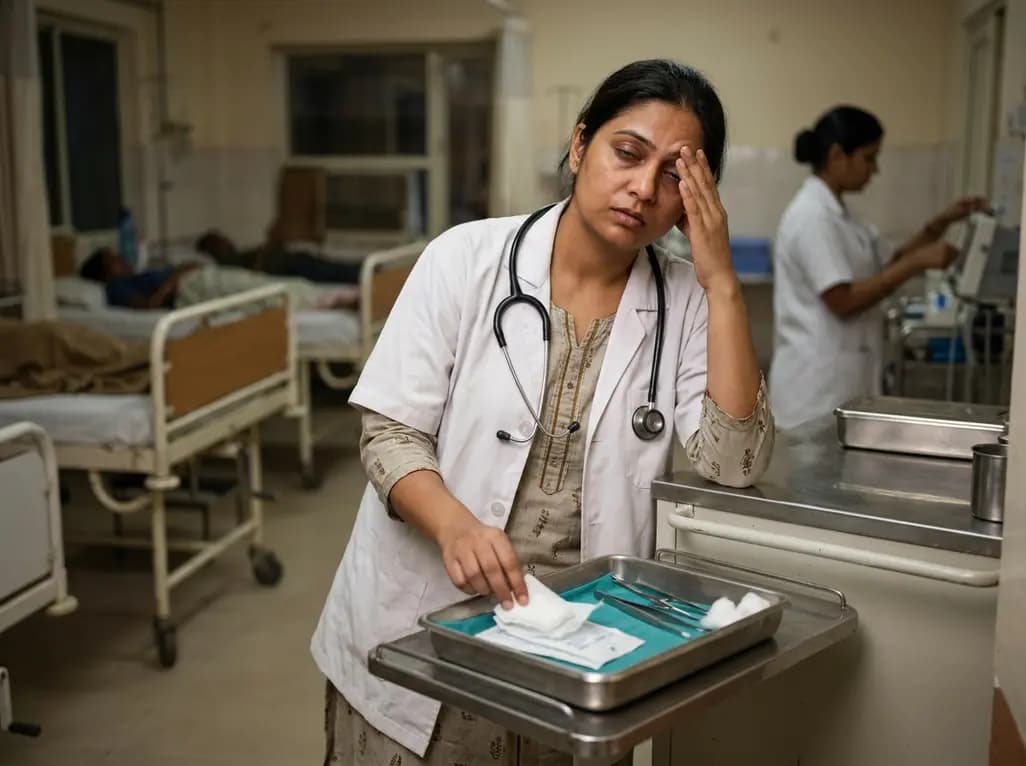
Addressing healthcare burnout patient safety concerns has become a paramount priority for medical institutions worldwide. Recent research highlights a disturbing correlation between provider exhaustion and compromised clinical standards, particularly in high-pressure environments. When clinicians reach a state of burnout, their ability to adhere to safety protocols often diminishes, creating significant risks for patients and staff alike.
A recent cross-sectional study conducted at Al Nahda General Hospital in Saudi Arabia offers critical insights into this relationship. Researchers surveyed 399 healthcare providers (HCPs), including physicians and nurses, to assess the prevalence of burnout and its impact on Patient Safety Management Activities (PSMA). The results were eye-opening, revealing a 41% prevalence of burnout among the participants.
The study found that middle-aged staff, specifically those aged 30 to 45, faced the highest risk of exhaustion. Furthermore, work schedules played a significant role, with night-shift workers exhibiting a higher burnout prevalence than those on morning shifts. This exhaustion directly translates into clinical lapses. For instance, HCPs experiencing burnout were nearly four times more likely to show suboptimal compliance with infection control guidelines. Additionally, they were significantly less familiar with standard precautions designed to prevent the spread of infections.
Beyond hygiene, burnout affects administrative and interpersonal aspects of care. The research indicated that exhausted providers were more likely to involve patients in decision-making only moderately rather than comprehensively. Moreover, they struggled more with consistent documentation and record-keeping. Consequently, these lapses in communication and administrative accuracy can lead to avoidable medical errors and decreased quality of care.
To address these challenges, hospitals must implement multi-pronged interventions. Organizations should focus on improving work-life balance, particularly for night-shift staff and middle-aged clinicians. Additionally, regular training on patient safety management and mental health support can help mitigate the effects of burnout. Ultimately, ensuring the well-being of healthcare providers is essential for maintaining a safe and effective healthcare environment.
Research indicates that middle-aged providers, particularly those aged 30 to 45, and night-shift workers exhibit the highest prevalence of burnout. Interestingly, younger staff (under 30) often show a significantly lower prevalence compared to their middle-aged counterparts.
Burnout is strongly associated with lapses in infection control compliance and a lack of familiarity with standard precautions. Furthermore, it impacts the quality of documentation, record-keeping, and the effectiveness of team communication regarding safety concerns.
Yes. Experts recommend multi-pronged interventions, including healthcare setting adjustments, depression screening, and improved work schedules. Strengthening interdisciplinary collaboration and work-life balance policies has also shown promise in reducing safety incidents.
Disclaimer: This content is for informational and educational purposes only. It is not a substitute for professional medical advice, diagnosis, or treatment. Always seek the advice of your physician or other qualified health provider with any questions you may have regarding a medical condition. Refer to the latest local and national guidelines for clinical practice.
References

Read summarized clinical updates, watch expert medical content, and earn CME certifications right from your smartphone.
Open your smartphone camera to scan and install.





A study at Al Nahda Hospital identifies a 41% burnout rate among HCPs, linking exhaustion to lapses in infection control and patient safety management....
4 months ago

As monsoon seasons elevate arboviral disease threats, Tamil Nadu has initiated an ICMR-monitored evaluation of the tetravalent dengue vaccine in Tenkasi district. Clinicians emphasize clinical monitoring, public prevention, and high-quality early pediatric care to reduce disease morbidity across endemic regions.
Today

A comparative cohort study evaluates vNOTES vs TLH hysterectomy for benign conditions, demonstrating shorter operative duration, faster return to daily activities, and equivalent female sexual function scores without increased dyspareunia.
Today

Review how tailored exercise programs benefit frail older patients with heart failure. Explore pathophysiological mechanisms, individualized training prescriptions, and strategies to overcome adherence barriers in clinical practice.
Today

This comparative study evaluates posterior labral tears with and without glenohumeral instability, highlighting distinct demographic patterns, MRI underestimation in stable shoulders, and successful arthroscopic repair outcomes.
Today

A clinical study demonstrates that early intervention with tocilizumab, either as monotherapy or bridged with corticosteroids, achieves significant proptosis reduction and resolves active inflammation in treatment-naive thyroid eye disease.
Today
