.webp&w=384&q=75)

Loading, please wait...
Loading, please wait...
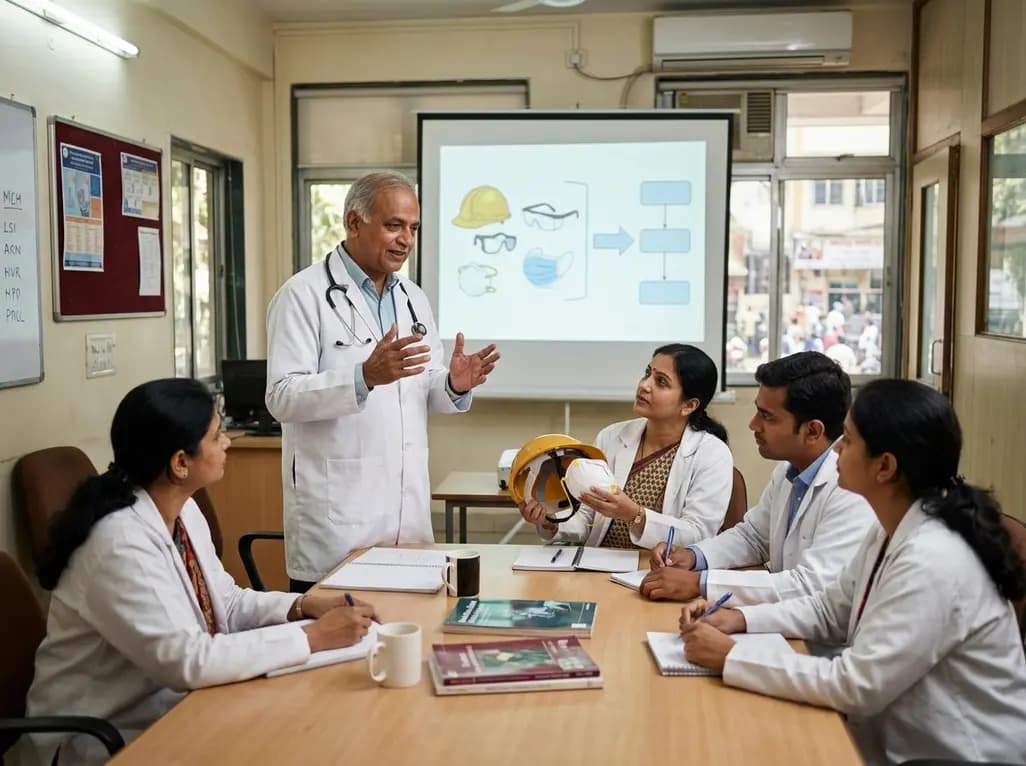
Workplace hazards pose significant risks to industrial employees, making proper safety protocols vital for long-term health. Despite the availability of protective gear, consistent usage often remains low due to psychological barriers and limited risk perception. A recent quasi-experimental study in Yasuj demonstrates that a Health Belief Model PPE training program can bridge this gap by addressing worker attitudes and perceived control.
Researchers recruited 109 factory workers and divided them into experimental and control groups to test educational efficacy. Specifically, the intervention group participated in six targeted sessions focusing on the psychological drivers of safety behavior. Consequently, the study measured significant changes in several key constructs, including knowledge, perceived susceptibility, and self-efficacy.
Furthermore, post-intervention results revealed that participants in the experimental group significantly improved their PPE-related behaviors. Specifically, the participants showed enhanced awareness of susceptibility to occupational injuries and a better understanding of the perceived severity of health risks. In contrast, the control group showed no major changes, highlighting the effectiveness of structured psychological frameworks in professional training.
The Health Belief Model offers a comprehensive way to understand why workers might ignore safety guidelines despite known risks. By focusing on increasing perceived benefits and reducing perceived barriers, companies can foster a robust culture of safety. Therefore, implementing these educational programs is a strategic move for improving occupational health outcomes and ensuring a safer working environment globally.
The model focuses on six key constructs: perceived susceptibility, severity, benefits, barriers, self-efficacy, and cues to action. These elements work together to drive behavioral change and improve compliance.
It targets the internal beliefs of workers, helping them recognize personal health risks and boosting their confidence in using safety equipment correctly to prevent injuries.
Disclaimer: This content is for informational and educational purposes only. It does not constitute professional medical or occupational safety advice. Always refer to the latest local and national guidelines for clinical practice and industrial safety standards.
References
1. Fereidouni Kamhari T et al. Boosting workplace safety: the effect of health belief model-based education on personal protective equipment use among workers in a cosmetics and personal care products factory in Yasuj. Int J Occup Saf Ergon. 2026 Jun 06. doi: 10.1080/10803548.2026.2677388. PMID: 42249752.
2. Mariani M et al. Study of Literature: Health Belief Model Components Influencing the Use of Personal Protective Equipment among Farmers. International Journal of Health Sciences. 2026. doi: 10.55606/ijhs.v6i1.6893.
3. ResearchGate. Investigating the Effect of Educational Interventions Based on the Health Belief Model on the Use of Personal Protective Equipment among the Workers of a Process Industry. 2026.

Read summarized clinical updates, watch expert medical content, and earn CME certifications right from your smartphone.
Open your smartphone camera to scan and install.





A study in Yasuj highlights how Health Belief Model-based education significantly improves PPE compliance and worker safety attitudes in industrial settings...
4 months ago

Review how tailored exercise programs benefit frail older patients with heart failure. Explore pathophysiological mechanisms, individualized training prescriptions, and strategies to overcome adherence barriers in clinical practice.
Today

Leucine Rich Bio has introduced South Asia's first comprehensive vaginal microbiome test, BugSpeaks. By profiling microbial dysbiosis, pathogens, and antimicrobial resistance, this next-generation diagnostic platform provides clinicians with deeper insights into recurrent infections, fertility, and reproductive health.
Today

In high-risk pulmonary embolism complicated by severe anemia and active uterine bleeding, systemic thrombolysis is contraindicated. Large-bore aspiration thrombectomy provides rapid hemodynamic rescue without fibrinolysis, supported by inferior vena cava filter placement and multidisciplinary critical care.
Today

This comparative study evaluates posterior labral tears with and without glenohumeral instability, highlighting distinct demographic patterns, MRI underestimation in stable shoulders, and successful arthroscopic repair outcomes.
Today

A clinical study demonstrates that early intervention with tocilizumab, either as monotherapy or bridged with corticosteroids, achieves significant proptosis reduction and resolves active inflammation in treatment-naive thyroid eye disease.
Today
