.webp&w=384&q=75)

Loading, please wait...
Loading, please wait...
The global opioid crisis continues to claim lives at an alarming rate, necessitating innovative public health strategies to prevent fatal overdoses. One such innovation gaining traction is the use of harm reduction vending machines. These automated units provide 24/7 access to life-saving supplies, including naloxone, fentanyl test strips, and sterile injection equipment. In the United States, overdose mortality remains a significant public health challenge, yet traditional methods of distributing risk reduction materials often face logistical and social barriers. Many individuals who use drugs encounter difficulties accessing pharmacies or community health centers due to limited hours, transportation issues, or the pervasive stigma associated with substance use disorders. Consequently, there is a critical need for low-barrier interventions that can operate independently of traditional healthcare infrastructure.
Furthermore, decentralized access models like vending machines offer a unique solution by providing anonymity and convenience. They are particularly relevant for populations that may be hesitant to engage with medical professionals or social workers. By placing these machines in strategic locations, public health authorities can extend their reach into communities that are currently underserved. This approach does not replace face-to-face clinical care but rather complements existing services by filling gaps in availability. Therefore, understanding the feasibility and acceptability of these machines is essential for scaling up harm reduction efforts effectively.
Recent research highlights a stark contrast in resource availability based on geographical urbanicity. Specifically, a study conducted in Maryland focused on people who use drugs (PWUD) across urban, suburban, and rural settings. The findings revealed that while urban participants generally had adequate access to naloxone through established needle exchange programs and pharmacies, those in suburban and rural areas faced significant hurdles. These non-urban participants frequently cited long travel distances and a lack of local distribution points as primary barriers to obtaining overdose reversal medications. Moreover, the rural environment often exacerbates the fear of being recognized, which further discourages individuals from seeking help at local clinics. Consequently, the disparity in access contributes to higher vulnerability in regions that are already struggling with limited healthcare resources.
In addition to physical distance, the rural landscape often lacks the high-density service networks found in cities like Baltimore. This makes the implementation of harm reduction vending machines even more vital for these areas. Suburban and rural residents often rely on a single pharmacy or clinic that may have restrictive policies or limited stock. However, by deploying automated dispensing units, health departments can provide a consistent supply of materials without requiring the presence of staff. This geographic tailoring of public health interventions ensures that resources are allocated where they are most needed, helping to bridge the widening gap between different types of communities.
Naloxone is an opioid antagonist that remains the gold standard for reversing life-threatening respiratory depression during an overdose. Providing this medication through harm reduction vending machines ensures that bystanders and peers—who are often the first responders at the scene of an overdose—have the tools necessary to save lives. Beyond naloxone, these machines can distribute fentanyl test strips, which allow users to identify the presence of potent synthetic opioids in their supply. This empowers individuals to make safer choices and reduces the likelihood of accidental poisoning. Clinical evidence suggests that when harm reduction tools are readily available, the incidence of fatal overdoses decreases significantly, as does the transmission of blood-borne pathogens like HIV and Hepatitis C.
Moreover, the integration of these machines into a broader public health framework supports the principles of addiction medicine. By focusing on immediate safety and risk reduction, clinicians can keep patients alive long enough to eventually engage them in long-term treatment and recovery programs. Transitioning from a purely punitive or restrictive approach to a proactive harm reduction model acknowledges the complexities of substance use. Consequently, the medical community must advocate for policies that simplify the distribution of these essential supplies. When patients have reliable access to sterile equipment and overdose reversal agents, the overall burden on emergency departments and intensive care units is reduced, creating a more sustainable healthcare ecosystem.
To ensure the success of any public health intervention, it is vital to gather input from the target population. Qualitative interviews with people who use drugs indicate nearly universal support for harm reduction vending machines. Participants often view these machines as a dignified way to access supplies without the fear of judgment or harassment. For many, the anonymity of a machine is its most appealing feature, as it removes the social friction inherent in face-to-face interactions. However, users also expressed specific concerns regarding the machines' maintenance and reliability. They emphasized that if a machine is frequently out of stock or broken, it loses its utility and diminishes trust in the program. Therefore, consistent oversight and replenishment are mandatory for maintaining user engagement.
Additionally, participants provided valuable insights into the ideal contents and placement of these units. Beyond naloxone, many suggested including hygiene kits, wound care supplies, and even informational brochures about local treatment options. Regarding location, the consensus was that machines should be placed in well-lit, accessible areas that are not directly under heavy police surveillance. This balance between visibility for ease of access and privacy for anonymity is crucial. By incorporating user feedback into the design and implementation phases, health authorities can create an intervention that truly meets the needs of the community. Consequently, the high level of acceptability suggests that these machines are a highly feasible tool for modern overdose prevention strategies.
The successful deployment of harm reduction vending machines requires careful planning and multisectoral collaboration. Public health departments must work alongside local law enforcement, community leaders, and healthcare providers to identify suitable locations. Ideal spots often include transit hubs, community centers, or the exterior of health clinics where power and security are available. Furthermore, the legal and regulatory framework must support the automated dispensing of naloxone, which may require adjustments to local pharmacy laws or standing orders. Oversight is equally important; a dedicated team should be responsible for monitoring inventory levels and ensuring the physical integrity of the machines. Without a robust logistical plan, even the most well-intentioned program may fail to achieve its intended impact.
In addition to logistics, the content of the machines should be dynamic and responsive to local trends. For example, in areas with a high prevalence of injected stimulants, the inclusion of different types of sterile equipment might be prioritized. Moreover, the machines can serve as a portal for communication, providing QR codes that link users to telehealth services or peer support networks. This creates a bridge between anonymous harm reduction and formal healthcare systems. Therefore, the strategic implementation of these units is not just about hardware; it is about creating a comprehensive network of support that adapts to the evolving drug landscape. By focusing on intentional placement and rigorous oversight, communities can maximize the life-saving potential of this technology.
While the Maryland study provides specific insights into the American context, the underlying principles are highly applicable to India's burgeoning opioid challenge. In states like Punjab, Manipur, and even urban centers like Delhi, the prevalence of injectable drug use necessitates a more decentralized approach to harm reduction. Currently, India relies heavily on Opioid Substitution Therapy (OST) centers and NGO-led outreach. However, these services often operate during limited hours and are concentrated in specific neighborhoods. Introducing harm reduction vending machines could provide a supplemental layer of protection, particularly for those who reside far from existing centers. This would align with the National AIDS Control Organisation (NACO) strategies while modernizing the delivery of care.
Furthermore, the cultural stigma surrounding drug use in India remains a significant barrier to service utilization. Automated machines could offer a discreet alternative for individuals who are otherwise unwilling to seek help due to social repercussions. Implementing such a program would require collaboration between the Ministry of Health and Family Welfare and local state departments to ensure regulatory compliance. Moreover, pilot programs could be used to evaluate the most effective supply mixes for the Indian population. Consequently, by learning from international models, India has the opportunity to lead in innovative public health solutions that prioritize the health and dignity of its citizens. Embracing these technologies could represent a pivotal shift in the nation's fight against the overdose epidemic and related health complications.
Harm reduction vending machines (HRVMs) provide 24/7 access to life-saving supplies, which is critical in areas where pharmacies or clinics have limited hours. They bridge the gap in resource access for rural and suburban populations who face travel barriers. Additionally, these machines offer a high degree of anonymity, reducing the impact of social stigma. By providing sterile supplies and naloxone consistently, they help lower overdose rates and the spread of infectious diseases in underserved communities.
Many individuals who use drugs avoid traditional healthcare settings due to fear of judgment or legal repercussions. Harm reduction vending machines remove the need for face-to-face interaction, allowing users to obtain necessary supplies privately. This anonymous access empowers individuals to prioritize their health without the anxiety of being recognized or shamed. By normalizing the availability of harm reduction tools in public spaces, these machines also contribute to a broader shift in perceiving addiction as a public health issue.
Effective machines should primarily stock naloxone and fentanyl test strips to prevent fatal overdoses. Other essential items include sterile syringes, alcohol swabs, and sharps containers to promote safer injection practices and reduce infection risks. Many programs also include hygiene products like soap, socks, and condoms to address broader health needs. Providing informational materials or QR codes for local treatment resources within the machine's interface can further assist users in finding long-term support and clinical care.
Disclaimer: This content is for informational and educational purposes only and does not constitute medical advice or a professional relationship. Always seek the advice of a qualified healthcare provider regarding any medical condition. Refer to the latest local and national guidelines for clinical practice.
References
Winiker AK et al. Harm reduction vending machines: An opportunity to bridge the resource access gap in non-urban communities. Health Place. 2026 Jun 28. doi: undefined. PMID: 42365716.
National AIDS Control Organisation (NACO). Harm Reduction Strategy for People Who Inject Drugs (PWID). Ministry of Health and Family Welfare, Government of India.
World Health Organization. Community management of opioid overdose. Geneva: WHO; 2014.

Read summarized clinical updates, watch expert medical content, and earn CME certifications right from your smartphone.
Open your smartphone camera to scan and install.





A study in Maryland explores the feasibility of harm reduction vending machines (HRVMs) to bridge access gaps for naloxone and other supplies among people who use drugs. HRVMs were highly acceptable, especially in rural and suburban areas where traditional barriers like stigma and distance persist.
3 months ago

Following regulatory scrutiny from FSSAI regarding promotional representations and lean muscle preservation claims, Dr. Reddy's Laboratories and Nestlé Health Science are currently reviewing the branding and marketing strategy for their joint nutritional supplement Celevida GLP+.
Today
A comprehensive scoping review synthesises evidence linking prenatal maternal mental health to long-term offspring neurodevelopment, evaluating neuroendocrine, inflammatory, and epigenetic pathways while highlighting clinical screening and future research priorities.
Today

The Directorate General of Health Services directs Indian states to halt the hazardous reuse and reprocessing of single-use medical devices. Discover regulatory implications under the Drugs and Cosmetics Act, critical infection risks, legal liabilities, and operational changes required across clinical specialties.
Today
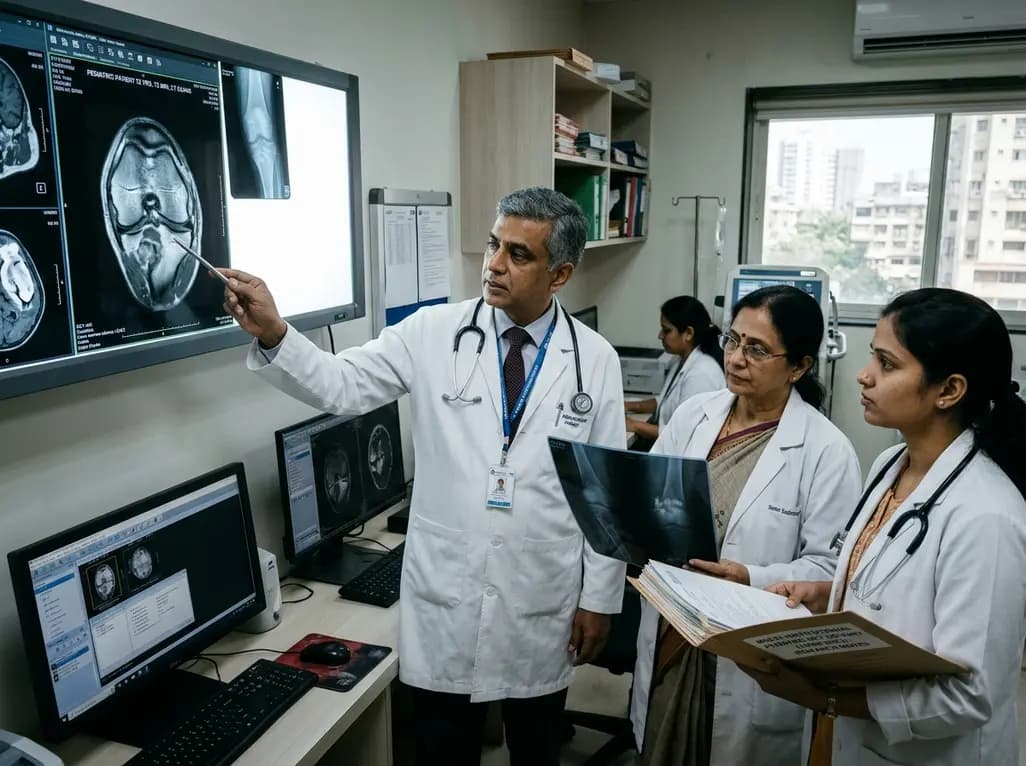
A 25-year multi-institutional cohort reveals high recurrence rates in pediatric giant cell tumor of bone, particularly in patients with open physes and bone marrow edema on preoperative MRI. Early surveillance and careful balance between growth plate preservation and tumor clearance are essential.
Today

India is advancing preventive healthcare by integrating genomics, artificial intelligence, and quantum technologies. With the SANGAM programme sequencing one million Indian genomes, clinicians can unlock personalized therapies, detect cardiometabolic risks early, and curb the burden of diabetes and heart disease.
Today
