.webp&w=384&q=75)

Loading, please wait...
Loading, please wait...

The recent hantavirus protocol breach at Radboudumc hospital underscores the importance of rigorous bio-safety measures. Furthermore, the hospital placed twelve staff members in quarantine following the mishandling of patient samples. This preventive action occurred after employees touched blood and urine without observing the strictest safety guidelines. However, health officials maintain that the risk of infection among these workers remains extremely low. Patient care continues without any interruption at the Nijmegen facility.
Dutch Health Minister Sophie Hermans recently addressed the parliament regarding the safety lapse. She confirmed that staff followed standard procedures but failed to implement the most stringent hantavirus-specific protocols. Consequently, the hospital chose to play it safe by isolating the exposed medics for six weeks. This serious virus requires precise handling to prevent any healthcare-associated transmission. Therefore, the institution is taking every precaution to keep the situation under control. Meanwhile, the patient involved remains under specialized care after returning from a cruise ship.
The World Health Organization (WHO) currently tracks an outbreak linked to the Hondius luxury cruise ship. Specifically, the official count has reached nine confirmed cases, with three reported deaths. These fatalities include a German national and a Dutch couple. Additionally, the WHO recognizes two suspected cases where testing was unavailable. Officials expect more cases soon due to the long incubation period of the virus. However, WHO chief Tedros Adhanom Ghebreyesus clarified that this situation is not a pandemic. He emphasized that the virus does not spread easily between humans compared to COVID-19.
Hantaviruses typically spread through contact with wild rodents or their excreta. Nevertheless, rare instances of person-to-person transmission can occur through very close contact. Symptoms often include high fever, muscle aches, and severe respiratory distress. In the current outbreak, one Spanish patient remains stable despite experiencing breathing difficulties. Another passenger in France is receiving intensive care. Health authorities in the United States and Italy are also monitoring individuals who traveled on the ship or connected flights. Consequently, international medical teams are working tirelessly to contain the spread across multiple borders.
Q1: Why did the Dutch hospital quarantine its staff members?
The hospital quarantined twelve staff members because they handled blood and urine samples without following the strictest safety protocols. This measure ensures that any potential infection is contained immediately.
Q2: Is the current hantavirus outbreak similar to the COVID-19 pandemic?
No, health officials state that hantavirus does not spread easily from person to person. While the virus is serious, it does not currently pose a pandemic threat like COVID-19.
Q3: How many deaths have officials linked to this specific outbreak?
As of the latest reports, three individuals have died during this outbreak. The victims include two Dutch citizens and one German national who were aboard the Hondius ship.
Disclaimer: This content is for informational and educational purposes only. It does not constitute medical advice or replace professional judgment. Refer to the latest local and national guidelines for clinical practice.
References

Read summarized clinical updates, watch expert medical content, and earn CME certifications right from your smartphone.
Open your smartphone camera to scan and install.





Dutch hospital quarantines 12 staff after a hantavirus protocol breach. WHO reports nine cases in the Hondius outbreak; more cases are expected shortly....
5 months ago
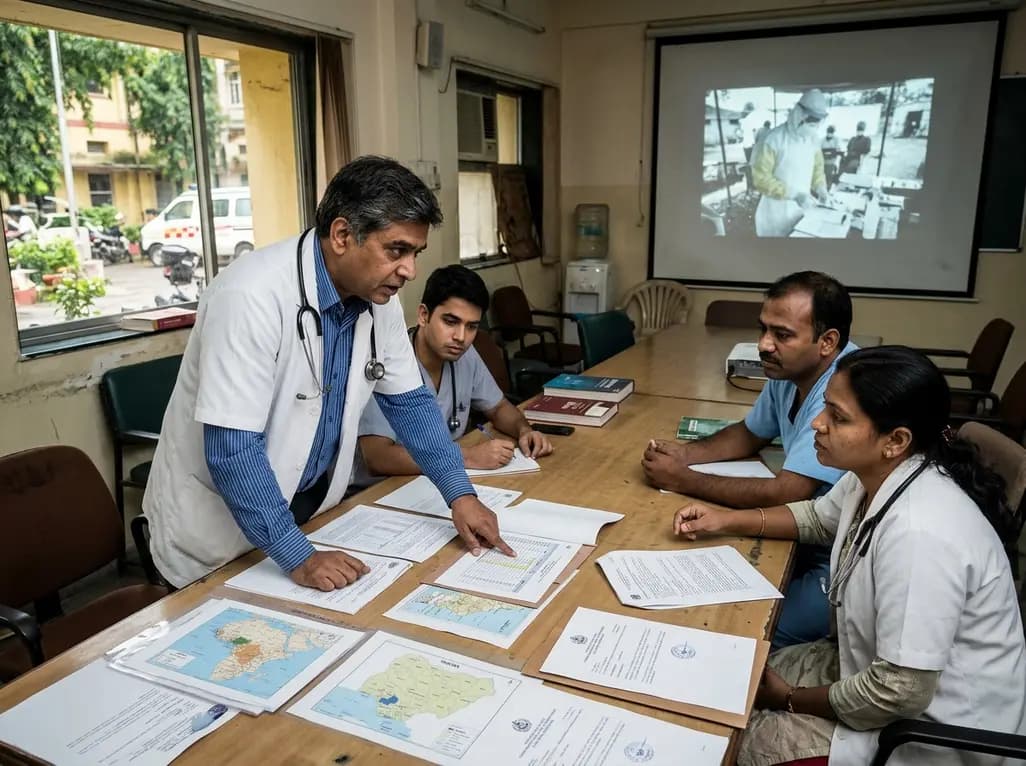
Following Nigeria's first recorded Ebola case linked to regional travel, the Africa CDC has convened an emergency ministerial summit. This alert underscores critical clinical priorities for healthcare professionals, including differentiating early viral infection from malaria, implementing barrier nursing, and triage.
Today

Leucine Rich Bio has introduced South Asia's first comprehensive vaginal microbiome test, BugSpeaks. By profiling microbial dysbiosis, pathogens, and antimicrobial resistance, this next-generation diagnostic platform provides clinicians with deeper insights into recurrent infections, fertility, and reproductive health.
Today

Review how tailored exercise programs benefit frail older patients with heart failure. Explore pathophysiological mechanisms, individualized training prescriptions, and strategies to overcome adherence barriers in clinical practice.
Today

This comparative study evaluates posterior labral tears with and without glenohumeral instability, highlighting distinct demographic patterns, MRI underestimation in stable shoulders, and successful arthroscopic repair outcomes.
Today

A clinical study demonstrates that early intervention with tocilizumab, either as monotherapy or bridged with corticosteroids, achieves significant proptosis reduction and resolves active inflammation in treatment-naive thyroid eye disease.
Today
