.webp&w=384&q=75)

Loading, please wait...
Loading, please wait...

Accurate injury assessment plays a central role when clinicians manage acute hamstring injuries in competitive sports. A clinician evaluates the hamstring strain MRI grade to formulate reliable return-to-play timelines. This objective approach protects athletes from premature clearance. In a comprehensive thirteen-season study of elite Australian cricketers, researchers analyzed one hundred forty-one magnetic resonance imaging scans. The overall incidence reached 3.2 injuries per one hundred players per season. Notably, male cricketers sustained injuries at four times the female rate. They recorded 4.5 versus 1.2 injuries per one hundred players annually. Furthermore, the biceps femoris muscle sustained injury far more often than any other muscle, representing sixty-three percent of all confirmed strains. Athletes remained unavailable for a median duration of twenty-two days and missed three matches across all grades. However, recovery times varied markedly according to anatomical location and structural disruption. Clinicians must recognize these epidemiological disparities when treating professional athletes. Therefore, baseline imaging provides crucial objective context for managing player availability and designing individualized rehabilitation pathways. Consequently, sports physicians can accurately anticipate match absences and prepare coaching staff for realistic team modifications.
Modern sports radiology relies extensively on the British Athletics Muscle Injury Classification system to characterize tissue damage. This diagnostic framework assigns numerical grades from zero to four based on the extent of architectural disruption. In addition, the classification incorporates alphabetical subcategories that denote specific anatomical zones. Letter 'a' denotes myofascial injury, letter 'b' reflects musculotendinous junction involvement, and letter 'c' indicates an intratendinous lesion. In the elite cricket cohort, grade 2C injuries emerged as the single most frequent presentation, accounting for twenty-seven percent of all recorded events. Grade 2 injuries represent moderate tears with architectural disruption between five and fifteen centimeters in length. Moreover, injuries graded 2 or 3 resulted in significantly longer absences than minor grade 1 strains. Specifically, grade 2 injuries caused greater time away from competition with statistical significance. Grade 3 tears similarly prolonged time loss compared to minor grade 1 injuries. Thus, the classification system effectively distinguishes mild muscle soreness from structurally consequential pathology. Medical staff can consequently communicate injury severity with greater anatomical precision. Furthermore, this uniform terminology enables orthopedic surgeons, radiologists, and physical therapists to collaborate effectively during acute triage.
The presence of tendon involvement drastically alters rehabilitation trajectories in competitive athletes. The Australian cricket investigation demonstrated that injuries involving the intramuscular tendon caused significantly more lost days than isolated muscle strains. Biologically, tendons contain dense type I collagen bundles that demonstrate slower metabolic turnover than adjacent vascular muscular tissue. In contrast, skeletal muscle fibers heal rapidly due to abundant blood perfusion and satellite cell activation. When an injury disrupts the intramuscular tendon, mechanical tensile load transfers poorly across the kinetic chain. Therefore, premature high-speed running creates excessive shear stress across the healing scar tissue. Clinicians frequently observe recurrent tears when athletes return to sport before tendon structural remodeling finishes. Moreover, the statistical analysis demonstrated a highly significant difference in player absence when tendon tissue suffered disruption. Rehabilitation teams must consequently extend protection phases for tendinous injuries. Clinicians should incorporate progressive eccentric strengthening, heavy slow resistance training, and gradual high-speed sprinting exposures. This methodical progression minimizes reinjury risk and safeguards long-term career durability. Additionally, serial clinical testing ensures that the musculotendinous junction handles tensile stress before competitive match simulation.
Pace bowlers experience unique physiological and mechanical demands that place extraordinary stress on the posterior thigh compartment. During the delivery stride, front-foot plant produces ground reaction forces exceeding five to seven times body weight. Subsequently, the bowler executes rapid trunk flexion and knee extension, imposing extreme eccentric loads on the lead hamstring. The study confirmed that pace bowlers missed significantly more days than athletes with other dominant cricket skills for grades B and C injuries combined. Batsmen and spin bowlers generate different kinematic patterns and tolerate earlier match re-entry. In contrast, fast bowlers require maximal velocity run-ups and violent braking forces to deliver high-speed deliveries. Consequently, a bowler returning with residual weakness risks severe acute re-tears or chronic hamstring dysfunction. Medical departments must therefore enforce strict bowling-specific return criteria. These criteria include controlled run-up progressions, workload monitoring through wearable sensors, and repeated high-intensity bowling spells in practice nets. Furthermore, strength coaches should address pelvic control and core stability to mitigate excessive anterior pelvic tilt during bowling delivery. Ultimately, individualizing rehabilitation according to player role ensures safe athletic reintegration and optimal performance on field.
While magnetic resonance imaging provides indispensable anatomical clarity, clinicians must interpret radiological findings within comprehensive clinical contexts. The authors noted that treating doctors and physiotherapists had access to the scans during clinical management. Consequently, MRI findings may have influenced the return-to-play decisions by encouraging cautious protocols for high-grade tears. Clinicians should avoid relying solely on structural imaging to dictate athletic clearance. Instead, sports medicine specialists must combine radiological grades with rigorous functional testing and subjective player readiness. Athletes should achieve symmetrical isometric hamstring strength, pain-free full active range of motion, and confident execution of maximal sprint efforts. Furthermore, GPS tracking metrics should confirm that the player tolerates match-intensity accelerations and decelerations during sport-specific drills. When managing athletes in cricket-dominant nations like India, clinicians encounter diverse competitive levels ranging from grassroots tournaments to international franchise leagues. Therefore, adhering to structured return-to-play frameworks prevents catastrophic reinjuries. Clinicians optimize outcomes by blending precise diagnostic classification with criteria-based functional progression. Additionally, regular communication between medical personnel, conditioning coaches, and team selectors prevents premature match re-entry under competitive pressure.
A higher hamstring strain MRI grade strongly correlates with prolonged recovery duration. Grade 1 strains typically resolve within two weeks because tissue disruption remains minimal. Conversely, grade 2 and grade 3 tears involve extensive architectural damage that demands four to eight weeks or more. Furthermore, injuries involving the intramuscular tendon require extended biological healing. Clinicians use these radiological classifications to set realistic recovery milestones, manage player expectations, and prevent premature competition.
Fast bowlers generate tremendous eccentric forces in the hamstring during the front-foot delivery stride. The lead limb undergoes violent deceleration while the trunk flexes rapidly, placing maximum mechanical strain on the healing musculotendinous tissues. Consequently, pace bowlers require greater structural healing and functional reconditioning than batsmen or spin bowlers before returning safely. Medical teams mandate progressive bowling workloads and high-speed running drills to ensure tissue resilience before sanctioning full competitive match participation.
Intramuscular tendon involvement signifies injury to the dense central or peripheral collagenous tendon framework, classified as category 'c' in the BAMIC system. Tendons possess limited blood supply compared to vascular muscle fibers, which dramatically slows cellular healing and tissue remodeling. Therefore, intratendinous tears exhibit higher reinjury rates if athletes accelerate rehabilitation prematurely. Clinicians must apply specialized eccentric strengthening and delayed high-velocity sprinting to protect the vulnerable tendon until structural integrity returns.
Disclaimer: This content is for informational and educational purposes only... Refer to the latest local and national guidelines for clinical practice.
References

Read summarized clinical updates, watch expert medical content, and earn CME certifications right from your smartphone.
Open your smartphone camera to scan and install.





A retrospective cohort study reveals how hamstring strain MRI grade predicts return to play timelines in elite cricket. Higher grades and intramuscular tendon involvement significantly prolong rehabilitation, particularly for fast bowlers, emphasizing structural imaging for personalized recovery.
Today

Preclinical research reveals that the hydrophilic extract of the inner bran fraction of rice attenuates skeletal muscle proteolysis in protein-deficient rats, restoring glutathione and polyamine metabolites while downregulating Atrogin-1 and FoxO1 expression.
Today
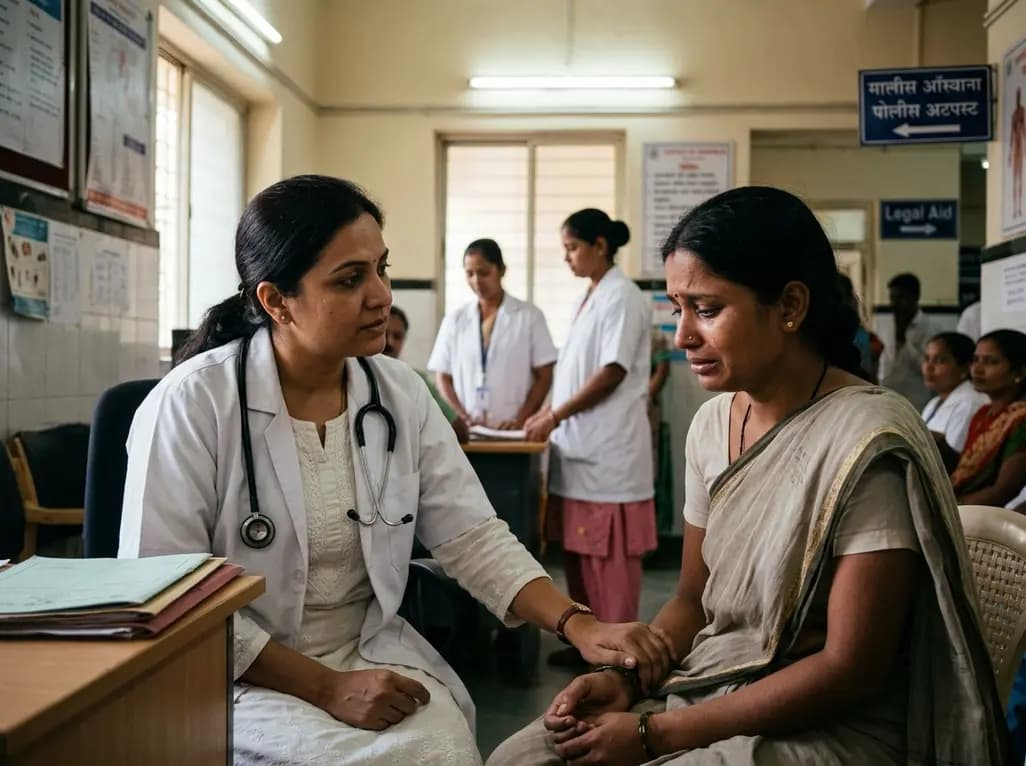
A recent qualitative study evaluates institutional gaps across health, police, and justice sectors in supporting survivors of intimate partner violence. Healthcare providers must bridge procedural fragmentation with empathetic, trauma-informed care and cross-sector coordination to safeguard vulnerable patients.
Today
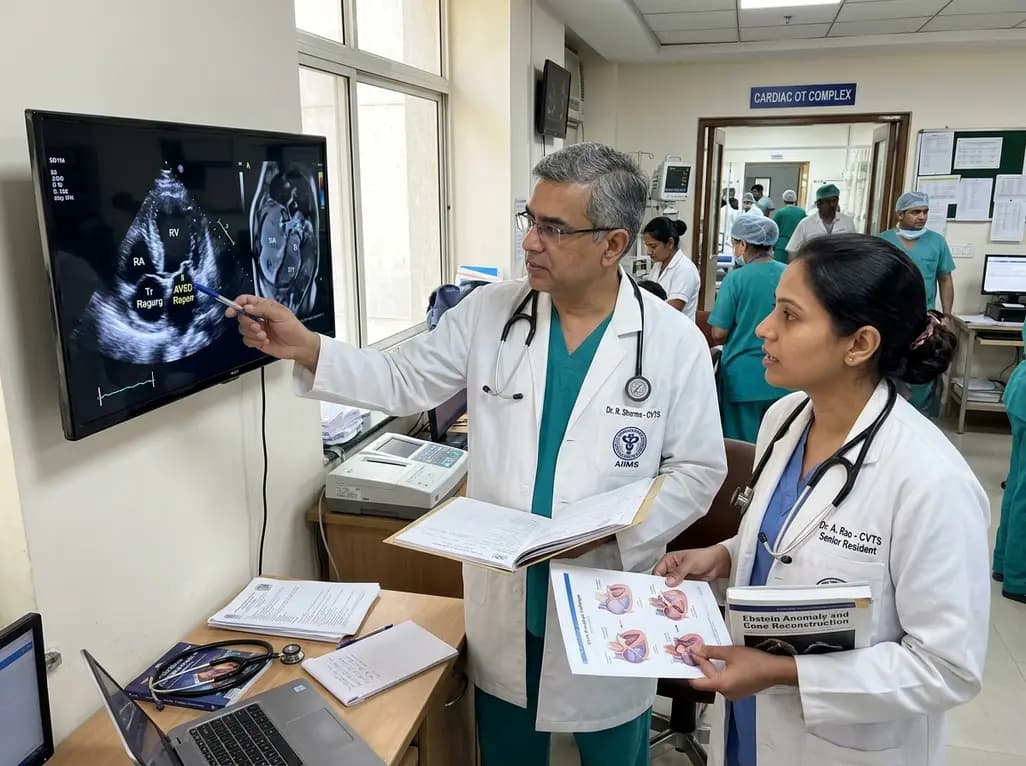
A review of the Cone procedure for severe right atrioventricular valve insufficiency in atypical Ebstein anomaly following partial AVSD repair, emphasizing operative technique and ventricular recovery.
Today
A cross-sectional study reveals a strong positive correlation between problematic internet use and kinesiophobia in adults aged 18-45 with non-specific low back pain, highlighting how digital overuse reinforces movement fear and complicates musculoskeletal recovery.
Today
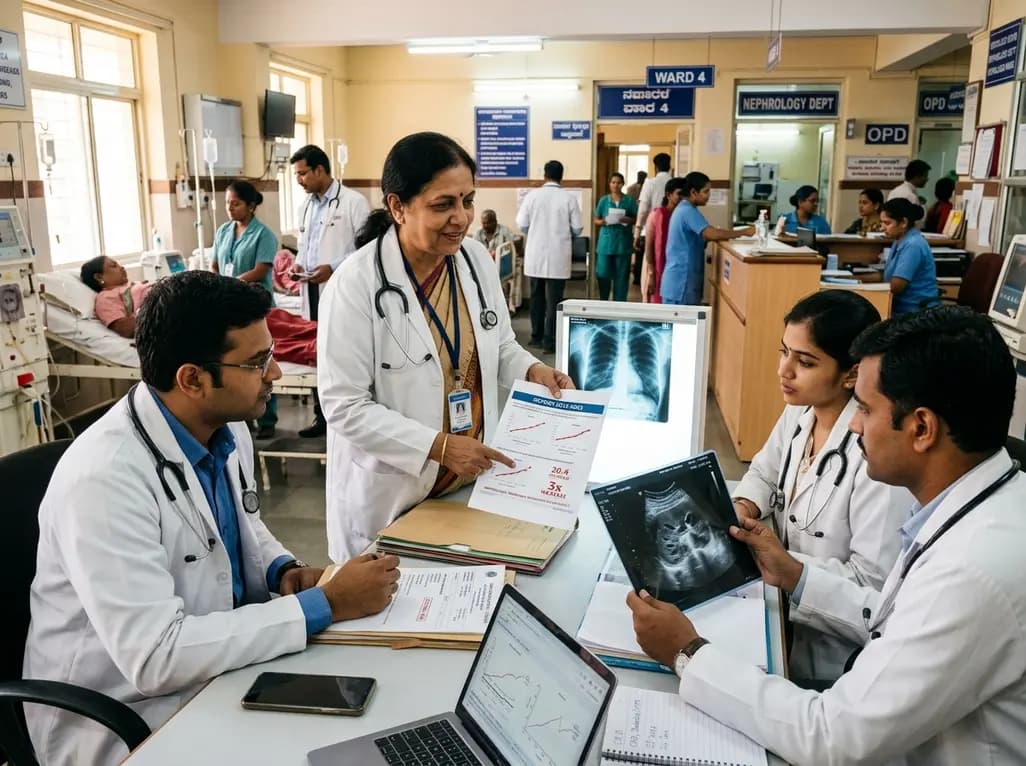
Recent data from Karnataka reveals a threefold surge in genitourinary and renal deaths over ten years. Driven by uncontrolled diabetes, hypertension, and emerging lifestyle hazards, this epidemiological shift highlights an urgent need for proactive screening and multidisciplinary nephrology management in primary care.
Today
