.webp&w=384&q=75)

Loading, please wait...
Loading, please wait...

Recent neurobiological investigations into the gut-brain axis demonstrate an intricate relationship between gut microbiota and OCD. Clinicians traditionally view obsessive-compulsive disorder as a primary psychiatric condition driven by cortico-striato-thalamo-cortical circuit abnormalities. However, mounting evidence indicates that gastrointestinal microbes actively influence brain function, neurotransmission, and behavioral regulation. Observational cohorts frequently report altered microbial diversity in patients suffering from compulsive phenotypes. Nevertheless, traditional observational trials fail to differentiate true biological etiology from reverse causality or environmental confounding. For example, psychotropic medications, chronic psychological stress, and distinct dietary habits alter intestinal flora independently. Consequently, medical researchers have struggled to determine whether gastrointestinal dysbiosis causes obsessive symptoms or merely reflects secondary distress. To address this dilemma, investigators deployed a comprehensive two-sample Mendelian randomization study. This genetic methodology evaluates whether specific bacterial communities causally initiate or protect against obsessive-compulsive pathology. Furthermore, clarifying this causal framework provides crucial diagnostic clarity for psychiatric practitioners. By establishing whether intestinal microorganisms drive compulsive phenotypes, clinicians can develop targeted microbial therapeutic strategies.
To overcome the inherent biases of observational research, scientists applied a two-sample Mendelian randomization framework. This sophisticated analytical approach leverages functional single nucleotide polymorphisms as robust instrumental variables for microbial exposures. Because human alleles undergo random assortment during meiosis, genetic variants remain naturally protected from common environmental confounders. Furthermore, this genetic allocation precedes disease onset, which decisively eliminates reverse causality. The investigators obtained comprehensive Genome-Wide Association Study summary statistics from the international MiBioGen consortium, encompassing 18,340 participants. In parallel, they extracted corresponding genetic data for obsessive-compulsive disorder from a large psychiatric cohort of 199,169 individuals. Additionally, the research team implemented stringent quality controls to ensure instrument validity. They strictly selected genetic instruments displaying an F-statistic greater than ten, thereby preventing weak instrument bias. Moreover, the analysts employed inverse-variance weighted regression as their primary statistical evaluation tool. They complemented this method with sensitivity analyses, including MR-Egger regression, to detect potential horizontal pleiotropy. Consequently, these meticulous precautions ensured that observed associations represented genuine causal effects rather than statistical artifacts.
The Mendelian randomization analysis revealed striking bidirectional effects across multiple taxonomic levels of intestinal microflora. Specifically, the researchers identified distinct bacterial groups that significantly altered susceptibility to obsessive-compulsive disorder. Among these findings, bacteria belonging to the order Bacillales demonstrated a substantial positive association with increased disorder risk. Patients carrying genetic variants predisposing them to elevated Bacillales abundance exhibited higher odds of developing obsessive-compulsive features. Conversely, other bacterial lineages displayed pronounced protective properties against the psychiatric disorder. Notably, the study revealed that abundant colonization by the phylum Proteobacteria significantly reduced the likelihood of obsessive symptoms. In addition, several discrete bacterial genera modulated psychiatric risk in contrasting directions, illustrating complex taxonomic influences. Therefore, obsessive-compulsive vulnerability does not stem from a generic disruption of microbial mass alone. Instead, specific bacterial metabolic outputs determine clinical susceptibility. Furthermore, extensive sensitivity analyses confirmed that these microbial associations remained consistent across statistical models without pleiotropic distortion. Accordingly, future diagnostics must move beyond broad microbial diversity metrics to quantify individual bacterial taxa.
Understanding how gastrointestinal microbes influence cerebral circuitry requires examining established communication channels along the gut-brain axis. Intestinal bacteria actively produce neuroactive compounds, including serotonin, gamma-aminobutyric acid, and microbial short-chain fatty acids like acetate and butyrate. When microbial dysbiosis emerges, bacterial metabolite production becomes altered. Consequently, impaired short-chain fatty acid synthesis compromises intestinal mucosal integrity, causing increased gut permeability. In addition, systemic leakage of bacterial endotoxins such as lipopolysaccharides triggers persistent, low-grade neuroinflammation. Circulating pro-inflammatory cytokines breach the blood-brain barrier and subsequently activate microglial cells in the striatum and basal ganglia. Because these specific cerebral structures regulate repetitive actions and threat appraisals, ongoing neuroinflammation disrupts cortico-striatal transmission. Furthermore, gut microbes communicate directly with the central nervous system through vagal nerve stimulation. For example, microbial alterations influence vagal afferent signaling, which modifies emotional processing and compulsive motor loops. Similarly, gut bacteria regulate host tryptophan availability, directly shifting systemic serotonin synthesis away from neuroprotective pathways. Therefore, these biochemical pathways collectively explain how altered intestinal ecology precipitates intrusive obsessive symptoms.
These genetic findings offer profound clinical implications for contemporary psychiatric practice and holistic patient assessment. Traditionally, clinicians treat obsessive-compulsive disorder primarily with cognitive behavioral therapy and high-dose selective serotonin reuptake inhibitors. However, approximately one-third of treated individuals experience treatment resistance or incomplete symptom remission under standard protocols. Therefore, identifying modifiable biological targets outside the central nervous system represents an urgent therapeutic priority. Clinicians should increasingly evaluate gastrointestinal symptoms, dietary habits, and systemic inflammatory markers during comprehensive psychiatric evaluations. Furthermore, understanding the causal role of the microbiome opens promising avenues for adjunctive, targeted interventions. For instance, specific dietary modifications rich in prebiotic fibers can selectively foster beneficial protective bacterial taxa. Similarly, well-designed psychobiotic supplements might eventually counteract pro-inflammatory strains like Bacillales in susceptible individuals. Nevertheless, medical practitioners must exercise clinical caution before recommending unvalidated probiotic regimens to patients. Currently, clinicians should maintain guideline-based psychopharmacology while actively promoting nutritional interventions that support overall gut health. Ultimately, integrating microbiome science into clinical psychiatry fosters a more comprehensive, multi-system approach.
Mendelian randomization utilizes human genetic variants as instrumental variables to deduce unconfounded causal relationships between exposures and clinical outcomes. Consequently, the recent two-sample analysis demonstrates that gut dysbiosis directly alters obsessive-compulsive disorder risk. This genetic methodology bypasses typical confounding factors such as dietary discrepancies, psychotropic medications, and reverse causation inherent in observational studies.
The investigation revealed that distinct bacterial taxa exert opposing effects on obsessive-compulsive disorder susceptibility. Specifically, microorganisms within the class Bacillales and related taxa significantly increase disease risk. In contrast, beneficial organisms, including members of the phylum Proteobacteria, demonstrate a protective effect. Therefore, differential abundance of specific bacterial lineages actively modulates neuropsychiatric vulnerability.
Current evidence does not support replacing standardized obsessive-compulsive disorder treatments with commercial probiotic supplements. Although genetic studies identify a causal microbiota-brain link, randomized clinical trials must first establish therapeutic strains, safety profiles, and appropriate dosing. Clinicians should maintain established treatments like cognitive behavioral therapy and pharmacotherapy while monitoring gut health and nutritional habits.
Disclaimer: This content is for informational and educational purposes only, and does not substitute professional medical advice, diagnosis, or treatment. Always consult a qualified healthcare provider for specific clinical decisions. Relying on any information in this article is solely at your own risk. Refer to the latest local and national guidelines for clinical practice.
References

Read summarized clinical updates, watch expert medical content, and earn CME certifications right from your smartphone.
Open your smartphone camera to scan and install.





A two-sample Mendelian randomization analysis demonstrates a causal link between gut microbiota and obsessive-compulsive disorder (OCD). The study identifies specific bacterial taxa that either increase risk or confer protection, highlighting new avenues for gut-brain axis research and psychiatric interventions.
Today

Left bundle branch pacing is an emerging physiological resynchronization strategy for heart failure. While observational data and some trials show benefits over biventricular pacing, divergent trial outcomes highlight the importance of confirmed conduction capture and specialized operator technique.
Today

A retrospective study of 86,012 pregnancies demonstrates that size-selective cfDNA enrichment boosts mean fetal fraction to 18.88% and achieves a 59.20% PPV for fetal copy number variants. However, 85.83% of CNVs showed size discrepancies, underscoring the mandatory role of confirmatory microarray testing.
Today
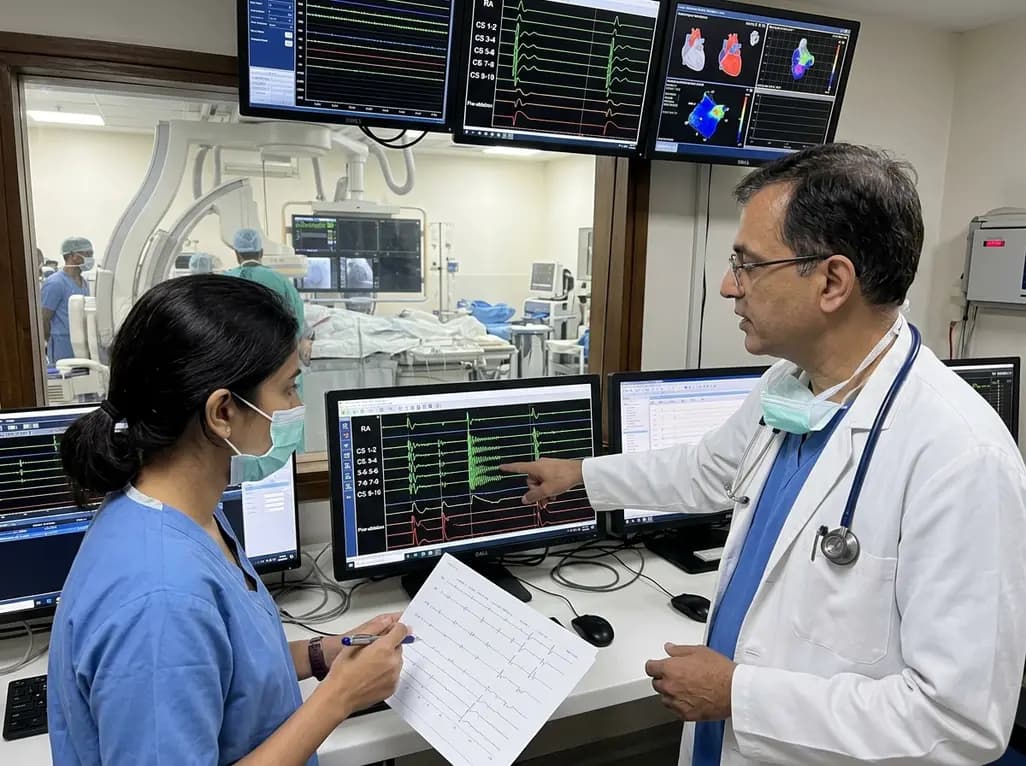
Radiofrequency catheter ablation of the cavotricuspid isthmus successfully terminates typical atrial flutter. This article reviews the mechanisms driving coronary sinus electrogram changes, wavefront activation pathways, and clinical criteria to verify bidirectional block during electrophysiology studies.
Today

A recent investigation examined load-dependent kinetic and kinematic profiles during two-way ballistic exercise across 30% to 80% 1-RM. Findings highlight load effects on velocity, impulse, and power, offering sports physicians objective guidance for neuromuscular conditioning and rehabilitation.
Today

A cross-sectional study demonstrates that increased BMI in adolescents significantly enhances mandibular length and alters salivary adipokines like adiponectin and resistin, providing novel insights into craniofacial growth and orthodontic planning.
Today
