.webp&w=384&q=75)

Loading, please wait...
Loading, please wait...
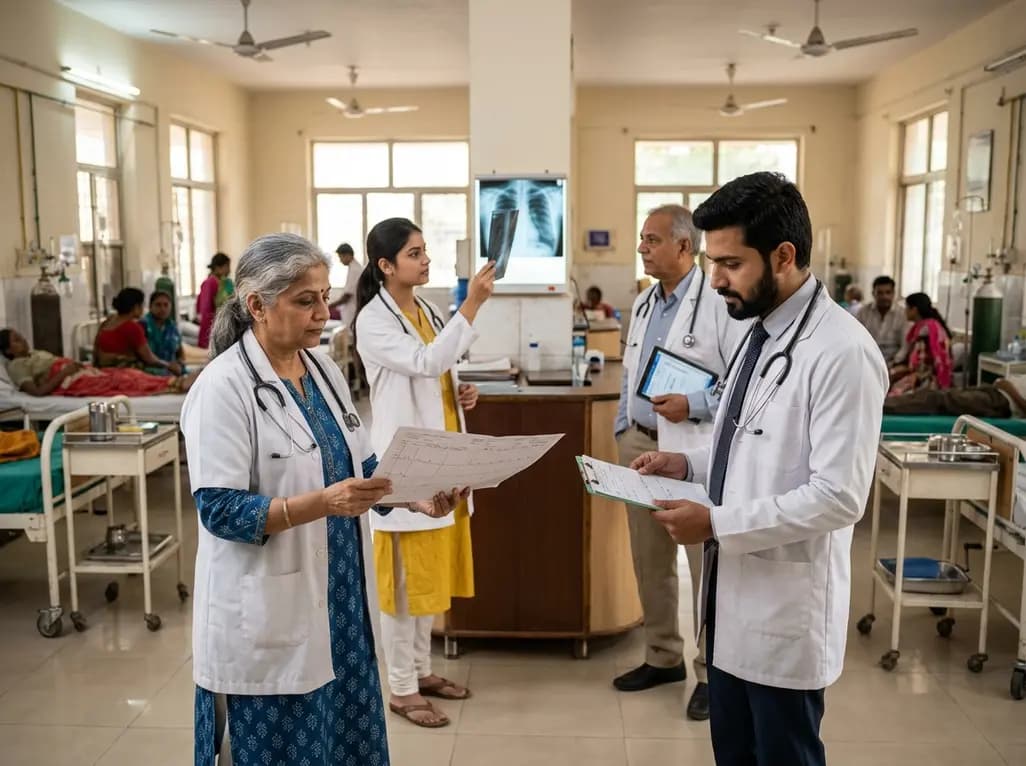
The Gujarat government recently launched an ambitious public health initiative to secure pediatric health across the state. Specifically, the newly introduced Gujarat Health Passport tracks child and adolescent wellness from birth to age 18. This comprehensive project operates under the School Health - Rashtriya Bal Swasthya Karyakram (SH-RBSK) framework. Consequently, this system offers a robust mechanism for families and healthcare providers to monitor long-term clinical development. By establishing a continuous record, this medical document bridges the historic gap between digital databases and real-world bedside care.
The foundational objective of this initiative lies in establishing a continuous and reliable child health biography. Previously, medical teams recorded health screenings on digital portals. However, parents did not possess a handy document for routine follow-up care. Therefore, the Gujarat government introduced this card to bridge the critical gap in pediatric health tracking. This project operates under the guidance of Chief Minister Bhupendra Patel and the national vision of a healthy childhood. Furthermore, the statewide rollout began on June 27, 2026, under the direction of Union Minister Amit Shah. Around 1.89 crore children will receive these specialized passports across the state. Consequently, families can actively participate in managing their children's ongoing clinical journeys. Clinicians also benefit from having immediate access to structured medical backgrounds. In essence, this framework establishes a solid foundation for preventative pediatric medicine. Additionally, the physical document is fully integrated with digital databases to prevent information loss. Ultimately, this effort aims to build a robust and healthier generation of citizens.
To deliver this program efficiently, the state utilizes 992 mobile health teams. These dedicated medical teams conduct comprehensive yearly examinations in multiple local settings. Specifically, screenings occur at Anganwadis, schools, madrasas, gurukuls, and other specialized educational centers. Consequently, this direct approach ensures that children in remote areas receive quality health assessments. The process to obtain the document is remarkably simple and rapid. Parents do not need to submit any additional documentation to participate. Instead, health personnel perform screenings directly on-site at these institutions. Once the medical data is recorded on the digital platform, families receive the document immediately. Therefore, this streamlined model eliminates unnecessary bureaucratic delays. Furthermore, it encourages immediate clinical intervention for any identified health challenges. Mobile teams can counsel parents on developmental milestones and early childhood nutritional needs. Additionally, this systematic method ensures no child gets left behind in rural communities. Ultimately, this structured delivery mechanism guarantees widespread access and reliable clinical registration for millions.
The new passport represents much more than a simple identity card. It contains a comprehensive record of critical age-specific health check-ups. Specifically, it tracks the four key clinical domains, known as the 4Ds under SH-RBSK guidelines. These domains consist of birth defects, childhood deficiencies, pediatric diseases, and developmental delays or disabilities. By focusing on these categories, clinicians can identify crucial issues early in life. Consequently, early therapeutic intervention becomes significantly easier and more effective. Additionally, the document chronicles the child's physical and mental growth milestones. It also records nutritional status, follow-up referrals, and targeted lifestyle recommendations. Therefore, parents receive a continuous educational resource regarding their child's holistic well-being. Furthermore, the passport includes contact details for essential emergency helpline numbers. By keeping all this critical clinical data in one handy book, parents are empowered to navigate clinical pathways easily. In essence, it serves as a reliable healthcare diary throughout the formative years of childhood. Thus, the state ensures that minor health issues do not escalate into chronic life-long conditions.
Maintaining an updated medical history requires a structured and straightforward update protocol. Therefore, the government established distinct and easy pathways for annual passport renewal. For children up to five years of age, primary care medical officers handle renewals. Similarly, these medical officers manage renewals for children who do not attend school. Conversely, school principals coordinate the annual updates for all school-going children. This distributed responsibility ensures that the renewal process remains highly efficient. Moreover, the state has fully integrated these physical cards with the SH-RBSK digital portal. If a physical copy is lost or damaged, parents can quickly get a replacement. This seamless backup ensures that clinical details are never permanently lost. Consequently, the healthcare system maintains a perfect digital double of each child's status. Furthermore, this dual system simplifies the process of clinical audit and program evaluation. By synchronizing physical records with secure databases, the government protects individual health privacy. In essence, this balanced approach combines traditional tangible convenience with cutting-edge technology.
A primary goal of this statewide program is to enhance parental involvement in child health. Traditionally, parents have been passive recipients of medical services. However, this handy health booklet turns them into active clinical partners. By keeping the record at home, families remain continuously informed about pending immunizations and screenings. Furthermore, this dynamic empowers parents during routine doctor visits or specialized referrals. Pediatricians and general practitioners also gain immediate access to a comprehensive historical baseline. Therefore, they do not have to rely solely on maternal memory for past medical history. Additionally, this historical context prevents medical errors and duplication of diagnostic tests. Consequently, pediatric healthcare becomes safer, more efficient, and highly personalized. In essence, the initiative fosters a strong collaborative bond between families and local clinical systems. It also reduces the administrative burden on primary care centers across Gujarat. Ultimately, this systemic improvement elevates the quality of care provided to young individuals. By transforming pediatric monitoring, the state paves the way for a healthier national future.
Q1: Who is eligible to receive the Gujarat Health Passport?
Every child and adolescent in Gujarat, from birth up to the age of 18, is fully eligible to receive this medical document. The state aims to cover approximately 1.89 crore young individuals through this program. No additional documentation or application is necessary. Screenings are conducted directly at schools and local community centers, and the passport is issued immediately after clinical evaluations are completed.
Q2: How are these passports renewed each year?
The annual renewal process is simplified to ensure high compliance across communities. For school-going children, the respective school principals coordinate the updates during the school year. Conversely, for children under five years old and those who are not enrolled in school, local medical officers at Primary Health Centres handle the annual renewal process. This dual pathway prevents administrative bottlenecks and guarantees continuous health tracking.
Q3: What happens if a physical passport is lost or damaged?
If the physical passport is lost or damaged, parents do not need to worry about losing their child's health history. Because the system is synchronized with the digital portal, a backup is safely maintained online. Parents can easily obtain a new physical copy from the mobile health screening teams. This digital integration ensures that the clinical record remains complete and continuous throughout adolescence.
Disclaimer: This content is for informational and educational purposes only. It does not constitute medical advice or replace professional judgment. Refer to the latest local and national guidelines for clinical practice.
References

Read summarized clinical updates, watch expert medical content, and earn CME certifications right from your smartphone.
Open your smartphone camera to scan and install.





The Gujarat government has introduced the Health Passport system under SH-RBSK to track child health parameters from birth to 18 years. This first-of-its-kind digital and physical initiative covers 1.89 crore children, ensuring seamless healthcare monitoring and clinical record integration.
3 months ago

Review how tailored exercise programs benefit frail older patients with heart failure. Explore pathophysiological mechanisms, individualized training prescriptions, and strategies to overcome adherence barriers in clinical practice.
Today

Leucine Rich Bio has introduced South Asia's first comprehensive vaginal microbiome test, BugSpeaks. By profiling microbial dysbiosis, pathogens, and antimicrobial resistance, this next-generation diagnostic platform provides clinicians with deeper insights into recurrent infections, fertility, and reproductive health.
Today

In high-risk pulmonary embolism complicated by severe anemia and active uterine bleeding, systemic thrombolysis is contraindicated. Large-bore aspiration thrombectomy provides rapid hemodynamic rescue without fibrinolysis, supported by inferior vena cava filter placement and multidisciplinary critical care.
Today

This comparative study evaluates posterior labral tears with and without glenohumeral instability, highlighting distinct demographic patterns, MRI underestimation in stable shoulders, and successful arthroscopic repair outcomes.
Today

A clinical study demonstrates that early intervention with tocilizumab, either as monotherapy or bridged with corticosteroids, achieves significant proptosis reduction and resolves active inflammation in treatment-naive thyroid eye disease.
Today
