.webp&w=384&q=75)

Loading, please wait...
Loading, please wait...

A recent SingWell proof-of-concept study highlights the significant biopsychosocial benefits of group singing for Parkinson's and healthy aging. This research evaluated how collective singing impacts biological, psychological, and social wellbeing in older adults. Researchers conducted the study over twelve weeks, observing participants in two distinct community choirs. Specifically, they monitored changes in mood, social bonding, and neurochemical markers before and after singing sessions.
The study observed immediate improvements in positive affect and significant reductions in negative mood states after only 45 minutes of singing. Furthermore, participants reported increased social bonding and higher pain thresholds across the board. These psychological shifts were accompanied by physiological changes, including a notable decrease in salivary cortisol levels. Interestingly, both healthy aging adults and those with Parkinson's disease experienced nearly identical gains, suggesting the intervention is broadly effective.
For patients with neurodegenerative conditions, music-based interventions offer a high-value, low-risk adjuvant therapy. Consequently, group singing for Parkinson's can address both motor and non-motor symptoms by improving quality of life. While neurodegeneration often leads to social isolation, the communal nature of a choir fosters essential interpersonal connections. Additionally, the rhythmic and vocal demands of singing may help maintain vocal stability and respiratory function over time.
Long-term participation in these programs appears to offer cumulative benefits that grow over several weeks. Although immediate effects are significant, consistent engagement across the 12-week period strengthened the overall positive outcomes. Therefore, clinicians should consider referring elderly patients to community-based music programs as part of a holistic care plan. Such interventions provide a unique approach to geriatric health by addressing biological and psychosocial needs simultaneously.
While this specific study focused on biopsychosocial factors, other research suggests that singing can improve vocal stability, speech clarity, and respiratory control in Parkinson's patients.
The SingWell study found that just 45 minutes of group singing can lead to immediate improvements in mood, pain thresholds, and social closeness.
Yes, communal singing is often associated with a rise in oxytocin levels. This neurochemical change facilitates social bonding and helps reduce the psychological impact of stress.
Disclaimer: This content is for informational and educational purposes only and does not constitute medical advice, diagnosis, or treatment. Always seek the advice of your physician or other qualified health provider with any questions you may have regarding a medical condition. Refer to the latest local and national guidelines for clinical practice.
References
Good A et al. Biopsychosocial benefits of group singing in older adults with and without a neurodegenerative condition: a SingWell proof-of-concept study. Arts Health. 2026 Apr 28. doi: 10.1080/17533015.2026.2661932. PMID: 42047159.
Baird A, et al. Group singing enhances positive affect in people with Parkinson’s Disease. Music and Medicine. 2018;10(1):1-6.
Stegemöller EL, et al. Group therapeutic singing improves clinical motor scores in persons with Parkinson’s disease. J Parkinsons Dis. 2017;7(1):157-163.

Read summarized clinical updates, watch expert medical content, and earn CME certifications right from your smartphone.
Open your smartphone camera to scan and install.





A proof-of-concept study reveals that group singing significantly improves mood, social bonding, and pain thresholds in healthy adults and Parkinson's patie...
5 months ago

Co-administering antiseizure medications and DOACs frequently causes pharmacokinetic interactions, subtherapeutic drug levels, and thromboembolic failures. This review highlights enzyme induction risks, unpredictable outcomes with levetiracetam, and the vital role of therapeutic drug monitoring.
Today

Demanding exhaustive hormonal profiling can inadvertently discourage clinical studies involving females. Methodological standards must align with the specific scientific question to expand, not restrict, equitable evidence for women.
Today

An elderly man with partially repaired Tetralogy of Fallot presented with STEMI caused by coronary embolism rather than atherosclerosis. Successful treatment with sustained mechanical aspiration thrombectomy underscores the vital need for high clinical vigilance in adult congenital heart disease.
Today
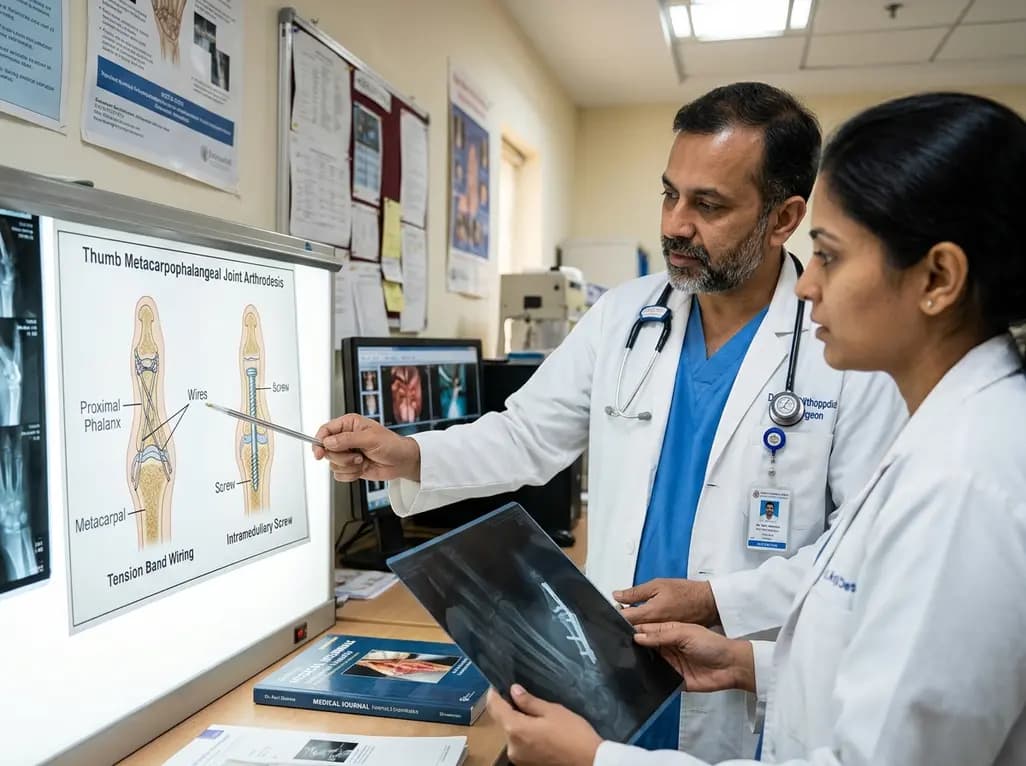
A comparative review of tension band wiring and intramedullary screw fixation in thumb metacarpophalangeal arthrodesis, evaluating union rates, hardware complications, and clinical outcomes.
Today

Following regulatory scrutiny from FSSAI regarding promotional representations and lean muscle preservation claims, Dr. Reddy's Laboratories and Nestlé Health Science are currently reviewing the branding and marketing strategy for their joint nutritional supplement Celevida GLP+.
Today
