.webp&w=384&q=75)

Loading, please wait...
Loading, please wait...

Mosquito-borne diseases remain a significant public health burden in India. Traditional chemical insecticides often face challenges due to increasing environmental toxicity and rising insect resistance. Consequently, researchers are focusing on green silver nanoparticles as a viable and sustainable alternative for vector management. This approach utilizes biological extracts from the Annonaceae plant family, commonly known as the custard apple family, to create potent larvicidal agents.
The biosynthesized nanoparticles demonstrate exceptional effectiveness against various mosquito species. For instance, studies show high mortality rates in Aedes, Anopheles, and Culex larvae. Because these particles are extremely small, they easily penetrate the larval cuticle. Furthermore, they disrupt essential enzyme functions and metabolic pathways within the insect. This multi-faceted mechanism significantly reduces the likelihood of mosquitoes developing resistance over time.
Synthesis using plant extracts like Annona squamosa or Annona muricata is inherently cost-effective. Moreover, this method is environmentally friendly as it avoids the use of harsh industrial chemicals. Researchers have noted that smaller nanoparticles generally yield higher toxicity toward larvae compared to crude plant extracts. Although field-scale studies and long-term toxicity assessments are still required, this technology offers a promising path for sustainable disease prevention.
These plants contain specific bioactive compounds that serve as both reducing and capping agents during synthesis. This eliminates the need for toxic chemicals and enhances the biological activity of the nanoparticles against mosquito larvae.
The nanoparticles act by penetrating the insect's protective cuticle and interfering with the molting process. They also inhibit critical enzymes and cause metabolic disruption, leading to rapid larval mortality.
Yes, green synthesis is considered an eco-friendly alternative to synthetic pesticides. It utilizes renewable plant resources and produces biodegradable products, though ongoing research continues to monitor their impact on non-target aquatic organisms.
Disclaimer: This content is for informational and educational purposes only. It does not constitute professional medical or public health advice. Refer to the latest local and national guidelines for clinical practice.
References
Soares Pereira J et al. Toxicological insights of silver nanoparticles biosynthesized from plant extracts of the Annonaceae family for control of insect vectors of pathogens: a systematic review. J Toxicol Environ Health B Crit Rev. 2026 Mar 31. doi: 10.1080/10937404.2026.2649172. PMID: 41915418.
Arjunan NK et al. Green synthesis of silver nanoparticles for the control of mosquito vectors of malaria, filariasis, and dengue. Vector Borne Zoonotic Dis. 2012 Mar;12(3):262-8. doi: 10.1089/vbz.2011.0661. PMID: 22022807.
"
Read summarized clinical updates, watch expert medical content, and earn CME certifications right from your smartphone.
Open your smartphone camera to scan and install.





A review of how green silver nanoparticles synthesized from Annonaceae plants provide an eco-friendly and effective solution for mosquito vector control....
6 months ago

Following regulatory scrutiny from FSSAI regarding promotional representations and lean muscle preservation claims, Dr. Reddy's Laboratories and Nestlé Health Science are currently reviewing the branding and marketing strategy for their joint nutritional supplement Celevida GLP+.
Today

A comprehensive scoping review synthesises evidence linking prenatal maternal mental health to long-term offspring neurodevelopment, evaluating neuroendocrine, inflammatory, and epigenetic pathways while highlighting clinical screening and future research priorities.
Today
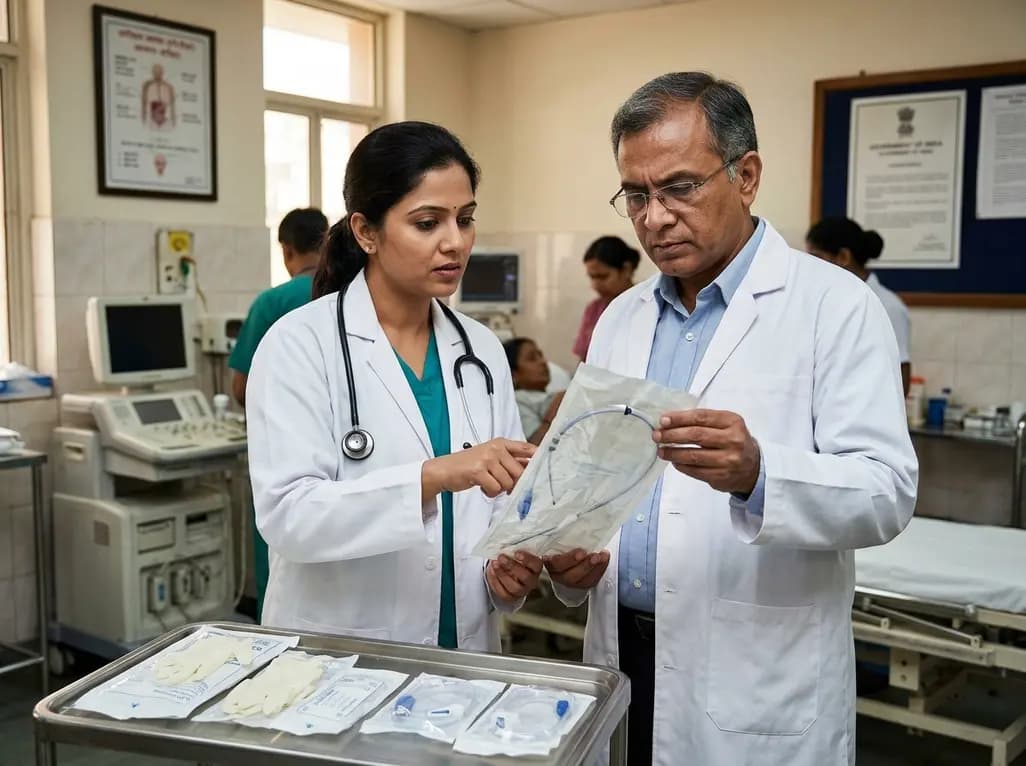
The Directorate General of Health Services directs Indian states to halt the hazardous reuse and reprocessing of single-use medical devices. Discover regulatory implications under the Drugs and Cosmetics Act, critical infection risks, legal liabilities, and operational changes required across clinical specialties.
Today

A 25-year multi-institutional cohort reveals high recurrence rates in pediatric giant cell tumor of bone, particularly in patients with open physes and bone marrow edema on preoperative MRI. Early surveillance and careful balance between growth plate preservation and tumor clearance are essential.
Today

India is advancing preventive healthcare by integrating genomics, artificial intelligence, and quantum technologies. With the SANGAM programme sequencing one million Indian genomes, clinicians can unlock personalized therapies, detect cardiometabolic risks early, and curb the burden of diabetes and heart disease.
Today
