

Loading, please wait...
Loading, please wait...

Cluster headache represents one of the most excruciating primary headache disorders known to modern medicine. Patients frequently experience severe, strictly unilateral retro-orbital pain accompanied by striking ipsilateral cranial autonomic symptoms. While acute abortive treatments like high-flow oxygen and triptans remain vital, procedural interventions provide rapid transitional suppression. Specifically, greater occipital nerve infiltration with local anesthetics and corticosteroids serves as a standard bridge therapy. However, despite decades of successful clinical application, the fundamental neurobiological mechanism underlying this intervention has remained controversial. Classical teaching suggested that blocking suboccipital afferents directly calms trigeminal pain pathways through shared neural networks. Recent groundbreaking clinical trial findings now directly challenge this traditional paradigm, demonstrating that therapeutic success occurs independently of trigeminal reflex alterations.
For years, pain specialists believed that suboccipital blocks worked by suppressing the trigeminocervical complex. Anatomically, sensory afferents from the greater occipital nerve converge directly onto second-order neurons within the upper cervical spinal cord. These fibers overlap extensively with nociceptive inputs arriving from the ophthalmic division of the trigeminal nerve. Consequently, clinicians theorized that greater occipital nerve infiltration interrupted this cross-excitation, thereby reducing central sensitization. To test this physiologic hypothesis, investigators historically evaluated the nociceptive blink reflex. This reliable electrophysiological assay tracks trigeminal brainstem excitability through polysynaptic R2 latencies. Prolonged R2 latencies conventionally signify suppressed trigeminal transmission along central brainstem pathways. Therefore, if nerve blockade truly suppressed trigeminal excitability, R2 latencies should lengthen substantially following the injection. Earlier preliminary observations hinted at such functional connectivity in limited healthy cohorts. Nevertheless, robust longitudinal evaluations examining both episodic and chronic cluster headache remained exceedingly scarce. Clinicians needed prospective objective verification to determine whether clinical headache relief genuinely mirrors brainstem neurophysiological changes.
To evaluate this connection rigorously, researchers conducted a prospective cohort study at a tertiary headache center. The team recruited thirty-three participants diagnosed with either episodic or chronic cluster headache. Each participant received a targeted nerve infiltration combining a local anesthetic with a corticosteroid. Furthermore, patients tracked their symptoms using detailed daily electronic headache diaries across twelve prospective weeks. The clinical outcomes proved remarkably robust and rapid. During the first week post-injection, patients with episodic cluster headache achieved a significant daily attack frequency reduction of over two attacks per day. Similarly, participants with chronic cluster headache experienced substantial reductions exceeding one attack daily. Moreover, these profound benefits persisted through week four, where attack frequency and attack intensity remained markedly suppressed across both disease phenotypes. Overall, seventy-six percent of participants achieved a thirty percent or greater reduction in attack frequency. Even more impressively, twenty-seven percent of patients became entirely attack-free at week four. Consequently, the trial confirmed the undeniable, high-potency clinical efficacy of this transitional therapeutic procedure.
While clinical symptoms improved dramatically, the electrophysiological findings yielded unexpected and paradigm-shifting results. Investigators recorded nociceptive blink reflex measurements thirty minutes before injection, thirty minutes post-injection, at one week, and at four weeks. Surprisingly, greater occipital nerve infiltration produced no significant prolongation in R2 latencies across the follow-up period. The anticipated inhibition of central trigeminal brainstem transmission failed to materialize in objective electrical recordings. In fact, researchers noted a solitary, slight decrease in R2 latency on the treated side at four weeks. Most importantly, statistical analysis revealed no meaningful correlation between individual R2 latencies and clinical headache improvement. Patients experiencing complete attack cessation displayed reflex profiles indistinguishable from non-responders. Thus, these findings effectively decouple clinical symptom relief from the modulation of the nociceptive blink reflex. Trigeminal transmission through the brainstem reflex circuit evidently operates without detectable interruption during successful nerve blocks. Consequently, medical science must discard the simplistic notion that occipital nerve blocks act merely as direct trigeminal transmission dampeners.
Because the blink reflex circuit remains unaffected, researchers must explore alternative biological mechanisms to explain the therapeutic benefit. One compelling hypothesis centers on higher subcortical centers, particularly the posterior hypothalamus. Functional neuroimaging consistently confirms that the posterior hypothalamus serves as the pivotal pacemaker driving cluster headache attacks. Therefore, peripheral occipital deafferentation might modulate hypothalamic functional connectivity through ascending thalamic or limbic pathways rather than local brainstem reflex loops. Alternatively, diffuse autonomic modulation could explain the rapid cessation of autonomic signs such as lacrimation, ptosis, and conjunctival injection. The greater occipital nerve communicates with sympathetic and parasympathetic cranial pathways through cervical perivascular plexuses. In addition, systemic corticosteroid absorption represents another critical factor that warrants careful consideration. Injected depot corticosteroids slowly enter the systemic circulation, where they exert potent anti-inflammatory effects and stabilize the blood-brain barrier. Furthermore, peripheral blockade may silence ectopic generators in hypersensitized cervical paraspinal tissues, eliminating secondary pain summation. Hence, the mechanism appears multifaceted and distinctly central rather than an isolated lower brainstem phenomenon.
These illuminating findings provide vital practical insights for neurologists, pain physicians, and emergency clinicians managing cluster headache. First, clinicians should continue utilizing greater occipital nerve infiltration as an indispensable bridging therapy. The intervention rapidly suppresses severe attack cycles while standard oral preventive agents, such as verapamil, are gradually titrated. The lack of blink reflex modulation does not diminish the clinical reality that three out of four patients gain significant relief. Second, practitioners should not rely on electrophysiological tests like the blink reflex to gauge procedural efficacy or predict clinical outcomes. Instead, clinicians must rely on meticulous clinical assessments and prospective patient-recorded headache diaries. Third, understanding that the mechanism remains enigmatic encourages safer, tailored multimodal protocols. Combining peripheral blocks with evidence-based abortive therapies like pure high-flow oxygen guarantees rapid, compassionate pain control. Moreover, recognizing the potential systemic contribution of corticosteroids reinforces the importance of monitoring cumulative steroid exposure across recurring cluster bouts. Ultimately, occipital infiltration remains an outstanding clinical tool whose therapeutic value stands firm even as its mechanistic secrets continue to unfold.
Although the exact mechanism remains enigmatic, greater occipital nerve infiltration likely alters upstream hypothalamic networks, modulates cranial autonomic outflow, and reduces peripheral inflammatory sensitization through systemic corticosteroid absorption. Crucially, the treatment delivers significant clinical relief without relying on the direct inhibition of trigeminal brainstem reflex transmission.
The nociceptive blink reflex demonstrated no prolongation of R2 latencies following nerve infiltration across four weeks of monitoring. Furthermore, researchers identified no correlation between electrophysiological measurements and clinical symptom reduction. This clear finding disproves the long-held hypothesis that occipital blocks relieve headache attacks by slowing or suppressing trigeminal reflex pathways.
Clinicians typically reserve occipital nerve infiltration as a transitional bridge rather than an isolated long-term treatment. The injection provides rapid, temporary suppression while oral prophylactic medications undergo gradual titration. Additionally, limiting repeated injections minimizes cumulative systemic corticosteroid exposure, protecting patients from potential endocrine and bone density complications over time.
Disclaimer: This content is for informational and educational purposes only... Refer to the latest local and national guidelines for clinical practice.
References
Naber WC et al. Beneficial effect of infiltration around the greater occipital nerve in cluster headache independent of modulation of the nociceptive blink reflex. Headache. 2025. doi: 10.1111/head.14946. PMID: 40270332.
Busch V et al. Occipital nerve blockade in chronic cluster headache patients and functional connectivity between trigeminal and occipital nerves. Cephalalgia. 2007;27(11):1206-1214.
Gaul C et al. Team players in cluster headache: Greater occipital nerve block and preventive therapy. Cephalalgia. 2011;31(16):1663-1673.

Read summarized clinical updates, watch expert medical content, and earn CME certifications right from your smartphone.
Open your smartphone camera to scan and install.





A prospective cohort study demonstrates that greater occipital nerve infiltration provides profound relief in episodic and chronic cluster headache without altering the nociceptive blink reflex, disproving theories of direct trigeminal transmission suppression and highlighting central neuromodulation.
Today

Ambient digital scribes promise effortless medical documentation, but a critical sociotechnical commentary reveals that AI alters rather than eliminates charting work. Discover how shifting cognitive burdens, oversight risks, and workflow redesign impact clinical safety and healthcare practice.
Today

A new comparative study demonstrates that intraoperative imprint cytology achieves 96.6% diagnostic accuracy in ovarian tumours, outperforming frozen section in sensitivity for borderline lesions and offering an accessible, rapid alternative for resource-constrained surgical centres.
Today

Thoracic aortic aneurysm lacks etiologic medical therapy. A new study reveals that targeting specific αV integrins with Cilengitide attenuates TGF-β and mechanotransduction pathways, effectively limiting pro-fibrotic remodeling and aortic bulb dilation in both syndromic and sporadic disease models.
Today
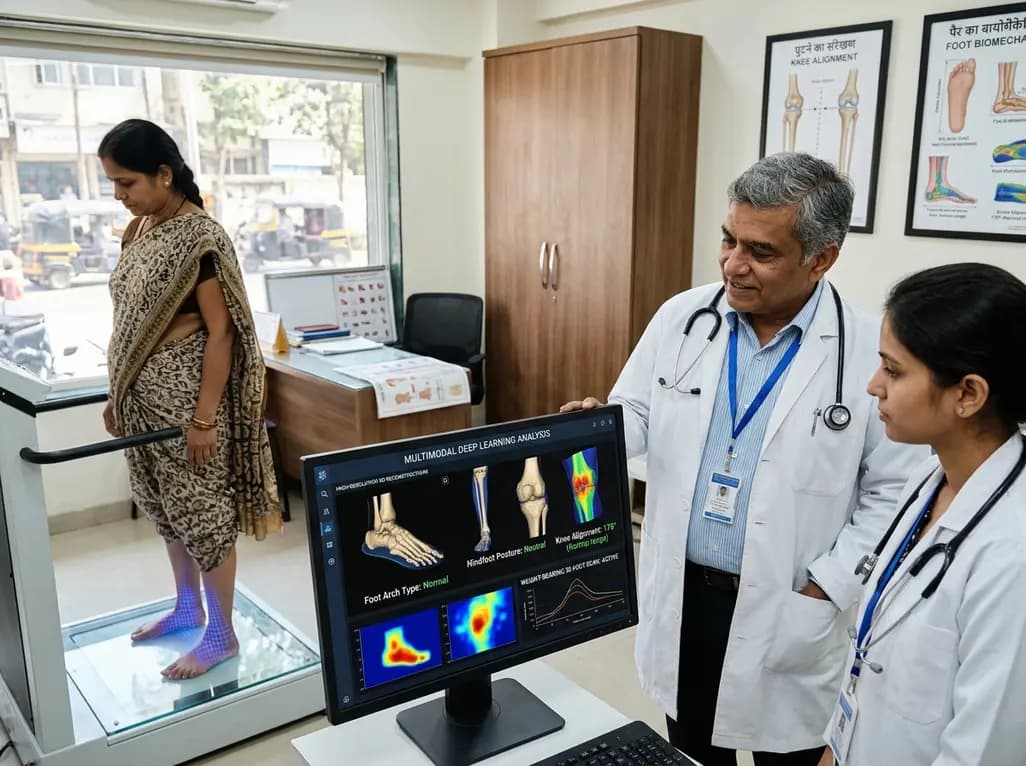
A multimodal deep learning framework utilizing weight-bearing 3D foot scans accurately screens lower-limb alignment, including arch type, hindfoot posture, and knee alignment, offering an accessible, radiation-free alternative to radiography for early biomechanical triage.
Today

A real-world retrospective study demonstrates that combining intravitreal ranibizumab with focal/grid macular laser significantly improves visual acuity and central macular thickness compared to laser monotherapy in patients with center-involved diabetic macular edema.
Today
