.webp&w=384&q=75)

Loading, please wait...
Loading, please wait...

Population health programs often show varying results across different patient groups. However, explaining why these variations occur remains a significant challenge for researchers. A recent study has utilized graphical structure learning to bridge this gap. By analyzing data from 6,396 Medicaid enrollees between 2023 and 2025, researchers identified conditional dependencies between patient traits, specific interventions, and health outcomes.
The study employed the Peter-Clark algorithm and Greedy Equivalence Search. These advanced methods helped researchers move beyond simple correlations. Instead, they generated mechanistic hypotheses about how different programs actually drive change. This approach provides clinicians with a clearer roadmap for optimizing resource allocation in large-scale health initiatives.
The analysis revealed four critical associations that warrant further investigation. First, behavioral health therapy was strongly associated with a reduction in psychiatric admissions. Specifically, it showed a risk ratio of 0.27, suggesting a massive impact on mental health stability. Furthermore, clinical pharmacy services demonstrated dose-dependent associations with reduced healthcare costs, highlighting the importance of medication management.
Additionally, community health workers played a vital role in reducing emergency department visits. Their involvement resulted in a risk ratio of 0.62. Women particularly benefited from care coordination, which reduced emergency visits with a risk ratio of 0.38. These findings illustrate that graphical structure learning can pinpoint exactly where interventions succeed. Consequently, health systems can better tailor their strategies to high-risk subpopulations.
Traditional models identify who benefits from a program but often ignore the underlying mechanisms. In contrast, graphical methods complement existing models by identifying probable pathways for success. Researchers utilized false coverage rate correction to ensure statistical robustness across all reported associations. This rigorous approach confirms that the findings were not merely due to selection bias.
For medical educators and health administrators, these results emphasize the power of data-driven hypothesis generation. Future clinical trials can now focus on confirming these specific mechanistic pathways. Ultimately, integrating advanced algorithms into population health will lead to more precise and effective patient care.
It is a set of computational methods used to discover the underlying structure of conditional dependencies in complex datasets, often represented as directed or undirected graphs.
While regression identifies relationships between variables, graphical learning helps visualize the pathway and direction of these associations, providing deeper mechanistic insights.
It allows health systems to understand which specific interventions, such as pharmacy or community support, are most effective for specific groups like women or psychiatric patients.
Disclaimer: This content is for informational and educational purposes only. It is not intended as a substitute for professional medical advice, diagnosis, or treatment. Always seek the advice of your physician or other qualified health provider with any questions you may have regarding a medical condition. Refer to the latest local and national guidelines for clinical practice.
References
Basu S et al. Graphical Structure Learning Identifies Hypothesized Mechanisms for Heterogeneous Treatment Effects in Medicaid Population Health Programs. Am J Epidemiol. 2026 Apr 23. doi: undefined. PMID: 42023435.
Scutari M. Learning Bayesian Networks with the bnlearn R Package. Journal of Statistical Software. 2010.
Spirtes P et al. Causation, Prediction, and Search. MIT Press. 2000.

Read summarized clinical updates, watch expert medical content, and earn CME certifications right from your smartphone.
Open your smartphone camera to scan and install.





Researchers used graphical structure learning to identify how pharmacy, therapy, and health workers improve outcomes in complex Medicaid population health p...
6 months ago
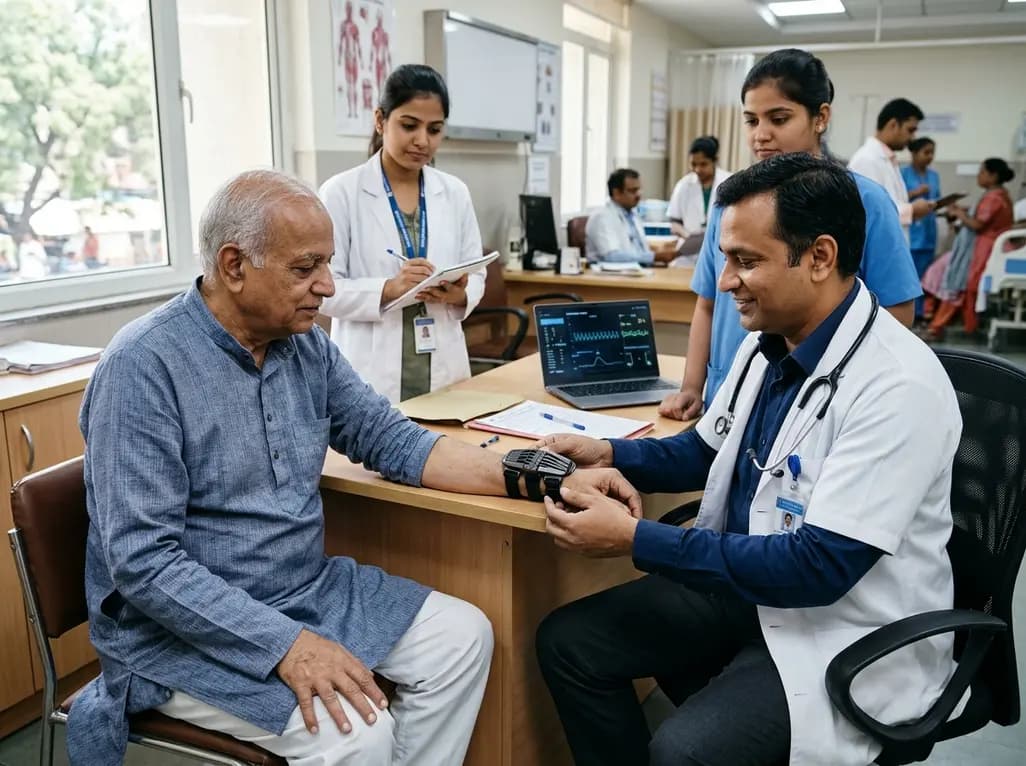
The TREM-AB open-label pilot study evaluated a wearable passive nonlinear vibration absorber for essential tremor. The Nonlinear Energy Sink bracelet reduced clinical Fahn-Tolosa-Marin tremor scores by 32.1% and electrophysiological tremor power by 49.2% with no adverse effects reported.
Today
A population-based study of 20,928 children reveals that small vulnerable newborns face sex-divergent mental capital outcomes at ages 6-7: term SGA girls show higher behavioral difficulties and lower resilience, while preterm non-SGA boys experience increased behavioral problems.
Today
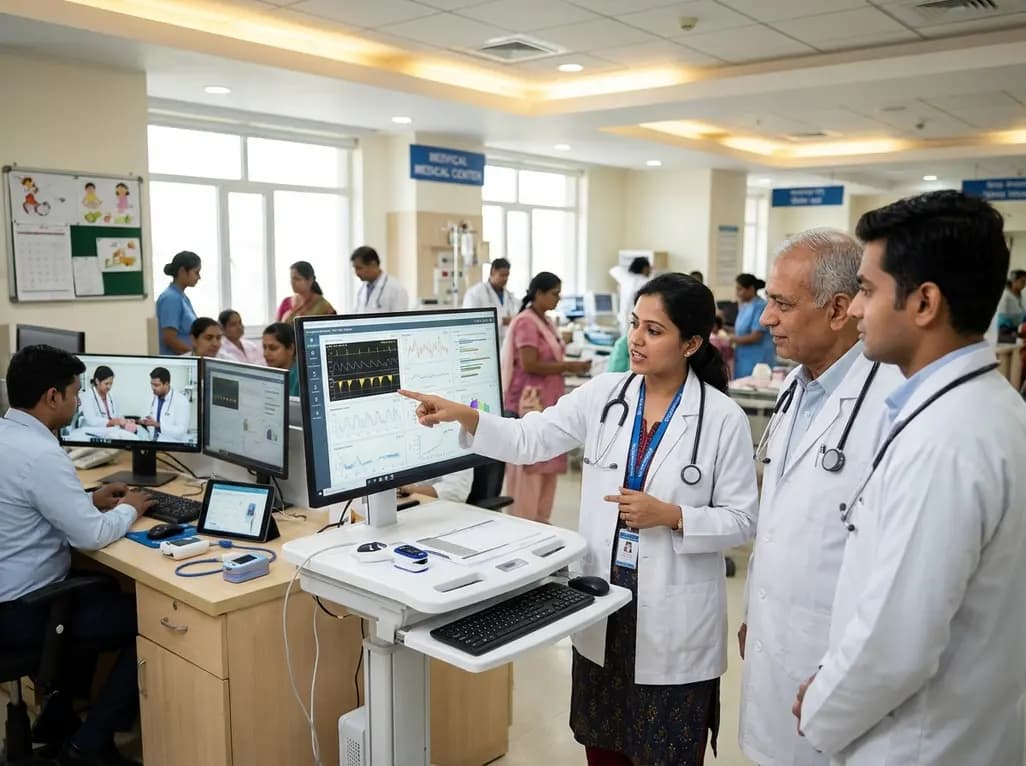
A landmark study details how an enterprise pediatric remote patient management model expanded from a single cardiology pilot to 16 diverse specialty programs by combining centralized digital operations with specialty clinical leadership.
Today

A comparative review of tension band wiring and intramedullary screw fixation in thumb metacarpophalangeal arthrodesis, evaluating union rates, hardware complications, and clinical outcomes.
Today
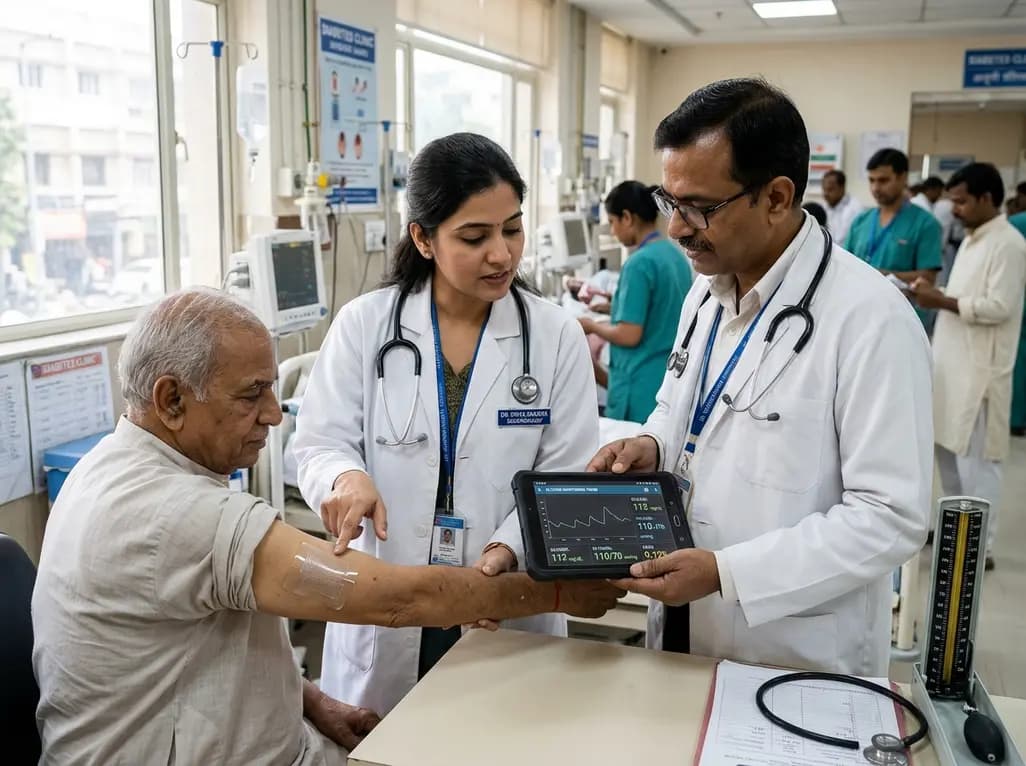
A breakthrough ultrathin multimodal sensor decouples physical hemodynamic monitoring from disposable electrochemical calibration, achieving long-term wearable glucose prediction with 81.36% accuracy and a 9.12% MARD. This offers a robust, drift-free solution for outpatient metabolic surveillance.
Today
