

Loading, please wait...
Loading, please wait...
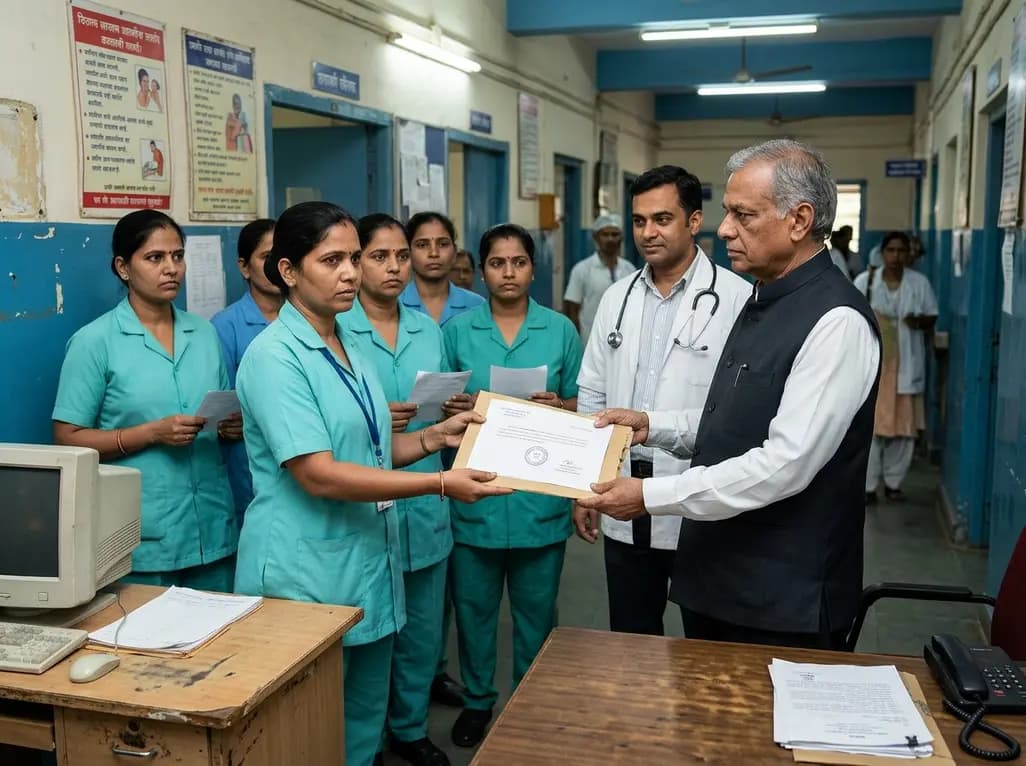
Recent reports concerning GNM exam irregularities have raised profound concerns among healthcare professionals and nursing educators across Maharashtra. Specifically, the Maharashtra Government Nurses Federation has demanded a comprehensive and transparent investigation into the centralised admission evaluation process. The alleged malpractices occurred during the evaluation of answer scripts in Solapur. Consequently, professional bodies fear that these lapses could compromise the standards of nursing education and harm qualified candidates. Over 10,000 to 15,000 nursing students across the state depend directly on the integrity of this examination system.
The controversy emerged after serious allegations surfaced regarding the handling of answer sheets in Solapur. In particular, whistleblowers reported that answer scripts were removed from designated college premises without authorization. Furthermore, reports indicated that unauthorized personnel altered marks on the original evaluation sheets. Therefore, the nursing federation submitted a formal letter to Medical Education Minister Hasan Mushrif and Public Health Minister Prakash Abitkar.
The federation has served the nursing cadre for more than fifty years. Consequently, leadership emphasized that preserving exam credibility remains vital for public health delivery. State president Indumati Thorat asserted that authorities must scrutinize the entire evaluation sequence. Investigators must examine whether custodians and assistant custodians compromised secure storage facilities. Moreover, digital evidence such as closed-circuit television recordings and vehicular transport logs must undergo verification.
Additionally, academic leaders highlighted the profound psychological distress inflicted upon aspiring candidates. Nursing trainees undergo rigorous academic and practical preparation to qualify for their clinical duties. However, systemic evaluation irregularities undermine their trust in institutional fairness. Thus, transparent procedures are necessary to verify the authenticity of all submitted examination papers.
To restore credibility, the nursing federation outlined clear regulatory demands. First, the organization demanded the immediate formation of an independent, high-level inquiry committee. Furthermore, this investigative committee must operate free from local bureaucratic pressures. State leaders stressed that investigators must examine all originally marked answer sheets alongside internal score ledgers. Consequently, any discrepancy between physical manuscripts and digital databases should prompt severe legal repercussions.
Moreover, the federation insisted on strict scrutiny of all designated examination custodians. If regulatory inquiries prove that staff facilitated illicit alterations, authorities must initiate statutory disciplinary actions immediately. Indumati Thorat declared that the state government must make all inquiry findings accessible to the public. In addition, if systemic tampering compromised the integrity of scores, the government must cancel the affected examination sessions.
Meanwhile, representatives highlighted that protecting evidentiary material remains paramount. The federation urged administrative bodies to seal relevant examination evaluation centres without delay. Therefore, secure storage of physical records prevents unauthorized tampering during ongoing investigations. Ultimately, these measures ensure that genuine merit determines the placement of future healthcare personnel.
Nursing personnel form the foundational backbone of inpatient medical care across Indian hospitals. Consequently, examination rigor is not merely an administrative milestone. Instead, standardized testing guarantees clinical competence and patient safety at the bedside. When examination integrity collapses, unqualified candidates might enter critical care workflows. Therefore, clinicians across specialties view these evaluation lapses with deep apprehension.
Furthermore, modern healthcare protocols demand high precision in medication administration and infection control. Nurses must also master advanced monitoring and emergency interventions. If centralized examination evaluations face manipulation, hospital administrators cannot effectively assess baseline clinical capabilities. As a result, bedside error rates could increase significantly in acute healthcare settings.
In addition, standardizing nursing qualification examinations upholds national parity. Regulatory bodies like the Indian Nursing Council establish stringent evaluation criteria to maintain global nursing standards. However, fraudulent local practices undermine institutional accreditation and reduce employment mobility for qualified candidates. Hence, stringent regulatory audits remain imperative to protect clinical reputations. The federation emphasizes that compromised examinations harm both dedicated students and vulnerable patients.
Healthcare regulatory agencies rely on strict protocols to secure academic credentials. Typically, examination answer booklets require tamper-evident envelopes, biometric tracking, and uninterrupted physical supervision. Nevertheless, the recent Solapur incident exposes potential administrative vulnerabilities in local handling workflows. Therefore, regulatory boards must urgently overhaul their physical and digital chain-of-custody measures.
Additionally, exam custodians must implement synchronized digital timestamps for script transportation. Authorities should record all physical movements of examination booklets through barcoded logging mechanisms. In contrast, paper-based tracking systems frequently enable lapses and unauthorized manipulation. Furthermore, evaluation centers should enforce continuous video surveillance across all marking rooms. Independent observers must supervise evaluation halls to prevent external influence.
Moreover, institutional governance requires robust whistleblowing protections within medical examination bodies. Subordinate staff and evaluators frequently notice procedural irregularities first. However, fear of administrative retaliation often suppresses timely reporting. Accordingly, the state health department should establish confidential reporting channels for examination malpractice. These institutional reforms will reinforce transparency and prevent future evaluation compromises across nursing colleges.
In response to administrative delays, the federation issued a clear protest ultimatum. General secretary Vishal Sonar announced that nursing personnel will initiate statewide agitation if demands remain unmet. Specifically, the federation announced a planned one-hour morning strike across Maharashtra medical institutions. Consequently, hospital administrators must prepare operational contingency plans to mitigate clinical disruptions during potential labor strikes.
Nevertheless, nursing leadership affirmed their primary commitment to emergency patient safety. Critical care units, operating rooms, and neonatal wards typically receive staff exemptions during limited symbolic strikes. However, outpatient clinics and scheduled administrative tasks could experience noticeable operational delays. Therefore, hospital superintendents must collaborate closely with clinical supervisors to maintain essential inpatient services.
Meanwhile, public health experts emphasize that swift government intervention can avert labor unrest. Medical directors should engage in constructive dialogue with nursing representatives to resolve legitimate grievances. Addressing exam irregularities promptly will reassure the workforce and restore professional confidence. Furthermore, decisive legal action against wrongdoers will establish a reliable deterrent against academic misconduct across the state.
Q1: Why is the Maharashtra Government Nurses Federation demanding an investigation?
The federation demanded an investigation due to reports of evaluation malpractices in Solapur during the GNM examination. Allegations include unauthorized removal of answer scripts from college premises and deliberate alteration of candidate scores. Consequently, the federation seeks an independent high-level inquiry to restore examination integrity and protect over 10,000 nursing students. In addition, this investigation must hold accountable officials who failed to preserve evaluation security.
Q2: What specific actions did nursing leaders propose to resolve the crisis?
Nursing leaders proposed the immediate formation of an independent inquiry committee to examine answer sheets, CCTV footage, and vehicle logs. Furthermore, they demanded comprehensive scrutiny of examination custodians and assistant custodians. If investigators confirm irregularities, the federation insists that authorities must cancel the compromised examinations. Moreover, officials must release findings publicly and penalize responsible personnel while securely preserving all relevant evaluation materials.
Q3: How could GNM examination irregularities affect clinical healthcare delivery?
Irregularities in nursing examinations threaten the baseline standard of clinical competence across hospital settings. When evaluation processes lack integrity, unverified candidates might enter critical healthcare environments without demonstrating necessary skills. Specifically, these skills include precision in patient care, medication delivery, and infection control. Consequently, clinical teams face heightened risks of bedside errors, potentially jeopardizing patient safety. Ultimately, this compromise undermines institutional trust within healthcare facilities.
Disclaimer: This content is for informational and educational purposes only. It does not constitute medical advice or replace professional judgment. Refer to the latest local and national guidelines for clinical practice.
References

Read summarized clinical updates, watch expert medical content, and earn CME certifications right from your smartphone.
Open your smartphone camera to scan and install.





The Maharashtra Government Nurses Federation has petitioned state ministers demanding an inquiry into reported evaluation malpractices during the GNM examination in Solapur. Representing over 10,000 candidates, the federation has warned of statewide strikes if swift corrective actions are not implemented.
Today
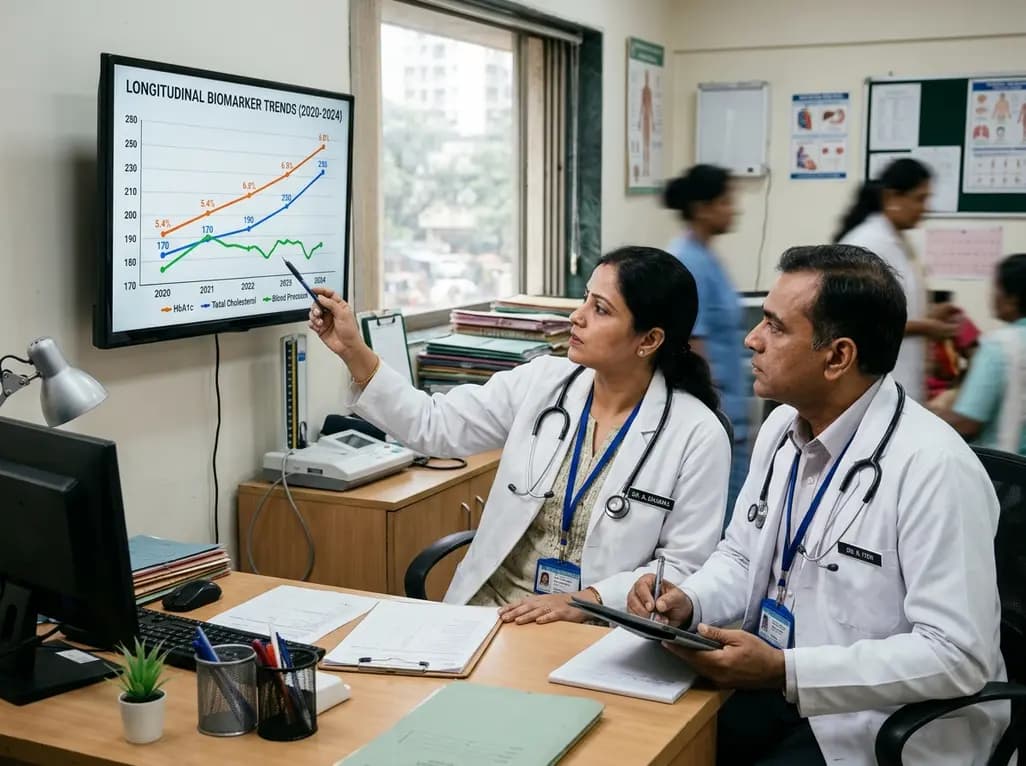
Annual health checks only offer static snapshots. Real-world evidence from 2.1 million insured Indians reveals that tracking dynamic biomarker trends over time enables clinicians to spot evolving cardiometabolic risks early, reverse borderline pathology, and deliver tailored preventive interventions.
Today
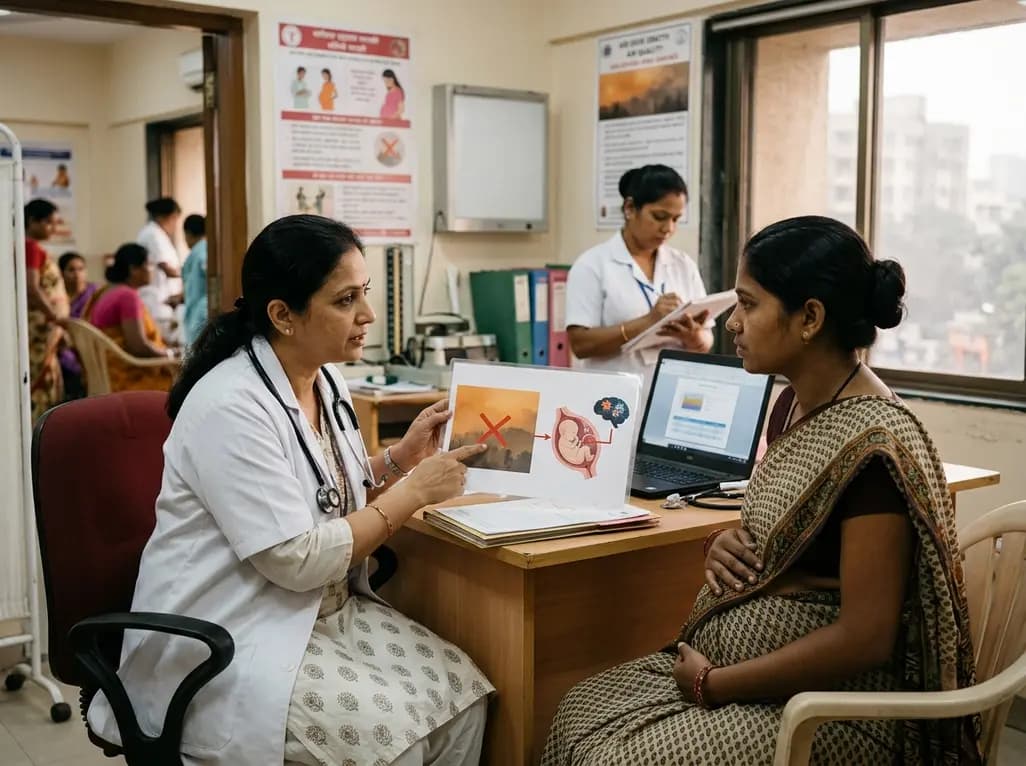
A nationwide cohort study published in JAMA Pediatrics reveals that maternal exposure to wildfire fine particulate matter, especially in late pregnancy, is linked to an elevated risk of childhood autism. Clinicians should evaluate ambient air quality risks and provide proactive protective counseling to mothers.
Today
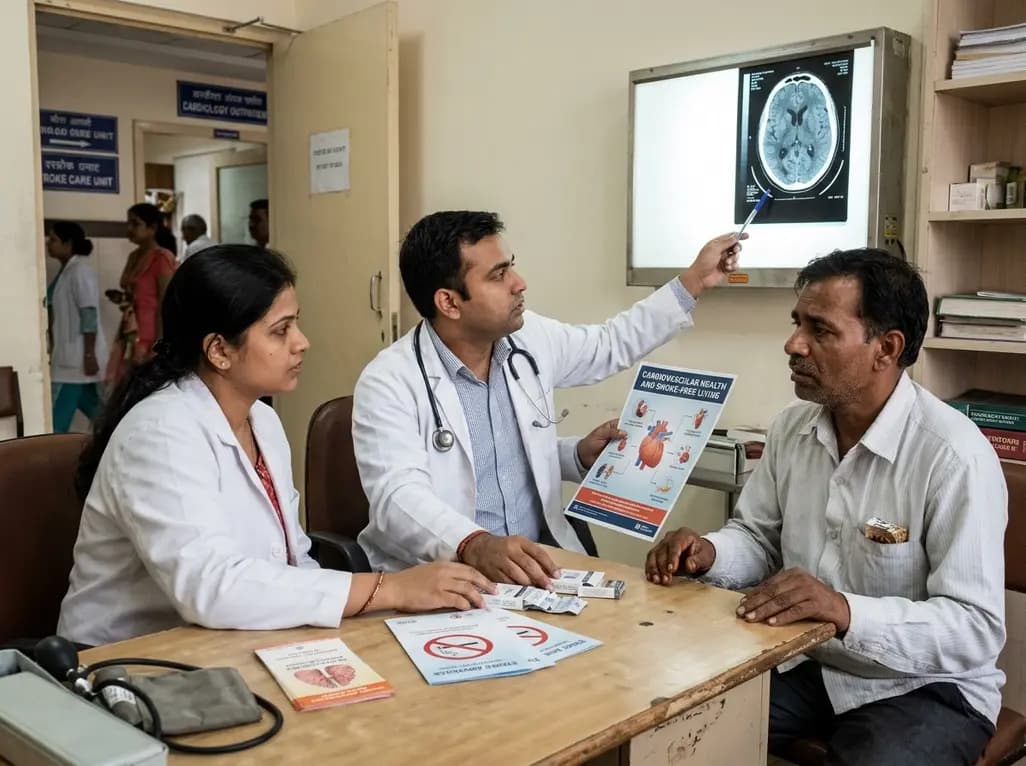
India faces an escalating challenge with vascular diseases, where tobacco use and hypertension together drive substantial cerebrovascular mortality. Addressing nicotine addiction as a clinical neurochemical disorder rather than a lack of willpower is vital for nationwide prevention and sustainable cessation support.
Today
Modern 3D anthropometry reveals that pediatric leg growth ceases years before spinal elongation, exposing the clinical illusion of the classical Anderson-Green model. Learn how segmental growth dissociation improves surgical timing for epiphysiodesis in adolescent leg length discrepancy.
2 days back

With packaged goods giant HUL backing FSSAI's proposed front-of-pack red warning labels for foods high in fat, sugar, and salt, India takes a major step toward curbing non-communicable diseases. Learn how clearer nutrition disclosures empower clinicians, inform consumer choices, and drive dietary reform.
Today
