.webp&w=384&q=75)

Loading, please wait...
Loading, please wait...
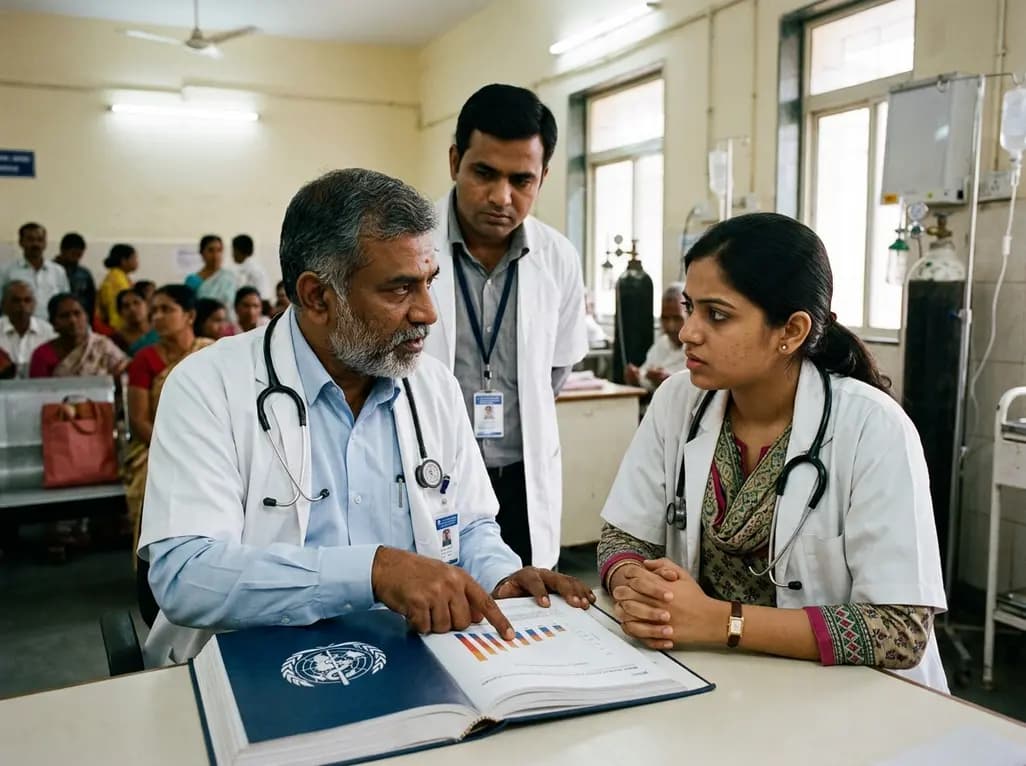
Recently, the World Health Organization released the Global Status Report on Cancer 2026. This report was compiled jointly with the International Agency for Research on Cancer. Significantly, the landmark publication highlights a staggering truth about the global cancer impact. It reveals that approximately 92 percent of people globally will experience cancer impacts in their lifetime. Consequently, the disease represents a universal crisis touching nearly every household. Only one in five individuals will personally develop a cancer diagnosis. However, the remaining population will bear the heavy burden of supporting affected family members. Daily, the disease claims more than 26,000 lives. Therefore, oncology remains a critical public health priority. The report estimates that healthcare systems globally diagnosed 20.6 million new cases annually. Additionally, close to 10 million deaths occur each year from the disease. These statistics prove that cancer remains the second leading cause of mortality globally. Clinicians must understand these trends to anticipate growing demands. Ultimately, medical communities must collaborate to address this rising tide through robust care. This collective effort will ensure better outcomes for patients globally. Ultimately, we must view oncology through a lens of global solidarity.
While diagnostic numbers are alarming, lived experiences vary dramatically based on geography. Specifically, the WHO report exposes widening inequities in access to essential medical care. These discrepancies translate directly into highly unequal survival outcomes. For example, eighty-seven percent of breast cancer patients survive five years in high-income countries. In contrast, only about forty-two percent survive in low-income nations. This massive survival gap stems from unequal access to early diagnosis and modern therapeutics. Additionally, developing areas face severe shortages of basic cancer medications. The availability of top priority medicines ranges from nine to fifty-four percent in lower-income regions. Conversely, high-income nations enjoy availability rates between sixty-eight and ninety-four percent. Many low-income countries also lack basic radiation therapy facilities. Therefore, geography frequently determines patient survival in the current global healthcare landscape. Consequently, global health leaders must prioritize resource equity to bridge these fatal gaps. Clinicians in developing nations must navigate these shortages daily. This demands innovative diagnostic approaches and optimized local protocols. Furthermore, medical institutions must work to lower costs for impoverished patients. Unresolved inequities will only lead to higher mortality rates worldwide. Ultimately, resolving these disparities is a matter of basic human rights.
Fortunately, public health agencies possess the knowledge to prevent many oncology cases. According to the report, stakeholders can prevent up to forty percent of new cancer diagnoses. We can achieve this by actively controlling known risk factors. Notably, tobacco use, chronic infections, and alcohol consumption represent the leading drivers of preventable cancers. A high body-mass index also contributes significantly to cancer risk. For instance, tobacco control programs achieved a twenty-seven percent decline in global use since 2010. Consequently, this decline has reduced lung cancer rates in several proactive countries. However, other critical risk factors like obesity continue to rise globally. Additionally, chronic infections such as the Human Papillomavirus require robust vaccination programs. Currently, eighty-two percent of countries have established national cancer control plans. Nevertheless, these administrative efforts do not always translate into life-saving clinical actions. Therefore, primary care physicians must aggressively counsel patients on lifestyle modifications. Doctors should also promote routine immunizations in their daily practice. By actively addressing these risk factors, clinicians can substantially mitigate future rates. Ultimately, prevention remains our most cost-effective clinical tool. Consistent screening can also detect abnormalities before they turn malignant. Thus, proactive healthcare represents the best defense against cancer.
To combat the rising burden, healthcare systems must integrate oncology services. Specifically, countries must include these services in national universal health coverage packages. Currently, fewer than one in three nations provide cancer care within their universal frameworks. As a result, millions of individuals face catastrophic out-of-pocket expenses. Indeed, the WHO report reveals that many cancer-affected households experience severe financial hardship. Specifically, at least forty-five percent of affected families face economic devastation. Furthermore, more than half of these patients report significant mental health challenges. Nearly all primary caregivers experience extreme emotional and physical strain. To alleviate this immense suffering, the WHO advocates for a people-centered model of care. This approach places patients and families at the center of clinical pathways. Additionally, governments must strengthen social protection policies to safeguard families. Consequently, medical systems need to align research with actual patient needs. Clinicians should support these policy shifts within their local institutions. They can advocate for affordable, value-based advances in oncology. Only through integrated coverage can societies manage this devastating burden. Equity in financing ensures that every patient receives adequate care. Therefore, policy makers must prioritize universal oncology benefits immediately.
Looking ahead, the global oncology landscape faces an incredibly challenging trajectory. Specifically, scientists project that annual global cancer cases will climb to nearly thirty-five million by 2050. This represents a staggering sixty-seven percent increase from 2024 levels. The primary drivers of this surge are population growth and aging. Therefore, local and international organizations must cooperate immediately. This collaboration is necessary to avert a catastrophic collapse of healthcare infrastructures. In response, the WHO urges governments and the private sector to unite. They must deliver equitable, value-based clinical advances to all patients. For medical practitioners in high-burden countries like India, early detection is vital. Furthermore, healthcare providers must establish robust screening protocols. These protocols should target common malignancies like breast and oral cancers. By implementing structured screening programs, clinicians can detect pre-cancerous lesions early. Early detection significantly improves overall survival rates. Ultimately, the fight against the disease requires both policy reforms and clinical action. Working together, we can reshape the future of cancer care. Consequently, we can save millions of lives across the globe. Active participation from every healthcare worker is essential for success.
Q1: Why does the WHO state that 92 percent of the global population will be affected by cancer?
The 92 percent statistic accounts for both direct and indirect impacts of cancer. While approximately one in five individuals will personally develop the disease during their lifetime, the physical, emotional, and economic consequences of a diagnosis ripple outward. Consequently, nearly almost everyone will experience the toll of cancer, either through their own medical journey or by supporting a close family member who is battling the disease.
Q2: What are the main preventable risk factors contributing to the rising cancer burden?
According to the report, stakeholders can prevent up to forty percent of cancer cases by targeting key modifiable risk factors. Specifically, tobacco use remains the leading contributor, followed by chronic infections, alcohol consumption, and a high body-mass index. Therefore, implementing aggressive tobacco control, promoting healthy dietary habits, reducing alcohol consumption, and expanding vaccination programs against HPV and Hepatitis B are vital steps to curb future global cancer rates.
Q3: How do cancer survival rates compare between high-income and low-income countries?
There is a profound survival gap shaped by geography and financial resources. For example, eighty-seven percent of women with breast cancer survive for five years in high-income nations. Conversely, only forty-two percent survive in low-income countries. This discrepancy arises from limited access to early screening, a lack of radiation therapy facilities, and the high cost of essential cancer medicines, which remain largely unavailable in developing regions.
Disclaimer: This content is for informational and educational purposes only. It does not constitute medical advice or replace professional judgment. Refer to the latest local and national guidelines for clinical practice.
References

Read summarized clinical updates, watch expert medical content, and earn CME certifications right from your smartphone.
Open your smartphone camera to scan and install.





The joint WHO and IARC Global Status Report on Cancer 2026 highlights a growing global crisis, with 92% of the population impacted by cancer directly or through family. It details severe disparities in survival rates and access to medications, calling for the integration of oncology into universal healthcare.
3 months ago

Following regulatory scrutiny from FSSAI regarding promotional representations and lean muscle preservation claims, Dr. Reddy's Laboratories and Nestlé Health Science are currently reviewing the branding and marketing strategy for their joint nutritional supplement Celevida GLP+.
Today

Demanding exhaustive hormonal profiling can inadvertently discourage clinical studies involving females. Methodological standards must align with the specific scientific question to expand, not restrict, equitable evidence for women.
Today

The Directorate General of Health Services directs Indian states to halt the hazardous reuse and reprocessing of single-use medical devices. Discover regulatory implications under the Drugs and Cosmetics Act, critical infection risks, legal liabilities, and operational changes required across clinical specialties.
Today
A novel calcium polyphosphate coacervate enables injectable bone implants with in situ hierarchical porosity via phase separation and gas foaming, significantly enhancing cell proliferation, energy metabolism, and osteogenic differentiation for minimally invasive bone defect repair.
Today

India is advancing preventive healthcare by integrating genomics, artificial intelligence, and quantum technologies. With the SANGAM programme sequencing one million Indian genomes, clinicians can unlock personalized therapies, detect cardiometabolic risks early, and curb the burden of diabetes and heart disease.
Today
