.webp&w=384&q=75)

Loading, please wait...
Loading, please wait...
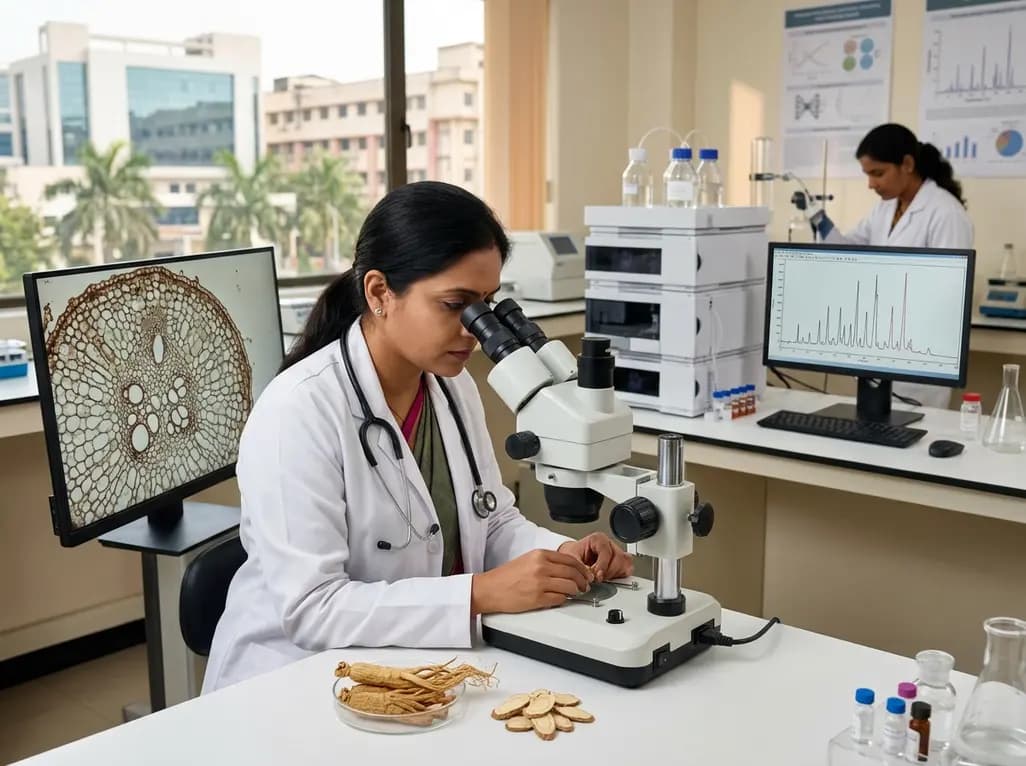
Ensuring the botanical integrity of herbal products is a cornerstone of modern pharmacognosy. Among the most valued medicinal plants, the Panax species (Ginseng) are frequently targeted for economic adulteration. Using advanced Ginseng authentication techniques, researchers can now effectively distinguish between genuine medicinal roots and morphologically similar substitutes. Recent findings highlight that integrating traditional microscopic examination with chemical profiling offers a failsafe method for verifying product safety.
Microscopic examination serves as a primary tool for detecting intentional or unintentional adulteration. In a recent study, researchers analyzed four major ginseng species—P. ginseng, P. quinquefolius, P. japonicus, and P. notoginseng—alongside common adulterants like Codonopsis pilosula and Platycodon grandiflorus. The presence of secretory ducts and abundant starch grains were identified as consistent diagnostic traits in genuine Panax species. Conversely, these features were either scarce or entirely absent in the adulterants.
While basic anatomy is helpful, distinguishing between highly similar species like P. ginseng and P. quinquefolius requires specialized Ginseng authentication techniques. Xylem architecture and the specific morphology of starch grains were found to be effective markers. However, chemical profiling via High-Performance Liquid Chromatography coupled with Ultraviolet detection (HPLC-UV) provided the ultimate confirmation. The analysis identified eight major ginsenosides in Panax samples, compounds that were completely absent in the tested adulterants.
Consequently, the integration of these dual methods allows for the detection of economically motivated bulking. This approach is particularly relevant for practitioners in India, where the AYUSH sector emphasizes the standardization of raw materials to maintain therapeutic efficacy. Therefore, adopting these rigorous standards helps protect consumers from ineffective or potentially harmful herbal substitutes.
Authenticating herbal raw materials is not merely a regulatory requirement but a clinical necessity. Combining microscopic techniques with chemical markers provides a reliable and complementary approach to ensuring the safety of herbal medicine. These integrated methodologies bridge the gap between traditional knowledge and modern analytical science, fostering greater trust in herbal therapeutics.
Many Panax species share high morphological and anatomical similarities, especially when processed into powders. This makes it challenging to identify the exact species without advanced laboratory tools like HPLC-UV or detailed xylem architecture analysis.
Codonopsis pilosula and Platycodon grandiflorus are frequently used as adulterants because they have roots that look similar to Panax species but lack the therapeutic ginsenosides found in true ginseng.
Secretory ducts are characteristic anatomical structures found in the roots of Panax species. Their presence, or absence in the case of common adulterants, serves as a clear microscopic indicator of botanical identity.
Disclaimer: This content is for informational and educational purposes only. It is not intended to provide medical advice or to take the place of such advice or treatment from a personal physician. All readers/viewers of this content are advised to consult their doctors or qualified health professionals regarding specific health questions. Neither the publisher nor the author of this content takes responsibility for possible health consequences of any person or persons reading or following the information in this educational content. All viewers of this content, especially those taking prescription or over-the-counter medications, should consult their physicians before beginning any nutrition, supplement or lifestyle program. Refer to the latest local and national guidelines for clinical practice.
References
1. Külkamp J et al. Microscopy Combined with LC-UV Analysis as a Tool for Authentication of Ginseng Species Used in Traditional Medicine and Detection of Their Adulterants. J Diet Suppl. 2026 Jun 09. doi: 10.1080/19390211.2026.2680314. PMID: 42262747.
2. Ministry of Ayush, Government of India. Standardization and Quality Control of Ayush Products. PIB Delhi. 2026.
3. Botanical Adulterants Prevention Program (BAPP). Bulletin on Ginseng (Panax ginseng, Panax quinquefolius, and Panax notoginseng) Root and Extracts. ABC-AHP-NCNPR. 2026.

Read summarized clinical updates, watch expert medical content, and earn CME certifications right from your smartphone.
Open your smartphone camera to scan and install.





New research confirms that combining microscopy with HPLC-UV analysis provides a robust framework for authenticating Panax species and detecting adulterants...
4 months ago

As monsoon seasons elevate arboviral disease threats, Tamil Nadu has initiated an ICMR-monitored evaluation of the tetravalent dengue vaccine in Tenkasi district. Clinicians emphasize clinical monitoring, public prevention, and high-quality early pediatric care to reduce disease morbidity across endemic regions.
Today

Leucine Rich Bio has introduced South Asia's first comprehensive vaginal microbiome test, BugSpeaks. By profiling microbial dysbiosis, pathogens, and antimicrobial resistance, this next-generation diagnostic platform provides clinicians with deeper insights into recurrent infections, fertility, and reproductive health.
Today

Review how tailored exercise programs benefit frail older patients with heart failure. Explore pathophysiological mechanisms, individualized training prescriptions, and strategies to overcome adherence barriers in clinical practice.
Today

This comparative study evaluates posterior labral tears with and without glenohumeral instability, highlighting distinct demographic patterns, MRI underestimation in stable shoulders, and successful arthroscopic repair outcomes.
Today

A clinical study demonstrates that early intervention with tocilizumab, either as monotherapy or bridged with corticosteroids, achieves significant proptosis reduction and resolves active inflammation in treatment-naive thyroid eye disease.
Today
