.webp&w=384&q=75)

Loading, please wait...
Loading, please wait...

Recent research highlights the critical role of social connections and geriatric depression technology acceptance in maintaining the mental health of older adults. As the global population ages, identifying protective factors against depressive symptoms becomes essential for primary care providers. Consequently, understanding how community-dwelling seniors interact with their social circles and digital tools can inform more effective clinical interventions.
A recent cross-sectional study involving 380 participants explored these dynamics in depth. The average age of the cohort was 66.5 years. Researchers utilized hierarchical regression analyses to evaluate the influence of sociodemographic factors alongside psychological variables. Significantly, the results demonstrated that both robust social networks and higher levels of technology acceptance inversely correlate with depressive symptoms.
The study found that social networks played a substantial role in buffering mental distress. Specifically, older adults with more diverse and frequent social interactions reported fewer depressive symptoms. Moreover, the willingness to adopt and use digital tools—referred to as technology acceptance—emerged as a significant predictor of better mental health outcomes. This suggests that bridging the digital divide could be as vital as traditional social outreach.
Clinicians should consider evaluating the digital literacy and social integration of their elderly patients. For example, encouraging participation in community programs can strengthen social ties. Additionally, providing resources or training for digital communication may reduce feelings of isolation. Because technology acceptance is linked to lower depression scores, healthcare systems should prioritize user-friendly digital health platforms.
Furthermore, the data indicates that interventions targeting these areas can lead to measurable improvements. While social support has long been recognized as a mental health pillar, the inclusion of technology as a protective factor represents a modern shift in geriatric care. Therefore, integrating technology training into social programs could offer a synergistic benefit for seniors at risk of depression.
Higher technology acceptance allows older adults to stay connected with family and access health information easily. This reduced digital exclusion helps mitigate feelings of loneliness and lowers the risk of developing depressive symptoms.
Studies suggest that larger, more diverse networks including both family and friends provide the best protection. Frequent contact and close emotional ties are key structural aspects that buffer against depression.
Disclaimer: This content is for informational and educational purposes only. It does not constitute professional medical advice, diagnosis, or treatment. Always seek the advice of your physician or other qualified health provider with any questions you may have regarding a medical condition. Refer to the latest local and national guidelines for clinical practice.
References
Kwan RYC et al. The associations of technology acceptance and social networks with depressive symptoms of community-dwelling older people: A cross-sectional study. Geriatr Nurs. 2026 May 12. doi: undefined. PMID: 42119249.
Reiner A, Steinhoff P. The association of social networks and depression in community-dwelling older adults: a systematic review. Syst Rev. 2024;13(1):164. doi: 10.1186/s13643-024-02581-6.
Jin Y et al. Digital exclusion and depressive symptoms among older adults: A global comparative study. Health Data Sci. 2025.

Read summarized clinical updates, watch expert medical content, and earn CME certifications right from your smartphone.
Open your smartphone camera to scan and install.





A cross-sectional study of 380 older adults finds that robust social networks and high technology acceptance levels significantly lower depressive symptoms....
5 months ago

An ICMR study reveals that nearly 25% of tribal adults in Odisha suffer from renal decline. Driven by untreated hypertension, diabetes, and lifestyle risks, this hidden burden highlights the critical need for point-of-care diagnostics, proactive screening, and targeted non-communicable disease interventions.
Today

Recent research reveals distinct protein secretion profiles and morphometric shifts between euploid and aneuploid human blastocysts cultured in an advanced 3D endometrial platform, opening new avenues for non-invasive embryo assessment.
Today
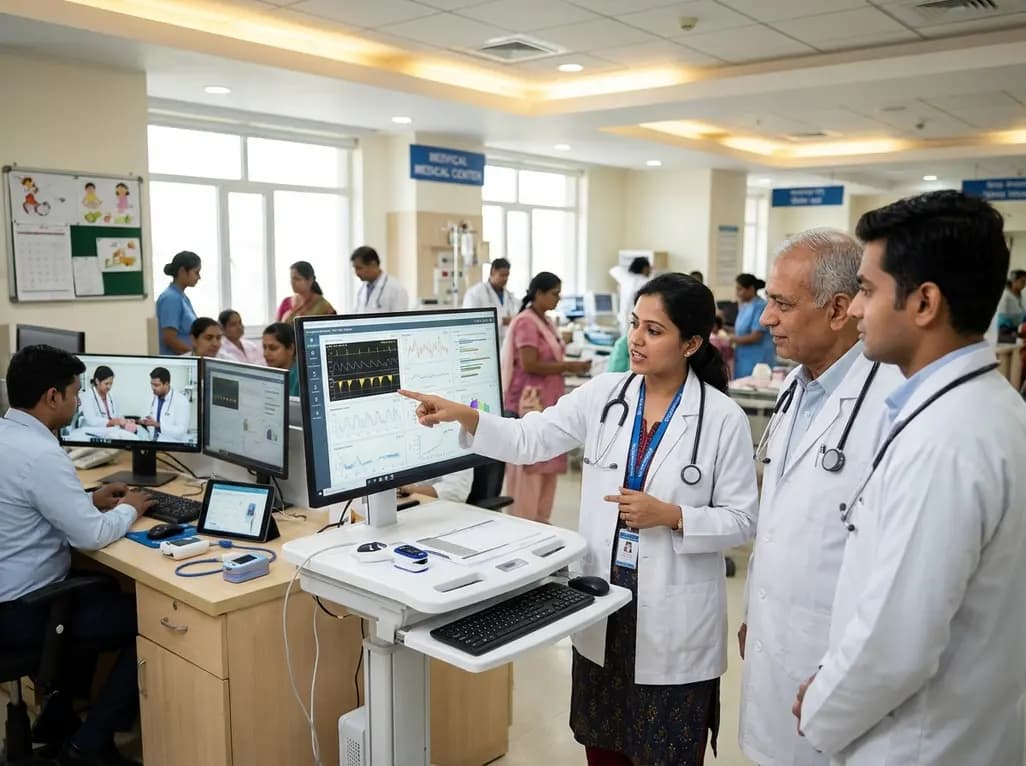
A landmark study details how an enterprise pediatric remote patient management model expanded from a single cardiology pilot to 16 diverse specialty programs by combining centralized digital operations with specialty clinical leadership.
Yesterday

Peripheral nerve injuries present clinical challenges due to regenerative mismatches between sensory and motor neurons. This review explores cutting-edge tissue-engineered nerve grafts designed as central-peripheral signal relays to overcome denervation atrophy and restore functional motor-sensory recovery.
Today

Protein O-GlcNAcylation couples cellular nutrient status to vital neuronal functions. This review explores how disrupted O-GlcNAc cycling drives both neurodevelopmental delays and neurodegenerative cascades, positioning metabolic post-translational modifications as therapeutic targets in clinical neurology.
Today
