.webp&w=384&q=75)

Loading, please wait...
Loading, please wait...

Inherited peripheral neuropathies represent a genetically heterogeneous group of disorders that pose substantial diagnostic and therapeutic challenges for healthcare professionals worldwide. Recent international discoveries have illuminated biallelic loss-of-function variants in the sorbitol dehydrogenase gene as a leading cause of autosomal recessive axonal neuropathy. Understanding the complete phenotypic spectrum and clinical progression of CMT-SORD neuropathy is essential for accurate clinical evaluation and timely intervention in neuromuscular practice.
Biallelic loss-of-function mutations in the sorbitol dehydrogenase (SORD) gene disrupt normal polyol metabolism. Consequently, toxic concentrations of intracellular sorbitol accumulate within peripheral axons and surrounding tissues. Comprehensive multi-ethnic cohort analyses have identified a diverse mutational landscape across European, Hispanic, Chinese, Near Eastern, and Northern African ancestries. Among these mutations, the frame-shift variant c.757delG (p.Ala253GlnfsTer27) remains the most common pathogenic allele across global populations. Additionally, clinicians frequently identify the missense substitution c.458C>A (p.Ala153Asp) as a prevalent causative variant. Other rare missense, nonsense, and splice-site variants typically appear in individual pedigrees. Because clinical presentations overlap significantly with other hereditary neuropathies, precise molecular genetic testing is indispensable. Whole-exome sequencing, targeted gene panels, and Sanger sequencing effectively confirm these biallelic variants. Identifying these genetic changes promptly enables clinicians to differentiate this metabolic neuropathy from other axonal subtypes. Furthermore, confirming the genetic diagnosis provides clarity regarding inheritance risks for affected families and guides long-term clinical planning.
The clinical manifestations of SORD mutations primarily encompass two distinct diagnostic categories. Approximately two-thirds of affected individuals receive a diagnosis of Charcot-Marie-Tooth disease type 2 (CMT2), whereas one-third present with distal hereditary motor neuropathy. Symptom onset typically occurs during the second decade of life, leading to gradual motor impairment. Patients frequently experience symmetrical lower limb weakness that affects both anterior and posterior distal compartments. Although foot dorsiflexion weakness represents the most noticeable clinical finding, quantitative assessments reveal that plantar flexion is often equally impaired. In most individuals, the difference in Medical Research Council strength scores between dorsiflexion and plantar flexion remains minimal. In addition, male patients frequently demonstrate more severe distal lower limb weakness and experience faster progression over time. Upper limb involvement occurs later in the disease course, primarily affecting intrinsic hand muscles. Tendon reflexes in the lower extremities are diminished or absent in most affected patients. Consequently, clinician awareness of these distinct motor patterns facilitates earlier clinical recognition.
Electrodiagnostic studies play a foundational role in characterizing this metabolic peripheral nerve disorder. Nerve conduction studies consistently reveal a motor-predominant axonal neuropathy with reduced compound muscle action potential amplitudes in distal nerves. Interestingly, approximately one-fourth of patients demonstrate reduced motor conduction velocities falling within intermediate ranges. These intermediate velocities reflect secondary changes in myelin architecture resulting from chronic axonal loss. In contrast to many classic axonal neuropathies, sensory nerve conduction abnormalities in this condition show a distinctive anatomical distribution. Upper limb sensory nerve action potentials frequently show greater impairment than lower limb responses during electrophysiological testing. Furthermore, needle electromyography demonstrates chronic neurogenic changes and active denervation potentials in distal lower extremity muscles. These neurophysiological findings help neurophysiologists differentiate this specific condition from demyelinating forms of Charcot-Marie-Tooth disease. Therefore, combining clinical assessments with comprehensive electrophysiological evaluations provides an accurate picture of underlying peripheral nerve dysfunction.
Biochemical profiling provides a powerful and accessible method to confirm the pathogenicity of identified genetic variants. Loss of sorbitol dehydrogenase function impairs the conversion of sorbitol into fructose, leading to marked metabolite accumulation. Consequently, fasting serum sorbitol concentrations are significantly elevated in affected individuals compared to healthy controls and heterozygous carriers. This elevation persists independently of patient sex, specific mutation type, or serum sample storage duration. Therefore, measuring fasting serum sorbitol serves as an exceptionally reliable biochemical biomarker in clinical practice. When genetic sequencing reveals novel or uncertain SORD variants, quantifying serum sorbitol can definitively establish pathogenicity. Moreover, this biochemical assay offers a cost-effective and rapid screening method before pursuing extensive genetic sequencing. Clinicians can utilize mass spectrometry to obtain highly accurate sorbitol measurements from simple blood draws. Thus, fasting serum sorbitol bridges the gap between molecular genetics and routine biochemical evaluation in neuromuscular clinics.
Although this hereditary neuropathy causes progressive distal weakness, long-term functional mobility remains favorable for many individuals. Most patients experience a gradual decline in foot dorsiflexion and plantar flexion strength over decades. Consequently, approximately one-fourth of affected individuals require ankle-foot orthoses to stabilize gait and prevent foot drop. Patients typically begin utilizing orthotic devices during their fourth decade of life. However, unlike more aggressive childhood-onset hereditary neuropathies, the vast majority of patients maintain independent ambulation well into advanced age. Assistive mobility devices, such as canes or walkers, are only necessary for a minority of older patients. Furthermore, physical therapy and structured exercise regimens help maintain joint mobility and prevent secondary contractures. Regular clinical monitoring allows multidisciplinary teams to address biomechanical changes and optimize functional independence. Therefore, understanding the natural history of the condition empowers clinicians to provide realistic long-term prognoses and targeted rehabilitative support.
The elucidation of the sorbitol accumulation pathway has opened exciting opportunities for targeted disease-modifying therapies. Aldose reductase catalyzes the conversion of glucose into sorbitol, representing the initial rate-limiting step of the polyol pathway. By inhibiting this upstream enzyme, novel therapeutic agents aim to reduce intracellular sorbitol accumulation and prevent toxic nerve injury. Govorestat, an orally active and central nervous system-penetrant aldose reductase inhibitor, has demonstrated significant efficacy in reducing systemic sorbitol levels in multicentre clinical trials. Clinical study data have shown strong correlations between sorbitol reduction and meaningful improvements in functional outcome measures and patient-reported health indices. Therefore, establishing an early and accurate diagnosis of CMT-SORD has become clinically imperative. Timely identification ensures that eligible patients can access emerging disease-modifying treatments as regulatory approvals advance. In addition, routine biomarker tracking will allow clinicians to monitor therapeutic efficacy and optimize metabolic control in clinical practice.
CMT-SORD primarily causes symmetrical motor-predominant weakness affecting both foot dorsiflexion and plantar flexion equally. Symptom onset typically occurs during adolescence or early adulthood. Unlike many other severe axonal neuropathies, most patients maintain independent ambulation throughout adulthood, and upper limb sensory nerves often show greater electrophysiological involvement than lower limb nerves.
Fasting serum sorbitol is significantly elevated in patients with biallelic loss-of-function SORD mutations compared to healthy individuals or carriers. Measuring serum sorbitol provides a rapid, reliable, and cost-effective biochemical assay. This test definitively confirms the functional pathogenicity of newly discovered or uncertain variants identified during genetic sequencing panels.
Govorestat is an orally active aldose reductase inhibitor that blocks the initial enzyme converting glucose to sorbitol in the polyol pathway. By inhibiting this enzymatic step, govorestat prevents toxic sorbitol accumulation in peripheral nerves. This targeted mechanism significantly reduces systemic sorbitol levels and helps mitigate progressive neuromuscular dysfunction.
Disclaimer: This content is for informational and educational purposes only and is not intended to serve as medical advice, diagnosis, or treatment. Healthcare professionals should exercise their independent clinical judgment when interpreting or applying this information. While every effort has been made to ensure accuracy based on reliable scientific literature and current evidence, medical knowledge is constantly evolving. Readers are advised to verify details with appropriate medical standards and consult original sources when making clinical decisions. The authors and publishers assume no responsibility for any errors, omissions, or potential consequences arising from the use of this material. Refer to the latest local and national guidelines for clinical practice.
References

Read summarized clinical updates, watch expert medical content, and earn CME certifications right from your smartphone.
Open your smartphone camera to scan and install.





Discover the clinical, genetic, and electrophysiological characteristics of CMT-SORD neuropathy, highlighting fasting serum sorbitol as a key biomarker and exploring novel therapeutic advancements.
last month

The novel chemiluminescent probe 2TPA-IsoL enables selective, deep-tissue monitoring of MPO-generated HOCl. This breakthrough offers real-time tracking of inflammatory bowel disease activity and therapeutic response.
Today

New evidence from Karolinska Institutet shows women vaccinated against HPV prior to conception have significantly lower rates of preterm birth and major perinatal complications. Clinicians in India can leverage these findings to strengthen adolescent immunisation and reproductive health advocacy.
Today

Cinematic rendering utilizes advanced global illumination to transform coronary CT angiography datasets. This imaging technique provides lifelike depth perception, helping cardiologists and surgeons precisely evaluate anomalous coronary artery origins, high-risk interarterial courses, and post-surgical anatomy.
Today
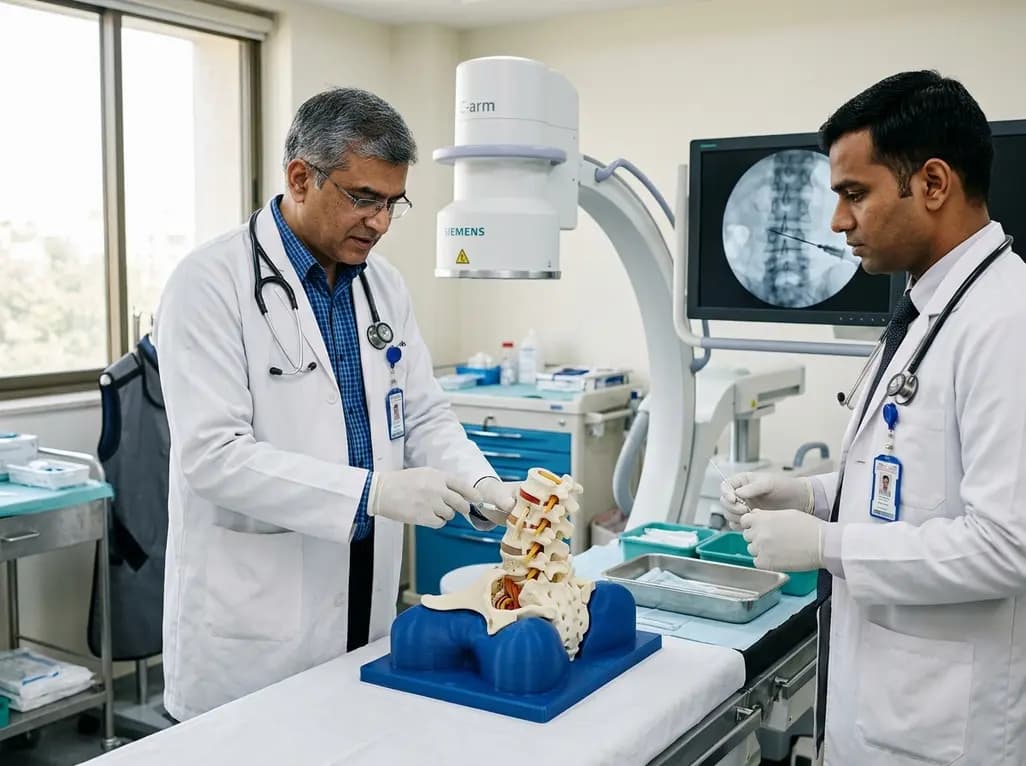
A novel 3D-printed lumbar spine simulator with tunable radiopacity provides realistic tactile and radiographic feedback for fluoroscopy-guided intervertebral disc puncture training, offering a low-cost, ethical alternative to cadaver models.
Today

A breakthrough study reveals that loss of SELENOT in hypothalamic POMC neurons triggers premature cellular senescence, ATF6α stress activation, and ER calcium depletion, linking neuroendocrine decay to metabolic disease.
Today
