

Loading, please wait...
Loading, please wait...

Digital health tools are rapidly transforming how young adults manage psychological distress across modern university campuses. Consequently, healthcare providers and researchers are closely observing the growing adoption of generative AI mental health applications among undergraduate populations. Recent empirical evidence reveals that students with co-occurring anxiety and depression interact with artificial intelligence platforms far differently than their healthy peers. Furthermore, these distressed individuals frequently turn to digital software to alleviate symptoms of severe isolation and emotional turmoil. Therefore, healthcare providers must evaluate these emerging digital behaviors during routine psychiatric consultations to protect patient welfare.
The investigation analyzed 890 university students who participated in the elective artificial intelligence module of the 2024–2025 Healthy Minds Study. Researchers systematically evaluated clinical symptoms using the Patient Health Questionnaire-9 and Generalized Anxiety Disorder-7 assessment scales. Consequently, investigators classified participants into four distinct clinical cohorts based on established diagnostic cutoffs: Anxiety-Depression, Anxiety Only, Depression Only, and Neither.
Furthermore, statistical models adjusted for relevant sociodemographic covariates, including age, gender identity, race, and academic standing. Interestingly, baseline analyses demonstrated that overall artificial intelligence usage did not differ among these diagnostic groups. However, clinically meaningful divergences surfaced when investigators examined specialized applications. Specifically, students experiencing co-occurring anxiety and depression reported significantly higher utilization of artificial intelligence for mental health support and companionship. In contrast, asymptomatic students rarely utilized algorithmic tools for emotional assistance. Moreover, this symptomatic group displayed distinct interaction patterns compared to students with isolated depression or anxiety alone. Therefore, underlying psychological distress strongly directs functional engagement toward conversational platforms.
Students navigating comorbid affective disorders often experience profound interpersonal isolation and acute emotional fatigue. Consequently, these individuals turn to conversational algorithms to fulfill unmet relational needs. Traditional campus mental health centers frequently face substantial appointment delays and administrative hurdles. As a result, overwhelmed students seek immediate assistance from readily accessible digital platforms rather than waiting weeks for an appointment.
Furthermore, commercial chatbots offer continuous availability, immediate responsiveness, and unconditional positive regard without social stigma. Vulnerable undergraduates frequently appreciate that automated software never expresses frustration, fatigue, or personal judgment. Nevertheless, substituting automated dialogue for authentic human connection introduces major clinical hazards. When individuals rely on synthetic conversations, they often exacerbate existing social withdrawal and emotional avoidance. Moreover, commercial language models lack genuine therapeutic empathy and cannot replicate evidence-based human psychotherapy. Consequently, while conversational agents provide temporary solace, they may unintentionally postpone essential professional treatment. Medical providers must recognize these emotional dynamics to address digital avoidance behaviors effectively during clinical consultations.
Paradoxically, students suffering from severe affective symptoms also reported significantly greater concern regarding artificial intelligence technologies. While these individuals use conversational tools more frequently, they remain deeply skeptical about algorithmic safety, bias, and operational ethics.
Several critical psychological factors drive this pronounced digital apprehension. First, students who struggle with chronic anxiety frequently worry about confidential disclosures and corporate data surveillance. They fear that sharing vulnerable emotional thoughts could compromise personal privacy or academic records. Second, depressed individuals often experience heightened pessimism about technological dependency and societal manipulation. Furthermore, observant users understand that large language models frequently generate inaccurate statements or hallucinated psychiatric guidance. Consequently, these distressed young adults face an uncomfortable emotional paradox. They feel drawn to instant digital availability yet remain highly suspicious of computational errors. Therefore, healthcare providers must validate these concerns during clinical visits. By acknowledging algorithmic risks, clinicians help patients establish healthier boundaries with modern technology and rebuild trust in human-led care.
These empirical observations provide essential guidance for psychiatrists, general practitioners, and family physicians treating young adults. Currently, primary care clinicians routinely assess physical activity, sleep quality, and recreational substance use during examinations. However, healthcare professionals rarely evaluate conversational artificial intelligence habits during standard psychiatric assessments.
Therefore, practitioners should integrate direct technological screening into standard clinical intake protocols. Clinicians can ask patients whether they consult automated chatbots for emotional advice, loneliness, or crisis management. Furthermore, medical providers must evaluate whether synthetic interactions replace genuine interpersonal relationships or healthy coping strategies. When physicians detect problematic technology dependence, they should recommend validated psychotherapeutic interventions, including cognitive behavioral therapy and structured peer support. In addition, doctors must caution patients about entering sensitive health data into commercial platforms that lack clinical privacy protections. By actively discussing digital habits, physicians demystify artificial intelligence and direct vulnerable individuals toward evidence-based professional care.
Educational institutions and student wellness departments must adapt rapidly to evolving student digital behaviors. Because psychological distress continues to rise globally, campus leaders cannot solve this problem by simply banning software. Instead, universities must develop transparent policies that encourage responsible digital health literacy across campus communities.
Additionally, academic healthcare centers should collaborate with behavioral researchers to evaluate regulated digital therapeutics. Unlike unregulated commercial tools, evidence-based mental health applications undergo clinical validation and incorporate vital emergency crisis protocols. Furthermore, student wellness programs should provide interactive workshops explaining how language models function behind the screen. When universities foster digital literacy, students understand the crucial difference between algorithmic text generation and authentic human empathy. Meanwhile, clinical investigators must continue monitoring the long-term psychiatric consequences of automated conversational tools. Through coordinated institutional policies and proactive clinical vigilance, healthcare leaders can safeguard student well-being during this rapid digital transition.
Students experiencing anxiety and depression turn to generative artificial intelligence primarily because of instant availability, convenient access, and perceived anonymity. Academic counseling centers frequently manage lengthy waiting lists, leaving distressed individuals without immediate psychological care. Furthermore, conversational algorithms offer continuous responsiveness without interpersonal judgment or social stigma. Consequently, struggling students utilize automated interfaces as readily accessible sounding boards during nighttime emotional crises when human healthcare providers are unavailable.
Significant clinical hazards include medical misinformation, algorithmic hallucinations, and the complete absence of emergency crisis intervention protocols. General-purpose artificial intelligence models often produce inaccurate psychological advice, potentially exacerbating depressive symptoms. Furthermore, conversational software cannot interpret subtle non-verbal cues or intervene safely during acute suicidal crises. Additionally, replacing human interaction with synthetic dialogue frequently worsens social isolation and delays vital clinical consultations with qualified psychiatric professionals.
Clinicians should incorporate open-ended, non-judgmental technology inquiries into standard psychiatric interviews. For instance, practitioners can ask patients whether they consult conversational software for emotional advice, stress reduction, or companionship. Furthermore, doctors should determine whether automated platforms replace genuine human connections or delay medical care. Finally, healthcare providers must educate patients regarding algorithmic privacy risks while recommending validated, evidence-based digital mental health applications.
Disclaimer: This content is for informational and educational purposes only... Refer to the latest local and national guidelines for clinical practice.
References

Read summarized clinical updates, watch expert medical content, and earn CME certifications right from your smartphone.
Open your smartphone camera to scan and install.





A new study reveals that college students with comorbid anxiety and depression report higher generative AI use for mental health and companionship, alongside heightened apprehension. Healthcare providers must screen for digital AI habits and guide patients toward evidence-based mental healthcare.
Today

A landmark Nature study reveals that only 27% of individuals with obesity have active clinical disease. By incorporating waist circumference and organ dysfunction, this new diagnostic framework moves beyond BMI to prevent widespread misclassification and guide personalized metabolic intervention.
Today

A breakthrough blood test measuring the RNA biomarker Tu-Stroma detects microscopic serous tubal intraepithelial carcinoma (STIC) lesions with remarkable accuracy. This non-invasive diagnostic tool offers crucial biological insight to guide prophylactic surgery decisions for women carrying high-risk genetic mutations.
Today

Thoracic aortic aneurysm lacks etiologic medical therapy. A new study reveals that targeting specific αV integrins with Cilengitide attenuates TGF-β and mechanotransduction pathways, effectively limiting pro-fibrotic remodeling and aortic bulb dilation in both syndromic and sporadic disease models.
Today
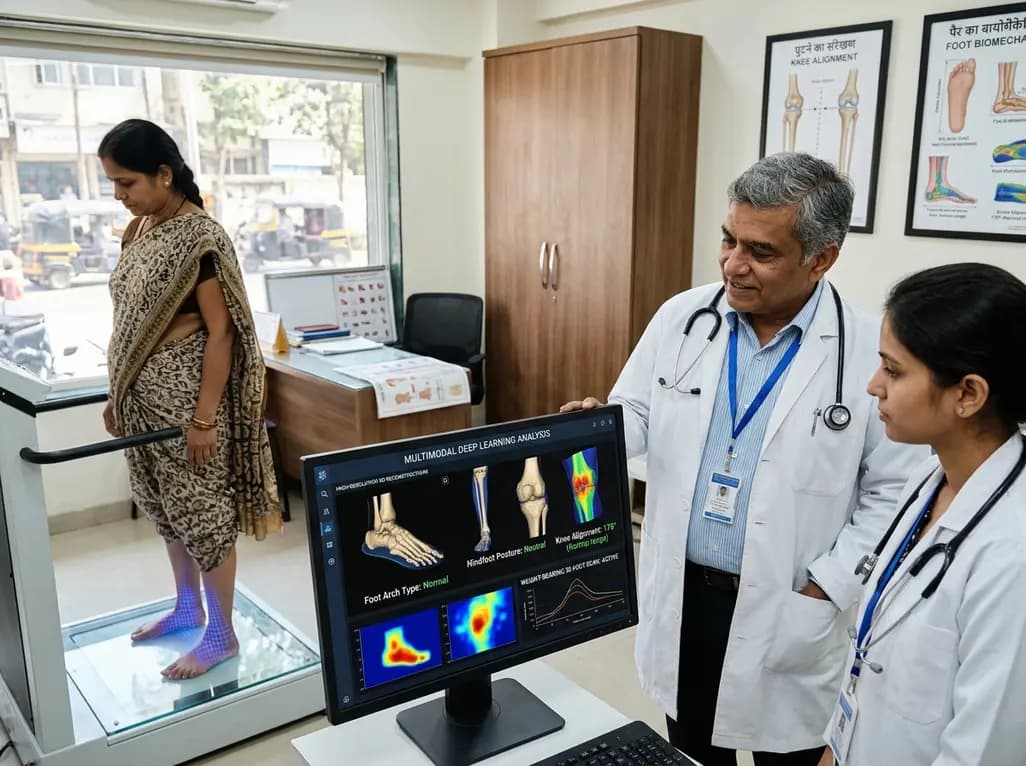
A multimodal deep learning framework utilizing weight-bearing 3D foot scans accurately screens lower-limb alignment, including arch type, hindfoot posture, and knee alignment, offering an accessible, radiation-free alternative to radiography for early biomechanical triage.
Today

A real-world retrospective study demonstrates that combining intravitreal ranibizumab with focal/grid macular laser significantly improves visual acuity and central macular thickness compared to laser monotherapy in patients with center-involved diabetic macular edema.
Today
