.webp&w=384&q=75)

Loading, please wait...
Loading, please wait...
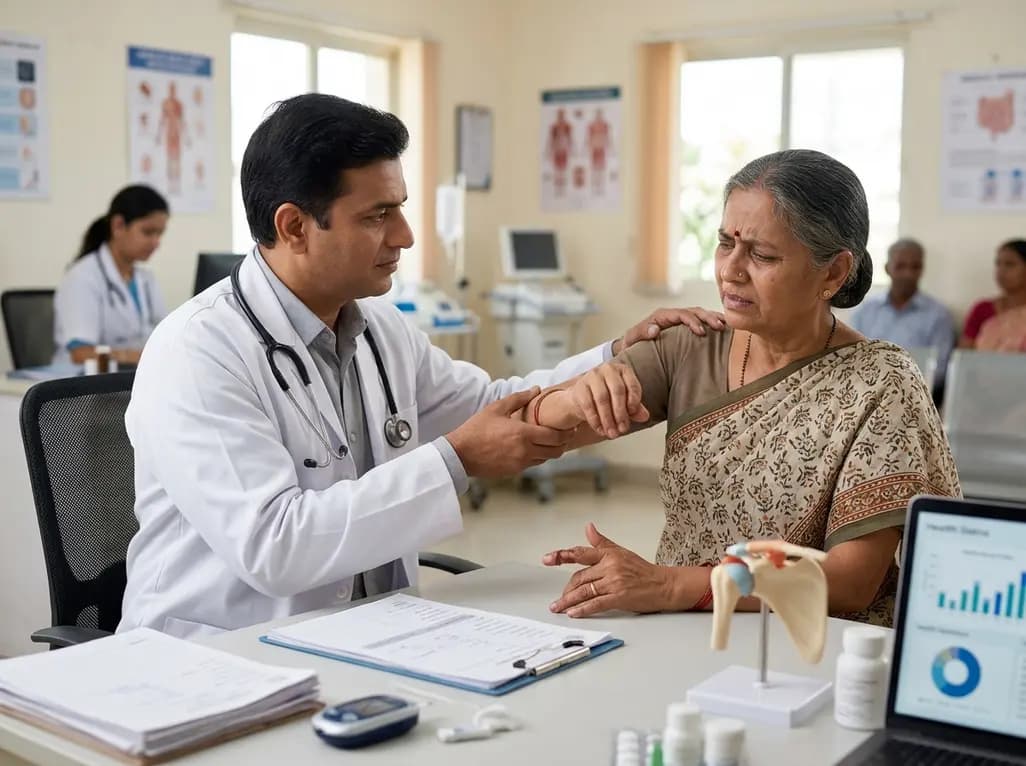
Managing blood sugar is a vital part of diabetes care. However, many people overlook the impact of this condition on joint health. Specifically, frozen shoulder in diabetes has emerged as a highly prevalent and debilitating complication. Recent clinical observations in India highlight that persistent hyperglycemia damages connective tissues. Consequently, patients often experience pain and progressive stiffness before they even receive a formal diabetes diagnosis.
Why does this painful joint restriction occur so frequently? Epidemiological studies show that adhesive capsulitis affects up to thirty percent of individuals with diabetes. In contrast, only two to three percent of the general population experiences this condition. Moreover, younger patients in India are now presenting with severe shoulder stiffness. This trend occurs because type 2 diabetes is increasingly diagnosed in younger age groups. Therefore, clinicians must routinely screen patients with joint complaints for underlying metabolic disorders.
How does high blood sugar damage the musculoskeletal system? Chronic hyperglycemia accelerates the ageing of connective tissues. Specifically, excess glucose promotes the formation of advanced glycation end products. These products accumulate in tendons and joint capsules, which makes them thick, stiff, and brittle. Consequently, the tendons lose their natural elasticity and become prone to tearing. Furthermore, diabetes narrows the small blood vessels and reduces vital blood flow. This impaired circulation slows down tissue healing and worsens post-surgical recovery.
In addition to shoulder stiffness, patients face several other orthopaedic issues. For example, trigger finger is highly common among diabetics. This condition causes painful locking of the digits during movement. Additionally, patients may develop diabetic hand syndrome, which severely restricts finger flexibility. Dupuytren's contracture also occurs when scar tissue pulls the fingers into a bent position. Most importantly, Charcot arthropathy represents a severe risk where nerve damage leads to joint destruction in the feet. Early detection and active physiotherapy are essential to prevent permanent disability.
Q1: Why is frozen shoulder more common in people with diabetes?
Persistent high blood sugar levels lead to the accumulation of advanced glycation end products. Consequently, these products make joint capsules thick, stiff, and highly prone to inflammation.
Q2: What are the primary treatment options for diabetes-related joint pain?
Treatment ranges from physiotherapy and targeted exercises to advanced therapies like ultrasound-guided hydro-dissection. Additionally, maintaining optimal glycemic control is vital to support tissue healing and prevent further damage.
Disclaimer: This content is for informational and educational purposes only. It does not constitute medical advice or replace professional judgment. Refer to the latest local and national guidelines for clinical practice.
References

Read summarized clinical updates, watch expert medical content, and earn CME certifications right from your smartphone.
Open your smartphone camera to scan and install.





Emerging evidence from India shows a strong link between diabetes and severe musculoskeletal disorders. High blood sugar damages collagen, leading to frozen shoulder, trigger finger, and joint stiffness. Early screening and glycemic control are essential to preserve mobility.
4 months ago

As monsoon seasons elevate arboviral disease threats, Tamil Nadu has initiated an ICMR-monitored evaluation of the tetravalent dengue vaccine in Tenkasi district. Clinicians emphasize clinical monitoring, public prevention, and high-quality early pediatric care to reduce disease morbidity across endemic regions.
Today

Leucine Rich Bio has introduced South Asia's first comprehensive vaginal microbiome test, BugSpeaks. By profiling microbial dysbiosis, pathogens, and antimicrobial resistance, this next-generation diagnostic platform provides clinicians with deeper insights into recurrent infections, fertility, and reproductive health.
Today

Review how tailored exercise programs benefit frail older patients with heart failure. Explore pathophysiological mechanisms, individualized training prescriptions, and strategies to overcome adherence barriers in clinical practice.
Today

This comparative study evaluates posterior labral tears with and without glenohumeral instability, highlighting distinct demographic patterns, MRI underestimation in stable shoulders, and successful arthroscopic repair outcomes.
Today

A clinical study demonstrates that early intervention with tocilizumab, either as monotherapy or bridged with corticosteroids, achieves significant proptosis reduction and resolves active inflammation in treatment-naive thyroid eye disease.
Today
