.webp&w=384&q=75)

Loading, please wait...
Loading, please wait...

Researchers at the Indian Institute of Technology (IIT) Kanpur are investigating how stress impacts human cognition. Specifically, they are studying brain waves to understand attention, working memory, and decision-making. Consequently, their research focuses on the biomarker known as frontal alpha asymmetry.
Alpha waves represent a relaxed and calm state of mind. Therefore, these waves are prominent when a person is awake with closed eyes. However, stress significantly alters these normal brain oscillations. To combat this, researchers previously exposed individuals to alpha-frequency binaural beats. Consequently, participants experienced a rise in alpha activity and reported lower stress levels. Thus, brain waves offer an objective window into our mental states.
The IIT Kanpur team is closely examining the frontal lobe. Additionally, this region controls critical judgment and executive decision-making. Specifically, they are analyzing frontal alpha asymmetry as a key neurological biomarker. This biomarker refers to an imbalance in alpha activity between the hemispheres. For example, depression is often linked to greater left frontal alpha power. Consequently, this imbalance signifies reduced approach motivation in affected individuals.
Furthermore, the researchers are utilizing custom EEG headbands with soft silicon electrodes to track brain waves. In addition, they collect cardiac activity through smartwatches. To classify emotions, the team developed an innovative algorithm called DAAFNet. This approach falls under affective computing, which bridges artificial intelligence and psychology. Consequently, these advanced systems could revolutionize medical rehabilitation and human-computer interfaces.
Despite extensive research, experts note that longitudinal data on alpha wave biomarkers is still lacking. This is because stress is a highly variable and subjective phenomenon. Moreover, an individual's mental state changes constantly throughout the day. Therefore, researchers need an objective measure of stress to account for daily state-level differences. Future longitudinal clinical trials will be essential to establish these brain signatures as reliable diagnostic tools.
Q1: What is frontal alpha asymmetry?
It is a neurological biomarker that refers to an imbalance in alpha wave activity between the left and right frontal hemispheres of the brain, often linked to mood disorders.
Q2: How does stress affect alpha brain waves?
Stress typically reduces alpha wave activity, which is normally associated with a relaxed, wakeful state of mind.
Q3: How are researchers measuring these brain waves non-invasively?
Researchers use electroencephalography (EEG) systems equipped with custom electrodes and headbands to capture brain wave activity without invasive procedures.
Disclaimer: This content is for informational and educational purposes only. It does not constitute medical advice or replace professional judgment. Refer to the latest local and national guidelines for clinical practice.
References

Read summarized clinical updates, watch expert medical content, and earn CME certifications right from your smartphone.
Open your smartphone camera to scan and install.





IIT Kanpur researchers study frontal alpha asymmetry and alpha brain waves to understand how stress impacts cognitive functions like attention and memory....
5 months ago
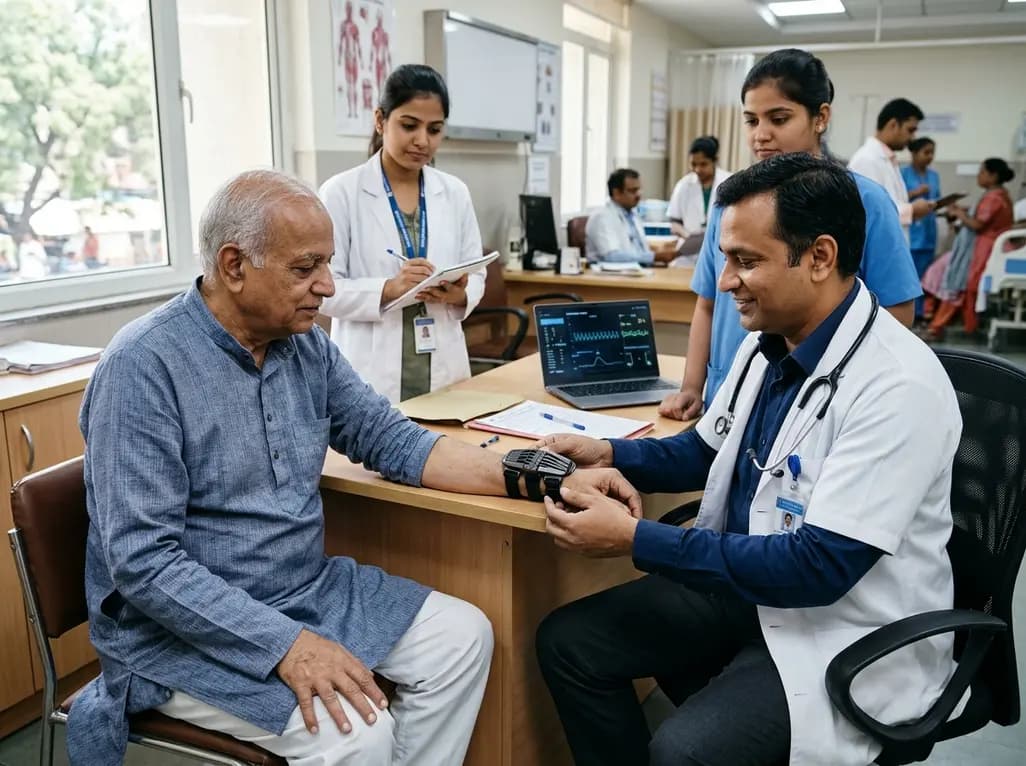
The TREM-AB open-label pilot study evaluated a wearable passive nonlinear vibration absorber for essential tremor. The Nonlinear Energy Sink bracelet reduced clinical Fahn-Tolosa-Marin tremor scores by 32.1% and electrophysiological tremor power by 49.2% with no adverse effects reported.
Today

A population-based study of 20,928 children reveals that small vulnerable newborns face sex-divergent mental capital outcomes at ages 6-7: term SGA girls show higher behavioral difficulties and lower resilience, while preterm non-SGA boys experience increased behavioral problems.
Today
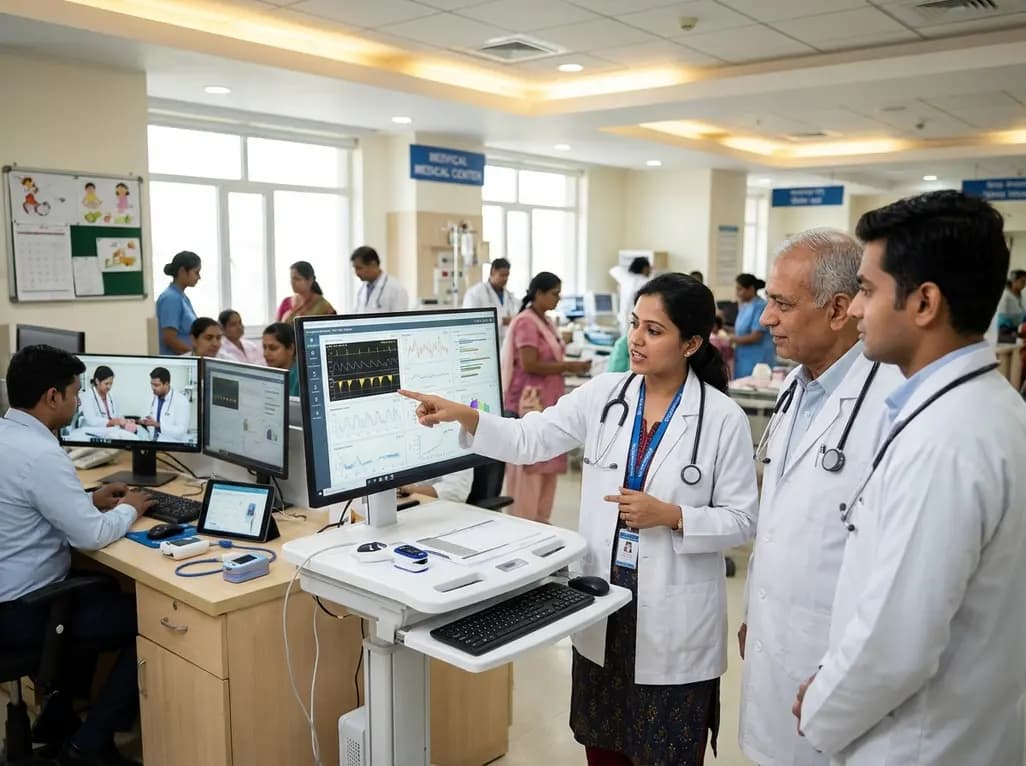
A landmark study details how an enterprise pediatric remote patient management model expanded from a single cardiology pilot to 16 diverse specialty programs by combining centralized digital operations with specialty clinical leadership.
Today
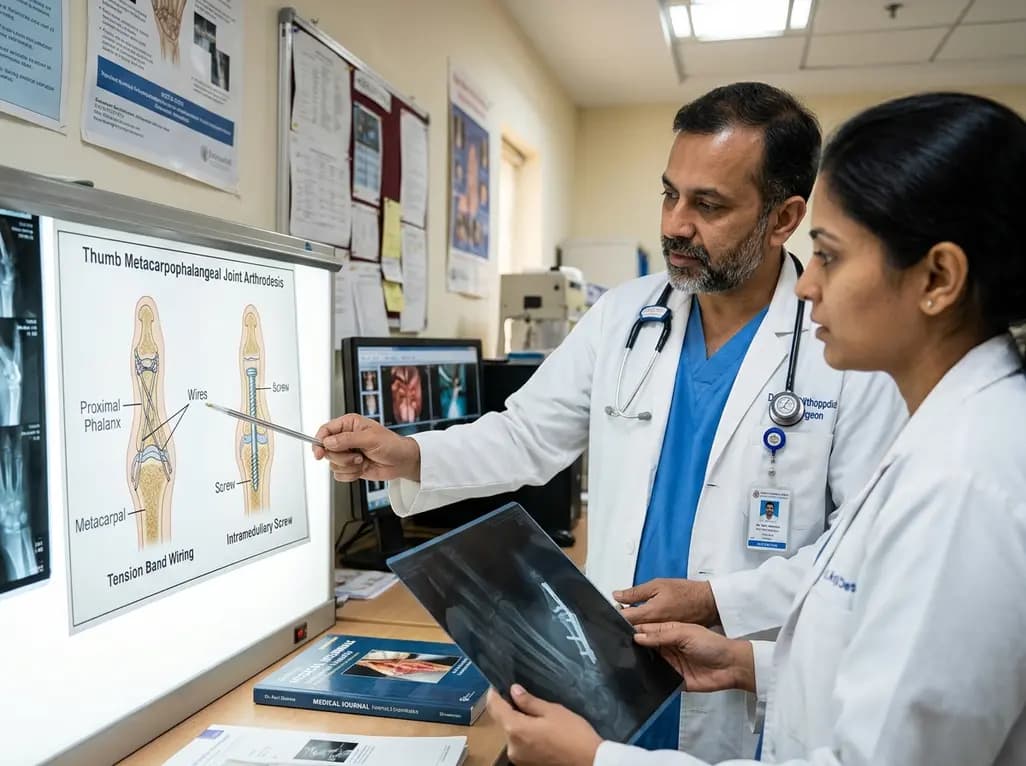
A comparative review of tension band wiring and intramedullary screw fixation in thumb metacarpophalangeal arthrodesis, evaluating union rates, hardware complications, and clinical outcomes.
Today
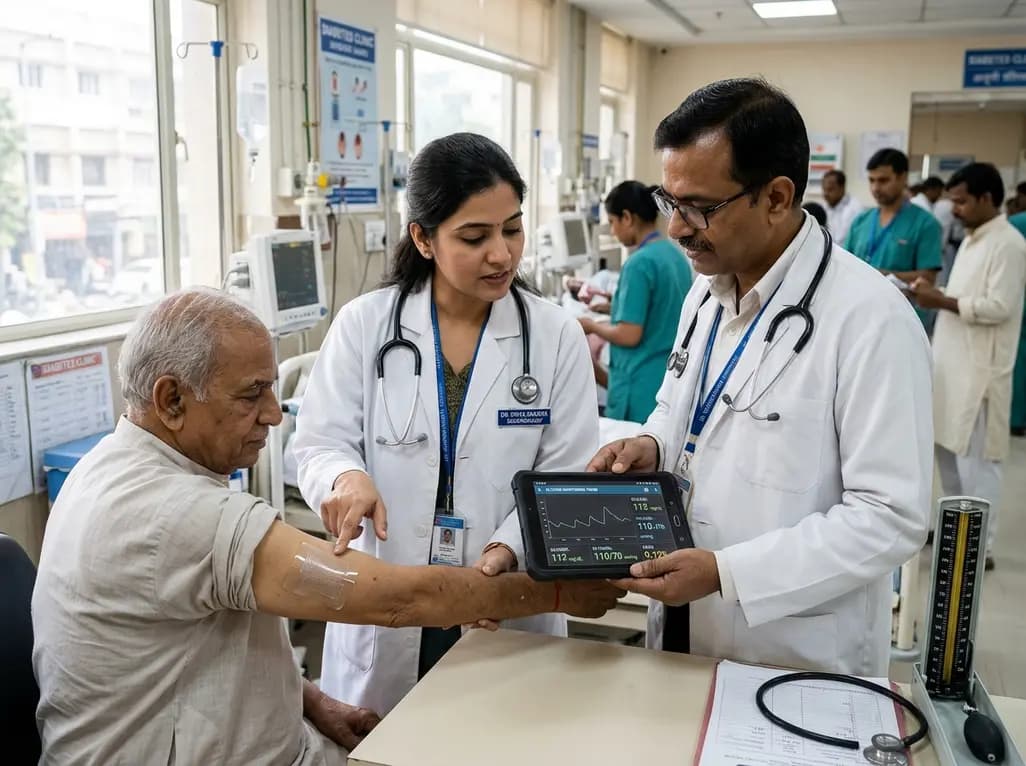
A breakthrough ultrathin multimodal sensor decouples physical hemodynamic monitoring from disposable electrochemical calibration, achieving long-term wearable glucose prediction with 81.36% accuracy and a 9.12% MARD. This offers a robust, drift-free solution for outpatient metabolic surveillance.
Today
