.webp&w=384&q=75)

Loading, please wait...
Loading, please wait...
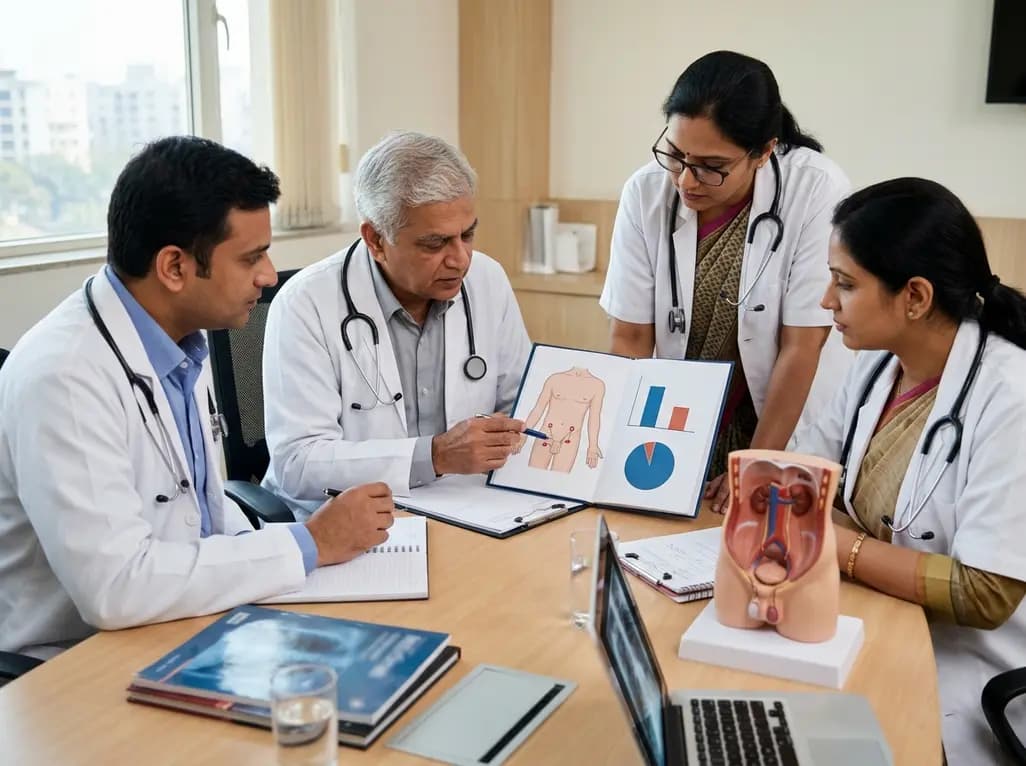
The management of intra-abdominal undescended testes represents one of the most complex challenges in pediatric urology and surgery. Cryptorchidism, if left untreated, significantly increases the risk of infertility and testicular malignancy later in life. While many cases of undescended testes involve inguinal locations, approximately 10 to 15 percent of cases present as non-palpable, intra-abdominal testes. For these patients, standard orchidopexy is often impossible due to the short length of the testicular vessels. Consequently, specialized surgical maneuvers are required to achieve tension-free scrotal placement. Among the various surgical options, two-stage Fowler-Stephens orchidopexy has emerged as a cornerstone procedure. This technique relies on the development of collateral circulation after the primary blood supply is ligated. Surgeons must balance the need for adequate mobilization with the risk of compromising testicular perfusion. Therefore, understanding the long-term success rates and potential complications is essential for clinical decision-making. Recent data highlights that while the procedure remains highly effective, it requires careful patient selection and precise surgical execution to minimize the risk of atrophy. By focusing on pediatric surgical outcomes, clinicians can better counsel parents regarding the expected results and the necessity of a staged approach to optimize testicular salvage.
The Fowler-Stephens technique was originally described based on the anatomical observation of a rich collateral blood supply to the testis via the vasal artery and cremasteric vessels. By ligating the short testicular artery, surgeons encourage these collateral pathways to hypertrophy over several months. This physiological adaptation allows the testis to survive solely on its secondary blood supply. In the first stage of the two-stage Fowler-Stephens orchidopexy, the testicular vessels are ligated in situ, usually laparoscopically. Subsequently, a waiting period of six months or more follows, allowing the collateral circulation to mature. The second stage involve the actual mobilization of the testis into the scrotum, utilizing the increased length provided by the division of the primary vessels. Historically, the single-stage approach was common, but the two-stage method has demonstrated superior results in preventing ischemia. Furthermore, the laparoscopic approach has revolutionized the first stage, providing excellent visualization of the internal ring and the position of the testis. However, despite these advancements, the procedure is not without risks. The success of the surgery heavily depends on preserving the delicate vessels surrounding the vas deferens. If these are damaged during mobilization, the testis will inevitably suffer from atrophy, rendering the initial ligation counterproductive.
Clinical studies evaluating the long-term outcomes of this procedure provide valuable insights into its efficacy. A retrospective analysis conducted at a major teaching hospital focused on 42 children who underwent the staged procedure for 48 intra-abdominal testes. The mean age of the patients at the time of the first procedure was approximately 3.3 years. Following the first stage, testicular atrophy was observed in three cases, indicating that even the initial ligation carries a baseline risk. After the completion of the second stage, success was defined by the presence of a palpable testis in the scrotum with preserved perfusion. The results showed that 32 testes were successfully positioned and remained palpable during follow-up. Conversely, four cases resulted in non-palpable testes post-operatively. Overall, the study reported a success rate of 82.5%, which aligns well with international literature where success ranges from 67% to 98%. These findings suggest that the two-stage Fowler-Stephens orchidopexy remains a robust choice for high-lying testes. However, the atrophy rate of 17.5% underscores the inherent biological limitations of vessel ligation. Clinicians must carefully weigh these statistics against the risks of other techniques that may offer different trade-offs between mobility and vascular safety.
As surgical techniques evolve, alternatives to vessel ligation have gained traction. One such method is the Shehata technique, which emphasizes gradual traction and vessel-sparing mobilization rather than ligation. Unlike the Fowler-Stephens approach, the Shehata technique keeps the primary testicular artery intact, potentially reducing the risk of ischemic atrophy. Some comparative studies suggest that the Shehata technique may yield lower atrophy rates because the primary blood supply is never sacrificed. Nevertheless, the Fowler-Stephens method is often preferred when the testis is located very high or when the vasal vessels appear particularly robust. The choice between these techniques often depends on the surgeon's experience and the specific anatomy encountered during the initial laparoscopy. Furthermore, some surgeons argue that the collateral circulation induced by the Fowler-Stephens method is more reliable for very distal scrotal placement. While the atrophy rate in the Hungarian study was slightly higher than some reported for Shehata, the overall success in achieving scrotal positioning remains a strong argument for Fowler-Stephens. Therefore, both techniques have their place in the pediatric surgeon\'s armamentarium. Continuous monitoring of outcomes is necessary to refine these approaches and ensure that the highest number of testes are preserved for hormonal and reproductive function.
In the Indian clinical landscape, the management of undescended testes faces unique challenges, including late presentation and variable access to specialized pediatric surgical care. Many children in rural or underserved areas may not be diagnosed until later in childhood, which complicates the surgical outlook. The use of two-stage Fowler-Stephens orchidopexy in India is increasingly supported by the growth of laparoscopic training centers across the country. Laparoscopy is particularly beneficial here because it allows for definitive diagnosis and the completion of the first stage of surgery through minimal incisions. Additionally, the staged approach allows for better follow-up management, although maintaining patient compliance for a two-part surgery can be difficult in certain socio-economic settings. Healthcare providers must focus on early detection programs to ensure that the first stage occurs well before the child reaches four years of age. Moreover, the cost-effectiveness of the laparoscopic staged approach, due to shorter hospital stays and fewer complications compared to older open techniques, makes it a viable standard for Indian hospitals. By adopting standardized protocols and emphasizing the importance of long-term follow-up, Indian pediatric surgeons can achieve success rates that mirror international benchmarks, ultimately improving the reproductive health of the pediatric population.
The findings from recent retrospective analyses confirm that the two-stage Fowler-Stephens orchidopexy is an effective and reliable surgical method for treating intra-abdominally retained testes. While it carries a measurable risk of testicular atrophy, the high success rate in achieving scrotal placement makes it a preferred option for many surgeons globally. Future advancements in surgical technology, such as robotic-assisted laparoscopy, may further refine the precision of vessel ligation and mobilization, potentially reducing the atrophy rate. Additionally, research into biomarkers for testicular health post-surgery could help in early detection of atrophy, allowing for earlier intervention or alternative counseling. It is also important to continue comparing this method with newer vessel-sparing techniques to establish clear guidelines on which patients benefit most from each approach. Ultimately, the goal remains the preservation of as much viable testicular tissue as possible. Consistent documentation of outcomes, regular clinical audits, and adherence to evidence-based practices will drive improvements in pediatric urology. As surgeons gain more experience with the nuances of collateral circulation and laparoscopic anatomy, the prognosis for children born with intra-abdominal testes will continue to improve, ensuring better long-term physical and psychological health outcomes.
The single-stage procedure involves ligating the testicular vessels and immediately moving the testis to the scrotum during one surgery. In contrast, the two-stage approach involves ligating the vessels first and waiting several months before moving the testis. This delay allows collateral blood flow to develop and strengthen. Research generally shows that the staged approach results in lower rates of testicular atrophy because the blood supply has more time to adapt.
The Shehata technique is a vessel-sparing method that avoids ligating the main testicular artery, potentially reducing ischemia. While the Fowler-Stephens method is highly reliable for very high testes, it has a slightly higher atrophy rate because it sacrifices the primary blood supply. Shehata may offer better preservation of the testis but requires specific anatomical conditions. Both techniques are effective, and the choice often depends on the surgeon\'s preference and the specific patient anatomy.
A successful orchidopexy is primarily indicated by the testis being consistently palpable in the dependent part of the scrotum during subsequent examinations. Furthermore, the testis should maintain a normal volume for the patient\'s age and demonstrate preserved perfusion on Doppler ultrasound if necessary. Absence of atrophy, lack of retractility, and the absence of post-operative hernias or hydroceles are also critical indicators that the surgical intervention has been effective and stable over time.
Disclaimer: This content is for informational and educational purposes only. It is not intended as medical advice or a substitute for the professional judgment of a healthcare provider. Refer to the latest local and national guidelines for clinical practice.
References
Ta DM et al. [Two-stage Fowler-Stephens orchidopexy in intra-abdominal undescended testes]. Orv Hetil. 2026 Jul 12. doi: 10.1556/650.2026.33561. PMID: 42437469.
Esposito C, et al. Laparoscopic management of abdominal testes: A systematic review and meta-analysis of the Fowler-Stephens technique. Journal of Pediatric Surgery. 2022.
Radmayne AS, et al. Comparison of success rates between Shehata and Fowler-Stephens techniques for high-level undescended testes. Pediatric Urology International. 2021.
"
Read summarized clinical updates, watch expert medical content, and earn CME certifications right from your smartphone.
Open your smartphone camera to scan and install.





This clinical analysis reviews the long-term success and testicular atrophy rates of two-stage Fowler-Stephens orchidopexy for intra-abdominal undescended testes, reporting an 82.5% success rate and comparing it with alternative surgical techniques like the Shehata procedure.
3 months ago
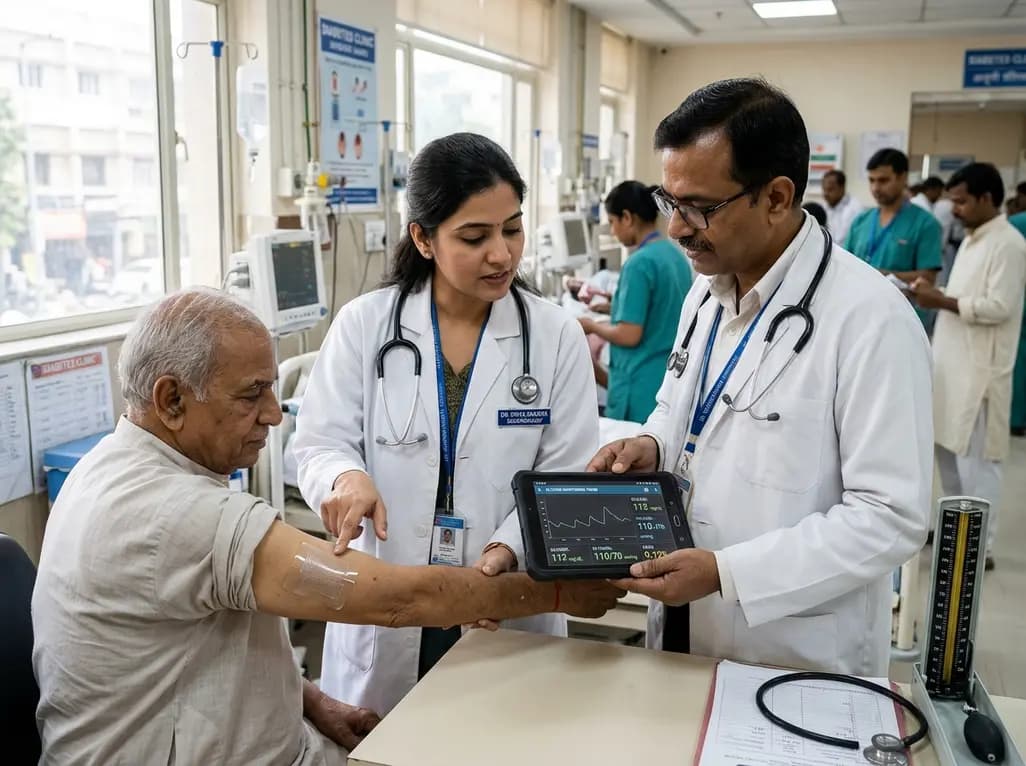
A breakthrough ultrathin multimodal sensor decouples physical hemodynamic monitoring from disposable electrochemical calibration, achieving long-term wearable glucose prediction with 81.36% accuracy and a 9.12% MARD. This offers a robust, drift-free solution for outpatient metabolic surveillance.
Today

Demanding exhaustive hormonal profiling can inadvertently discourage clinical studies involving females. Methodological standards must align with the specific scientific question to expand, not restrict, equitable evidence for women.
Today

Co-administering antiseizure medications and DOACs frequently causes pharmacokinetic interactions, subtherapeutic drug levels, and thromboembolic failures. This review highlights enzyme induction risks, unpredictable outcomes with levetiracetam, and the vital role of therapeutic drug monitoring.
Today
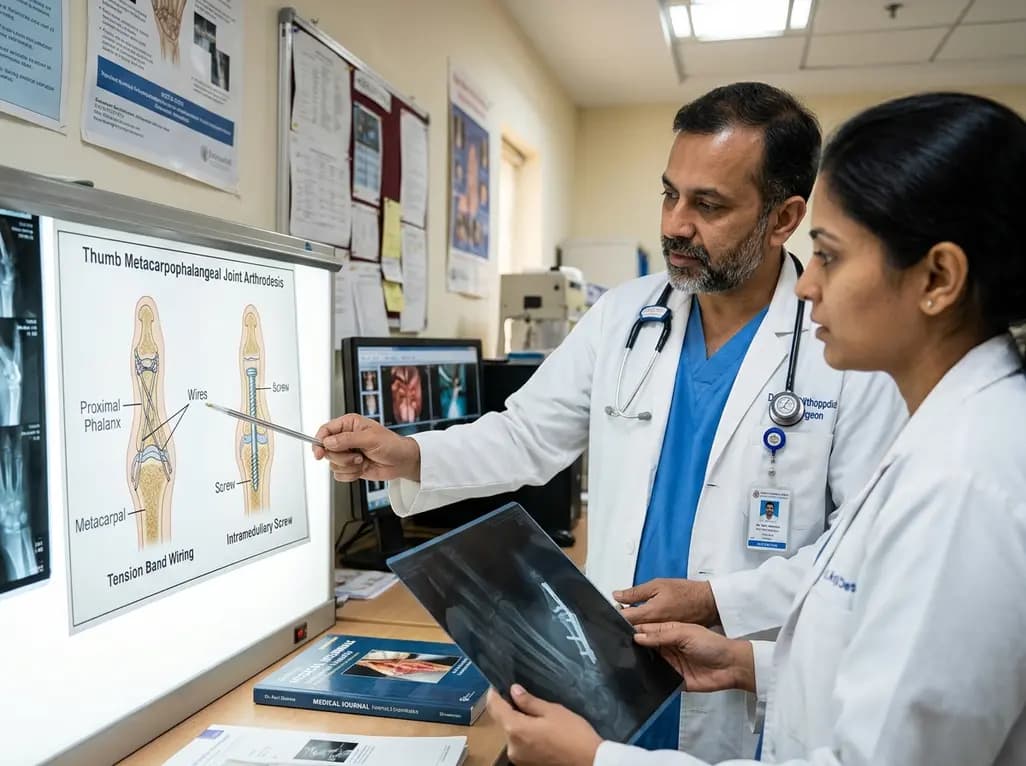
A comparative review of tension band wiring and intramedullary screw fixation in thumb metacarpophalangeal arthrodesis, evaluating union rates, hardware complications, and clinical outcomes.
Today
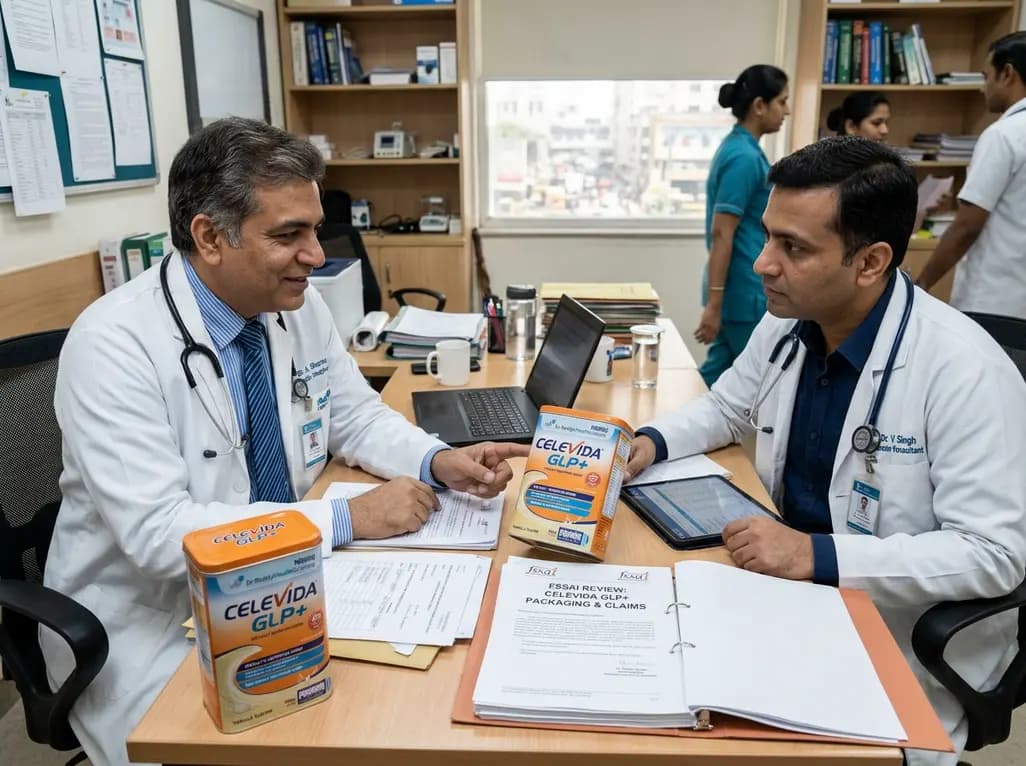
Following regulatory scrutiny from FSSAI regarding promotional representations and lean muscle preservation claims, Dr. Reddy's Laboratories and Nestlé Health Science are currently reviewing the branding and marketing strategy for their joint nutritional supplement Celevida GLP+.
Today
