.webp&w=384&q=75)

Loading, please wait...
Loading, please wait...
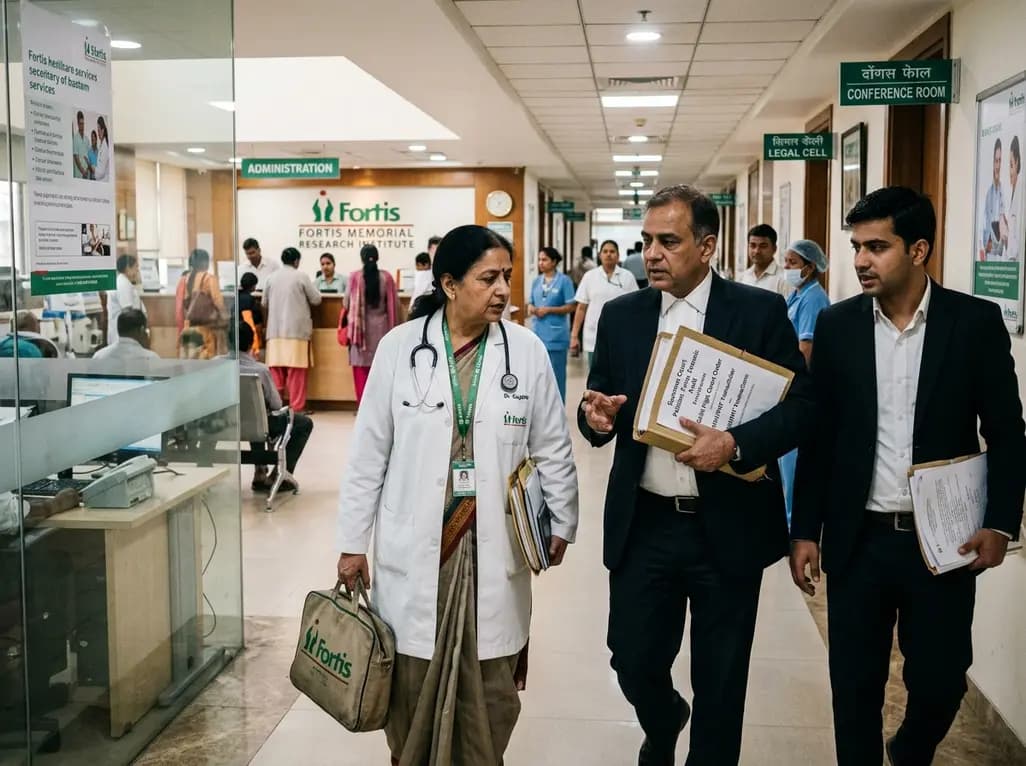
Fortis Healthcare has officially escalated its legal battle by approaching the Supreme Court of India. Specifically, the hospital network filed a Special Leave Petition on September 16, 2026. This petition challenges an adverse ruling issued by the Delhi High Court. The High Court had directed an investigative probe into transactions involving Malaysia-based IHH Healthcare Berhad and Singapore-listed RHT Health Trust. This judicial directive for a Fortis forensic audit stems from long-running enforcement proceedings initiated by Japanese pharmaceutical leader Daiichi Sankyo. Furthermore, Axis Bank is preparing to join the apex court proceedings to protect institutional lending actions. Consequently, this confrontation highlights intensifying judicial oversight over corporate restructurings within major tertiary healthcare networks across India.
The current legal dispute stems from a long-running international conflict dating back to 2008. In that year, Daiichi Sankyo acquired a majority stake in Ranbaxy Laboratories from former promoters Malvinder Mohan Singh and Shivinder Mohan Singh. However, undisclosed regulatory issues with foreign drug authorities quickly led to substantial legal disputes. In 2016, a Singapore arbitration tribunal awarded Daiichi Sankyo damages exceeding 2,562 crore rupees. With accrued interest over the past decade, the total enforcement claim now exceeds 5,300 crore rupees. Therefore, Daiichi Sankyo approached Indian courts to execute this substantial foreign award.
During ongoing enforcement proceedings, institutional lenders began liquidating promoter-pledged shares to recover unpaid debt. Consequently, Daiichi Sankyo alleged that these corporate actions diluted assets and obstructed valid recovery efforts. On August 31, 2026, the Delhi High Court delivered a landmark ruling under Justice Subramonium Prasad. The court allowed three key execution applications to probe the historical evolution of Fortis shares. In addition, the bench appointed S. Ramanand Aiyar and Company as an independent forensic auditor. This investigative mandate aims to reconstruct capital flows across multiple corporate entities.
The forensic investigation focuses heavily on transactions involving three distinct corporate entities. Specifically, auditors must examine fund flows between Fortis Healthcare, Malaysia-based IHH Healthcare, and Singapore-based RHT Health Trust. In 2018, IHH Healthcare successfully acquired a controlling thirty-one percent stake in Fortis through a preferential allotment. However, Daiichi Sankyo questioned this transaction structure in subsequent court hearings. The pharmaceutical company alleged that executives diverted capital infusions through complex subsidiary transactions instead of satisfying court decrees.
Moreover, the court directed auditors to examine asset acquisitions connected to RHT Health Trust. Former promoters established this Singapore trust to hold critical clinical establishment assets and hospital properties. Fortis subsequently repurchased these healthcare assets for approximately 4,666 crore rupees. Therefore, the forensic audit seeks to determine whether capital movements remained entirely bona fide. The court wants to verify if these corporate transfers violated prior judicial stay orders. Additionally, the investigation will review whether lenders improperly liquidated encumbered shares during ongoing recovery proceedings.
Fortis Healthcare moved swiftly to challenge the High Court order before the Supreme Court. In a formal regulatory disclosure, Fortis confirmed filing a Special Leave Petition on September 16, 2026. The hospital management emphasized that Fortis was never an original judgment debtor in the Daiichi arbitration. Furthermore, the company clarified that the forensic audit order does not impose any penalty, fine, or operational liability. Current leadership operates completely independently of the former promoters. Thus, Fortis argues that investigative inquiries should not burden normal hospital governance or cloud corporate reputation.
Simultaneously, Axis Bank is preparing its own legal petition before the apex judicial forum. Institutional lenders argue that they acted lawfully when enforcing pledged securities against defaulted promoter loans. In fact, banks maintained valid primary liens on those shares long before execution orders commenced. Therefore, financial institutions want the Supreme Court to protect legitimate banking recovery rights. Unchecked forensic scrutiny into standard pledge enforcement could create severe uncertainty across Indian corporate lending. Accordingly, Axis Bank seeks swift judicial intervention to protect recognized commercial practices.
Legal battles of this magnitude naturally raise pertinent questions for medical professionals working across network hospitals. For practicing doctors, corporate litigations rarely interrupt day-to-day patient care or clinical decision-making. However, prolonged judicial scrutiny can influence hospital administration and long-term capital allocation. Fortis Healthcare operates dozens of premier tertiary hospitals across India, employing thousands of dedicated healthcare workers. Consequently, maintaining strong leadership stability remains essential for hospital accreditation, clinical excellence, and advanced medical equipment acquisition.
Moreover, hospital networks require predictable corporate backing to expand specialized surgical infrastructure and intensive care facilities. When legal disputes freeze capital expenditures, healthcare modernization can experience temporary delays. Fortunately, current Fortis operational metrics show resilient patient volumes and ongoing healthcare delivery. The hospital administration continues to support evidence-based medicine and clinical research initiatives without direct interference. Nevertheless, senior medical faculty must stay informed about institutional regulatory developments. Transparent corporate governance ultimately strengthens the wider healthcare ecosystem and reinforces public trust in private hospital care.
The Supreme Court proceedings will establish vital legal principles for Indian healthcare and corporate management. Over the past decade, foreign direct investment has reshaped private healthcare across India. Global healthcare operators like IHH Healthcare bring vital operational expertise and modern management systems to Indian hospitals. However, legacy legal liabilities from previous promoters can complicate cross-border investments. Therefore, the Supreme Court ruling will provide crucial clarity regarding how successor management can insulate ongoing hospital operations from historical disputes.
Furthermore, regulatory clarity protects clinical staff, institutional investors, and patient communities alike. Indian healthcare demands billions of dollars in infrastructure expansion over the coming decade. Private healthcare providers deliver over sixty percent of tertiary inpatient services across the country. Consequently, robust judicial mechanisms must balance creditor recovery with the uninterrupted functioning of essential medical institutions. As the apex court takes up this special leave petition, healthcare observers anticipate clear legal guidelines. Transparent governance norms will ensure that hospital operations remain firmly dedicated to patient welfare and clinical safety.
Q1: Why did Fortis Healthcare move the Supreme Court against the forensic audit order?
Fortis Healthcare filed a Special Leave Petition before the Supreme Court to challenge the Delhi High Court directive. The company argues that it was neither an original judgment debtor nor a party to the Daiichi Sankyo arbitration. Furthermore, Fortis emphasizes that current corporate management operates independently of former promoters. Therefore, hospital leadership contends that an extensive forensic audit unfairly burdens lawful operations and clouds corporate standing without establishing any direct wrongdoing.
Q2: How does this legal dispute affect daily clinical operations and patient care at Fortis hospitals?
Daily patient care, clinical treatments, and hospital services continue completely unaffected across all Fortis Healthcare facilities. The ongoing litigation remains strictly confined to corporate finance, equity transfers, and debt recovery among institutional stakeholders. Furthermore, the High Court order does not levy financial penalties or operational restrictions on hospitals. Practicing doctors, nursing teams, and surgical departments continue delivering routine and emergency medical care under established clinical protocols and professional hospital administration standards.
Q3: Why is Axis Bank also planning to challenge the Delhi High Court judgment?
Axis Bank is preparing to approach the Supreme Court to protect legitimate banking procedures and creditor rights. The bank previously liquidated promoter-pledged shares to recover outstanding institutional credit lines following substantial commercial defaults. However, Daiichi Sankyo claimed that these share sales compromised arbitral recovery channels. Consequently, Axis Bank seeks judicial clarity from the apex court to confirm that standard loan recovery actions and share pledge enforcements remain lawful under Indian commercial banking regulations.
Disclaimer: This content is for informational and educational purposes only. It does not constitute medical advice or replace professional judgment. Refer to the latest local and national guidelines for clinical practice.
References

Read summarized clinical updates, watch expert medical content, and earn CME certifications right from your smartphone.
Open your smartphone camera to scan and install.





Fortis Healthcare has approached the Supreme Court against the Delhi High Court mandate ordering an investigative forensic probe into transactions with IHH Healthcare and RHT Health Trust. The legal battle highlights ongoing regulatory scrutiny in India's hospital sector, impacting governance and healthcare investments.
Today
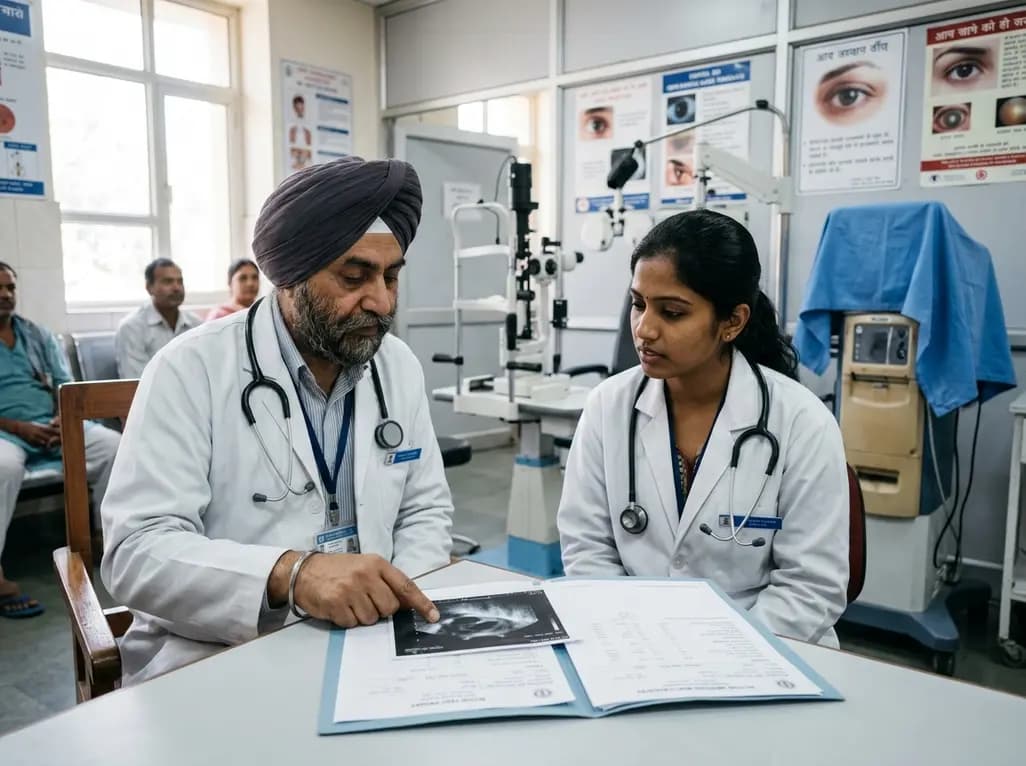
A multicenter study reveals that a significant proportion of HCV antibody-positive ophthalmic surgical patients remain untreated and eligible for direct-acting antivirals. Stratifying antibody titers and streamlining referral pathways can optimize hepatitis C micro-elimination efforts.
Today
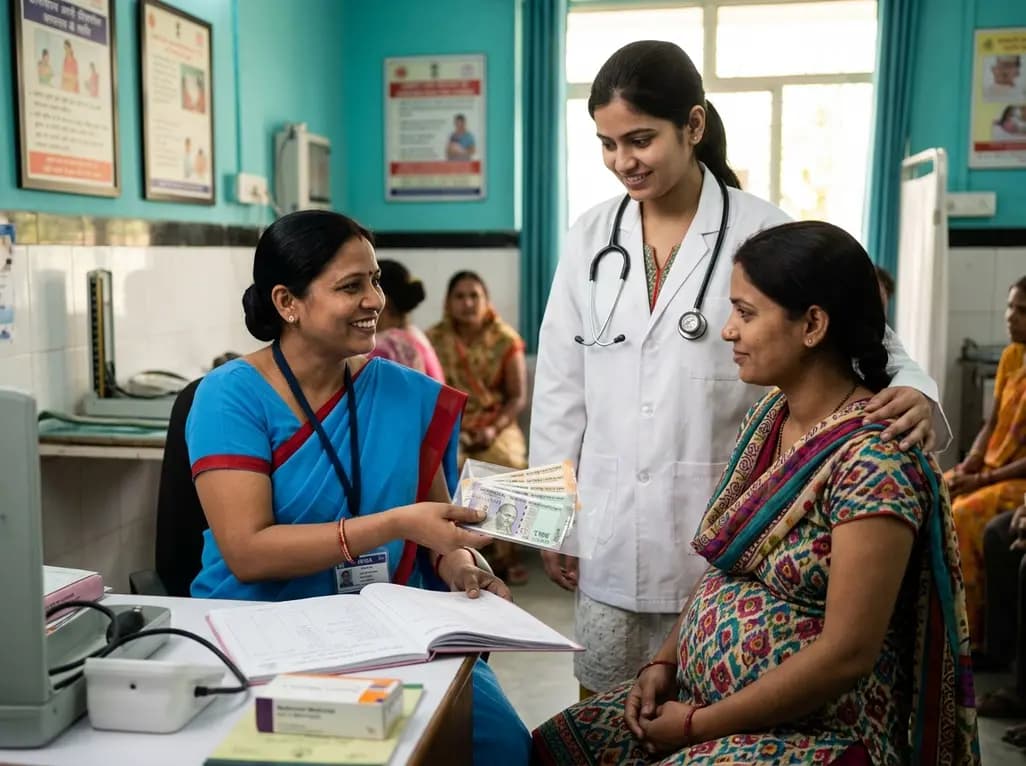
The Delhi Cabinet has approved a key policy revision doubling the fixed monthly allowance for accredited social health activists. This financial enhancement bolsters grassroots maternal and child healthcare delivery, strengthens urban public health surveillance, and improves frontline community health worker retention.
Today
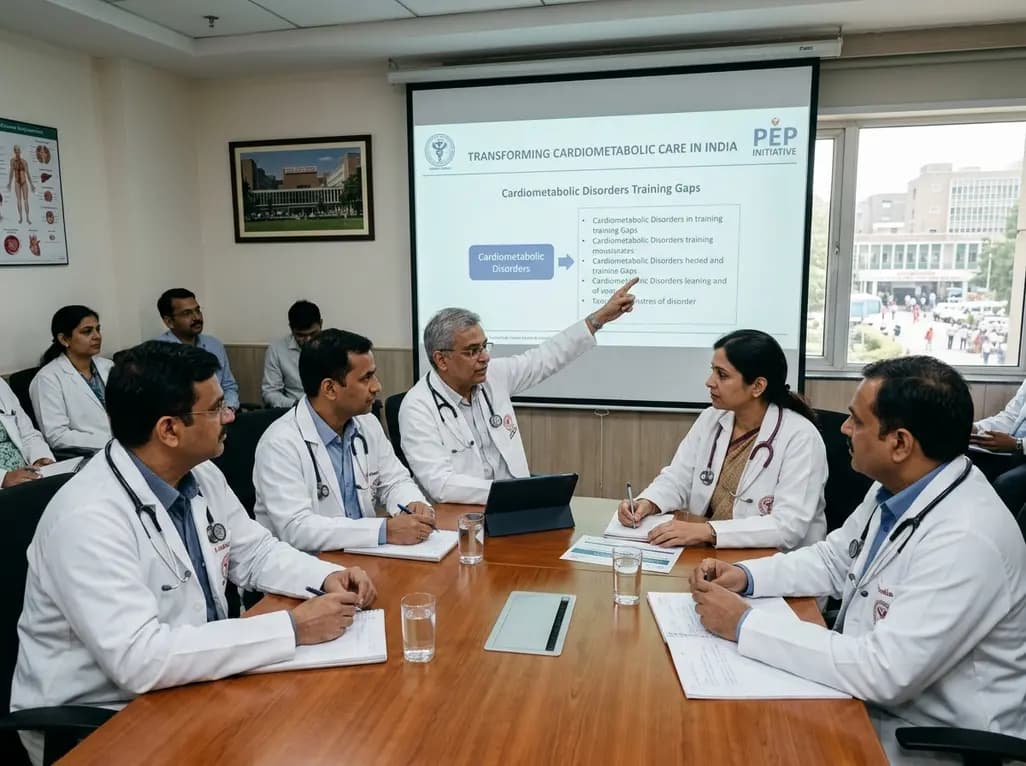
The All India Institute of Medical Sciences has convened national health experts, policymakers, and state nodal officers to transform medical training for cardiometabolic disorders. This collaborative effort under the PEP initiative addresses training gaps to elevate chronic disease care across Indian healthcare.
Today
A systematic review and meta-analysis of 21 RCTs reveals that platelet-rich plasma provides small but statistically superior pain relief and functional improvements compared to hyaluronic acid at 12 months in knee osteoarthritis, influenced by platelet concentration and leukocyte enrichment.
Today
A multicenter real-world prospective study in Taiwan demonstrates that liraglutide effectively reduces body weight and BMI standard deviation score in adolescents with obesity. The therapy shows a favorable safety profile with mild gastrointestinal adverse events and zero treatment discontinuations due to intolerance.
Today
