.webp&w=384&q=75)

Loading, please wait...
Loading, please wait...

Elective ocular procedures provide unexpected opportunities to detect silent chronic infections. Millions of older individuals undergo cataract procedures each year, requiring routine serological evaluations. Consequently, hepatitis C preoperative screening has emerged as a crucial intercept point for finding undiagnosed individuals. A recent multicenter investigation demonstrates that despite declining population seroprevalence, a substantial proportion of antibody-positive surgical candidates still urgently require curative antiviral treatment.
Many health systems conduct routine serological evaluations prior to ophthalmic surgery to protect surgical staff and prevent cross-contamination. However, these screening encounters generate profound epidemiological benefits beyond immediate operating theatre safety. Ophthalmology departments perform exceptionally high volumes of procedures, particularly in elderly populations who bear the highest historical burden of blood-borne viral transmission. In many healthcare settings, an elective surgical workup represents the only medical encounter where an asymptomatic patient receives an antibody assay. Consequently, hepatitis C preoperative screening functions as an effective public health surveillance tool. When healthcare teams detect positive serology, they can rapidly initiate diagnostic confirmations rather than treating the test solely as an infection control checklist. Unfortunately, clinical teams often overlook the therapeutic potential of these findings. Surgeons frequently complete the ocular procedure without connecting the seropositive patient to hepatology services. Therefore, structured screening pathways must evolve from passive perioperative risk reduction into proactive clinical linkage conduits, ensuring that every discovered antibody-positive patient undergoes complete evaluation for curative direct-acting antiviral therapy.
To evaluate how many antibody-positive surgical patients need treatment, researchers in Japan conducted a nationwide multicenter cohort study across twenty institutions. The investigators reviewed electronic medical records from 2019 to 2023, identifying 2,792 patients who tested positive for hepatitis C virus antibodies during routine preoperative evaluations. Across all twenty institutions, the proportion of antibody-positive patients requiring referral for direct-acting antiviral therapy remained remarkably consistent over time. Specifically, the proportions requiring referral were 44.4% in 2019, 38.7% in 2020, 34.2% in 2021, 38.9% in 2022, and 42.5% in 2023. Furthermore, in nine institutions where clinical teams measured quantitative antibody titers among 1,255 patients, the referral requirement rates ranged between 20.8% and 28.4%. Although overall hepatitis C antibody prevalence has gradually decreased due to broader public health interventions, the percentage of patients eligible for therapy among seropositive individuals did not drop. Consequently, these findings highlight that eye clinics continue to encounter a stable reservoir of untreated chronic infections. Surgeons and hospital administrators must recognize that seropositive candidates are not merely historical cases, but active candidates for life-saving interventions.
Differentiating between active viral replication and resolved infection remains a central clinical challenge in serological screening programs. Many individuals maintain circulating antibodies for decades after spontaneous clearance or successful past therapy. In addition, weak false-positive reactions frequently occur in low-prevalence demographics. The multicenter study clearly demonstrated that combining electronic medical record reviews with quantitative antibody titer measurements dramatically refines referral precision. When laboratories measured antibody titers, the estimated proportion of patients requiring immediate referral dropped from approximately 40% to 25%. This reduction occurs because low antibody titers rarely indicate ongoing viremia, whereas high titers consistently predict active viral replication. Consequently, integrating quantitative titer stratification protects gastroenterology departments from unmanageable influxes of non-viremic individuals while prioritizing those with severe disease. Furthermore, health facilities should establish automated reflex ribonucleic acid testing protocols. Under reflex algorithms, the laboratory automatically evaluates any high-titer sample for viral load without requiring a secondary venipuncture. Thus, quantitative antibody stratification streamlines diagnostic pathways, conserves clinical resources, and prevents diagnostic confusion among vulnerable elderly patients awaiting ocular interventions.
Despite the revolutionary efficacy of pan-genotypic direct-acting antivirals, real-world linkage to care remains fraught with administrative and cognitive hurdles. In typical surgical pathways, ophthalmic teams focus primarily on visual outcomes, intraocular lens calculations, and perioperative ocular recovery. As a result, non-ophthalmic laboratory abnormalities frequently receive minimal post-discharge documentation. Patients often leave the hospital unaware that an incidental antibody discovery requires gastroenterological follow-up. Moreover, elderly patients may mistakenly assume that an asymptomatic infection requires no immediate medical attention. To dismantle these barriers, institutions must introduce automated electronic alerts within hospital information systems. When a preoperative panel shows a positive antibody result, the system can automatically generate a specialty referral order and issue educational materials to the patient. Additionally, dedicated nurse navigators or infectious disease coordinators can track confirmed cases to verify appointment attendance. Therefore, closing the gap between surgical detection and hepatology consultation requires structural automation rather than relying solely on informal clinician recommendations. Coordinated handoffs ensure that patients receive the transformative benefits of curative regimens.
The findings of this nationwide study carry immense relevance for clinical practice and public health policy across India. Cataract surgery represents one of the most widely performed elective procedures in the country, with millions of interventions conducted annually through high-volume camps and tertiary centres. Many Indian ophthalmic institutions routinely administer preoperative rapid card tests for hepatitis viruses and human immunodeficiency virus. However, vast numbers of seropositive patients currently experience complete attrition from care after their ocular surgery. India's National Viral Hepatitis Control Program offers fully subsidized, generic direct-acting antivirals that achieve cure rates exceeding 95%. Consequently, linking preoperative ophthalmic screening directly to local program nodal centres provides an extraordinary micro-elimination opportunity. Hospital administrators should align preoperative surgical workflows with district hepatitis registries to facilitate seamless enrollment. Furthermore, training ophthalmologists and surgical residents on the importance of viral load confirmation will prevent unnecessary surgical delays while expanding national therapeutic coverage. By transforming routine surgical workups into systematic screening gateways, Indian clinicians can accelerate the elimination of viral hepatitis across rural and urban communities.
To maximize patient outcomes, healthcare systems must implement concrete operational protocols that connect surgical suites with medical hepatology. First, hospital committees should standardize preoperative testing protocols, transitioning from standalone qualitative rapid tests to quantitative chemiluminescent immunoassays wherever feasible. Second, clinical laboratories must implement automated reflex viral load testing on all positive specimens to distinguish active viremia from resolved disease immediately. Third, surgical departments must establish unambiguous referral criteria so that surgeons never discharge an antibody-positive patient without a documented consultation pathway. Furthermore, medical teams must communicate test results empathetically, reassuring patients that hepatitis C is now an easily curable condition rather than a surgical contraindication. In addition, surgical coordinators must ensure that seropositive status never leads to discriminatory procedural cancellations or delayed cataract care, provided standard universal precautions are maintained. Ultimately, treating hepatitis C prevents progressive cirrhosis, liver failure, and hepatocellular carcinoma. By viewing preoperative ophthalmic screening through an interdisciplinary lens, surgeons and physicians can work synergistically to cure chronic liver disease while restoring patient vision.
Preoperative screening in ophthalmic clinics captures a large volume of older adults who rarely access routine hepatology evaluations. Because cataract procedures require rapid serological testing, clinics detect silent chronic infections early. However, simply identifying antibodies is insufficient. Clinical teams must establish structured linkage protocols to confirm active viral replication through RNA testing and ensure that diagnosed individuals promptly consult hepatologists for curative oral antiviral therapy.
High anti-HCV antibody titers strongly correlate with active viral replication and detectable serum HCV RNA. Conversely, low titers frequently represent false positives or past resolved infections. Therefore, reporting quantitative antibody titers prevents unnecessary specialist referrals and alleviates patient anxiety. When clinical laboratories flag high titers alongside automated reflex HCV RNA testing, hospitals significantly improve diagnostic yield, accelerate clinical decision-making, and reduce unnecessary diagnostic expenses.
In India, high-volume cataract surgical camps and eye hospitals evaluate thousands of rural and geriatric individuals daily. These surgical encounters present an outstanding opportunity to advance the National Viral Hepatitis Control Program targets. By establishing mandatory referral pathways from ophthalmic operating lists to district viral hepatitis clinics, clinicians can effectively prescribe fully subsidized generic direct-acting antivirals, eliminating transmission reservoirs across underserved regional communities.
Disclaimer: This content is for informational and educational purposes only and does not constitute medical advice, diagnosis, or treatment regimens. Healthcare professionals must evaluate individual clinical circumstances, laboratory values, and institutional protocols when making screening or treatment decisions. Refer to the latest local and national guidelines for clinical practice.
References

Read summarized clinical updates, watch expert medical content, and earn CME certifications right from your smartphone.
Open your smartphone camera to scan and install.





A multicenter study reveals that a significant proportion of HCV antibody-positive ophthalmic surgical patients remain untreated and eligible for direct-acting antivirals. Stratifying antibody titers and streamlining referral pathways can optimize hepatitis C micro-elimination efforts.
Today

The Delhi Cabinet has approved a key policy revision doubling the fixed monthly allowance for accredited social health activists. This financial enhancement bolsters grassroots maternal and child healthcare delivery, strengthens urban public health surveillance, and improves frontline community health worker retention.
Today
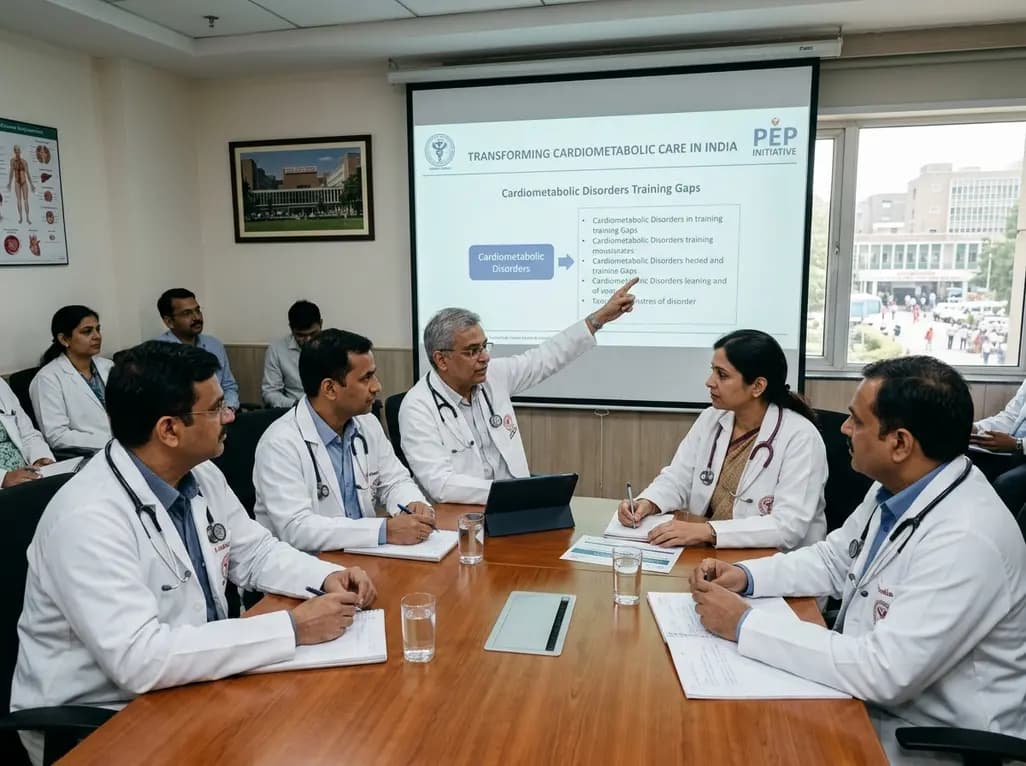
The All India Institute of Medical Sciences has convened national health experts, policymakers, and state nodal officers to transform medical training for cardiometabolic disorders. This collaborative effort under the PEP initiative addresses training gaps to elevate chronic disease care across Indian healthcare.
Today

A systematic review and meta-analysis of 21 RCTs reveals that platelet-rich plasma provides small but statistically superior pain relief and functional improvements compared to hyaluronic acid at 12 months in knee osteoarthritis, influenced by platelet concentration and leukocyte enrichment.
Today

A multicenter real-world prospective study in Taiwan demonstrates that liraglutide effectively reduces body weight and BMI standard deviation score in adolescents with obesity. The therapy shows a favorable safety profile with mild gastrointestinal adverse events and zero treatment discontinuations due to intolerance.
Today
