.webp&w=384&q=75)

Loading, please wait...
Loading, please wait...

Forensic odontology bridges oral science and criminal jurisprudence, providing essential expertise in victim identification and legal investigations. Consequently, dental professionals across the globe increasingly recognize the field as a cornerstone of modern medico-legal justice. A recent cross-sectional study evaluated self-reported awareness, educational exposure, and perceived curriculum gaps among dental professionals and students. While professional interest in forensic duties remains exceptionally strong, formal academic training continues to lag behind. Therefore, analyzing these educational shortcomings is vital for institutional curriculum development and clinical practice.
The cross-sectional study evaluated 276 dental professionals, including undergraduate students, house officers, general practitioners, and postgraduate residents. Notably, 82.2% of respondents reported general awareness of forensic dental applications. However, 84.8% revealed that their undergraduate dental curriculum completely excluded formal forensic dentistry instruction. Furthermore, 76.1% of participants identified the internet as their primary informational source, rather than university textbooks or structured lectures. Age estimation emerged as the most recognized clinical application at 55.1%, while 49.3% recognized human identification protocols. In addition, participants acknowledged the evidentiary value of bite mark analysis, cheiloscopy, and palatal rugae patterns. Moreover, dental tissues frequently survive severe thermal or mechanical trauma. Consequently, teeth represent invaluable biological evidence during complex forensic casework. Despite this widespread theoretical familiarity, the study lacked practical competence testing. Consequently, reported awareness may reflect superficial exposure rather than true procedural mastery. Many clinicians recognize the administrative necessity of dental records, yet few understand the technical standards required for judicial admissibility. These findings clearly confirm that informal web browsing cannot substitute for accredited academic instruction.
Dental institutions face substantial systemic barriers that impede the integration of forensic dentistry into standard academic programs. Specifically, 39.1% of survey participants cited complete absence from the curriculum as their main educational obstacle. Moreover, 26.8% identified limited awareness, while 18.1% emphasized an acute shortage of qualified forensic instructors. Dental schools often struggle with congested timetables, prioritizing core restorative competencies over specialized medico-legal disciplines. Consequently, faculty boards rarely create dedicated clinical clerkships or didactic modules for forensic procedures. In addition, most teaching hospitals lack the specialized equipment necessary for post-mortem dental examinations. Students rarely obtain access to mortuary facilities, advanced comparison software, or stereomicroscopy tools. Because educational resources remain heavily tilted toward routine dental practice, trainees develop minimal confidence in handling forensic evidence. Furthermore, regional licensing bodies rarely evaluate forensic competencies during qualifying board examinations. Therefore, universities lack immediate regulatory incentives to reform existing dental curricula. Institutional leaders must therefore address these structural deficits by recruiting qualified forensic faculty and updating course guidelines. Ultimately, overcoming these hurdles requires decisive regulatory intervention and dedicated academic resource allocation.
In India, forensic dental expertise plays an expanding role in criminal investigations, mass casualty management, and human rights advocacy. The Dental Council of India incorporates basic forensic concepts under oral pathology, yet practical clinical training remains inconsistent nationwide. As a result, Indian dental graduates frequently encounter difficulty when law enforcement agencies solicit expert opinions for criminal proceedings. Dental surgeons frequently evaluate suspicious injuries related to domestic violence, child abuse, and violent assault. Furthermore, the Indian judicial framework expects healthcare practitioners to deliver reliable scientific testimony and maintain impeccable chain-of-custody protocols. Meticulous dental record-keeping forms the backbone of successful disaster victim identification. However, studies show that many Indian dental clinics maintain incomplete patient charts and discard diagnostic radiographs prematurely. This clinical neglect severely hinders forensic comparison during sudden catastrophic events or unwitnessed deaths. Similarly, preserving pre-treatment study models protects clinicians against malpractice claims. Thus, meticulous record maintenance serves dual clinical and legal functions. Therefore, Indian dental practitioners must view accurate clinical documentation as both a therapeutic duty and a legal responsibility. Enhanced training ensures clinicians meet statutory standards while serving justice effectively.
Modern dental education requires a multifaceted strategy to convert passive forensic interest into measurable clinical skill. Notably, 85.9% of survey respondents supported mandatory undergraduate forensic training, while 96.4% believed such education strengthens medico-legal practice. Furthermore, 87.0% expressed enthusiastic interest in attending specialized workshops and hands-on continuing dental education courses. Dental colleges can capitalize on this enthusiasm by implementing simulation-based workshops, mock courtroom exercises, and digital odontogram comparisons. In addition, institutions should adopt hybrid curricula that merge theoretical digital lectures with rigorous wet-lab practical modules. Professional societies, including the Indian Association of Forensic Odontology, provide valuable fellowship pathways that demonstrate effective practical pedagogy. Similarly, universities should partner with state forensic science laboratories and medical colleges to expand clinical exposure. Through these collaborative efforts, dental students can observe actual post-mortem examinations and learn legal testimony protocols. Furthermore, institutional leaders should encourage undergraduate participation in research projects addressing local forensic challenges. Such academic initiatives foster critical thinking and practical problem-solving. Consequently, dental graduates will develop the technical precision and forensic confidence necessary to serve as competent expert witnesses.
Although cross-sectional surveys provide meaningful insight into learner perceptions, reliance on self-reported data presents noticeable methodological limitations. For instance, self-assessment frequently inflates actual clinical readiness, because respondents often confuse theoretical familiarity with procedural proficiency. Consequently, researchers cannot determine whether surveyed professionals can successfully analyze real bite mark patterns or execute disaster victim identification protocols. Therefore, dental researchers must design objective, scenario-based evaluation instruments to measure practical competence accurately. Educational institutions should implement objective structured clinical examinations that assess tooth-based age estimation and radiographic comparison skills. Furthermore, academic dental departments must establish validated rubrics to evaluate student performance during legal report drafting and evidence preservation. Multicenter collaborative investigations across South Asian institutions could also elucidate shared educational barriers and standardize regional benchmarks. In addition, longitudinal studies should track whether continuing professional development courses produce lasting improvements in clinical record maintenance. By prioritizing empirical research and objective evaluation, the dental profession can elevate forensic standards globally.
Forensic odontology provides dental surgeons with critical scientific tools to assist law enforcement and judicial authorities during civil and criminal legal proceedings. Dental structures resist high temperatures, chemical degradation, and physical decomposition, making teeth invaluable for human identification in mass disasters. Furthermore, dentists apply specialized knowledge to estimate chronological age, evaluate suspicious bite marks, and document clinical indicators of domestic violence or child abuse, fulfilling an essential societal and statutory duty.
The most prominent barrier to teaching forensic dentistry is the absence of dedicated, standardized curricula in undergraduate programs. Additionally, dental institutions face an acute shortage of formally trained, qualified forensic instructors to lead didactic and practical training. Crowded academic schedules further prioritize clinical operative quotas over medico-legal coursework. Finally, dental colleges frequently lack specialized laboratory infrastructure, digital comparison software, and direct administrative partnerships with local mortuaries and forensic science laboratories for hands-on student learning.
Indian dental practitioners can enhance forensic documentation by maintaining meticulous, standardized ante-mortem dental records for every clinical patient. Clinicians should routinely record detailed odontograms, diagnostic radiographs, treatment logs, and clinical photographs in secure digital formats. Furthermore, dental surgeons should preserve physical study models and dental casts when appropriate. Practitioners must also pursue continuing dental education workshops in forensic record-keeping, thereby ensuring that private clinical records comply fully with national medico-legal standards and court admissibility criteria.
Disclaimer: This content is for informational and educational purposes only... Refer to the latest local and national guidelines for clinical practice.
References

Read summarized clinical updates, watch expert medical content, and earn CME certifications right from your smartphone.
Open your smartphone camera to scan and install.





A recent cross-sectional survey highlights significant awareness of forensic odontology among dental professionals alongside notable curriculum gaps. Despite high interest in medico-legal investigations, formal training remains limited, emphasizing the need for structured curricular integration and practical skills.
Today
Non-invasive biospecimen sampling offers exciting opportunities for stress medicine. This article examines a pioneering protocol comparing cortisol, inflammatory cytokines, and metabolic markers across blood plasma, whole saliva, and oral mucosal transudate during baseline and acute stress states.
Today
A school-based intervention using the Health Action Process Approach (HAPA) significantly enhanced adolescents' perceived benefits of consulting healthcare providers and promoted proactive menstrual health behaviors, offering key clinical insights for managing adolescent dysmenorrhea and endometriosis.
Today
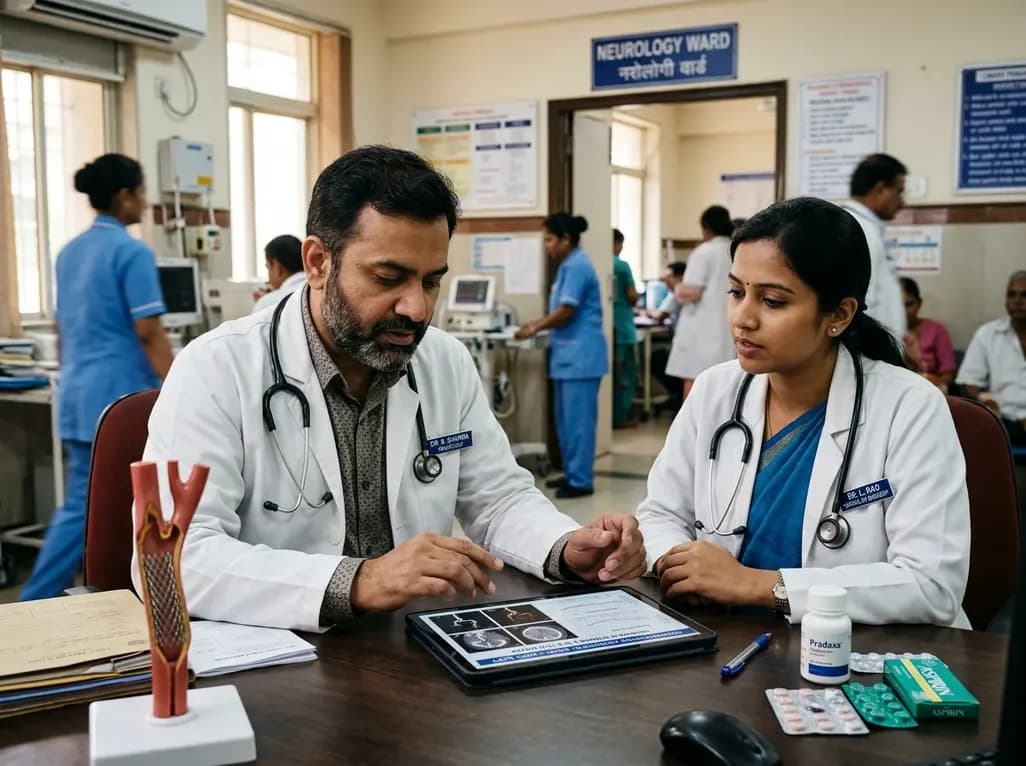
A multicenter propensity-matched study evaluated DOAC plus single versus dual antiplatelet therapy after carotid artery stenting. Findings revealed comparable intracranial hemorrhage and ischemic stroke rates, supporting DOAC plus SAPT as a viable antithrombotic strategy in high-risk patients.
Today
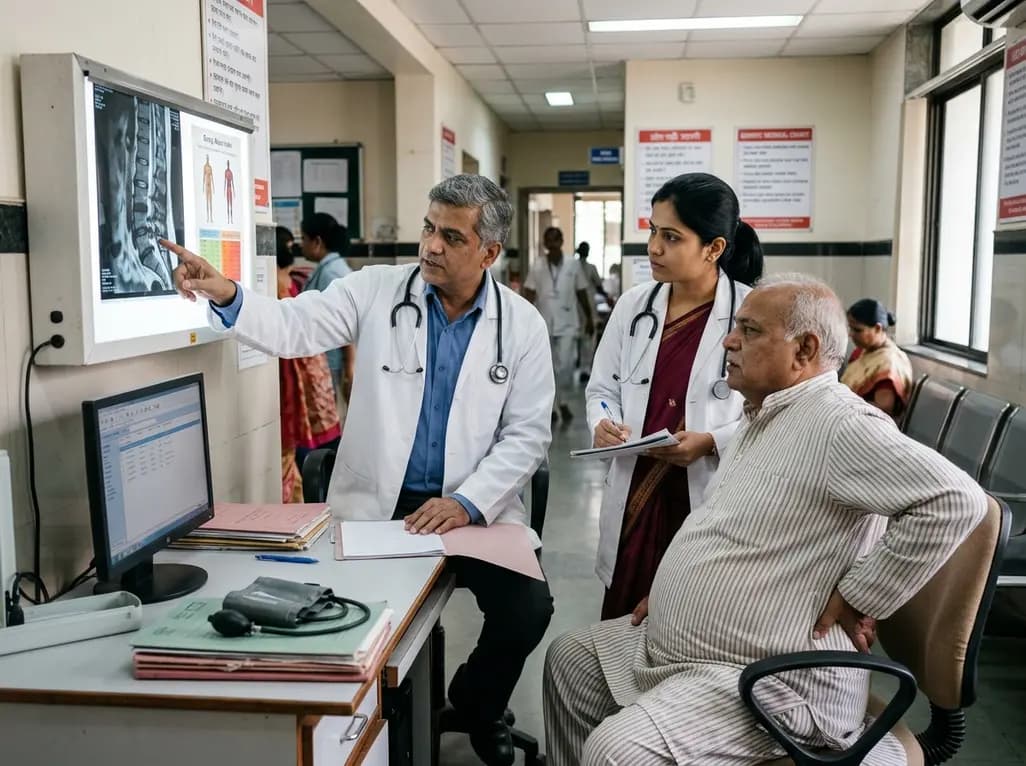
A cross-sectional study reveals that sarcopenic obesity independently increases functional impairment and severe disc degeneration in patients with degenerative lumbar spinal stenosis, highlighting the need for body composition assessment.
Today
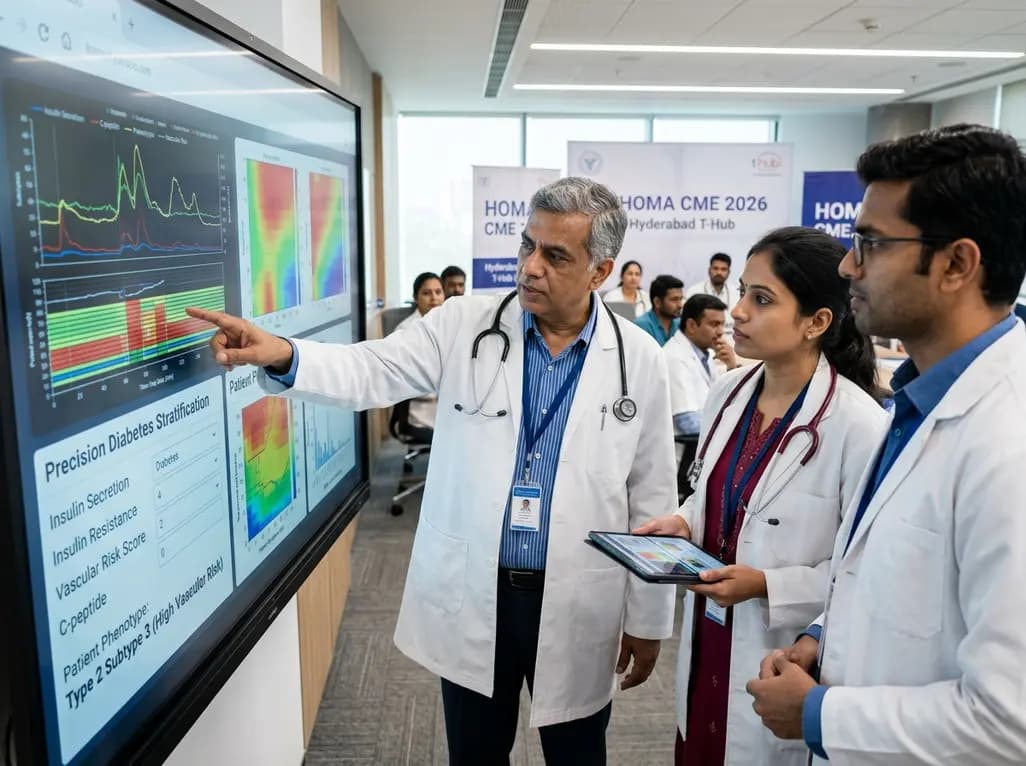
At Homa CME 2026 at Hyderabad's T-Hub, healthcare leaders emphasized moving beyond routine metrics through digital calculators and precision stratification. Discover why characterizing individual insulin secretion, resistance patterns, and vascular risks transforms chronic metabolic care in India.
Yesterday
