

Loading, please wait...
Loading, please wait...

Biological aging systematically alters adipose tissue distribution, cellular senescence, and immune balance. Consequently, chronic low-grade inflammation within white adipose depots remains a defining feature of age-related metabolic decline. Emerging investigations evaluating caloric restriction and exercise highlight that visceral fat undergoes dynamic phenotypic changes during senescence. In aged rodent models, epididymal adipose tissue gathers immune cell infiltrates that challenge metabolic equilibrium. Clinically, geriatricians observe that visceral adiposity accelerates insulin resistance, vascular dysfunction, and chronic cardiovascular morbidity. However, lifestyle interventions often trigger nuanced cellular responses that conventional serum panels fail to reflect immediately. Macrophage infiltration within aging adipose tissue represents an intricate process governed by distinct inflammatory cascades. Specifically, CD11c expression traditionally denotes classically activated, pro-inflammatory phenotypes. Conversely, CD206 expression characterizes alternatively activated, tissue-remodeling macrophages. Recent preclinical data indicate that advanced age disrupts baseline macrophage homeostasis, altering traditional metabolic paradigms. Therefore, clinicians must look past simple body mass metrics to comprehend tissue-level immune dynamics. Appreciating these molecular adaptations allows physicians to design more refined lifestyle prescriptions for vulnerable older patients.
Caloric restriction remains a prominent dietary intervention proposed to extend longevity and improve metabolic health. Recently, researchers examined 26-month-old male Wistar rats undergoing dietary restriction over a six-week duration. The experimental protocol established a 30% reduction during initial weeks, followed by a sustained 20% restriction. Surprisingly, caloric restriction markedly increased both CD11c and CD206 transcript levels within epididymal fat. Thus, the intervention induced generalized, non-specific transcriptional upregulation rather than a classic anti-inflammatory phenotypic shift. In younger animal cohorts, caloric reduction typically dampens inflammatory markers while boosting protective pathways. In contrast, advanced age substantially alters tissue responses to sustained negative energy balance. Sudden food restriction triggers rapid lipolysis, liberating substantial quantities of free fatty acids into local tissue spaces. Consequently, elevated lipid concentrations may stimulate pattern recognition receptors on resident macrophages. Senescent adipose depots therefore mount a dual transcriptional response, activating both tissue remodeling and classical inflammatory markers. Furthermore, these findings emphasize that caloric restriction stimulates complex cellular machinery rather than straightforward immunosuppression in older subjects.
Physical exercise activates distinctive cellular cascades compared to caloric deficit alone. In this aged animal model, subjects completed treadmill running five days weekly at 60% maximal aerobic speed. Interestingly, endurance training alone did not significantly alter adipose CD11c or CD206 transcript levels compared to control animals. However, adding endurance training to caloric restriction noticeably attenuated the dietary-induced surge in macrophage gene expression. In particular, aerobic conditioning suppressed the marked elevation of pro-inflammatory CD11c mRNA within visceral depots. Therefore, physical conditioning served as an essential molecular buffer against restriction-induced cellular stress. Aerobic exercise elevates anti-inflammatory myokines, enhances capillary perfusion, and accelerates muscular fatty acid consumption. As a result, working muscle clears circulating lipids more rapidly, limiting lipotoxic exposure in visceral adipose tissue. Additionally, the combined intervention group exhibited increased variability in the CD11c to CD206 expression ratio. This variation suggests that individual biological systems modulate immune expression differently under combined stressors. Ultimately, endurance activity prevents unrestrained inflammatory gene transcription during dietary restriction in senescent models.
Translating basic laboratory observations into geriatric clinical practice requires thoughtful metabolic analysis. Throughout the study, investigators systematically measured fasting blood glucose, serum insulin, HOMA-IR, QUICKI, and HOMA-beta. Furthermore, the protocol tracked the triglyceride-glucose index, conventional lipid panels, and extensive atherogenic indices. Intriguingly, none of these circulating metabolic parameters exhibited significant alterations across any intervention group. This dissociation between tissue-level transcript changes and blood biomarkers holds vital clinical importance. Specifically, stable serum laboratory tests do not prove absence of active remodeling inside visceral fat depots. In aged physiology, established arterial stiffness, hormonal receptor desensitization, and entrenched epigenetic factors frequently delay systemic biomarker shifts. Nevertheless, adipose macrophages display rapid transcriptional plasticity following caloric restriction and exercise interventions. Clinicians who exclusively rely on blood tests might mistakenly conclude that short-term lifestyle regimens lack biological efficacy. Instead, meaningful cellular reprogramming occurs in visceral compartments well before peripheral chemistry profiles shift. Thus, medical teams should recognize that tissue adaptation precedes systemic metabolic improvements during geriatric lifestyle therapies.
These discoveries provide actionable guidance for managing metabolic health in aging populations. First, physicians must prescribe dietary restriction cautiously in older adults. Because abrupt energy deficits trigger non-specific macrophage transcription, unmonitored crash diets may provoke unintended tissue stress. Second, pairing endurance exercise with caloric control establishes a safer therapeutic environment. Endurance training buffers inflammatory gene upregulation while preserving skeletal muscle mass and functional stamina. In clinical practice, solitary dietary restriction often induces sarcopenia and weakness in frail seniors. Conversely, combined exercise regimens sustain physical resilience and promote metabolic flexibility. Third, clinicians should educate patients regarding realistic timelines for metabolic recovery. Since cellular remodeling precedes changes in circulating fasting glucose or lipid ratios, short-term blood tests should not discourage continued adherence. Long-term interventions are necessary to translate tissue adaptations into measurable systemic benefits. In summary, combining moderate caloric adjustment with regular aerobic training optimizes tissue health and limits inflammatory risks in aging individuals.
Preclinical data demonstrate that caloric restriction in aged models does not selectively favor M2 anti-inflammatory polarization. Instead, dietary restriction simultaneously upregulates both CD11c and CD206 gene transcription within visceral fat. This dual response indicates generalized, non-specific transcriptional activation driven by accelerated lipolysis and cellular stress. Consequently, physicians must realize that caloric restriction alone does not automatically resolve local tissue inflammation in aged physiological systems without concomitant physical activity.
Circulating metabolic parameters often change slowly in aged organisms due to chronic vascular stiffness, persistent cellular senescence, and long-standing hormonal resistance. Although local adipose macrophages responded quickly to the interventions, a six-week timeline was insufficient to alter systemic glucose, insulin, or lipid panels. Therefore, clinicians must recognize that systemic laboratory tests do not capture early molecular adaptations occurring within visceral tissues during geriatric lifestyle interventions.
Endurance training serves as a crucial molecular buffer when combined with caloric restriction in aged models. Specifically, aerobic running attenuates the sharp dietary-induced rise in CD11c transcription within adipose tissue. Exercise achieves this protective effect by increasing muscular lipid clearance, reducing local lipotoxicity, and promoting anti-inflammatory cytokine release. Thus, combining endurance exercise with dietary restriction prevents excessive immune activation while supporting broader cardiovascular and muscular resilience.
Disclaimer: This content is for informational and educational purposes only... Refer to the latest local and national guidelines for clinical practice.
References

Read summarized clinical updates, watch expert medical content, and earn CME certifications right from your smartphone.
Open your smartphone camera to scan and install.





A study in aged rats reveals that caloric restriction broadly upregulates adipose macrophage genes, whereas concurrent endurance training buffers this response. Despite these tissue-level transcriptional changes, systemic glycemic and lipid markers remain unchanged, highlighting the complexity of geriatric metabolism.
Today

A randomized trial of 272 young women in underserved settings evaluated motivational interviewing versus didactic education. Motivational interviewing effectively reduced unintended pregnancy and risky sexual behavior, while didactic counseling fostered greater condom consistency in Hispanic participants.
Today

A landmark study reveals structured variation in daily emotional experiences using mobile cardiac monitoring and machine learning. Uncovering a many-to-many mapping between autonomic states and feelings, this research offers key insights for managing psychosomatic and psychiatric conditions in clinical practice.
Today
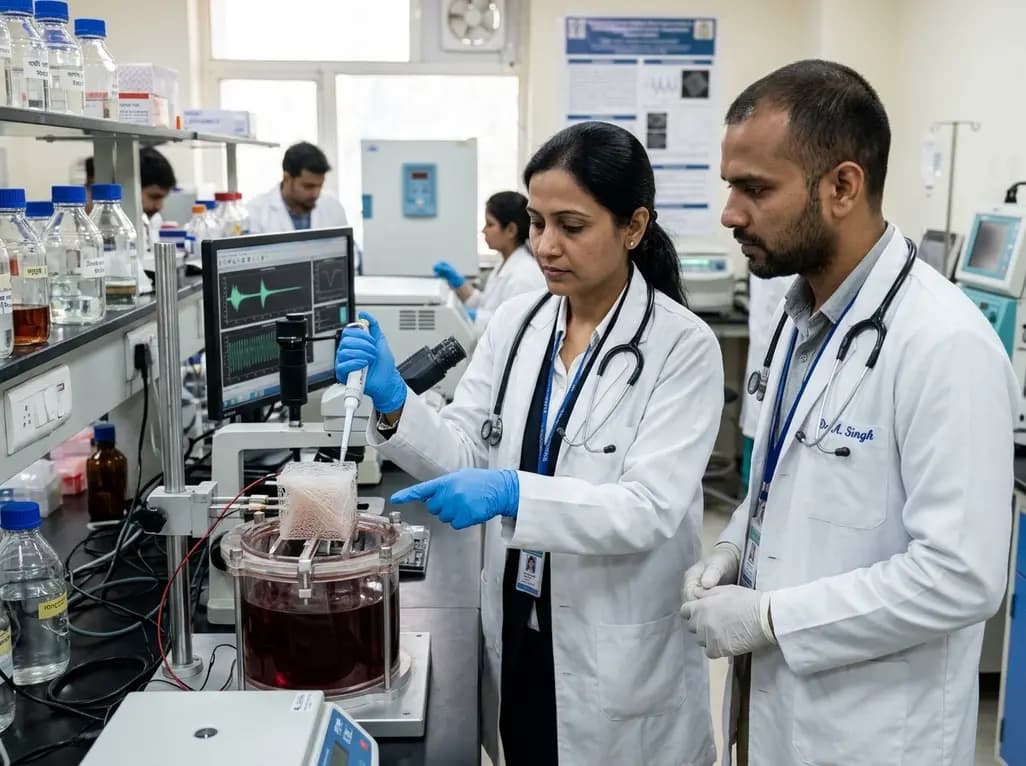
Engineered 3D piezoelectric PHBV scaffolds generate electrical charges during mechanical strain, mimicking native muscle electromechanics to promote cellular alignment, myogenic differentiation, and functional tissue repair in severe volumetric muscle loss.
Today

A recent study highlights that pairing photograph-assisted 24-hour recalls with regional food databases significantly boosts dietary assessment accuracy. This methodology reduces cultural bias and strengthens nutrient tracking, offering crucial lessons for clinicians managing nutritional care in diverse populations.
Today
