.webp&w=384&q=75)

Loading, please wait...
Loading, please wait...

Recent clinical research highlights that repetitive head impacts sustained over a single collegiate football season can lead to measurable alterations in brain function. While the long-term risks of subconcussive trauma are well-documented, this study specifically examined how short-term exposure affects memory across different athlete positions. Researchers compared collegiate football players to non-contact track and field athletes to determine the extent of these changes.
The findings indicate that football athletes consistently performed worse in memory measures than their non-contact counterparts. Notably, track and field athletes showed significantly higher scores in concentration, delayed recall, and spatial memory. These results suggest that the cumulative nature of repetitive head impacts may exert a downward pressure on cognitive performance even within a relatively short timeframe like a single competitive season.
The study further analyzed the data by categorizing football players into "speed" and "non-speed" positions. It was discovered that the rate of change in concentration and delayed recall was significantly influenced by position type. Specifically, non-speed position athletes with a history of concussion showed more pronounced decreases in delayed recall scores. This suggests that the biomechanics of impacts associated with different roles on the field play a critical role in neurological outcomes.
Clinicians should note that a history of prior concussions acts as a significant covariate, exacerbating the decline in certain memory domains. This underscores the importance of personalized monitoring for athletes, particularly those in high-impact positions who have already suffered head injuries. Understanding these nuances helps in developing better protective protocols and return-to-play guidelines.
Athletes in non-speed positions often experience different types of impact forces compared to speed positions. The study found that these positional requirements, combined with concussion history, significantly influence the rate of memory change over a season.
This study focused on changes over a single season. While some alterations were measurable post-season, further research is needed to determine the long-term persistence of these specific memory deficits.
Disclaimer: This content is for informational and educational purposes only and does not constitute medical advice. It is not intended to be a substitute for professional medical judgment, diagnosis, or treatment. Always seek the advice of your physician or other qualified health provider with any questions you may have regarding a medical condition. Refer to the latest local and national guidelines for clinical practice.
References
Griffith O et al. Memory alterations over a football season are dependent on athlete position-type and prior concussion history. Brain Inj. 2026 Jun 10. doi: 10.1080/02699052.2026.2683513. PMID: 42268675.
Abbas K et al. Subconcussive impacts and imaging findings over a season of contact sports. PMC. 2024.
Guskiewicz KM et al. Effects of Career Duration, Concussion History, and Playing Position on White Matter Microstructure and Functional Neural Recruitment in Former College and Professional Football Athletes. Radiology. 2017.

Read summarized clinical updates, watch expert medical content, and earn CME certifications right from your smartphone.
Open your smartphone camera to scan and install.





A study of collegiate athletes reveals that memory alterations over a football season are significantly influenced by the player's position and prior concussion history, with football athletes generally scoring lower than non-contact athletes across all memory domains.
4 months ago

A prospective multicenter trial demonstrates that a 15-day factory-calibrated continuous glucose monitoring system provides high analytical accuracy (MARD ~7.7%) and safety in pregnant women with gestational diabetes mellitus.
Today

A rare presentation of cervical villoglandular adenocarcinoma metastasizing to the ovary mimicked a borderline ovarian tumor. Multimodal testing with immunohistochemistry and HPV16 DNA confirmed metastatic origin, guiding optimal surgical and chemoradiotherapy intervention.
Today

A landmark study details how an enterprise pediatric remote patient management model expanded from a single cardiology pilot to 16 diverse specialty programs by combining centralized digital operations with specialty clinical leadership.
Yesterday
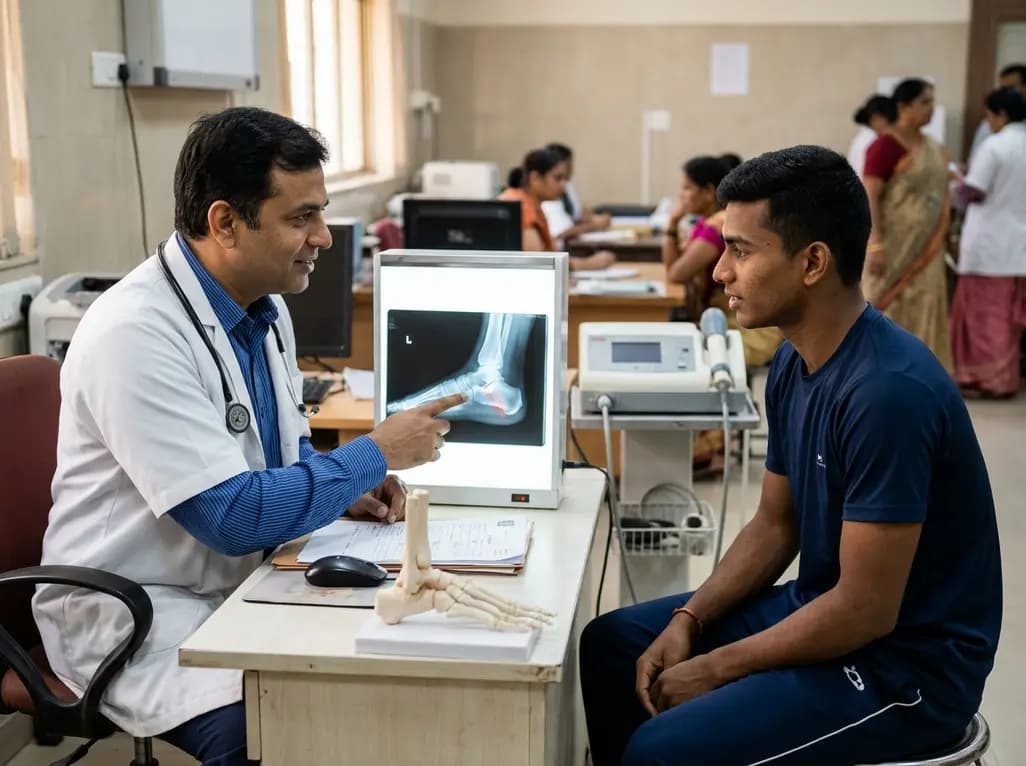
A collegiate hurdler with a 2-year neglected Degan type III anterior process calcaneus fracture achieved complete pain resolution and bony bridging using focused extracorporeal shock wave therapy, returning to competition without invasive surgery.
Today
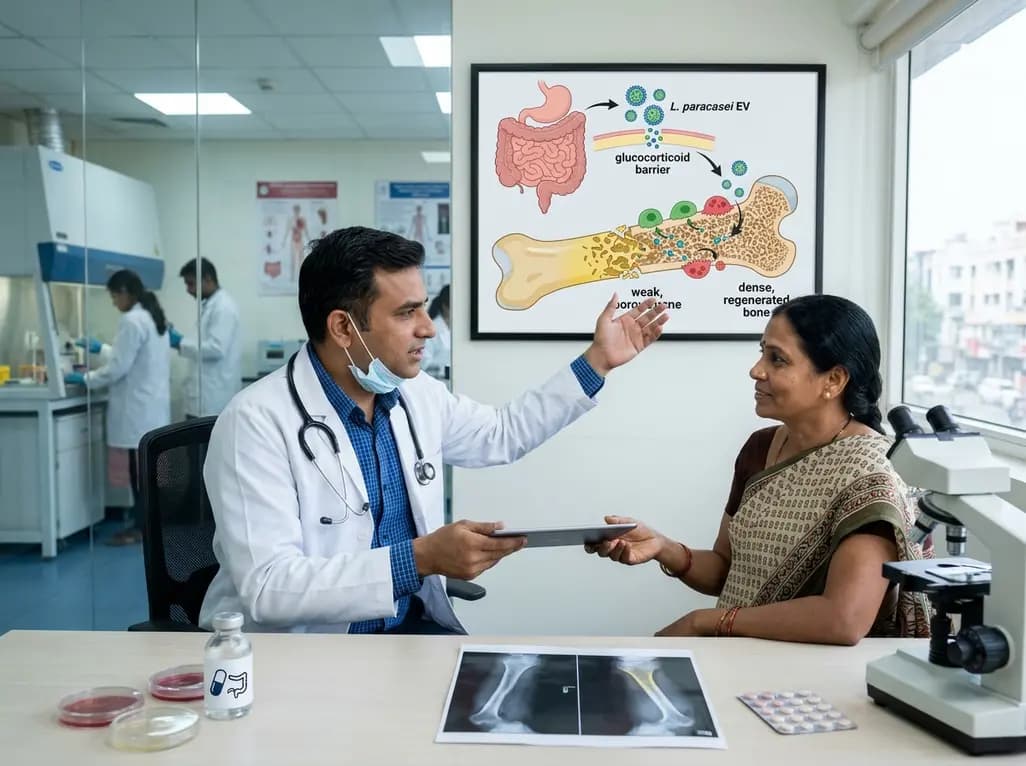
A novel oral nanoplatform using Lacticaseibacillus paracasei-derived extracellular vesicles delivers alendronate, reversing glucocorticoid-induced bone loss and restoring gut-immune-bone homeostasis.
Today
