

Loading, please wait...
Loading, please wait...
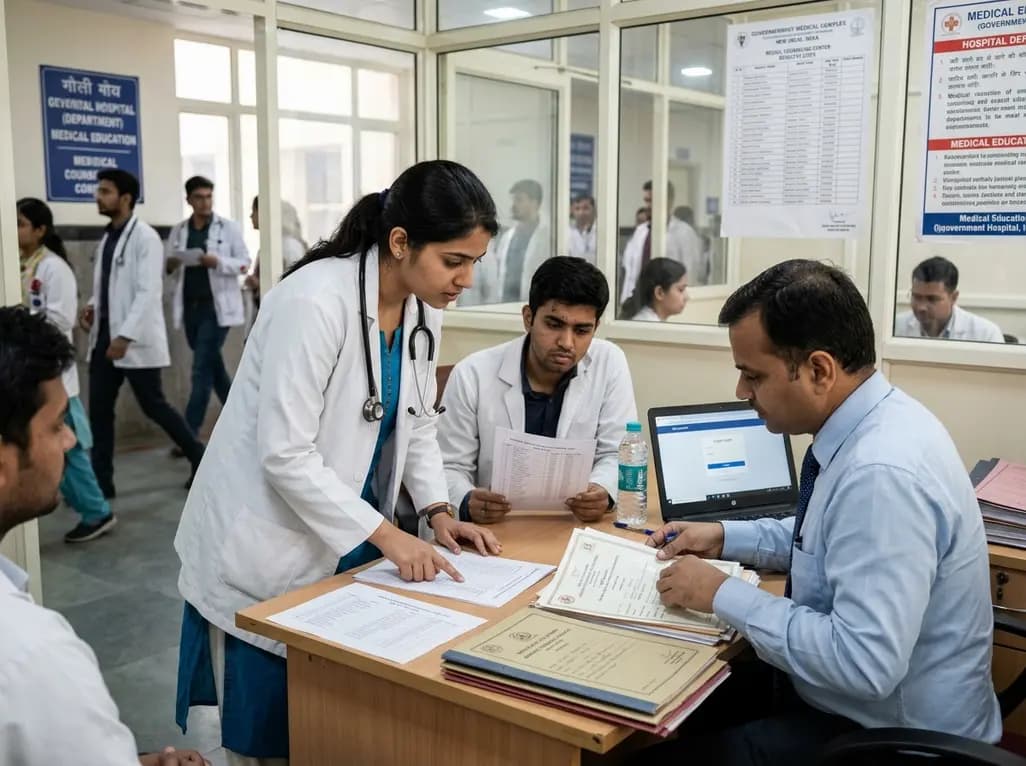
The National Board of Examinations in Medical Sciences recently released the October screening test results for foreign-trained medical graduates. Consequently, the latest figures have triggered fresh debate over licensing standards. The overall FMGE pass percentage reached 22.86%, as only 9,354 candidates passed while 31,539 failed. Therefore, this outcome underscores enduring hurdles facing international doctors seeking licensure in India. Moreover, authorities continue assessing candidate assessment frameworks.
The October examination provided an additional testing opportunity after widespread candidate protests followed the difficult June session. During that previous sitting, qualification rates fell sharply to approximately 12%, causing extensive distress among international medical graduates. In response, an expert committee recommended clear structural guidelines to construct balanced question papers. Specifically, the advisory panel recommended a distribution of 30% easy questions, 50% moderate questions, and 20% difficult questions. Furthermore, advisors urged officials to display recorded responses, official answer keys, and individual question marks to ensure transparent evaluation.
However, medical association leaders noted that the October examination felt predominantly moderate to difficult, diverging from the proposed ratios. Nevertheless, the qualification proportion improved noticeably when compared against the June results. In addition, eliminating video-based questions aided examinee pacing significantly. Candidates in previous sessions had reported that unfamiliar multimedia items consumed valuable time and caused cognitive fatigue. Thus, returning to conventional clinical vignettes allowed examinees to navigate the paper far more effectively. Consequently, the session provided a more standardized baseline for evaluating clinical competencies across diverse medical disciplines. Moreover, structured test formats remain essential for maintaining consistency.
Official records from the examination board present comprehensive metrics regarding participation and performance across nationwide testing centers. In total, 42,113 candidates registered for the October screening session. However, 1,190 candidates remained absent on the examination day, reducing the active test-taking cohort to 40,923 doctors. Among these active test-takers, exactly 9,354 candidates cleared the mandated threshold to achieve qualification. In contrast, 31,539 applicants failed to secure passing scores, producing an unsuccessful rate above 77%. Therefore, while the 22.86% pass rate represents substantial recovery from June, the majority still faced disappointment.
Additionally, the administrative board withheld results for 30 candidates due to pending procedural reviews. Authorities notified those affected individuals through direct email communications regarding their documentation status. Meanwhile, broad score patterns demonstrated that thousands of unsuccessful applicants fell just short of qualifying benchmarks. Observers emphasize that although this proportion mirrors historical winter trends, it reflects persistent learning gaps. Consequently, academic mentors urge foreign medical graduates to adopt structured revision plans aligned with domestic standards. Furthermore, early diagnostic mock testing helps identify knowledge gaps before sitting for the formal assessment. Thus, disciplined preparation remains the most reliable pathway to success.
Candidate experiences during the October examination reflected persistent logistical hurdles despite recent fee reductions. Medical associations acknowledged the reduced registration costs as a positive step for foreign medical graduates. However, doctor representatives highlighted serious lingering deficiencies in operational planning and communication. For example, the testing authority released admit cards very late, inducing severe anxiety across the candidate community. Furthermore, organizers allocated distant examination centers located far from candidates' hometowns. Consequently, numerous doctors had to endure exhausting cross-country journeys immediately prior to taking their comprehensive examinations.
In addition, candidates voiced substantial disappointment regarding the lack of promised transparency. Earlier committee recommendations had proposed providing answer keys and recorded response sheets to every test-taker. Instead, the testing authority published only numerical totals without individual itemized performance data. Therefore, professional medical associations continue demanding open answer sheets and question challenges to foster accountability. Moreover, clear administrative timelines prevent unnecessary emotional stress among aspiring practitioners. Ultimately, greater transparency strengthens institutional credibility and supports international doctors as they navigate licensing requirements. Similarly, predictable testing schedules help candidates arrange their logistics effectively. Thus, systemic improvements will benefit future screening sessions substantially.
An in-depth analysis of candidate scores reveals an extraordinary concentration of applicants just below the passing threshold. To clear the screening examination, candidates must achieve a minimum score of 150 marks out of 300 points. Official data demonstrates that 14,613 candidates scored between 125 and 149 marks. Furthermore, exactly 5,365 examinees scored between 140 and 149 marks, missing qualification by less than ten correct answers. Consequently, these marginal deficits represent an immense emotional and financial burden for thousands of foreign-trained physicians. This striking cluster shows how slight variations in question difficulty profoundly shape licensure outcomes.
Because so many examinees fall narrowly short, post-exam review protocols play a pivotal role in maintaining fairness. The testing board engaged subject experts to review challenged questions, awarding marks for technically flawed test items. In addition, evaluators accepted alternate correct options where technical ambiguities existed. Nevertheless, missing the cutoff forces candidates to wait months for subsequent testing opportunities. Many repeaters incur substantial expenses enrolling in specialized coaching programs while delaying their medical careers. Therefore, educators recommend focusing revision on high-yield clinical subjects and targeted mock practice. Thus, addressing small diagnostic weaknesses can effectively convert borderline scores into passing results.
For the 9,354 candidates who successfully qualified, declaring results represents only the preliminary step toward clinical practice. In accordance with statutory regulations, successful doctors must complete in-person identity and credential verification before receiving practice certificates. During this process, regulatory officials carefully inspect original primary qualification documents, embassy attestations, and eligibility certificates. The National Board clarifies that individual scorecards will be available online from November 20 for six months. However, candidates cannot utilize these scorecards to register with State Medical Councils in place of the official certificate.
Additionally, examinees must note that all declared screening results remain provisional. The regulatory body retains the legal authority to cancel candidature if an applicant proves ineligible at any stage. Even if an individual has received a pass certificate, authorities can cancel credentials upon discovering fraudulent records. Meanwhile, candidates with withheld results must resolve pending documentation queries through direct email communications. Once candidates complete document validation, they can begin mandatory rotatory medical internships at approved hospitals. Consequently, foreign medical graduates must maintain strict documentation compliance alongside their clinical competencies to secure practice rights in India. Therefore, proactive verification steps protect graduates from regulatory complications.
Q1: What passing score is required to qualify for the FMGE screening test?
Candidates must secure a minimum of 150 marks out of 300 total points, representing a 50% threshold, to pass the examination. Furthermore, the assessment features no negative marking for incorrect responses across both papers. However, applicants who obtain even 149 marks do not qualify, as regulatory bodies enforce the qualifying cutoff strictly without rounding up. Over 14,000 candidates scored between 125 and 149 in the October session, highlighting how competitive meeting this benchmark remains.
Q2: Can candidates use their downloadable scorecards to register with State Medical Councils?
No, candidates cannot use downloadable scorecards as legal substitutes for the official pass certificate when registering with State Medical Councils. Although individual scorecards become accessible online from November 20 for six months, they serve strictly informational purposes. Qualifying candidates must attend mandatory in-person credential verification conducted by the examination board. Officials issue the physical pass certificate only after successfully validating primary degrees, identity records, and eligibility documents, which enables lawful medical registration.
Q3: Why did the pass percentage improve in October compared to the June session?
The pass proportion rose to 22.86% in October primarily because the test eliminated video-based questions that had confused examinees in June. In addition, this October sitting offered an extra attempt for dedicated repeaters following substantial student protests. Although examinees still categorized the paper as moderate to challenging, standardizing clinical vignettes allowed better time management. Consequently, the success rate aligned with historical winter examination averages, nearly doubling the 12% pass rate recorded during the previous session.
Disclaimer: This content is for informational and educational purposes only. It does not constitute medical advice or replace professional judgment. Refer to the latest local and national guidelines for clinical practice.
References

Read summarized clinical updates, watch expert medical content, and earn CME certifications right from your smartphone.
Open your smartphone camera to scan and install.





NBEMS announced the results of the October screening test, revealing that 31,539 candidates failed while 9,354 passed. In response to recurring exam hurdles, medical associations urge enhanced transparency in answer keys, while thousands of foreign-trained doctors prepare for rigorous verification and credential audits.
Today
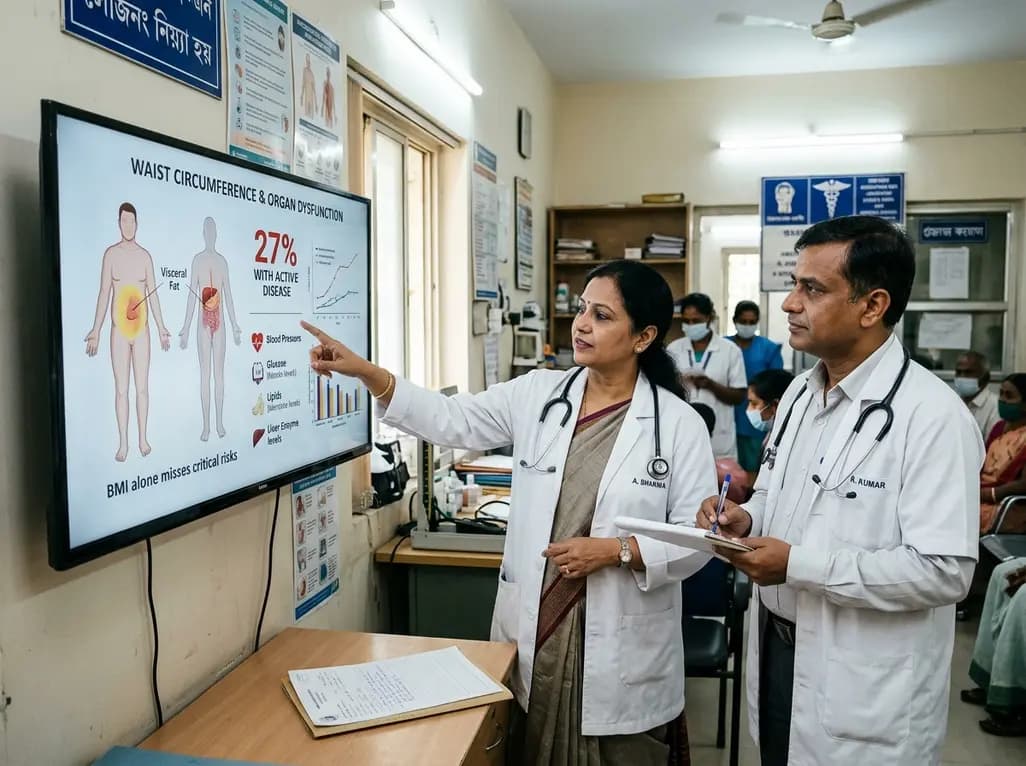
A landmark Nature study reveals that only 27% of individuals with obesity have active clinical disease. By incorporating waist circumference and organ dysfunction, this new diagnostic framework moves beyond BMI to prevent widespread misclassification and guide personalized metabolic intervention.
Today
A breakthrough blood test measuring the RNA biomarker Tu-Stroma detects microscopic serous tubal intraepithelial carcinoma (STIC) lesions with remarkable accuracy. This non-invasive diagnostic tool offers crucial biological insight to guide prophylactic surgery decisions for women carrying high-risk genetic mutations.
Today

Thoracic aortic aneurysm lacks etiologic medical therapy. A new study reveals that targeting specific αV integrins with Cilengitide attenuates TGF-β and mechanotransduction pathways, effectively limiting pro-fibrotic remodeling and aortic bulb dilation in both syndromic and sporadic disease models.
Today
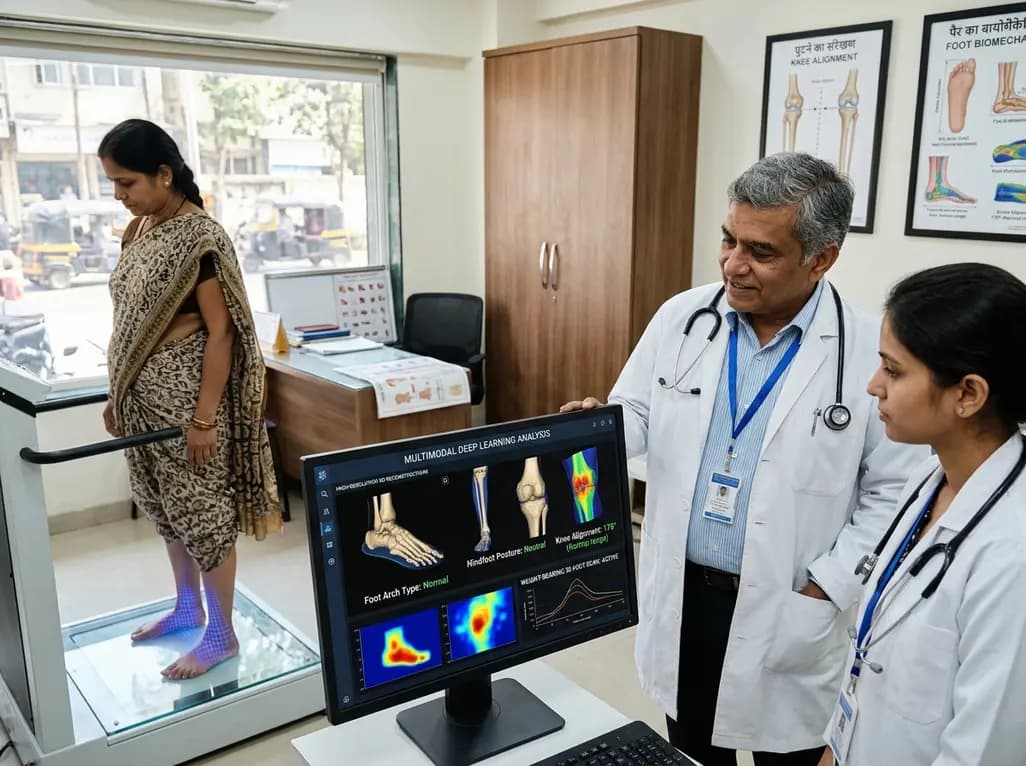
A multimodal deep learning framework utilizing weight-bearing 3D foot scans accurately screens lower-limb alignment, including arch type, hindfoot posture, and knee alignment, offering an accessible, radiation-free alternative to radiography for early biomechanical triage.
Today

A real-world retrospective study demonstrates that combining intravitreal ranibizumab with focal/grid macular laser significantly improves visual acuity and central macular thickness compared to laser monotherapy in patients with center-involved diabetic macular edema.
Today
