.webp&w=384&q=75)

Loading, please wait...
Loading, please wait...

Monitoring cognitive health in seniors often relies on stable averages. However, recent evidence suggests that fluctuations in executive functions are actually better predictors of daily life success. This variability highlights the "good days" and "bad days" that patients experience in their home environments.
Researchers recently conducted a study involving 127 community-dwelling older adults over 18 days. They tracked daily cognitive performance alongside self-reported abilities. Furthermore, the team assessed instrumental activities of daily living (IADLs) within the home environment. Specifically, the data revealed that the magnitude of daily shifts in cognition uniquely predicts functional status. In addition, these results showed that mean performance and daily fluctuations together explain 27% of functional variance.
Consequently, this represents a large effect size in clinical neuropsychology. However, mean levels of self-reported ability did not correlate with actual task performance in the study. Therefore, clinicians should prioritize objective, longitudinal tracking over single-point self-reports. Moreover, recognizing these shifts can help in identifying patients at risk of functional decline earlier than traditional methods. Ultimately, addressing these variances allows for more personalized and effective care plans for aging populations.
These fluctuations refer to the day-to-day variability in cognitive processes such as planning, working memory, and mental flexibility. Unlike a single average score, this metric captures how an individual\'s cognitive capacity changes over time.
Variability often reflects the stability of the neural systems supporting daily tasks. Frequent fluctuations may indicate that a patient lacks the consistent cognitive resources needed to manage complex activities like medication or financial tasks independently.
Disclaimer: This content is for informational and educational purposes only and does not constitute medical advice, diagnosis, or treatment. Always seek the advice of a qualified healthcare provider with any questions regarding a medical condition. Refer to the latest local and national guidelines for clinical practice.
References
1. Suchy Y et al. The ups and downs matter: Magnitudes of fluctuations in executive functions predict daily functioning in older adults. Clin Neuropsychol. 2026 May 23. doi: 10.1080/13854046.2026.2674737. PMID: 42175746.
2. Holtzer R, et al. Intraindividual variability in executive functions but not speed of processing or conflict resolution predicts performance differences in gait speed in older adults. J Gerontol A Biol Sci Med Sci. 2014 Aug;69(8):980-6.
3. Allaire JC, Marsiske M. Daily fluctuations in everyday cognition. J Aging Health. 2012;24(2):230-51.

Read summarized clinical updates, watch expert medical content, and earn CME certifications right from your smartphone.
Open your smartphone camera to scan and install.





Research indicates that daily fluctuations in executive functions are powerful predictors of functional independence and daily living activities in older ad...
5 months ago
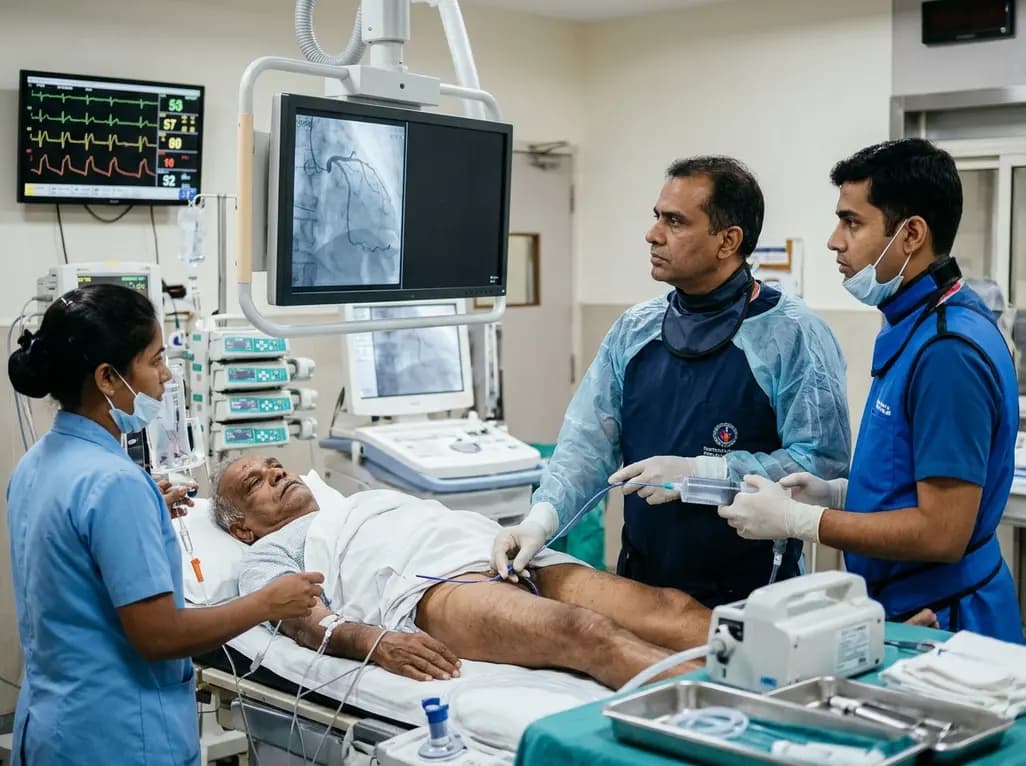
An elderly man with partially repaired Tetralogy of Fallot presented with STEMI caused by coronary embolism rather than atherosclerosis. Successful treatment with sustained mechanical aspiration thrombectomy underscores the vital need for high clinical vigilance in adult congenital heart disease.
Today

Demanding exhaustive hormonal profiling can inadvertently discourage clinical studies involving females. Methodological standards must align with the specific scientific question to expand, not restrict, equitable evidence for women.
Today

A recent study demonstrates that spinal oxygen sensors do not require mitochondrial electron transport to trigger sympathetic excitation during acute hypoxia, revealing new insights into how mitochondrial oxidative stress modulates autonomic tone in cardiovascular and neurological diseases.
Today

A comparative review of tension band wiring and intramedullary screw fixation in thumb metacarpophalangeal arthrodesis, evaluating union rates, hardware complications, and clinical outcomes.
Today

Following regulatory scrutiny from FSSAI regarding promotional representations and lean muscle preservation claims, Dr. Reddy's Laboratories and Nestlé Health Science are currently reviewing the branding and marketing strategy for their joint nutritional supplement Celevida GLP+.
Today
