.webp&w=384&q=75)

Loading, please wait...
Loading, please wait...

Recent breakthroughs in material science have paved the way for highly sophisticated wearable electronics. Researchers recently developed a dual-mode flexible sensor using a bilayer PEDOT(MXene)-PVDF(HFP) composite membrane. This innovative flexible sensing technology bridges the gap between material design and intelligent health monitoring. Specifically, the membrane utilizes electrochemical polymerization and interface regulation to achieve remarkable mechanical and electrical properties.
Moreover, the structure of the PEDOT chains undergoes a critical transition from benzenoid to quinoid configurations. This structural rearrangement, induced by dimethyl sulfoxide, significantly enhances conductivity. Simultaneously, the MXene nanosheets provide a resilient framework that supports massive deformation. Consequently, the resulting PMPH membrane can stretch up to 1200% without losing its functional integrity. This makes it ideal for monitoring human joint movements and other dynamic physiological signals.
The clinical implications of this advancement are vast, particularly for remote patient monitoring and rehabilitation. Furthermore, the dual-mode sensor distinguishes between different mechanical stimuli, such as stretching and pressing. This capability allows healthcare providers to track complex patient behaviors more accurately. Notably, the integration of a machine learning-guided data recognition model elevates the device's utility. The system achieves an intelligent classification accuracy of 92.13%, ensuring that the data captured is both reliable and actionable.
Therefore, this study demonstrates a simple yet efficient strategy to couple conductive polymer hybrids with flexible fluoropolymers. These materials will likely lead to the next generation of intelligent human-machine interfaces. Physicians could soon use these sensors to monitor post-operative recovery or manage chronic conditions through continuous, non-invasive data collection. Advanced wearable devices are moving closer to becoming a standard part of personalized medicine in India and beyond.
The dual-mode sensor uses a bilayer composite design and machine learning algorithms to analyze electrical signal patterns. Consequently, it can accurately identify whether a movement is a press or a stretch based on the specific resistance changes.
MXene nanosheets offer exceptional electrical conductivity and mechanical resilience. In this study, they provide the framework that allows the sensor to maintain stable responses even during extreme stretching of up to 1200%.
Yes, the high classification accuracy of 92.13% suggests that these sensors can serve as effective interfaces for prosthetics. They can translate muscle movements or skin strain into precise commands for robotic limbs.
Disclaimer: This content is for informational and educational purposes only and does not constitute medical advice or a professional recommendation. The technology described is in the research phase and may not be available for clinical use. Refer to the latest local and national guidelines for clinical practice.
References
Wu P et al. Nano-engineered PEDOT(MXene)/PVDF(HFP) bilayer membranes for dual-mode flexible sensing and machine learning-guided signal recognition. Nanoscale. 2026 Feb 17. doi: 10.1039/d5nr04473a. PMID: 41700451.
Jiang Y, et al. MXene-based wearable sensors for human health monitoring. Nano Energy. 2024;112:108450.
Zhang X, et al. Flexible and stretchable sensors for medical applications. Advanced Materials. 2025;37(12):2400123.

Read summarized clinical updates, watch expert medical content, and earn CME certifications right from your smartphone.
Open your smartphone camera to scan and install.





New bilayer PEDOT(MXene) membranes offer 1200% stretchability and machine learning signal recognition for high-accuracy wearable medical sensors....
8 months ago

Co-administering antiseizure medications and DOACs frequently causes pharmacokinetic interactions, subtherapeutic drug levels, and thromboembolic failures. This review highlights enzyme induction risks, unpredictable outcomes with levetiracetam, and the vital role of therapeutic drug monitoring.
Today

Demanding exhaustive hormonal profiling can inadvertently discourage clinical studies involving females. Methodological standards must align with the specific scientific question to expand, not restrict, equitable evidence for women.
Today
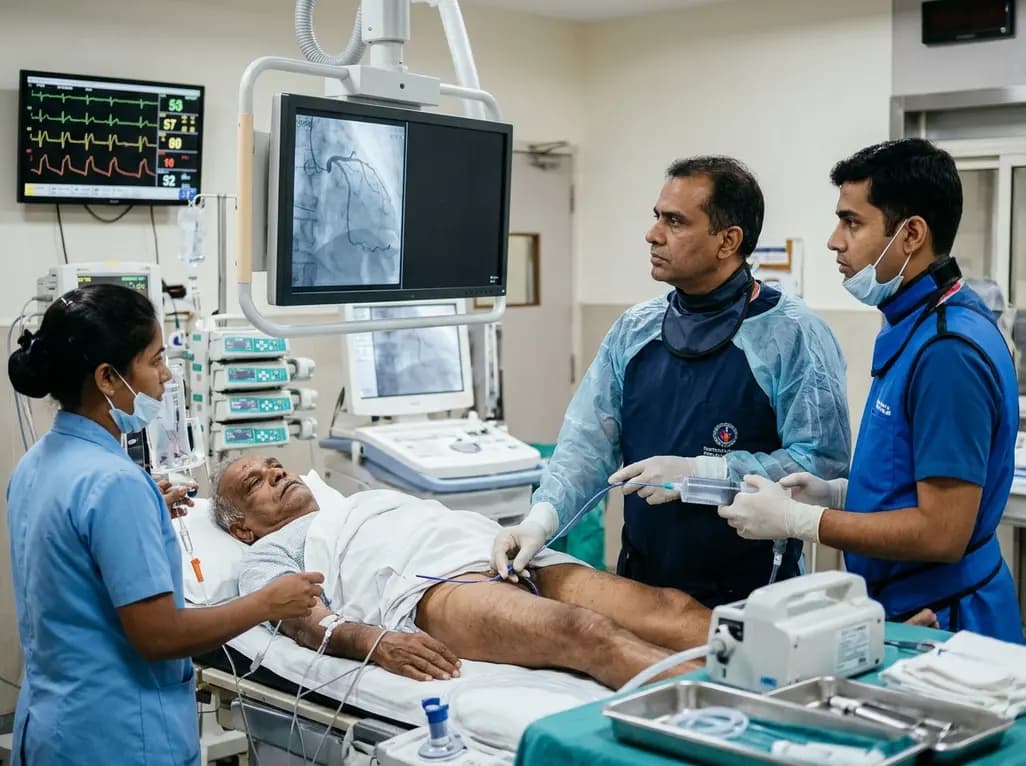
An elderly man with partially repaired Tetralogy of Fallot presented with STEMI caused by coronary embolism rather than atherosclerosis. Successful treatment with sustained mechanical aspiration thrombectomy underscores the vital need for high clinical vigilance in adult congenital heart disease.
Today

A comparative review of tension band wiring and intramedullary screw fixation in thumb metacarpophalangeal arthrodesis, evaluating union rates, hardware complications, and clinical outcomes.
Today

Following regulatory scrutiny from FSSAI regarding promotional representations and lean muscle preservation claims, Dr. Reddy's Laboratories and Nestlé Health Science are currently reviewing the branding and marketing strategy for their joint nutritional supplement Celevida GLP+.
Today
