.webp&w=384&q=75)

Loading, please wait...
Loading, please wait...
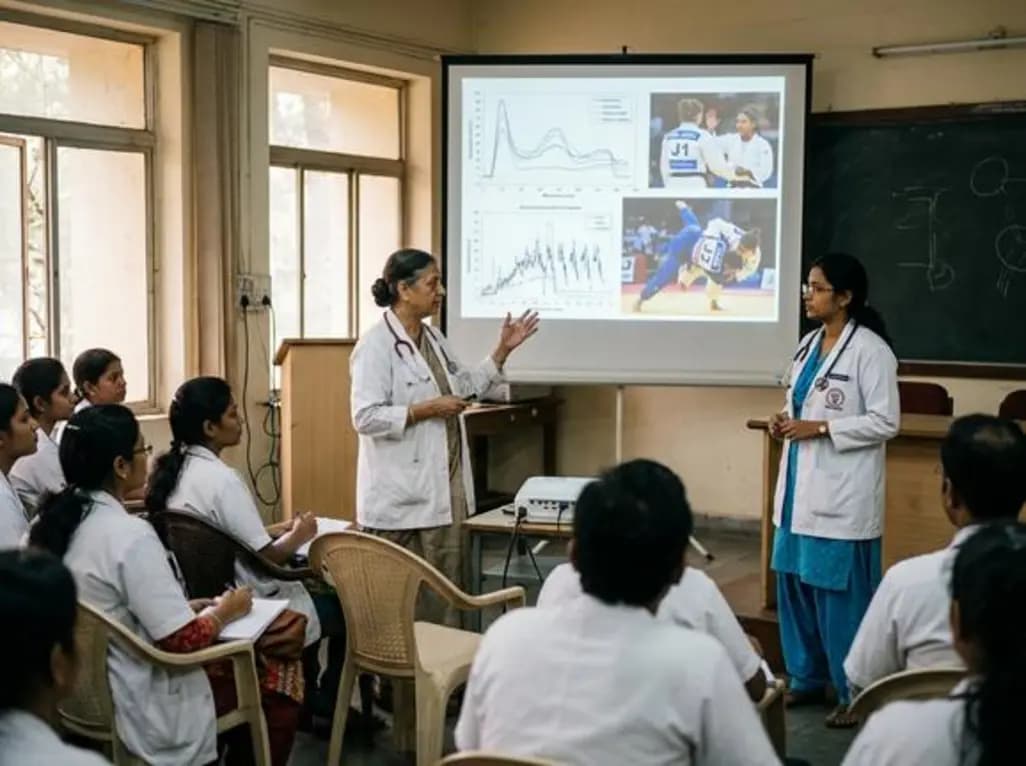
Recent updates to the International Blind Sports Federation (IBSA) classification system have significantly altered the competitive landscape for athletes with visual impairments. A new study published in the American Journal of Physical Medicine & Rehabilitation explores how these changes influence Para judo combat dynamics in female athletes. By analyzing 116 matches from the 2022 IBSA Judo World Championships, researchers have identified distinct temporal patterns that vary by sport class and weight category.
The 2022 classification system separates athletes into two distinct groups: J1 for the totally blind and J2 for the partially sighted. Consequently, these groups exhibit markedly different match behaviors. J1 athletes generally experience a more fragmented combat structure characterized by longer pauses. In contrast, J2 athletes engage in more dynamic matches with extended periods of active standing combat and fewer interruptions. These findings suggest that the level of visual impairment dictates the rhythm and intensity of the match more than any other factor.
While sport class remains the dominant factor, weight categories act as a secondary modulator for Para judo combat dynamics. In the J1 class, extra-lightweight athletes (-48 kg) demonstrate an intermittent pattern with relatively short pauses. However, heavier J1 athletes tend to have longer displacement times and extended pauses. Conversely, within the J2 class, lighter athletes typically perform shorter standing-combat sequences compared to their heavier counterparts. This intersection between weight and vision impairment requires coaches to tailor physical preparation specifically to each division.
Understanding these temporal structures is essential for sports medicine professionals and coaches. For example, J1 athletes may require training focus on explosive movements within short bursts, followed by recovery strategies for longer pauses. Meanwhile, J2 athletes need higher aerobic capacity to sustain longer active sequences. Furthermore, medical professionals must consider these specific physical demands when designing injury prevention programs for Para judokas.
J1 athletes are totally blind or have minimal light perception, while J2 athletes have a higher degree of functional vision. This results in J2 matches being more continuous and J1 matches having more frequent stoppages.
Generally, heavier weight categories in the J1 class exhibit longer pause durations and more displacement time, whereas lighter weight categories across both classes tend to have shorter, more explosive combat sequences.
The IBSA introduced the J1 and J2 separation to ensure fairer competition by preventing totally blind athletes from competing directly against those with significant residual vision.
Disclaimer: This content is for informational and educational purposes only and does not constitute professional medical advice, diagnosis, or treatment. Always seek the advice of your physician or other qualified healthcare provider with any questions you may have regarding a medical condition. Refer to the latest local and national guidelines for clinical practice.
References
Gutiérrez-Santiago A et al. Time-motion Analysis of Female Para Judo Athletes With Visual Impairments: Influence of the New Sport Classes and Weight Categories. Am J Phys Med Rehabil. 2026 Jun 22. doi: 10.1097/PHM.0000000000003072. PMID: 42322126.
International Blind Sports Federation (IBSA). IBSA Judo Rules 2022-2024. Accessed June 2024.
Kons RL et al. The Classification System in Para Judo: Transitions, Performance Outcomes, and Future Challenges. Adapt Phys Activ Q. 2025 Sep 1:1-13. doi: 10.1123/apaq.2025-0089.
"
Read summarized clinical updates, watch expert medical content, and earn CME certifications right from your smartphone.
Open your smartphone camera to scan and install.





A comprehensive time-motion analysis of the 2022 IBSA Judo World Championships highlights how sport classes (J1 and J2) and weight categories dictate female Para judo combat dynamics. J2 athletes display more dynamic combat, whereas J1 athletes show more intermittent patterns with longer pauses.
4 months ago

As monsoon seasons elevate arboviral disease threats, Tamil Nadu has initiated an ICMR-monitored evaluation of the tetravalent dengue vaccine in Tenkasi district. Clinicians emphasize clinical monitoring, public prevention, and high-quality early pediatric care to reduce disease morbidity across endemic regions.
Today

A comparative cohort study evaluates vNOTES vs TLH hysterectomy for benign conditions, demonstrating shorter operative duration, faster return to daily activities, and equivalent female sexual function scores without increased dyspareunia.
Today

Review how tailored exercise programs benefit frail older patients with heart failure. Explore pathophysiological mechanisms, individualized training prescriptions, and strategies to overcome adherence barriers in clinical practice.
Today

This comparative study evaluates posterior labral tears with and without glenohumeral instability, highlighting distinct demographic patterns, MRI underestimation in stable shoulders, and successful arthroscopic repair outcomes.
Yesterday

A clinical study demonstrates that early intervention with tocilizumab, either as monotherapy or bridged with corticosteroids, achieves significant proptosis reduction and resolves active inflammation in treatment-naive thyroid eye disease.
Today
