.webp&w=384&q=75)

Loading, please wait...
Loading, please wait...
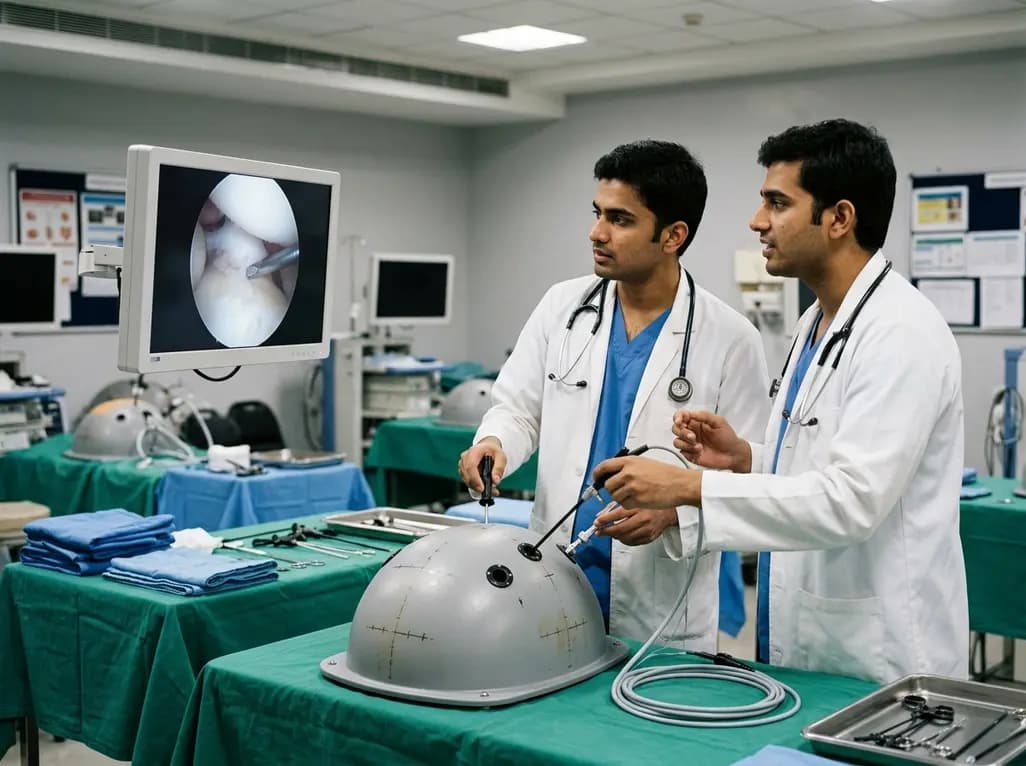
Modern surgical education requires objective and reliable methods to prepare residents before they enter the operating theatre. Structured arthroscopic surgery training has emerged as a cornerstone in orthopedic residency programs worldwide. Traditionally, surgical trainees acquired technical competencies through direct apprenticeship on live patients. However, this historical model poses significant challenges regarding patient safety, procedural efficiency, and institutional operating room expenses. Furthermore, modern work-hour restrictions have significantly reduced deliberate surgical practice time for orthopaedic trainees. In response, educators developed benchtop workstations and virtual reality platforms to accelerate psychomotor skill acquisition. Specifically, standardized training models allow residents to master triangulation, depth perception, and bimanual dexterity in controlled low-risk settings. Consequently, surgical trainees establish muscle memory before executing complex intra-articular maneuvers on patients. In India, orthopaedic postgraduate training programs increasingly integrate surgical simulation to satisfy contemporary medical education frameworks. Therefore, objective simulation represents a vital shift toward patient-centered procedural safety. Moreover, standardized curricula establish clear benchmarks that evaluate trainee progress systematically. Thus, simulation bridges the gap between theoretical knowledge and operative readiness.
The Fundamentals of Arthroscopic Surgery Training program delivers a structured curriculum designed to build foundational psychomotor skills. Orthopedic leaders established this program to standardize arthroscopic skills instruction across residency institutions. Trainees utilize a specialized modular workstation equipped with optical domes and interchangeable task plates. For example, junior residents practice essential camera mechanics, including horizon control, telescoping, periscoping, and sweeping. In addition, trainees perform deliberate bimanual exercises such as ring transfers, probing tasks, knot tying, and precision tissue resection. Furthermore, learners progress from transparent shells to opaque domes to simulate authentic operating environments. This sequential transition forces residents to rely entirely on real-time monitor visualization rather than direct visual cues. Consequently, the curriculum sharpens spatial orientation and two-dimensional depth interpretation inside enclosed anatomical spaces. Moreover, the self-paced structure allows residents to repeat difficult exercises until they achieve technical mastery. Faculty instructors can also oversee group sessions, ensuring uniform adherence to standardized operative fundamentals. Therefore, the curriculum provides an accessible, reproducible pathway for surgical skill development.
A prospective multicenter trial rigorously examined whether simulation performance correlates with actual operative dexterity. The researchers evaluated thirty-four postgraduate year one through three orthopedic residents from seven distinct training programs. Participants completed an intensive two-day training course alongside surgical skills assessments at an advanced learning center. To assess content validity, faculty and resident participants completed detailed evaluative surveys. Remarkably, one hundred percent of trainees and faculty members confirmed that the curriculum substantially improved arthroscopic skills. Furthermore, expert-novice performance comparisons demonstrated statistically significant differences across five of the six testing modules, verifying robust construct validity. Post-training evaluation revealed improved pass rates across nearly all workstation modules. Most importantly, researchers demonstrated concurrent and transfer validity by measuring resident surgical performance in actual operating room environments. Each passed simulation module correlated directly with a 1.24-point increase in validated surgical evaluation scores during simulated cadaveric arthroscopy. Therefore, objective metrics demonstrate that simulator-acquired skills transfer directly to surgical environments. Consequently, these findings validate simulation as an effective educational methodology.
Accurate evaluation of operative competence requires validated, objective assessment instruments. In the multicenter investigation, faculty evaluated trainee performance using three recognized assessment tools. First, examiners utilized the Arthroscopic Surgical Skill Evaluation Tool, known as the ASSET score. This instrument objectively grades essential surgical domains, including anatomical visualization, flow of operation, instrument handling, and tissue safety. Second, evaluators employed the Operative Performance Score, established by the American Board of Orthopaedic Surgery. This metric provides a global evaluation of independent surgical execution and technical maturity. Third, proctors utilized the Procedure-Specific Checklist Tool to measure exact adherence to essential operative steps. Together, these tools provide a comprehensive evaluation of resident surgical ability in real time. Furthermore, the combination of these instruments eliminates subjective grading bias among faculty evaluators. Consequently, surgical educators obtain reliable data regarding individual trainee strengths and procedural deficiencies. In addition, repeated objective scoring demonstrates continuous technical improvement as residents gain clinical experience. Therefore, standardized scoring tools support meaningful progress tracking in orthopedic postgraduate education.
The findings from this landmark study offer tremendous practical value for orthopedic surgery training across India. Currently, the National Medical Commission emphasizes competency-based medical education for postgraduate orthopaedic curricula. However, many training institutions face significant challenges, including high patient loads, limited surgical theater availability, and financial constraints. Furthermore, patient safety concerns often prevent junior residents from performing intricate arthroscopic maneuvers independently during real surgeries. Adopting benchtop simulation platforms provides an affordable, highly scalable solution for Indian teaching hospitals. For instance, low-cost modular workstations and hybrid simulators allow trainees to practice triangulation and probing repeatedly. In addition, institutions can implement structured weekend workshops or dedicated simulation labs within their surgical departments. Consequently, postgraduate trainees develop essential motor skills without increasing operating room duration or patient risk. Moreover, faculty can utilize validated metrics like the ASSET score to ensure procedural competency. Thus, integrating structured arthroscopy training into MS and DNB Orthopaedics programs will modernize surgical training across the subcontinent.
Transfer validity demonstrates that technical skills acquired on a simulator translate directly into superior performance inside a real operating room. In this multicenter trial, orthopedic residents who completed the simulation curriculum showed significant improvements in intraoperative performance scores. Blinded evaluators documented better instrument control, improved safety, and higher procedural scores during simulated cadaveric arthroscopy. Consequently, this evidence confirms that simulation practice produces meaningful operative proficiency.
Faculty assess arthroscopic competence using validated scoring tools such as the Arthroscopic Surgical Skill Evaluation Tool and the Operative Performance Score. These instruments measure specific technical variables, including anatomical knowledge, instrument triangulation, gentle tissue handling, and overall procedural flow. Additionally, computerized simulators record quantitative objective metrics like elapsed execution time, camera alignment, and total instrument tip path length. Consequently, evaluators obtain objective, reproducible data regarding resident procedural competence.
Teaching hospitals can introduce simulation training by utilizing cost-effective modular workstations, low-cost webcams, and synthetic joint domes. Rather than purchasing expensive virtual reality systems immediately, departments can construct practical simulation stations for basic triangulation and knot-tying exercises. Furthermore, institutions can conduct intensive weekend surgical workshops and share simulation resources across academic regional centers. Consequently, postgraduate programs can deliver standardized arthroscopic skills training without imposing unsustainable financial strain on their academic budgets.
Disclaimer: This content is for informational and educational purposes only... Refer to the latest local and national guidelines for clinical practice.
References
Nicandri G et al. Fundamentals of Arthroscopic Surgery Training Program Shows Transfer Validity Through Enhanced Operative Arthroscopic Performance. Arthroscopy. 2026 Sep 20. doi: 10.1002/arj.70528. PMID: 42763781.
Koehler RJ, Nicandri GT, Frank RM, et al. The Arthroscopic Surgical Skill Evaluation Tool (ASSET). Am J Sports Med. 2013;41(6):1229-1237.
Vaghela KR, Trockels A, Lee J, Akhtar K. Is the Virtual Reality Fundamentals of Arthroscopic Surgery Training Program a Valid Platform for Resident Arthroscopy Training? Clin Orthop Relat Res. 2021;479(12):2714-2724.
Tronchot A, Berton E, Kerebel P, et al. Virtual reality simulation training improve diagnostic knee arthroscopy and meniscectomy skills: a prospective transfer validity study. J Exp Orthop. 2023;10(1):136.

Read summarized clinical updates, watch expert medical content, and earn CME certifications right from your smartphone.
Open your smartphone camera to scan and install.





A multicenter trial reveals that the Fundamentals of Arthroscopic Surgery Training (FAST) program demonstrates transfer validity. Trainees showed marked improvement on the ASSET score, proving simulation enhances operating room performance and technical surgical skills.
Today
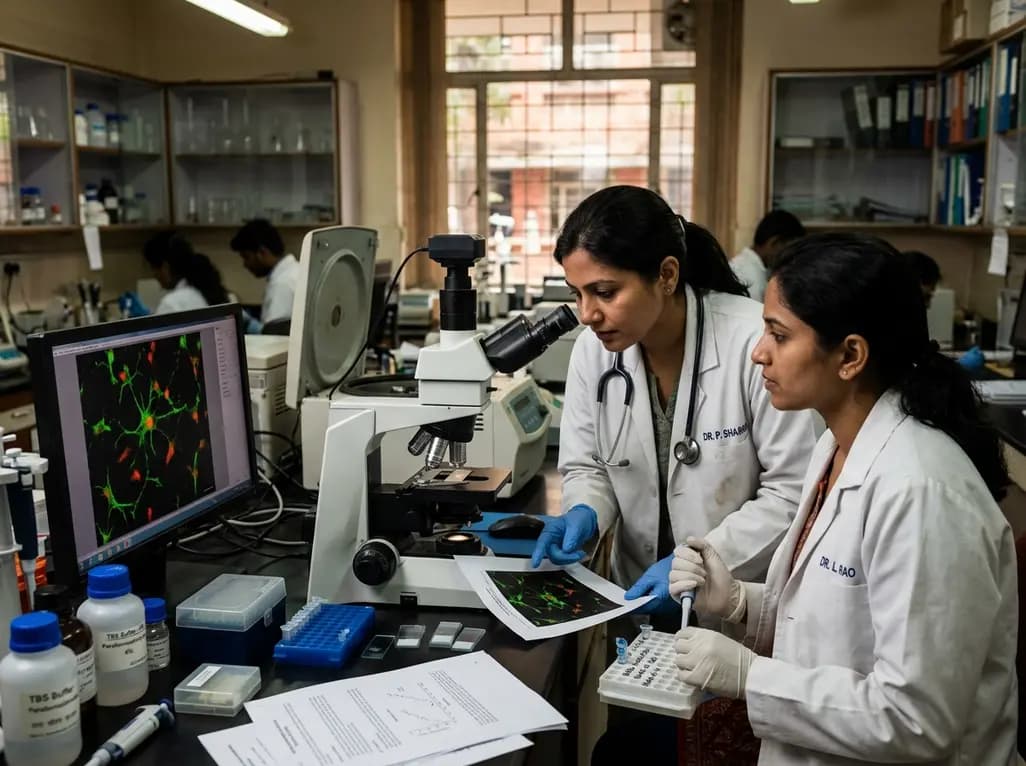
A groundbreaking study highlights how elevated ISG15 fuels RIG-I/MDA5 signaling and macrophage-microglia crosstalk during blood-brain barrier disruption in neuromyelitis optica spectrum disorder, revealing novel therapeutic targets for neuroinflammation.
Today
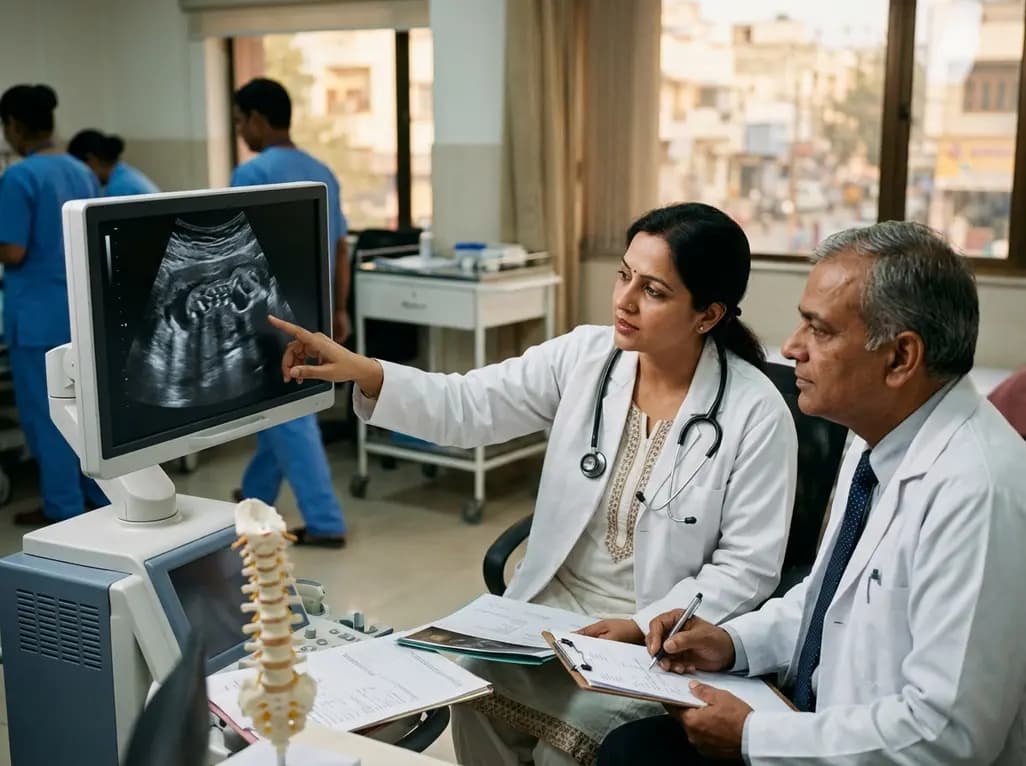
A 10-year cohort study highlights prenatal ultrasound accuracy and postnatal functional outcomes in closed spinal dysraphism, demonstrating favorable motor milestones alongside notable urologic morbidity.
Today

An updated systematic review and meta-analysis of 7,875 patients reveals that routine microaxial left ventricular support during nonemergent high-risk PCI does not reduce mortality or ischemic complications, while significantly increasing major bleeding events.
Yesterday
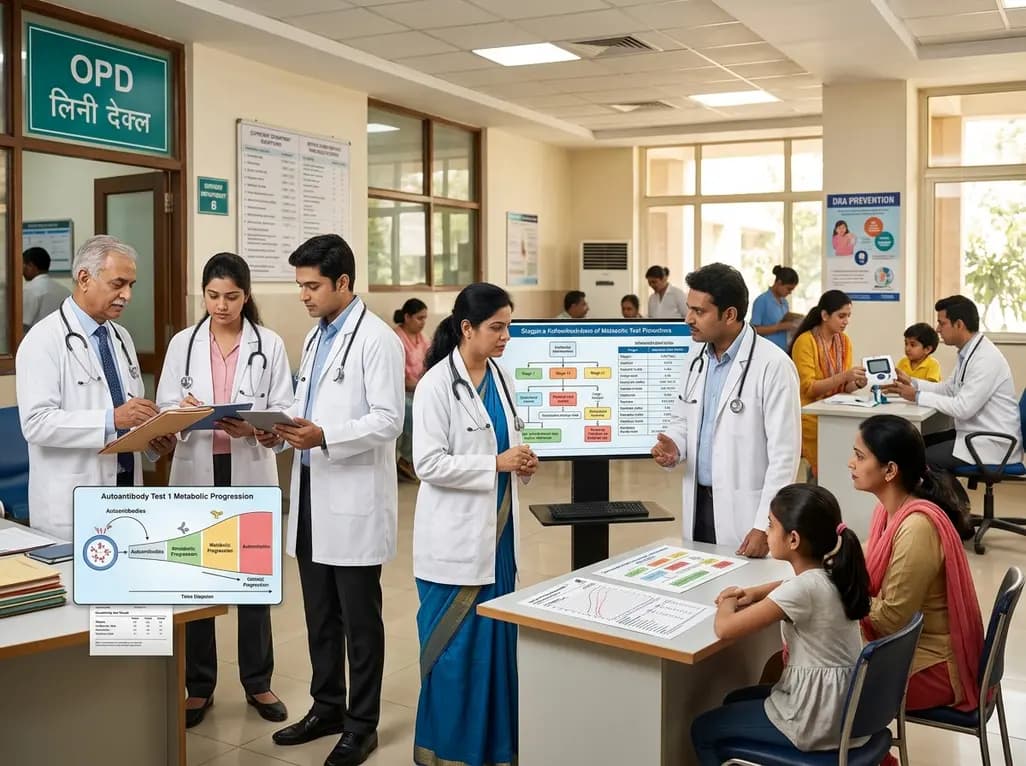
The SED-SEEN-SEEP consensus outlines an Integrated Care Pathway for preclinical type 1 diabetes, structuring target screening, autoantibody confirmation, metabolic staging, and proactive follow-up to prevent diabetic ketoacidosis and facilitate early disease-modifying intervention.
Yesterday
